
GLEN JEAN, W.Va. — National Park Week begins Saturday, spotlighting hundreds of America’s most celebrated landscapes. But in West Virginia, the national park experience is a little different.

New River Gorge National Park and Preserve isn’t simply wilderness set aside from the modern world. Railroads still rumble along the New River, and communities and privately owned properties remain within and around its complex boundaries. Hunters can pursue game across much of the preserve, while climbers scale sandstone cliffs and whitewater rafters run rapids far below.
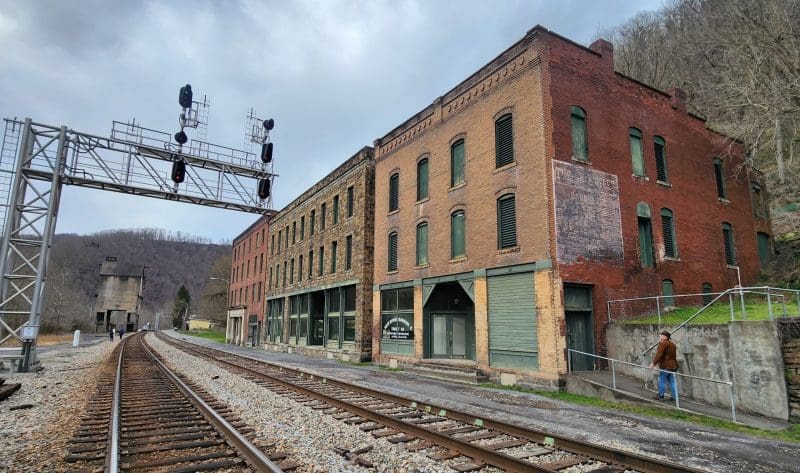
Scattered through the forest are the remains of towns that once helped power industrial America.
That combination makes the New River Gorge an unusual place to consider during National Park Week, which runs Aug. 22–30 this year as the National Park Service celebrates its 110th anniversary. The theme, “Celebrate America’s Story,” coincides with the nation’s 250th anniversary.
On Aug. 25, the agency’s birthday, it will waive entrance fees for U.S. citizens and residents at National Park Service sites that normally charge them.
New River Gorge does not charge an entrance fee.
A national park—and a national preserve
Even its name, “New River Gorge,” hints at what makes the West Virginia destination unusual.
Congress redesignated the former New River Gorge National River as New River Gorge National Park and Preserve in December 2020. The protected area encompasses more than 70,000 acres along the New River, but only a fraction is designated as national park land.
Approximately 90 percent lies within the national preserve, where hunting remains permitted.
That arrangement allows the National Park Service to protect some of the gorge’s most important natural and cultural resources while maintaining traditional recreational uses across much of the landscape.
The result doesn’t necessarily resemble the popular conception of a national park as an enormous, uninterrupted tract of federally owned wilderness.
The New River Gorge is a patchwork shaped by generations of settlement, industry, transportation, and land ownership. Roads enter and leave the park boundaries. Rail lines follow the river. Historic communities survive alongside places where the forest has almost completely reclaimed former towns.
In many respects, it is a national park layered over a landscape where people have lived and worked for centuries.
A park built around a working river corridor
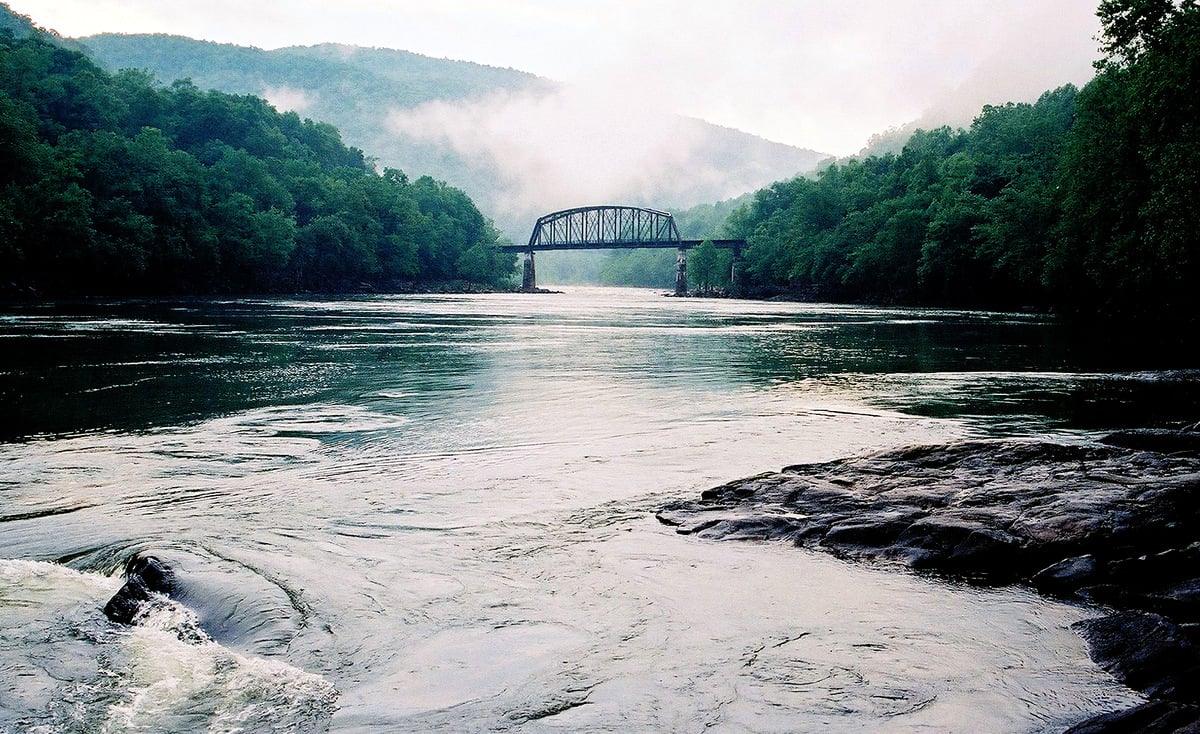
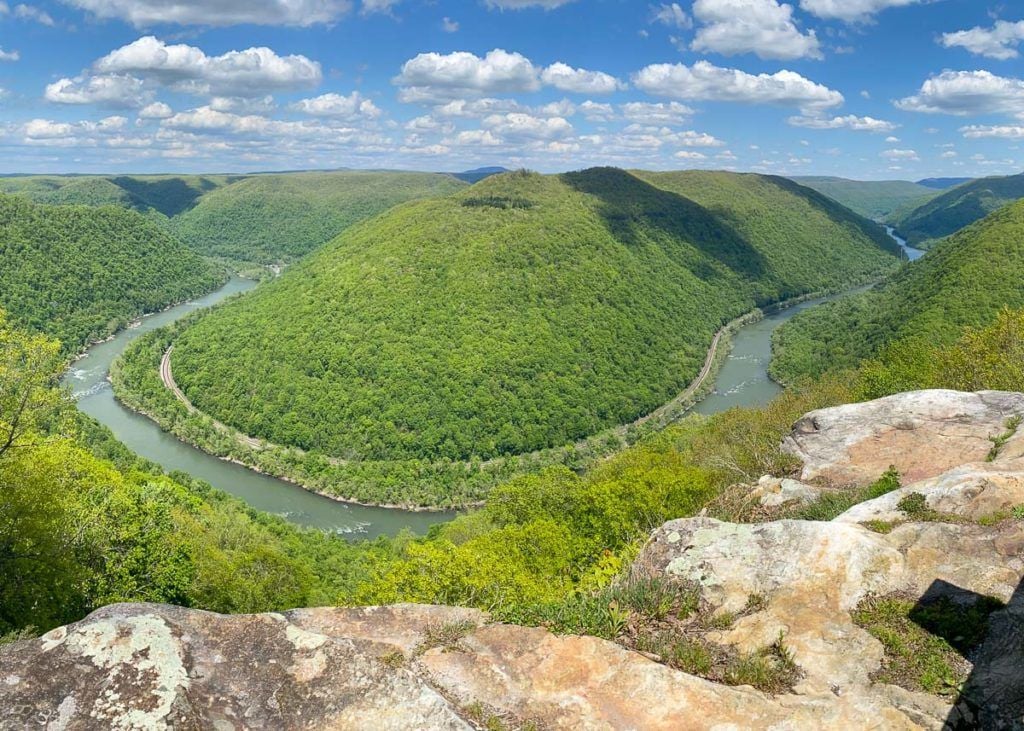
The New River itself is the organizing feature. The park protects a 53-mile stretch of the river through southern West Virginia, where the New cuts deeply into the Appalachian Plateau. The National Park Service says the exposed rocks in the gorge date back 330 million years.
But visitors looking down from overlooks aren’t seeing an untouched landscape.
Railroad tracks remain visible along the river. Historic roads descend from the plateau. Abandoned mine entrances, coke ovens, foundations, and bridge abutments survive in the woods.
The arrival of the Chesapeake and Ohio Railway in 1873 transformed the isolated gorge by enabling large-scale coal mining. Settlements sprang up along the tracks, and coal extracted from the mountains could suddenly reach distant industrial markets.
Places including Thurmond, Nuttallburg, Kaymoor, Quinnimont, and Prince preserve pieces of that story.
At Quinnimont, for example, industrial development accelerated in the 1870s with the construction of an iron furnace, coal mining, and the C&O Railroad’s arrival. The community existed before industrialization, but the railroad fundamentally changed life in the gorge.
Prince developed differently. Brothers William and James Prince purchased 300 acres there in 1870, before the railroad arrived, and operated a store and ferry. The community subsequently became an important railroad stop.
Some communities vanished almost entirely. At Royal, once home to dozens of houses as well as a company store, theater, and pool room, the forest has reclaimed nearly everything except scattered stonework and foundations.
The ruins aren’t incidental to the park. They are part of what the park was created to preserve.

People still live in the New River Gorge
Perhaps most surprising to visitors accustomed to parks dominated by federal land is that the New River Gorge remains closely intertwined with private property and communities.
The federal boundary encompasses a complex landscape assembled over decades, not a single block of government-owned land.
That means a traveler can pass through national park territory, private property, and established communities while exploring the region.
The human presence is much older than the coal boom. Along the upper New River, broad bottomlands supported farms before the railroad transformed the region.
At Richmond Hamilton Farm, the National Park Service preserves a landscape associated with generations of settlement and self-sufficient farming. Archaeological sites also document American Indian occupation long before European settlement.
This is one reason the New River Gorge can feel different from parks established primarily to protect vast wilderness. Its story isn’t nature or people. It’s the relationship between them.
Recreation here can get extreme
The New River Gorge also differs from many national parks in the intensity of recreation it attracts.

The New River is internationally known among whitewater paddlers, while the gorge’s cliffs have become one of the premier rock-climbing destinations in the eastern United States.
Thousands of established climbing routes dot the region’s sandstone cliffs. Mountain biking, hiking, fishing and hunting add to the mix.
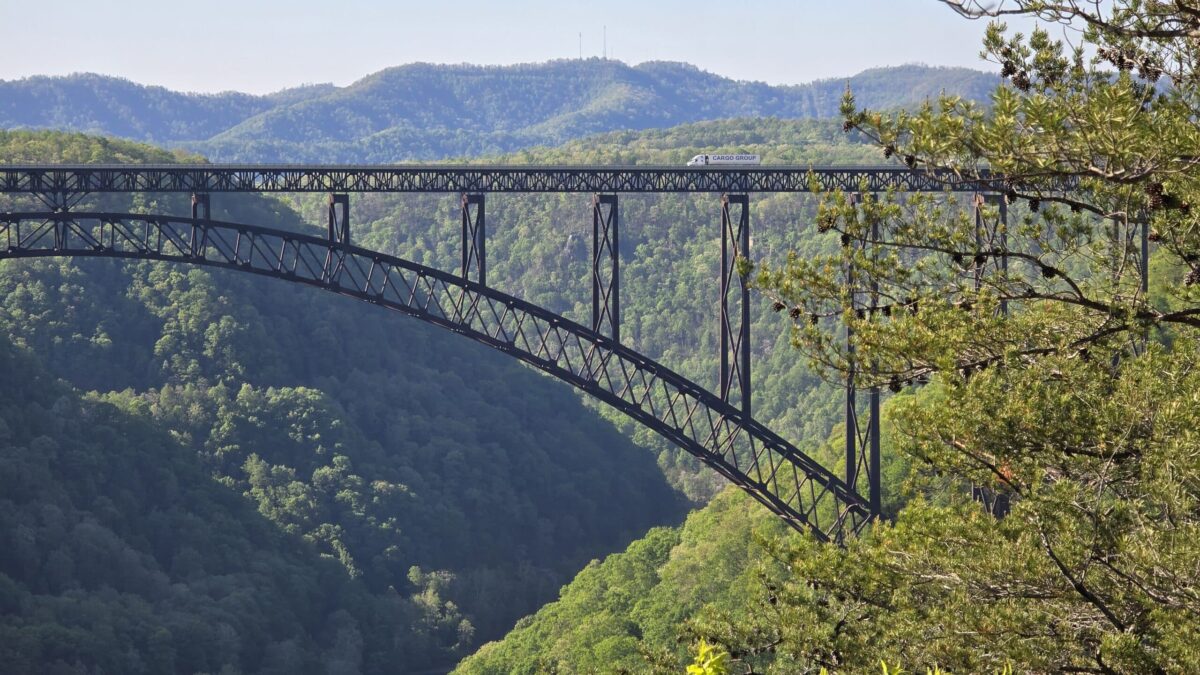
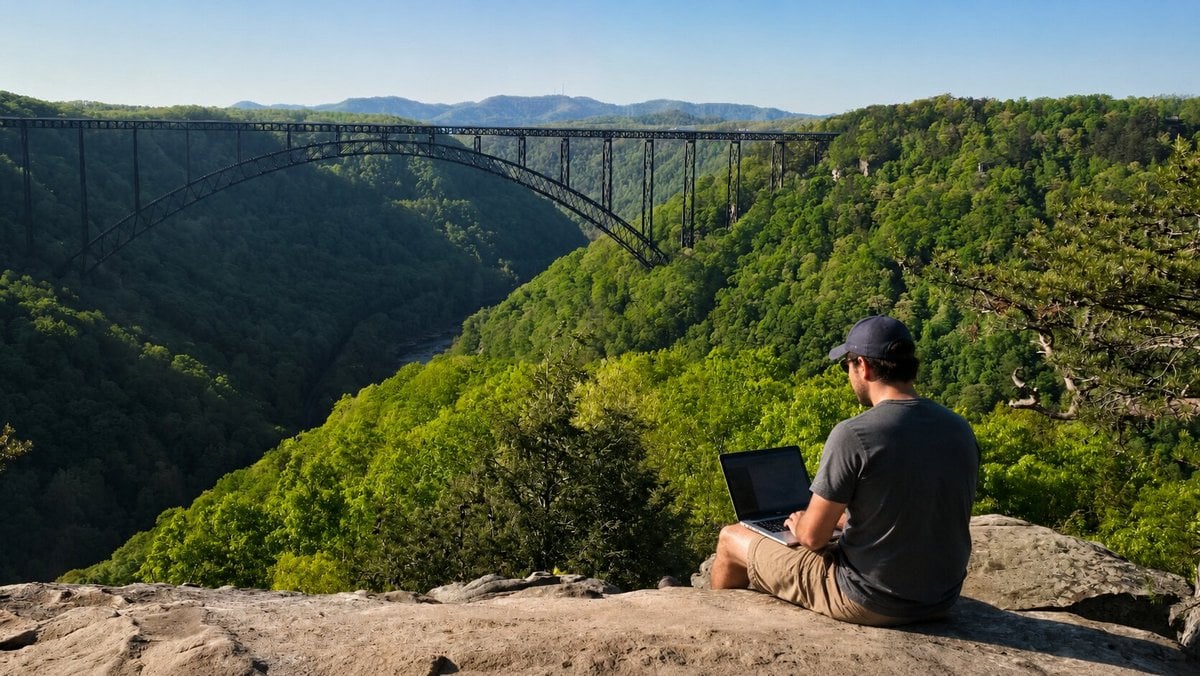
Towering over it all is the New River Gorge Bridge, the 3,030-foot steel arch that carries U.S. 19 across the canyon.
Each October, even the bridge becomes part of the recreational landscape during Bridge Day, when pedestrians replace highway traffic and BASE jumpers leap from the span into the gorge.
Few national parks combine industrial ruins, active railroads, hunting, world-class whitewater, rock climbing and extreme sports within the same landscape.
America’s newest national park is attracting record attention
The New River Gorge’s redesignation has also reshaped the tourism economy around it.

The National Park Service reported that New River Gorge National Park and Preserve set a visitation record in 2025, part of a year when national parks recorded more than 323 million recreation visits nationwide.
The economic effects extend beyond the park boundary. In 2024, more than 2.08 million visitors to the three National Park Service properties administered together in southern West Virginia — New River Gorge National Park and Preserve, Gauley River National Recreation Area, and Bluestone National Scenic River — spent more than $108 million in surrounding communities, according to the National Park Service.
Spending increased by almost 12 percent from the previous year. The growth has helped transform the New River Gorge from a region best known nationally for coal and whitewater into one of West Virginia’s most recognizable travel destinations.
Yet its industrial past hasn’t disappeared. That collision of wild landscape and human history is what distinguishes the gorge.
Visitors can stand at an overlook above one of the continent’s oldest river corridors, descend into the remains of a coal town, watch a freight train wind alongside the river, climb a sandstone cliff, and eat dinner in a nearby community — all in the same day.
As National Park Week celebrates “America’s Story,” West Virginia’s national park offers a particularly complicated chapter.
The New River Gorge isn’t a landscape where human history has been removed. Human history is part of what visitors have come to see.