
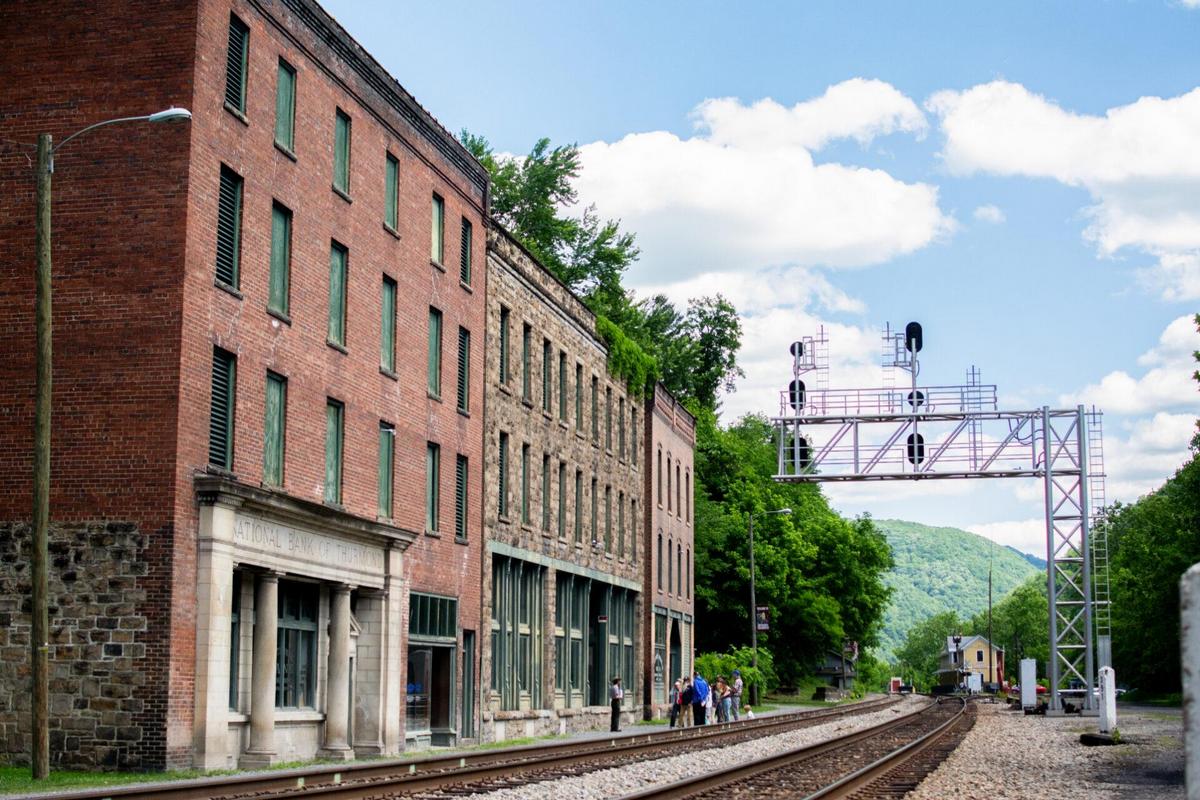
THURMOND, W.Va. — A nearly abandoned railroad town preserved within New River Gorge National Park and Preserve is preparing for a legal fight with the federal agency that owns much of it as the National Park Service moves toward demolishing historic buildings there.

Bailey & Glasser LLP has agreed to represent the Thurmond town council pro bono, with Charleston attorney Benjamin Bailey serving as attorney of record, according to officials at Preservation Thurmond, the nonprofit opposing the demolitions. Preservation Thurmond president Holly Clark says demolition could begin in November.
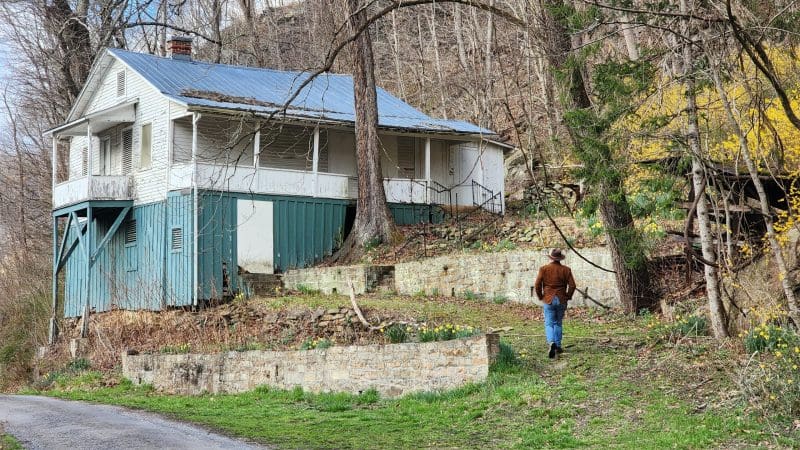
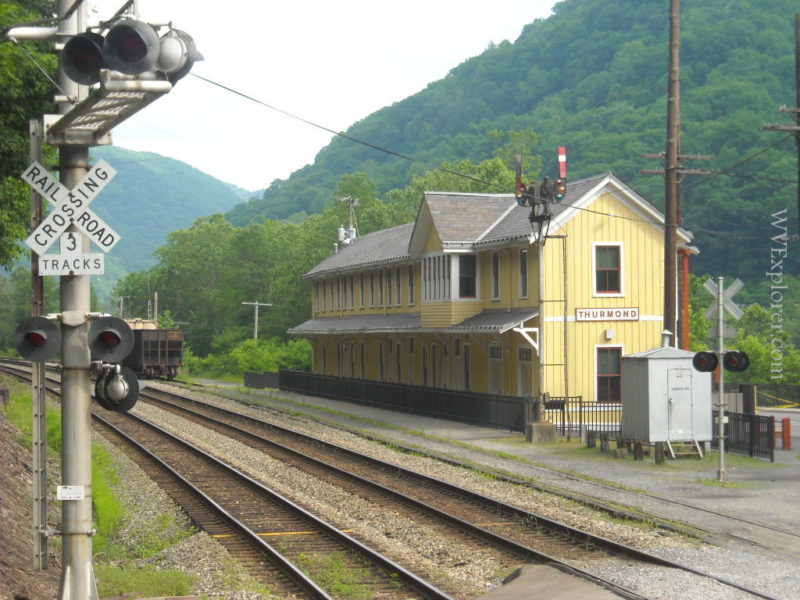
Once a thriving Chesapeake & Ohio Railway community, Thurmond dwindled to a handful of residents after the coal and railroad economy that created it declined. Much of the town eventually came under federal ownership, and today its railroad depot, commercial buildings, houses, and surrounding landscape preserve one of the New River Gorge’s most recognizable industrial-era remnants.
The park service restored the historic railroad depot as a visitor center and has preserved other structures there, making the community a cultural destination within one of America’s newest national parks. Now the town and the federal agency are at odds over how much of that historic landscape should survive.
Tighe Bullock, a Charleston attorney, Thurmond town council member, and historic-preservation developer, described Bailey & Glasser’s arrival as giving the town new hope.
“One of the best law firms in the country, Bailey Glasser, will be representing us in our suit to preserve our town and prevent its destruction by the Federal Government,” Bullock wrote on social media.
“Sad it has come to this, but I think it really speaks to how much this state loves our history, and loves Thurmond,” he added. “Once it’s gone, it’s gone. But we have some new hope.”
Preservation Thurmond president Clark said the representation gives the community greater ability to challenge decisions that could permanently change the historic town.
“We are deeply thankful to have Bailey & Glasser join us in this fight,” she said. “Thurmond’s history is irreplaceable, and once these structures are gone, they cannot be brought back. Having a firm of this caliber stand with the town council gives our community a real voice in decisions that will shape Thurmond’s future for generations to come.”
Preservation Thurmond and Thurmond Mayor Melanie Dragan were scheduled to formally announce the representation Saturday morning. The organization has described the dispute as moving toward litigation, although its announcement did not say that a federal complaint had yet been filed.
Earlier Park Service study recommended maintaining many buildings
The confrontation follows years of study into what should happen to deteriorating historic buildings the federal government acquired at Thurmond.
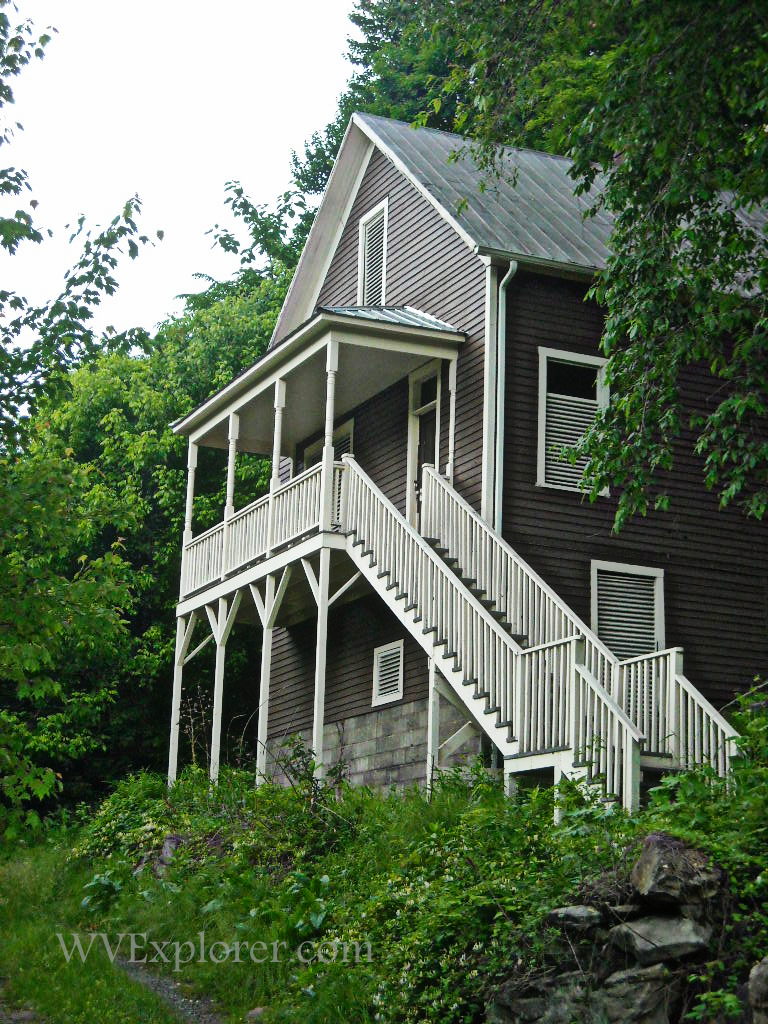
A 2022 historic resources survey prepared for the park service by Bratslavsky Consulting Engineers and Aurora Research Associates evaluated buildings at Thurmond, documented their condition and historic integrity, and recommended treatment.
The consultants found that the resources retained sufficient historic integrity to contribute to the Thurmond Historic District. For many contributing structures, the recommendations focused on maintenance or stabilization rather than removal.
The Billy McGuffin Garage and Phillip A. McClung House were among the stronger candidates for demolition because of their deteriorated condition. For many of the other resources, however, the consultants recommended measures intended to maintain or stabilize them.
The park service subsequently determined that it could not reasonably preserve all the buildings. Its later environmental review acknowledged the 2022 survey while finding that many excess structures were abandoned, undermaintained, and heavily deteriorated, and that their continued upkeep would consume limited staffing and money.
The difference between the earlier treatment recommendations and the agency’s subsequent demolition plan has become an important element of the preservation dispute.
Why a national park plans to demolish historic buildings
National Park Service officials in Washington approved a modified demolition plan in 2025 after environmental and historic-preservation reviews and public comment.
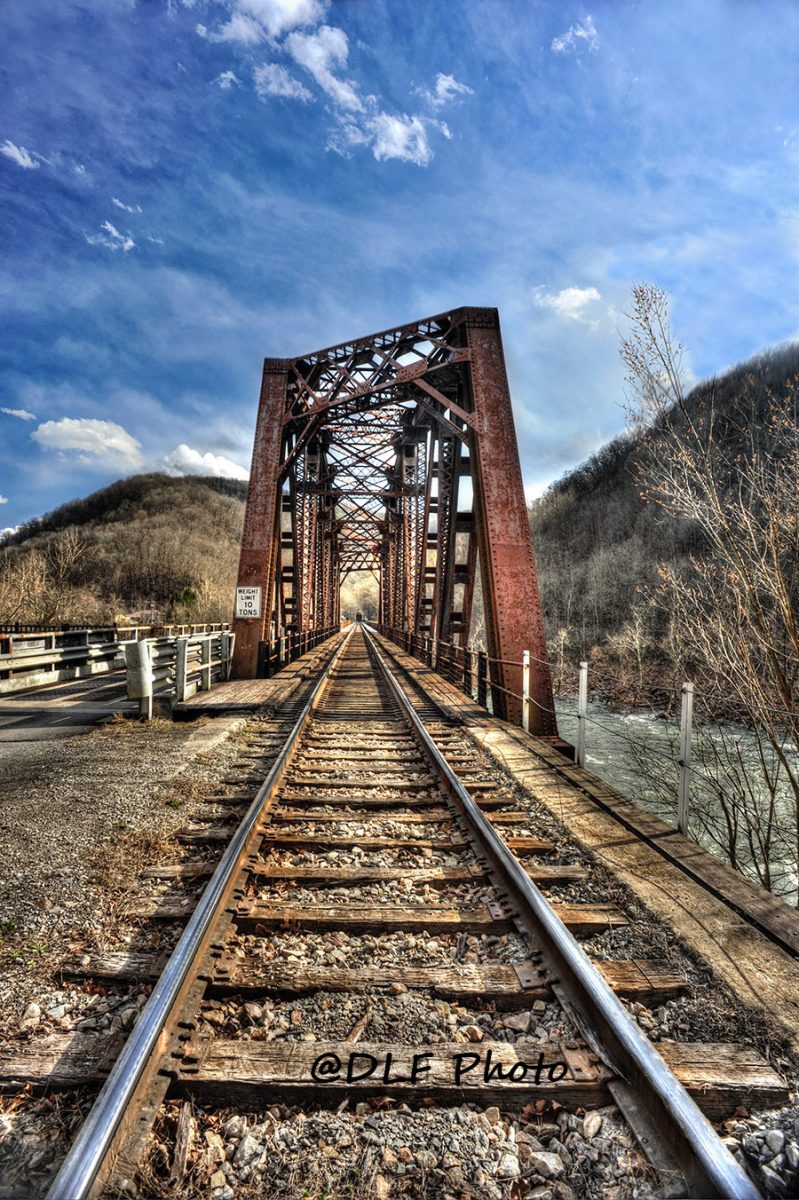
The service cited structural deterioration, safety concerns, maintenance costs, and the need to focus resources on higher-priority buildings and facilities.
Under its final decision, the agency agreed to retain the Marilyn Brown House, the Thurmond Ice House, and the Dun Glen Ark, a structure associated with the development of the New River’s commercial whitewater industry.
The decision authorized the demolition of other historic resources, including the Erskine Pugh Rental House, the James Humphrey Sr. House, the Billy McGuffin Garage, the Phillip A. McClung/Meadows House, and the remaining Dun Glen Building/Ranger Station.
Three additional structures may survive through another route. The Tom Kelly House in Thurmond and the Dun Glen Boat Storage Rack and Mini Ark may be retained if viable lease proposals are received.
The park service’s environmental review acknowledged that removing contributing buildings would diminish elements of the Thurmond Historic District’s historic integrity. The agency concluded, however, that the district would remain eligible for the National Register of Historic Places and would continue to convey Thurmond’s railroad, commercial, and residential history.

The park service has also completed 3D scans of contributing Thurmond structures proposed for removal to document their design, appearance, and materials.
Preservation Thurmond and the town council have questioned the decision and raised concerns about the federal historic-preservation process that produced it.
Demolition money came from landmark parks legislation
Another dimension of the dispute concerns the source of the funds, Clark says.
The work is part of a larger New River Gorge project funded by the Great American Outdoors Act, the 2020 federal law that provided billions of dollars to address deferred maintenance on federal public lands.
At New River Gorge, the larger project includes improvements to water and wastewater infrastructure and visitor facilities, rehabilitation and stabilization of some historic resources, and removal of other historic and nonhistoric buildings the park service considers hazardous or unnecessary.
Bullock highlighted the irony of using those funds in the Thurmond dispute.
“The poetic irony is that the Department of the Interior is the promulgating entity for historic preservation in our country,” he wrote. “Double the irony when you realize the funds being used to tear these structures come from the largest single investment in our parks system, ever, the Great American Outdoors Act.”
The park service has characterized the work as part of a broader effort to address deferred maintenance, with removal of excess buildings intended to reduce ongoing costs and allow resources to be directed elsewhere in the park.
Leasing could still save at least three structures
The dispute is unfolding along two tracks. The town is preparing for a potential court fight, while Preservation Thurmond continues working within a park service leasing process that could save three structures.
During the federal review, the park service received expressions of interest in leasing the Tom Kelly House and structures at Dun Glen. The agency subsequently revised its decision to allow the Tom Kelly House, Dun Glen Boat Storage Rack, and Mini Ark to remain if viable lease proposals meet federal historic-preservation requirements.
Preservation Thurmond is asking individuals, businesses, and organizations interested in rehabilitating the properties to contact the organization as soon as possible.
“Every one of these buildings has a story, and every one of them deserves a future,” Clark said. “If you have ever thought about what it would mean to bring one of these historic places back to life, now is the time to reach out.”
The fight comes as Thurmond has gained new visibility since New River Gorge became a national park and preserve in 2020. Visitors who reach the isolated community today encounter a functioning railroad, a historic commercial district, former homes, and National Park Service facilities within the remains of a town built around the railroad more than a century ago.
For the park service, the dispute centers on how to manage a collection of deteriorating historic structures with finite resources. Thurmond officials and preservation advocates contend that buildings slated for demolition could instead be stabilized and reused.

With demolition proposed for November and Bailey Glasser now representing the town council, that disagreement may soon move from the national park into federal court.
“It’s gonna be an interesting couple of weeks leading up to the proposed demolition in November,” Bullock wrote. “Truly a David and Goliath story.”
A comparison of demo costs to renovation costs might help. Perhaps at least some of the targeted buildings could be renovated with the demo savings from not destroying them.
Jeanne Finstein,
Friends of Wheeling
Let’s call it what it is in the truth. This is all Trump’s doing. He continues to steal money from taxpayers and their programs for his pet projects, which is pathetic considering it’s coming from one who has Never paid taxes or his share. He put his thugs in place to dismantle the country and our National Parks have been no exception. Since his 2nd reign he and his thugs have called for cutting and selling the lumber to the highest bidder, allowing the highest bidding ranchers cattle to graze the National Parks land, decreasing and selling off lands of our parks to those same people, etc. This is why this is no surprise. He is and has always been a destroyer of everything he has ever touched. Narcissist people don’t care about others, thieves and con artists think all money is and should be theirs. Compulsive liars can’t ever keep their lies straight as they are what makes up who they are as an individual. We must continue to fight and stand up to this corruption until this evil is gone to save everything and what we have left. If he had total rampant control he would burn it all to the ground and sell it to the highest bidder, including our country. A person that would destroy what time and God has given is an enemy of the people. Good will always win out over evil but we must ban together to do it. Our National Parks are the last of the protected beauty we have in our country. A place where we go to relax, spend time together as a couple, a family, or by ourselves. It is therapeutic, soulful, spiritual, and it belongs to all Americans. We must do everything to preserve what we have in them and Thurmond is the prime example.
Amen!! tRump probably plans to sell it for some more bitcoin.
I was there two months ago. I couldn’t believe how many people were there as well just to see a Town of empty buildings. I spoke to someone at the visitor center about repurposing some of these buildings. They told me one of the biggest issues would be since it is a park, Alcohol is not allowed so bars restaurants, or breweries or anything associated with that which people would come to see, would not be allowed on the property. The restored visitor center, which used to be a train station, was great to see. But if they demolished buildings that are there, there will be nothing for visitors to see and restoring the train station would’ve been a waste.
My family loves to visit many places in West Virginia. We lived in the far northern region for 47 years. My husband’s family worked at Weirton Steel ( the largest employer in West Virginia and the largest tax provider as well). Those days are gone forever because our government mismanaged imported steel.
So sad to see this happen to West Virginia.
Then the state instituted gamling, that sucked the money out of people and ruined some families.
West Virginia is a beautiful state. Preserving our historical past is very important, in my opinion.
How to do it is a larger question.
Has there been a donation page started to collect money to help restore these buildings so that they do not fall into complete ruin? I understand that Thurmond is now part of the National Park and that certain rules apply. I also feel that if the government won’t supply the preservation money, is there another way to donate to a restoration fund?
Critical to out future
Maintaining out past thank you