
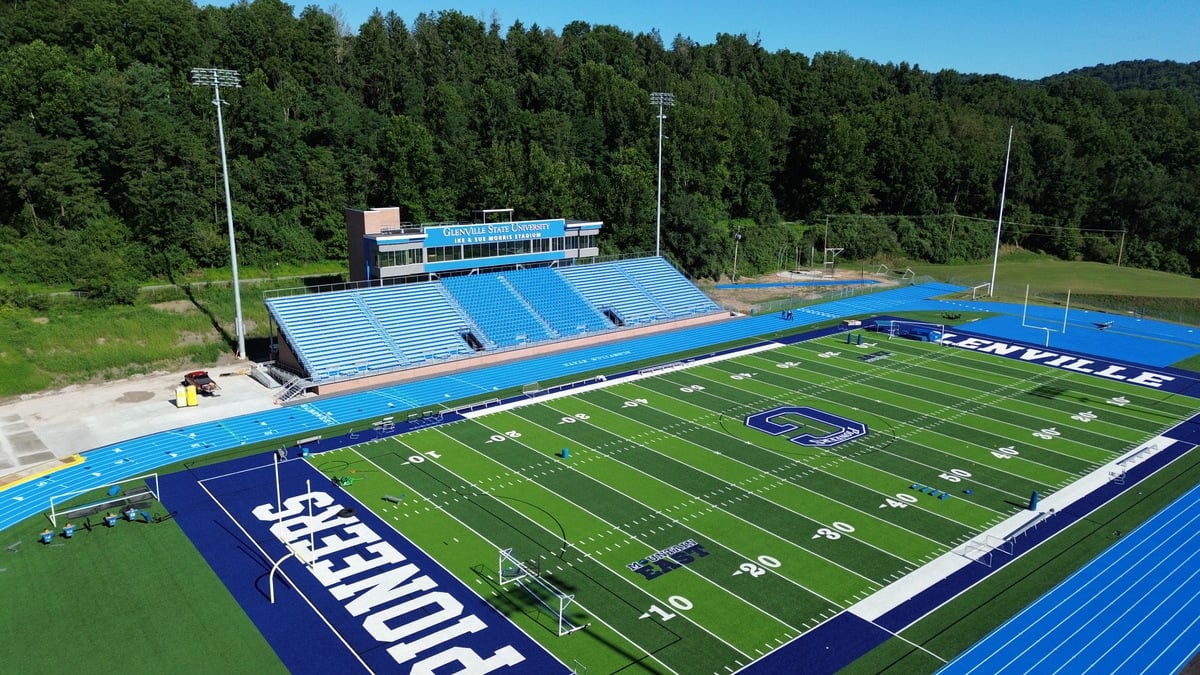
GLENVILLE, W.Va. — In a West Virginia county with fewer than 8,000 residents, a $26 million university development is about to make its most visible public debut.

Glenville State University will dedicate the new Ike and Sue Morris Stadium on Thursday, opening the centerpiece of a health, fitness and athletics complex whose significance extends well beyond college football.
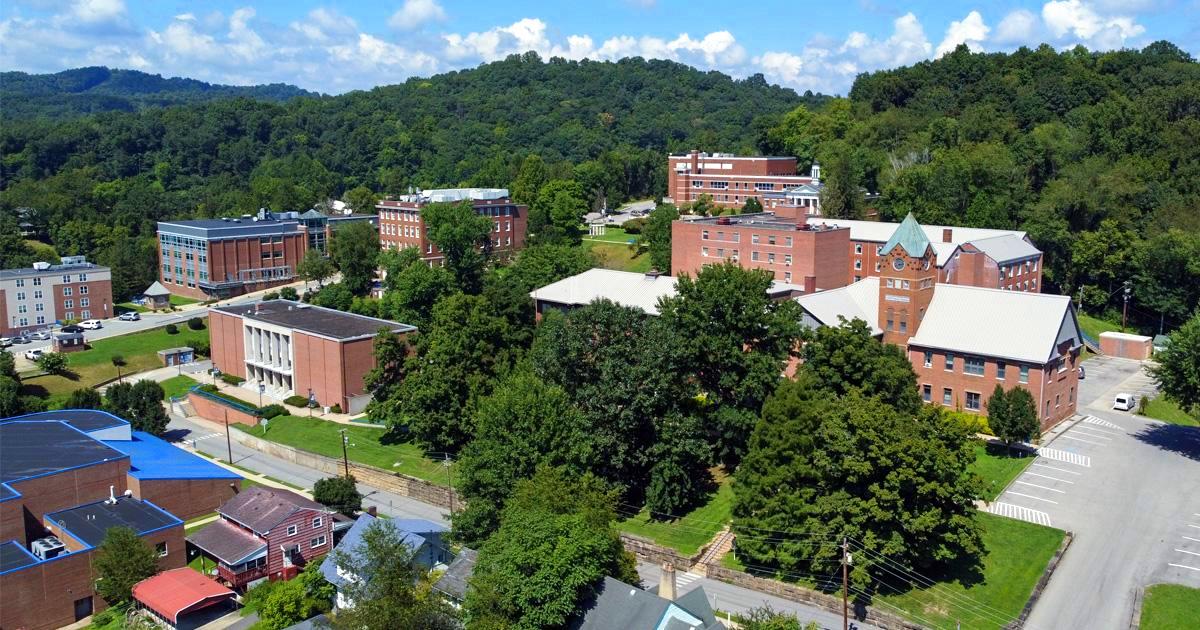
The investment is particularly striking because of where it is happening. Glenville, the Gilmer County seat, is a small Appalachian community in the geographic heart of West Virginia, far from the state’s largest population centers and interstate highways. Gilmer County had 7,408 residents in the 2020 Census, while Glenville itself had fewer than 1,200.
Yet the town is home to a university founded more than 150 years ago to train teachers for classrooms across West Virginia.
A field dedication ceremony is scheduled for 5:45 p.m. Sept. 3, followed by a 6 p.m. kickoff for Glenville State’s first home football game of the season. The game will also mark the home debut of new Pioneer head coach Jake Casteel.
“This is more than the opening of a new stadium,” Glenville State President Mark A. Manchin said in announcing the dedication. “It represents the continued growth of Glenville State University and the strong connection between our university and the Glenville community.”
A $26 million investment in a small Appalachian community
The new stadium is part of the $26 million Morris Family Health and Fitness Complex, under development at the university’s Mineral Road campus beside the Waco Center. Glenville State Board of Governors documents describe the larger complex as the future home of the university’s College of Health Sciences.
The project brings together facilities that might otherwise have little in common — a college football stadium, a community fitness space, and classrooms and laboratories for health-care education — as part of a broader effort to strengthen both the university and the rural region it serves.
That mission extends beyond Gilmer County. Rural communities across West Virginia have struggled to recruit and retain health-care professionals, particularly as populations age and hospitals and medical providers contend with workforce shortages.
Manchin has said Glenville State intends not only to educate health-care workers but also to encourage them to remain in the region after graduation.
“We envision over the next three to five years growing our programs, our master’s level programs, and ensuring that students trained here remain here to serve their communities,” Manchin said in April, when Gov. Patrick Morrisey visited the campus to announce $5 million in state funding for Glenville State’s health-sciences initiatives.
The university has also taken steps toward establishing an associate degree in nursing. In December, Glenville State’s Board of Governors approved an intent to plan the program, with a target implementation date of spring 2027.
The Morris complex is designed to provide laboratories, classrooms, and other spaces for health-sciences education, and to include a fitness center available to the public. University officials said the combination is intended to give students hands-on training while expanding health and wellness resources for people in Glenville and surrounding communities.
From training teachers to training health-care workers
Glenville State has long held a specialized place in West Virginia higher education. Founded in 1872 as a branch of the West Virginia State Normal School, it was established to train teachers for a young state’s growing public-school system, particularly in rural communities where trained educators were urgently needed.
The institution eventually became known as the “Lighthouse on the Hill,” a reference to its reputation for teacher education and the graduates it sent into schools throughout West Virginia. Teacher preparation remains part of its mission, but the university has increasingly developed programs closely tied to the economy and needs of rural Appalachia, including forestry, wildlife management, land surveying, environmental science, and criminal justice.

Its natural-resources programs are particularly characteristic of the school. Students train for careers managing forests and wildlife, surveying land, and working in conservation and natural-resource fields — occupations closely connected to the landscape surrounding the small central West Virginia campus.
The institution became Glenville State University in 2022 after operating for generations as Glenville State College, reflecting an expanded academic mission.
Now Glenville State is extending that rural-service tradition into health care, Manchin said.
In that sense, the Morris Family Health and Fitness Complex represents more than an expansion of the university. An institution founded more than 150 years ago to produce teachers for underserved West Virginia communities is attempting to apply much the same model to one of the state’s most pressing modern needs: producing health-care professionals willing to live and work in those communities.
A new generation of athletic facilities
The development also continues a decades-long relationship between Glenville State and Ike and Sue Morris, whose philanthropy has helped transform the university’s athletic facilities.
Ike Morris came to Glenville in 1962 during an oil and gas boom and later became the owner of Waco Oil & Gas Co. Sue Morris, a 1965 Glenville State graduate, taught for decades in Gilmer County schools and later served on the university’s Board of Governors.
Their support has helped finance athletic facilities ranging from artificial turf and stadium improvements to the Waco Center and the Sue Morris Sports Complex. The university’s football field became I.L. “Ike” and Sue Morris Stadium after the couple donated artificial turf in 2001.
The latest construction represents another generation of those facilities, according to Jagger Furr, Glenville State’s sports information director. Furr said the difference between the former stadium and its replacement is dramatic. “It’s night and day,” he said.
The stadium includes coaches’ offices on the lower level and an expanded press area above, with spaces for sports information staff, radio broadcasters, and other users. The development also includes new turf, a track, lighting, and a video scoreboard.
“We were actually up there yesterday, and it’s, I mean, it’s state-of-the-art,” Furr said. “Compared to what we used to have and what we have now, it’s night and day.”
The stadium will serve more than football. Women’s soccer and track and field will also use the facility, spreading the investment across several athletic programs.
Athletics have become a significant part of campus life. Furr said Glenville State has maintained a population of about 500 student-athletes, a level he described as substantially higher than a decade ago.
“There’s been growth, especially with athletics,” Furr said.
A university closely tied to its town
For a town the size of Glenville, the university’s importance is hard to separate from that of the surrounding community. Students, faculty, employees, athletic events, and visitors give Gilmer County an economic and cultural institution of a scale rarely found in an Appalachian community of fewer than 8,000 people.
That relationship helps explain why university leaders have emphasized public access to portions of the new complex. Rather than functioning exclusively as a campus facility, the complex’s fitness and health components are intended to serve surrounding residents as well.
It also helps put the scale of the investment into perspective. Glenville is not a large college town or metropolitan university center. It is a small county seat in rural central West Virginia, where the fortunes of the university and community have been intertwined for generations.
That makes the new stadium an unusually visible symbol of a larger experiment underway at Glenville State.
An institution founded to place teachers in rural communities is expanding its mission to help produce another profession rural communities urgently need — health-care workers — while investing heavily in athletics and facilities intended to make the university and its hometown more attractive places to study, work, and live.
Thursday night, much of that larger ambition will look like a football game under new lights.