
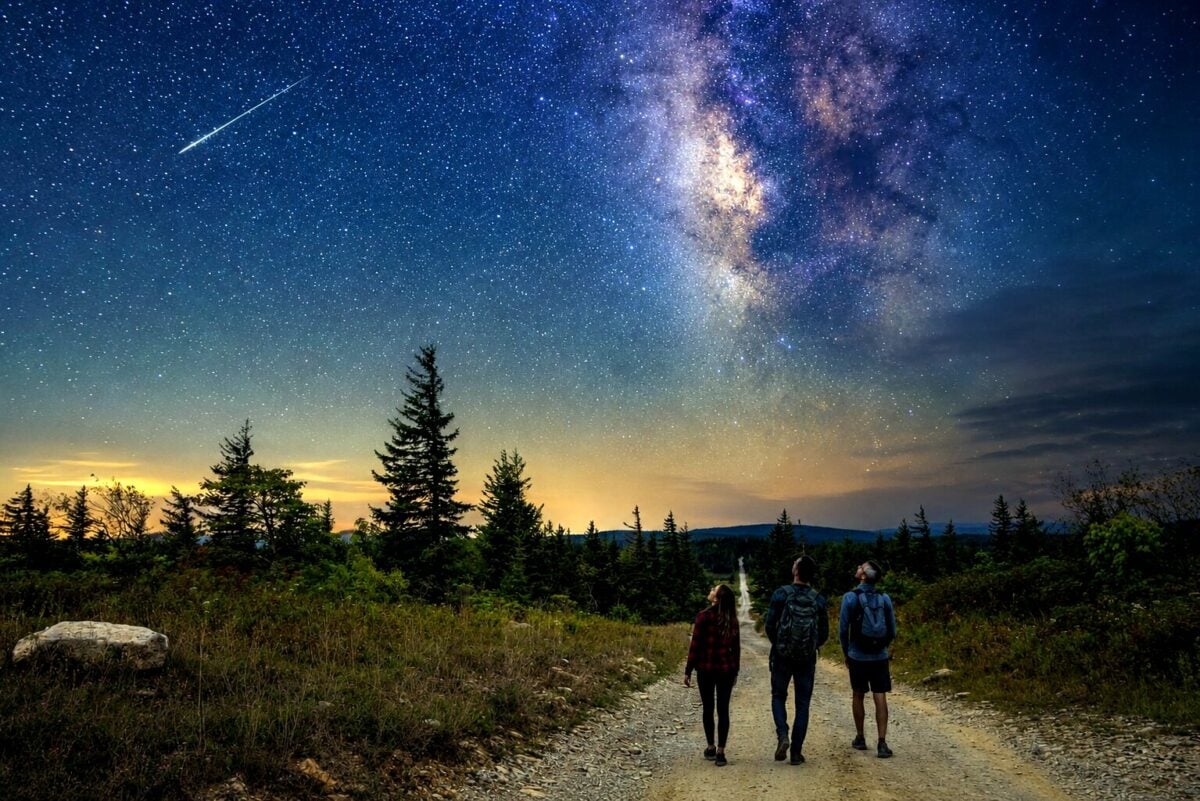
MARLINTON, W.Va. — The annual Perseid meteor shower arrives during one of the busiest travel months of the year, and for millions of people across the eastern United States, one of the best places to experience it may be hiding in plain sight: the mountains of West Virginia.
While much of the East Coast contends with sprawling metropolitan light pollution, West Virginia remains one of the nation’s darkest states after sunset. Vast stretches of protected public land, rugged mountains and sparsely populated valleys create conditions that astronomers and night-sky photographers prize, making the Mountain State an increasingly popular destination for stargazing.
This year’s Perseid meteor shower is expected to build steadily during the first half of August before reaching its peak on the nights of Aug. 12 and 13, when patient observers under dark skies could see dozens of meteors each hour, weather permitting. The meteors are fragments left behind by Comet Swift-Tuttle that burn brilliantly as Earth passes through the comet’s debris stream each summer.
According to the American Meteor Society, the Perseids are widely regarded as one of the year’s most reliable and spectacular meteor showers, producing bright, fast-moving meteors that often leave glowing trails across the night sky.
For travelers searching for a memorable late-summer getaway, the timing offers an unusual opportunity to pair one of nature’s best sky shows with camping, hiking or a quiet evening in the Appalachian Mountains.
Dark skies give West Virginia an advantage
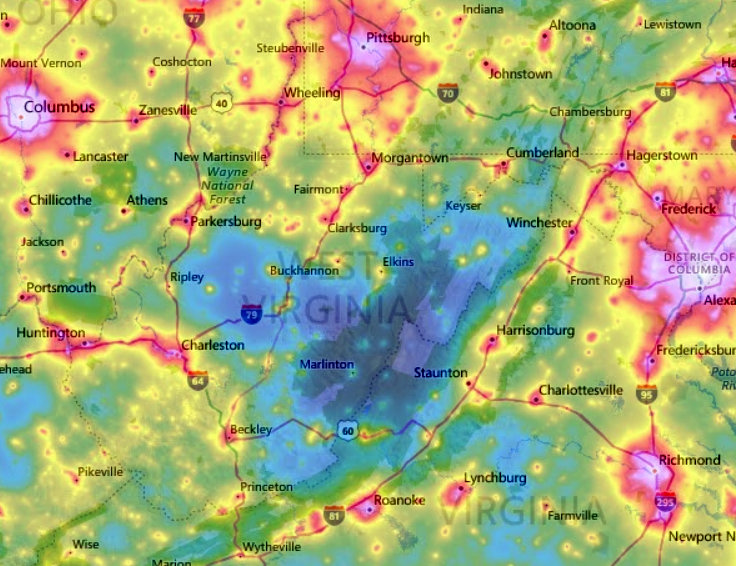
Unlike many eastern states, West Virginia has relatively little urban development spread across its mountainous interior. National forests, state parks and wildlife management areas cover millions of acres, creating broad regions where artificial light barely reaches the night sky.
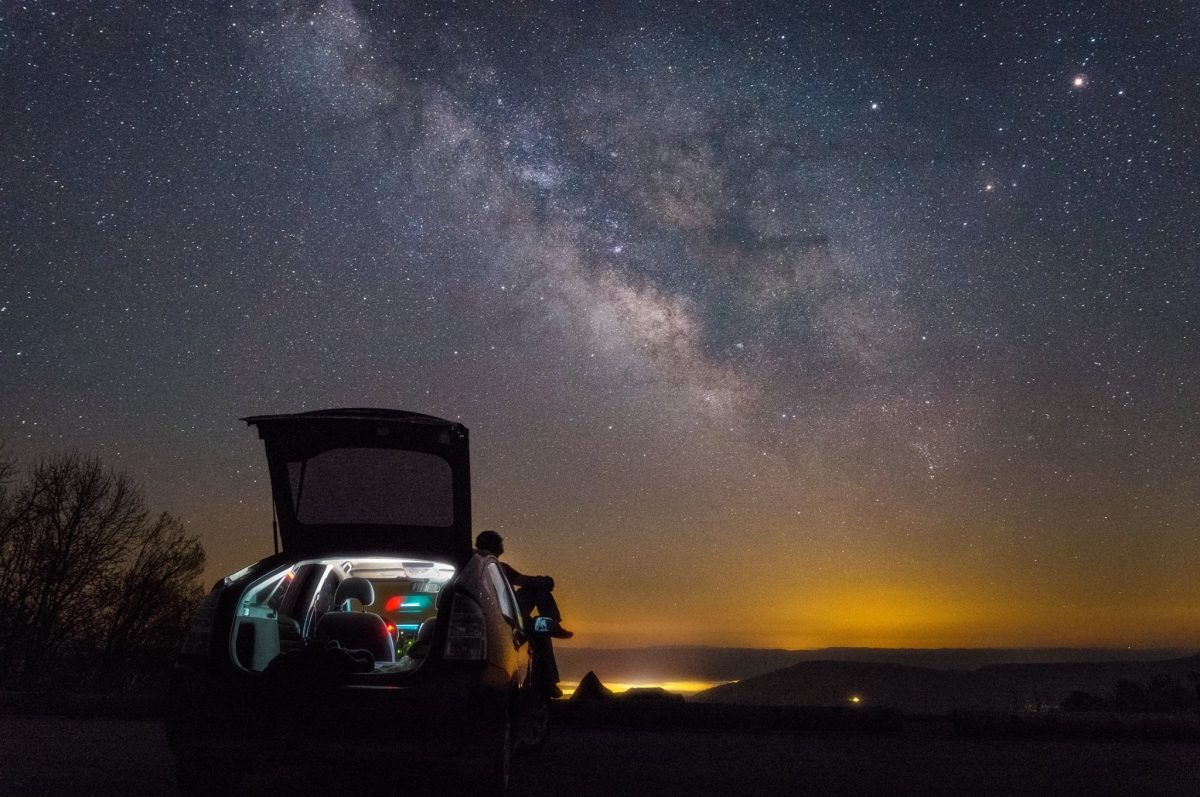
That darkness reveals far more than the Milky Way. Under ideal conditions, observers can see satellites crossing overhead, distant star clusters, planets and, during the Perseids, bright meteors that sometimes streak across half the sky before disappearing in a flash.
Several West Virginia destinations consistently rank among the state’s finest places for astronomy.

Spruce Knob
At 4,863 feet, Spruce Knob is West Virginia’s highest point and one of the premier stargazing destinations east of the Mississippi River. Located within the Monongahela National Forest, the summit’s elevation and distance from major cities provide exceptionally dark skies. Visitors often remain after sunset to watch the Milky Way emerge before settling in for meteor viewing.
Calhoun County Park
Calhoun County Park has also become a favorite destination for amateur astronomers and astrophotographers. Designated as West Virginia’s second Dark Sky Park, it offers broad, open meadows with unobstructed views to the south and east, making it an excellent place to watch meteor showers. The park regularly hosts star parties and astronomy events, and visitors can even rent facilities for overnight observing sessions.
Dolly Sods Wilderness
Known for its windswept plateaus and unusual northern ecosystems, Dolly Sods offers expansive horizons rarely found in Appalachia. The broad, open landscape allows viewers to watch meteors appear across nearly the entire sky.
New River Gorge National Park and Preserve
Although portions of the national park are near developed communities, many overlooks, campgrounds, and backcountry areas provide excellent nighttime viewing. The gorge’s deep valleys and surrounding forests also make the park a favorite destination for overnight campers hoping to combine outdoor recreation with astronomy.
Canaan Valley
Surrounded by high mountains, Canaan Valley offers numerous public viewing opportunities and relatively dark skies. Nearby Blackwater Falls State Park and the Canaan Valley National Wildlife Refuge also provide scenic settings for an evening outdoors.
Cranberry Wilderness
One of the largest federally designated wilderness areas in the East, the Cranberry Wilderness offers exceptionally remote conditions for experienced campers seeking minimal light pollution. Some of the most accessible sky-viewing areas are along the Highland Scenic Highway, which courses along the east flank of the wilderness.
How to watch the Perseids
Unlike eclipses or other celestial events, the Perseid meteor shower requires no telescope or binoculars.
Astronomers recommend arriving at a dark location well before midnight, allowing 20 to 30 minutes for eyes to adapt fully to the darkness. Looking generally northeast after evening twilight, then higher overhead as the night progresses, offers the greatest chance of spotting meteors, though they can appear anywhere in the sky.
A reclining chair or blanket often provides the most comfortable viewing. Even during the days surrounding the peak, observers may still see impressive numbers of meteors under favorable conditions.
Pair a meteor shower with an Appalachian adventure
For many visitors, the Perseids offer another reason to spend a summer weekend in West Virginia’s mountains.
Days can be filled exploring waterfalls, hiking shaded mountain trails, paddling quiet lakes or visiting small mountain towns before settling beneath some of the darkest skies in the eastern United States.
As urban light pollution continues expanding across much of the country, places where the Milky Way still dominates the night have become increasingly rare. West Virginia remains one of those places, and for a few nights each August, that darkness becomes the stage for one of nature’s most spectacular annual performances.
Some of my best pics are from WV mountain areas.
Thank you for the Perseid meteor update, unfortunately for this event I live in a much brighter area of Wva ( Brooke County in the Northern Panhandle)..We are illuminated by not only our local area but neighboring cities from Oh . Thank for keeping readers informed.