
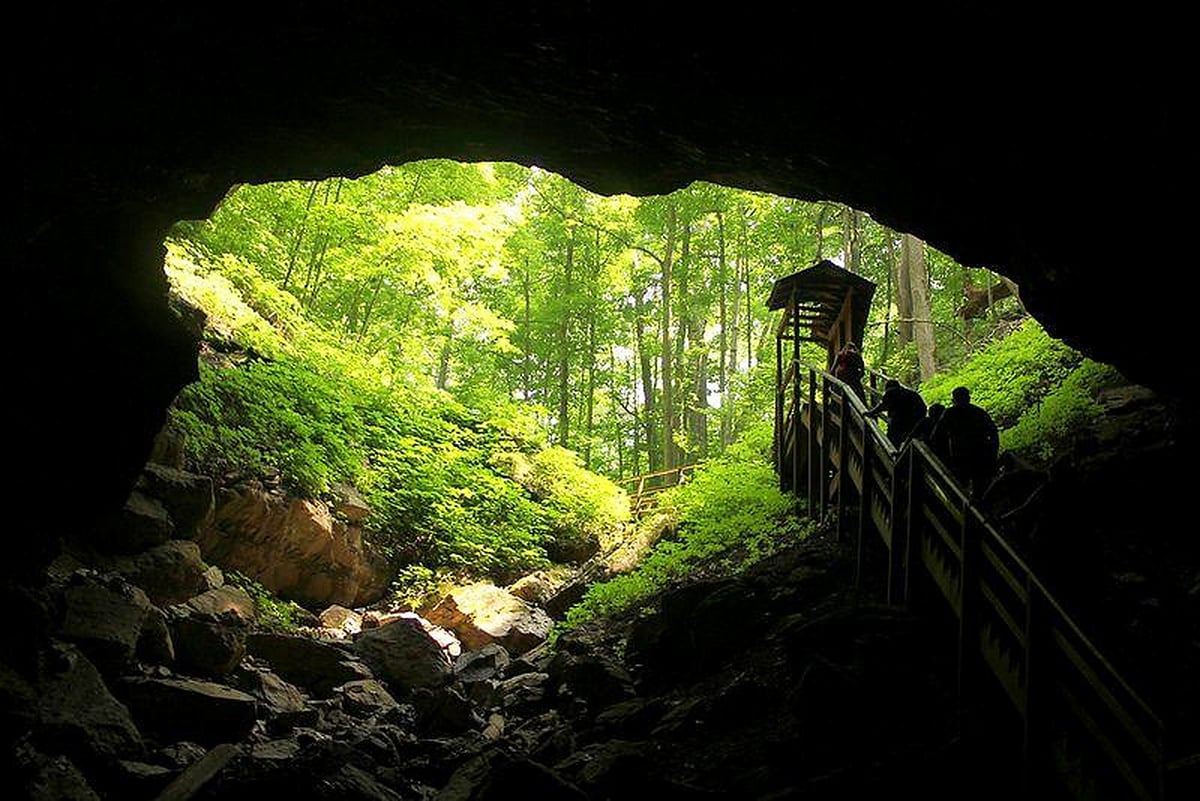
GRAFTON, W.Va. — West Virginia is riddled with caves, rock shelters, sinking streams, and dark openings in the mountains, so it is perhaps no surprise that generations of stories have accumulated around them. Some involve pioneers. Others involve Native Americans, soldiers, abolitionists, hunters, and fugitives.
There are tales of murder, gunpowder-making, and men hiding underground. One story even tells of a hunter who supposedly killed 11 bears at the mouth of a cavern in a single day.
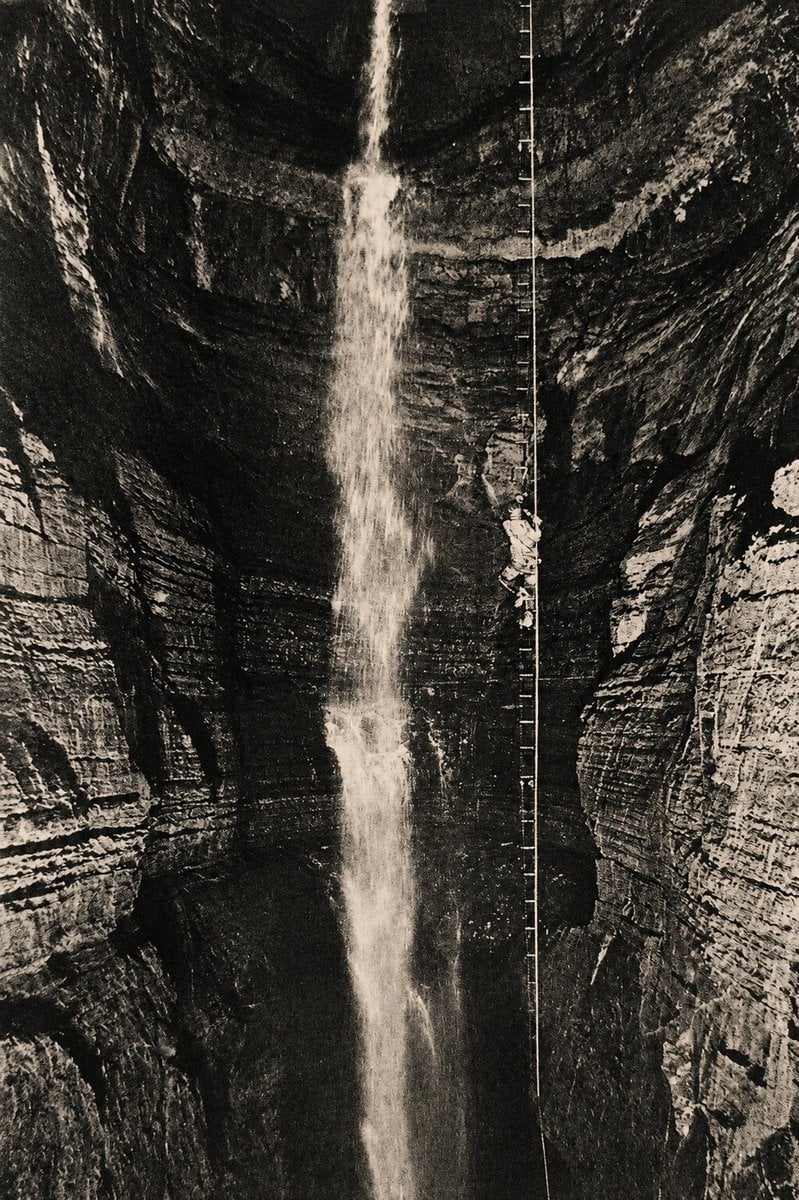
West Virginia historian Charles Carpenter (1889-1975) gathered many of these stories in an article first published in 1934, when memories of the 19th century were still fresh. “Numerous caves in West Virginia have interesting records,” Carpenter wrote. “It is only natural that this is true.”
He thought motorists were passing remarkable places without knowing what had supposedly happened there. “Oftentimes without knowing it, we pass near caverns on our highways that have interesting stories associated with them,” he wrote, singling out caves along the Old Northwestern Turnpike, the Midland Trail, and the Seneca Trail.
Carpenter wrote as much about lore as about documented history, and the distinction matters. Some of the traditions he recorded have since been questioned by historians, while others Carpenter already identified as traditions, legends, or things merely “said” to have happened. In that spirit, his account offers a remarkable tour through the stories West Virginians once told about the dark places beneath their mountains.
An evil reputation along the Midland Trail
Along the Midland Trail between Montgomery and Kanawha Falls, Carpenter pointed readers to a place called Camp Rock. It wasn’t technically a cave. Carpenter described it as a rock shelter formed by a cliff overhanging an open space. Before railroads changed travel in the region, it apparently served as a convenient place for travelers to spend the night.
It didn’t have the best reputation. “In the old days Camp Rock bore an evil reputation,” Carpenter wrote, describing it as a camping place for travelers “not fastidious enough to desire a hostelry for their nocturnal halts.” He added tantalizingly that “traditions are yet alive locally of the boisterous carrying-ons at this place.” Carpenter doesn’t tell us exactly what those carrying-ons involved, leaving nearly a century of subsequent readers to imagine them.
A lost cave filled with Civil War relics
Farther east along the Midland Trail, Carpenter told a stranger story. Near White Sulphur Springs, he said, was a cave whose location had been lost for years before it was rediscovered sometime before he wrote his account.
Explorers reportedly found something remarkable inside. More than three dozen wooden hoppers, Carpenter said, lay four hundred feet underground and had been used to make saltpeter for gunpowder during the Civil War. “The hoppers were in a fine state of preservation due to the purity of the air in the cave,” he wrote. Even more remarkably, he claimed, “Smoke was still found on the walls of the cavern which had been there since the powder-making days.”
Carpenter explained that saltpeter, or niter, could be extracted from cave earth using wooden hoppers, then boiled down in large kettles. Mixed with charcoal and sulfur, it became one of the essential ingredients of gunpowder. It wasn’t the only Greenbrier County cave Carpenter associated with wartime gunpowder.
An underground organ and Confederate gunpowder
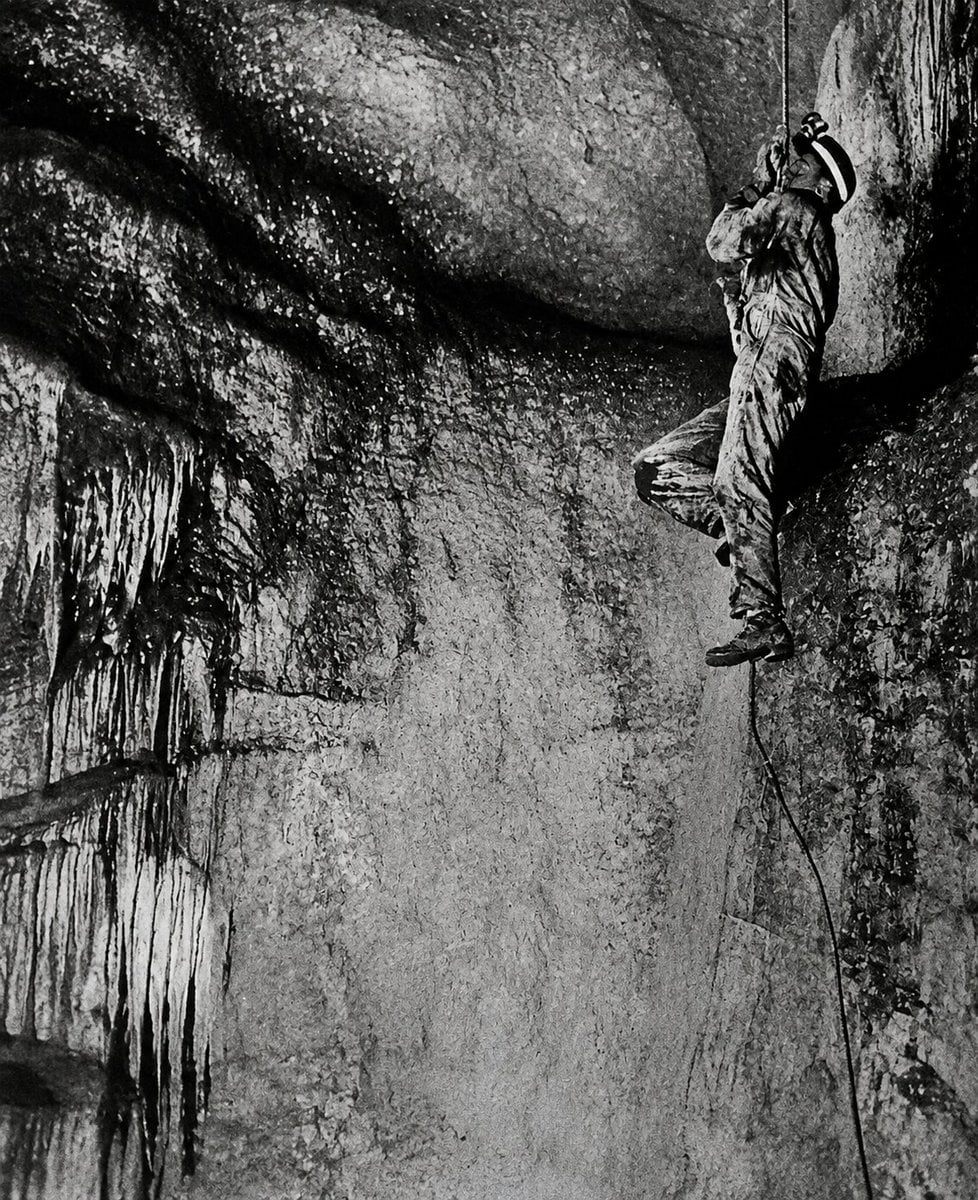
Organ Cave, near the Monroe County line, was already among West Virginia’s better-known caves when Carpenter wrote about it. He said it had been used for saltpeter production during the Civil War “by Lee’s Army” and that its old wooden hoppers could still be seen inside.
“There was a shortage of powder in the South during the early days of the war,” Carpenter explained, “and the Confederate Army made a portion of their powder as they moved about.” But Organ Cave had another kind of lore.
Carpenter said its name came from a formation of stalactites and columns resembling the pipes of a giant organ. Stranger still, the formation was “said to give off the sound of an organ if struck with some object.” Visitors could also encounter formations named the “Beehive,” “Fishpond” and “Wrecked Ship.” By 1934, Carpenter reported that the cave had been improved and electrically illuminated.
The pioneer who lived inside a mountain
One of Carpenter’s most evocative cave stories concerns Stephen Sewell, remembered alongside Jacob Marlin as among the earliest European settlers in what became the upper Greenbrier Valley. According to Carpenter’s account, Marlin and Sewell crossed the Allegheny Mountains and initially stopped near the present site of Marlinton. Marlin eventually moved west toward the Gauley River, while Sewell took up residence in a cave.
The cavern, near Mill Point in Pocahontas County, became known as Sewell’s Cave. Carpenter described it as lying in a limestone ledge roughly 300 feet from the Seneca Trail. He was careful, however, when recounting the darker ending to Sewell’s story: “There is no documentary account of the death of Stephen Sewell,” Carpenter wrote, “but tradition says he was slain by Indians at the cave.”
The cave itself sounded like something out of an adventure story. After entering beneath the ledge, Carpenter said, the opening narrowed until a person had to proceed “on hands and knees.” Some 70 or 80 feet beneath the mountain, however, the passage suddenly opened into a large chamber.
Sewell was hardly the last West Virginian said to have made a cave his home. As late as the 20th century, the state became famous for several colorful cave dwellers, including the “Wild Man of Clay County” and the “Webster County Cave Man.”
Two families make a cave their home
Another pioneer cave story survived in Spencer. Carpenter wrote that in 1812, Samuel Tanner, his wife and child, and Jonathan Wolf and his wife were traveling from Randolph County toward a settlement on the Ohio River. When they reached what became Spencer, they stopped.
The two families lived for a time in a rock shelter on what Carpenter described as the high school grounds. They ultimately remained in the area, and Tanner’s name survived in the settlement’s early name, Tanner’s Cross Roads. It later became New California and finally Spencer.
Carpenter said the shelter was still there in 1934, “almost in the center of Spencer,” only about 100 feet from the high school. He described it as roughly 70 or 80 feet long and 10 or 12 feet wide, with plenty of room to stand.
Boone and Wetzel disappear into the caves
Some of West Virginia’s most famous frontier names were also linked to caves. Carpenter wrote that a cave just above Charleston was traditionally associated with Daniel Boone, who lived for a time in the Kanawha Valley.
Near Wheeling, another cave was linked to the legendary frontiersman Lewis Wetzel. Carpenter reported that someone had recently erected a monument nearby. He offered few details about either tradition, but their inclusion shows how readily caves became woven into frontier storytelling. A dark opening in a mountainside could become a shelter, hideout, or landmark—and, eventually, part of a famous person’s legend.
A dark story from Indian Camp
Some of the lore Carpenter preserved was considerably more troubling. At Indian Camp, a cave along the Buckhannon River in Upshur County, Carpenter recounted a tradition about the killing of a group of Native Americans during the frontier settlement period.
According to the story as Carpenter presented it, the victims were friendly toward white settlers. He further wrote that the five men accused of killing Delaware Indians at Bulltown were “supposed to have had a hand” in the Indian Camp killings. “The taking of the lives of the Indians in these two cases has been pronounced a heinous crime by more than one historian,” Carpenter wrote.
Historians have questioned the traditional account of the Bulltown killings, making this an especially good example of the uncertain ground where folklore, memory and history meet. Whatever happened there, Carpenter’s account shows that the story remained associated with Indian Camp well into the 20th century.
The hunter who killed 11 bears in a day
Then there is Ash Camp. Carpenter described it as another cave in the same general region and said pioneer hunters and generations that followed had long used it. Its name supposedly came from the accumulated remains of their fires. “The cave got its name from the fact that the floor is composed of layers of ashes,” Carpenter wrote.
But the better story concerns bears. A “well-known hunter of a generation ago,” Carpenter reported, “is said to have killed eleven bears at and near the mouth of this cave in one day.” Carpenter supplied neither the hunter’s name nor an explanation of how anyone managed to encounter 11 bears at one cave in one day. Perhaps that’s just as well. Some cave stories are more enjoyable when left alone.
Mysterious drawings in a Harrison County cave
Not all of Carpenter’s stories relied entirely on oral tradition. He described a cave on Two Lick Run in Harrison County where petroglyphs had reportedly been discovered about half a century before he wrote.
“These crude picture writings were made by the Indians,” Carpenter wrote, adding that “no one knows how long ago.” According to Carpenter, historian Lucullus V. McWhorter brought the cave to the attention of the federal Bureau of Ethnology. Professor Holmes subsequently studied the site, and Carpenter said information about the cave and its drawings appeared in the bureau’s Tenth Annual Report.
The account gives this cave a different kind of mystery. Rather than asking whether something happened there, the mystery concerns who left the markings and what they meant.
Indians hiding in the darkness of Smoke Hole
Smoke Hole’s dramatic landscape in Pendleton County naturally inspired its own cave stories. At Indian House Cave, Carpenter recorded a tradition that Native Americans fired upon passing white travelers from the cavern’s mouth and, when pursued, retreated into its dark underground passages.
“A tradition is current that Indians shot at passing whites from the mouth of this cavern,” he wrote. Carpenter added that “Indian legends are connected with many of the caverns in this picturesque section.”
Nearby Seneca Caverns had accumulated traditions as well, though by Carpenter’s time it was also becoming a tourist attraction. He considered it “one of the finest so far explored in West Virginia.” Paths and steps had been constructed, portions were electrically illuminated, and visitors paid admission.
One enormous stalagmite had been named “Snow Bird” after the Seneca princess of local legend. Other formations supposedly resembled the Statue of Liberty and a battleship, while a chamber known as the “Great Ball Room” contained formations of many shapes and sizes.
A baby born in a cave
Carpenter also mentioned a cave on the upper Elk River named for him—Carpenter’s Cave. He called it a “unique history.” According to the story, it was the birthplace of “the first white child born in the central portion of West Virginia.”
Unfortunately for modern readers, Carpenter declined to tell the tale again. He had already written about the cave in the Review several years earlier and declared that “further comment on it is not necessary here.” Nearly a century later, one might wish he had reconsidered.

George Washington and a secret meeting underground
Perhaps the most intriguing bit of lore Carpenter saved for near the end concerned George Washington. Washington Cave, also known as Masonic Cave, stood along the Charles Town road in Jefferson County.
Carpenter described it as the supposed site of “the first Masonic Lodge meeting west of the Blue Ridge,” with none other than George Washington serving as master. By the 1930s, Carpenter said, the cave belonged to the Masonic Order and had been wired for electric lights.
Then the historian allowed himself a joke. “This Jefferson County cave must have been a dark place in George Washington’s time,” Carpenter wrote, “but it may be that Masons know each other in the dark as in the daylight, and would have no trouble in carrying on their work in such a place.”
A cave on the Underground Railroad
One final Carpenter story carries West Virginia’s cave lore into the era of slavery and abolition. Near West Union in Doddridge County stood Jaco’s Cave, associated with Luke Jaco, whom Carpenter said arrived in the region in 1845.
Jaco bought a farm and established a tavern and stage station, but Carpenter remembered him for something else. “Jaco was one of those who believed that men ought not to be held in bondage,” he wrote. According to Carpenter, Jaco helped people escaping slavery travel north toward the Ohio River. His property became a station on the Underground Railroad, while the cave on the hill above his tavern served as a hiding place for fugitives.
Carpenter’s story grows even more dramatic from there. He wrote that Jaco’s activities “evidently made him unpopular with some people,” and that he was eventually shot from ambush and left for dead. Jaco survived, but an arm had to be amputated. After the Civil War, Carpenter said, he sold his property and moved west. “Many stories are told in the Jaco Hill region about this old abolitionist,” Carpenter concluded.
The stories beneath our feet
Nearly a century has passed since Carpenter gathered these tales, and some have inevitably become harder to separate into history, tradition, and legend. But perhaps that is precisely what makes cave lore so compelling.
Caves are natural repositories for stories. They are hidden from ordinary view, preserve traces of those who passed through, and provide both shelter and concealment. Their passages disappear into darkness, sometimes extending far beyond what is visible from the entrance.
Other West Virginia legends have imagined entire waterways disappearing underground, including the bizarre 19th-century tale of the day residents supposedly “knocked a hole” in the Cheat River.
For generations of West Virginians, they were places where a pioneer might make his home, an abolitionist might conceal a fugitive, soldiers might manufacture gunpowder, hunters might gather around a fire, or a traveler might disappear from the road for the night. And sometimes, as Carpenter understood in 1934, the story attached to the hole in the mountain was every bit as interesting as the cave itself.
I’d be very interested to know more about “Mad” Ann Bailey of Mason County who supposedly lived in a cave in that area. It always seems added as a footnote and I’m curious where it is and if it’s been explored properly.