
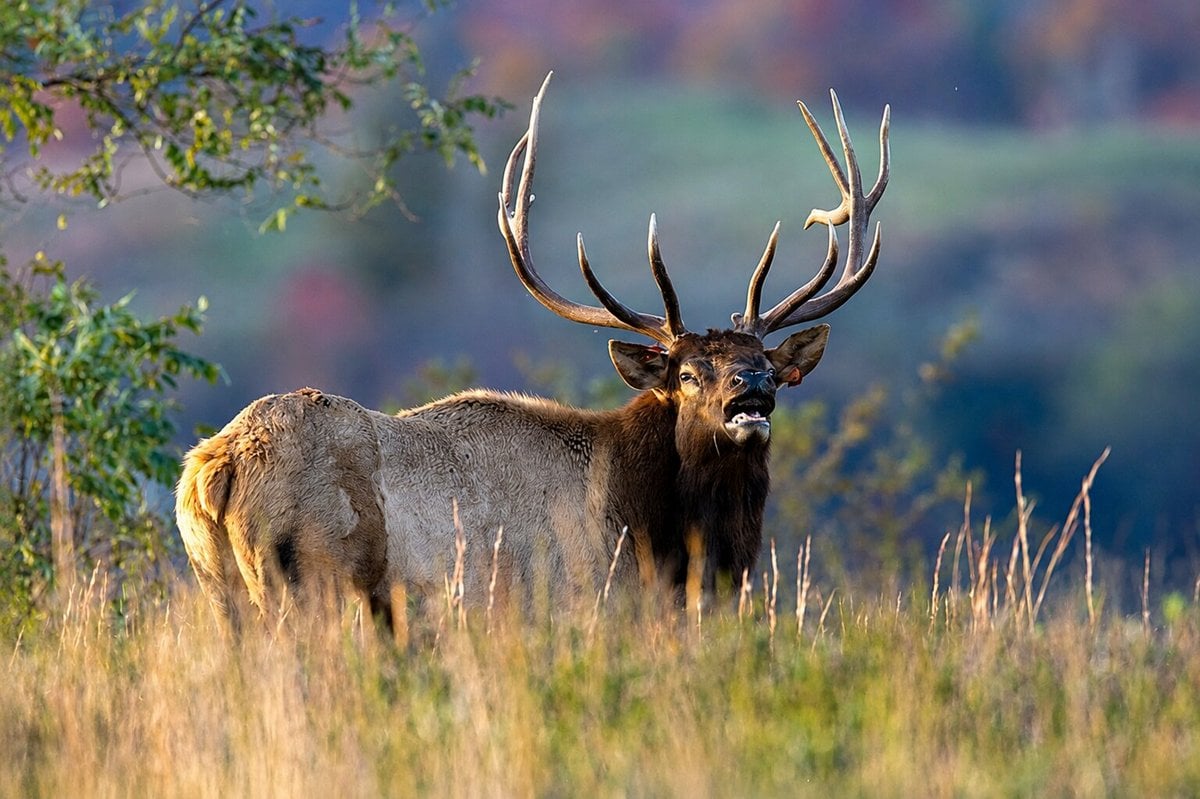
CHARLESTON, W.Va. — West Virginia’s restored elk are beginning to roam farther from the southern coalfields where they were reintroduced, even as the state prepares to welcome visitors for another season of guided elk-viewing tours.

The W.Va. Division of Natural Resources announced Sunday that tickets are available for its 2026 Elk Management Tours, which begin Sept. 13 and run on weekends through Oct. 24. The four-hour excursions take visitors into elk country in Logan County, where the animals have become an increasingly visible part of a landscape from which they disappeared more than a century ago.
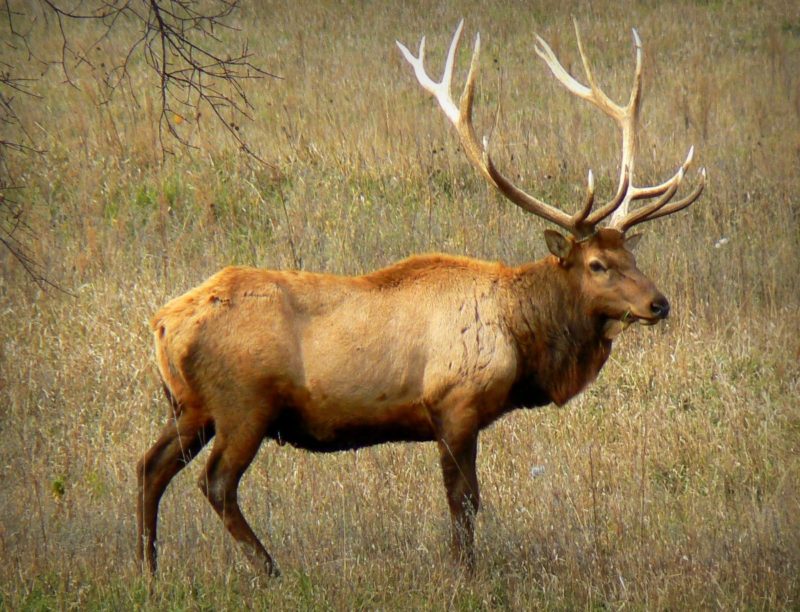
Nearly a decade after West Virginia began restoring the species, tracking shows some animals are exploring territory beyond their customary range around the Tomblin Wildlife Management Area.
Randy Kelley, the division’s elk project leader, said in July that wildlife officials are seeing more roaming as the herd grows. He described one young cow that traveled north into Lincoln County near Harts Creek, where she spent time on a ridge and in a pasture on private farmland before eventually returning to Tomblin.
“We’re starting to observe more roaming by the elk as their numbers grow,” Kelley told MetroNews.
Most of the animals still consider the Tomblin area their home range, Kelley said, and the movement does not mean established herds are spreading across southern West Virginia. But the excursions show that individual animals are beginning to explore more of the territory wildlife managers envisioned for elk when they developed the restoration program.
Elk country extends beyond Logan County
West Virginia’s designated Elk Management Area encompasses approximately 2,845 square miles of the southern coalfields. It includes all of Logan, Mingo, McDowell, and Wyoming counties and portions of Boone, Lincoln, and Wayne counties.
The state’s management plan calls for wildlife officials to monitor changes in elk use and travel near the management area’s boundaries and to consider boundary adjustments if movements eventually warrant them.

Southwestern West Virginia was not selected for elk restoration by accident. Studies the division began in 2005 identified the coalfields as particularly suitable because large-scale mining created open habitat that could support elk, while relatively little agricultural land reduced the potential for conflicts with farming.
At first, the state adopted a passive strategy of protecting elk that wandered across the border from Kentucky. Active restoration followed years later, and in December 2016 the division released 24 elk obtained from the Land Between the Lakes National Recreation Area in western Kentucky.
Since 2018, another 95 elk — 53 from Kentucky and 42 from Arizona — have been introduced at Tomblin. Biologists reported that the herd reached about 130 animals after additional releases in 2024 and said at least 60 calves have been born in West Virginia since restoration began. The agency has not announced a current 2026 population estimate.
Released elk wear GPS telemetry collars, and biologists also capture and collar previously unmarked animals. The equipment allows wildlife managers to track individual animals and study how the herd uses the landscape, including movements such as the recent excursion into Lincoln County.
West Virginia’s restoration is part of a broader return of elk to the central Appalachians, where neighboring Kentucky and Virginia also support restored populations. For West Virginia, the movement of animals beyond Tomblin carries some historical symmetry. Before the state began releasing elk of its own, wandering animals from Kentucky were already occasionally finding their way into the Mountain State.
Fall tours return to West Virginia elk country
The expanding restoration effort provides the backdrop for the state’s annual fall elk tours, which start and end at Chief Logan Lodge at Chief Logan State Park.
Morning excursions depart at 5:30 a.m., and evening tours depart at 4:30 p.m. According to division officials, participants may walk two to three miles. Park staff leads each tour, discussing elk behavior, history, and conservation. Wildlife sightings are not guaranteed.
Brett McMillion, director of the division, said when announcing the 2026 season that the elk reintroduction program has been one of the Mountain State’s most successful programs.
“Restoring elk to West Virginia has been one of our state’s greatest conservation success stories, and these guided tours offer the public a front-row seat to that achievement,” McMillion said.
Visitors can also observe wildlife from the elk-viewing platform and education center at Tomblin Wildlife Management Area, which opened in 2025. A level viewing area is available for visitors with limited mobility.
Chief Logan Lodge offers overnight accommodations. Guests who purchase an elk-tour ticket can receive a special rate on selected rooms using the promotional code ELK26. For tour availability, booking details, and more information, visit WVDNR.gov/elk.
I love nature and wildlife. Elk are a magnificent animal. I don’t think reintroduction of elk in West Virginia is a great idea. Yes, they were originally here, so were the bison and wolf. Elk move in large herds. I have enough trouble with deer destroying my property. I have hit deer with my truck and have deer hit my truck while sitting still in traffic. You see what problems deer can cause. What positive can elk do for West Virginia. I can imagine a herd of elk in my garden at night. I can forget canning this year. People will also get seriously injured and killed by elk. Elk will cause more harm and no benefit to West Virginia.
I find it sad anyone would be against an elk herd in West Virginia. These are magnificent animals that one day may be hunted by future generation. Remembering when a deer sighting was rare in southern West Virginia, now we complain when there are nice herds.
Another illiterate who knows nothing about bringing the land back the way it was and always has something to say when something good is happening move to Florida with the rest of the maga crowd
You would be much better off if it was a wolf or bison ,then in between or around a mother and her calf no joke 1500 lbs wanting to stomp.you to death…
The military should have never been allowed to kill off the bison to damn near Extinction, along with hunting elk, wolf, and the eastern cougar into extinction in West Virginia. This was there home before it was ours and if your not smart enough to come up with some preventive measures to protect your garden and land maybe you should sell it to someone who can. The benefit of having deer, elk, and bison are they are better sources of healthy protein than farm raised beef.
We look forward to taking one of the tours this year.
This is great I remember when I was a kid if a squirrel showed its self 20 people were shooting at it conservation is great just look at all the deer and turkeys keep up the good work for the next generation