
GLEN JEAN, W.Va. — Scientists are attaching tiny cellular transmitters to endangered bats in the New River Gorge National Park and Preserve, hoping to answer a difficult question: Where do the animals go after they disappear into the night?

Graduate students from Virginia Tech and biologists with the W.Va. Division of Natural Resources are working with the National Park Service to capture, tag, and release bats in the rugged national park in southern West Virginia.
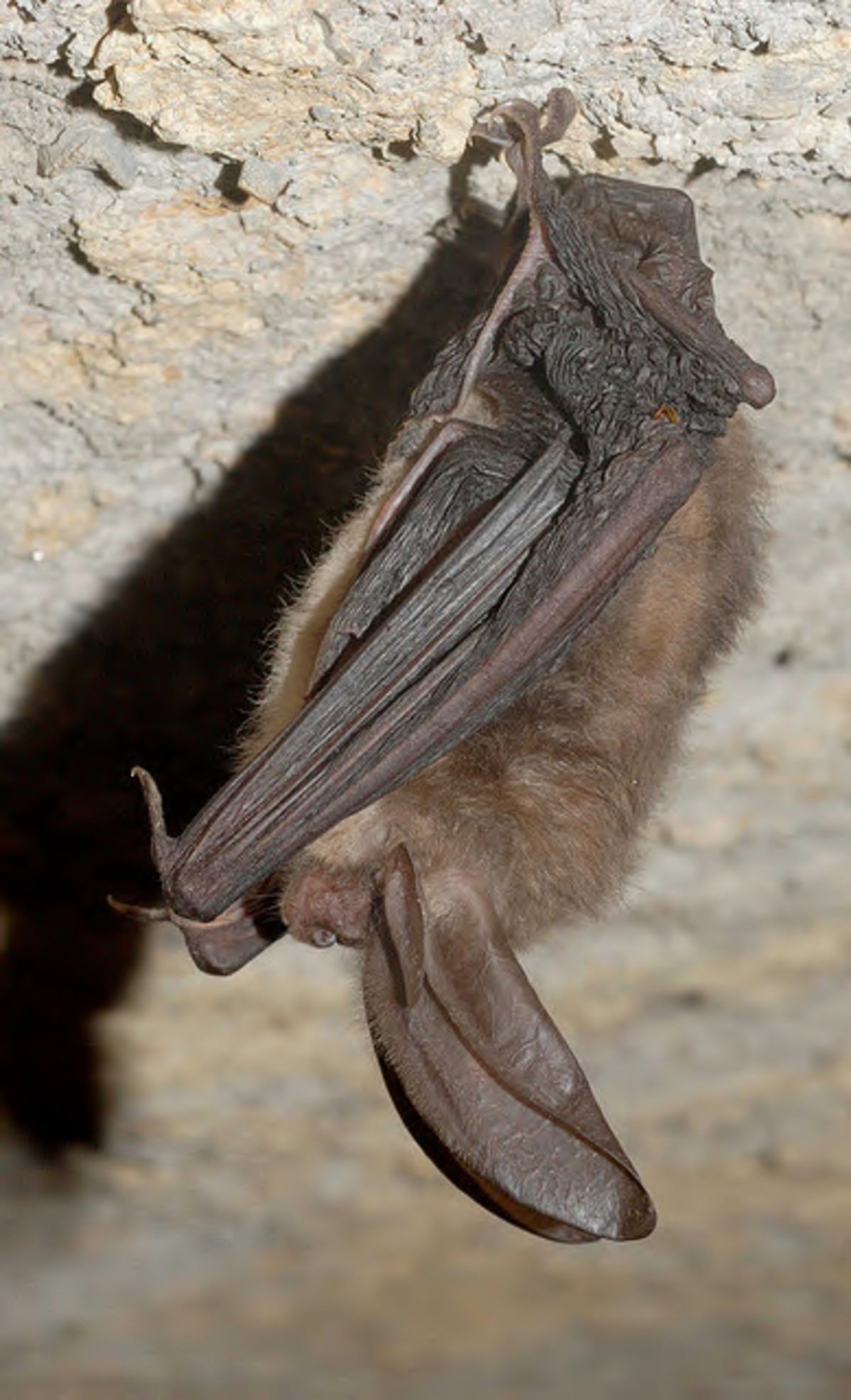
Their particular interest is in Indiana bats, Virginia big-eared bats, and other threatened and endangered species, some of which use abandoned coal mines left from the New River Gorge’s industrial past.
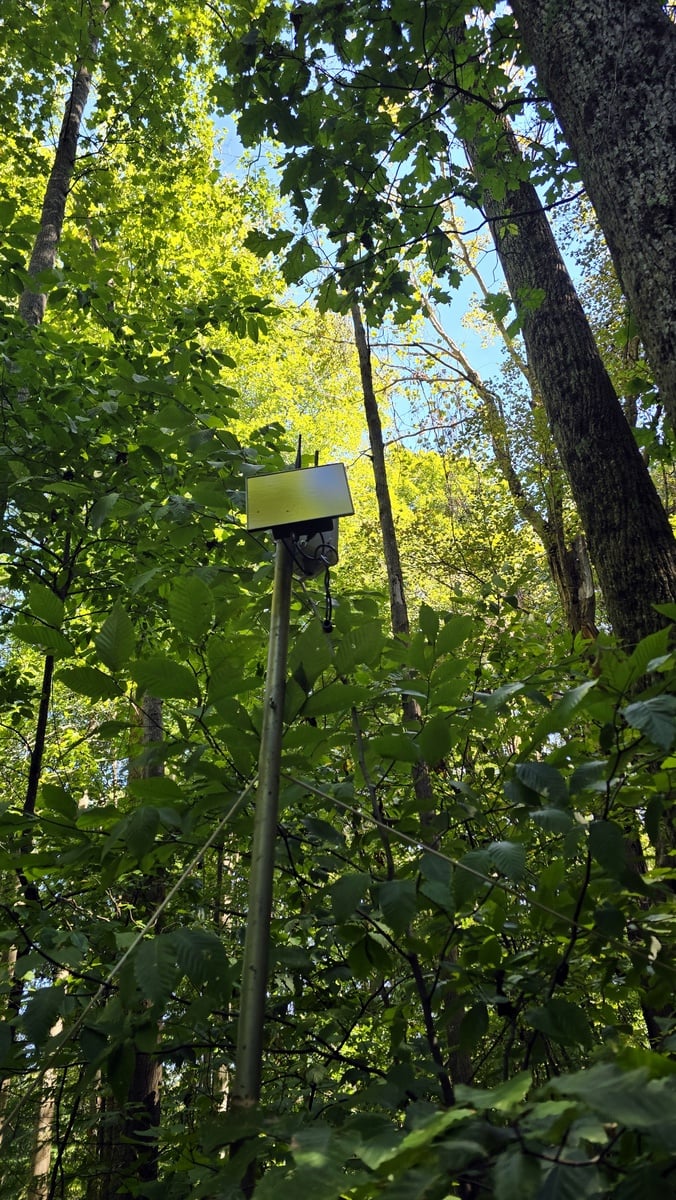
The new tracking technology could allow researchers to follow movements that have historically been extremely difficult to observe. A bat can leave a mine portal after dark and quickly disappear across a landscape of deep forest, cliffs, river gorges and abandoned mine workings.
The cellular tags being used in the project measure about 3.75 centimeters long and weigh just 0.21 grams, according to park spokesman Dave Bieri.
Temporarily glued to a bat’s back, the devices fall off naturally within about one to two weeks. During that time, they can provide researchers with near-real-time information about how the animals move across the landscape.
The work is part of a larger effort to determine which areas of New River Gorge remain especially important to bats after white-nose syndrome caused severe population losses across the eastern United States.
Abandoned coal mines have become bat habitat
The research is also revealing an unusual relationship between the human and natural histories of the gorge.

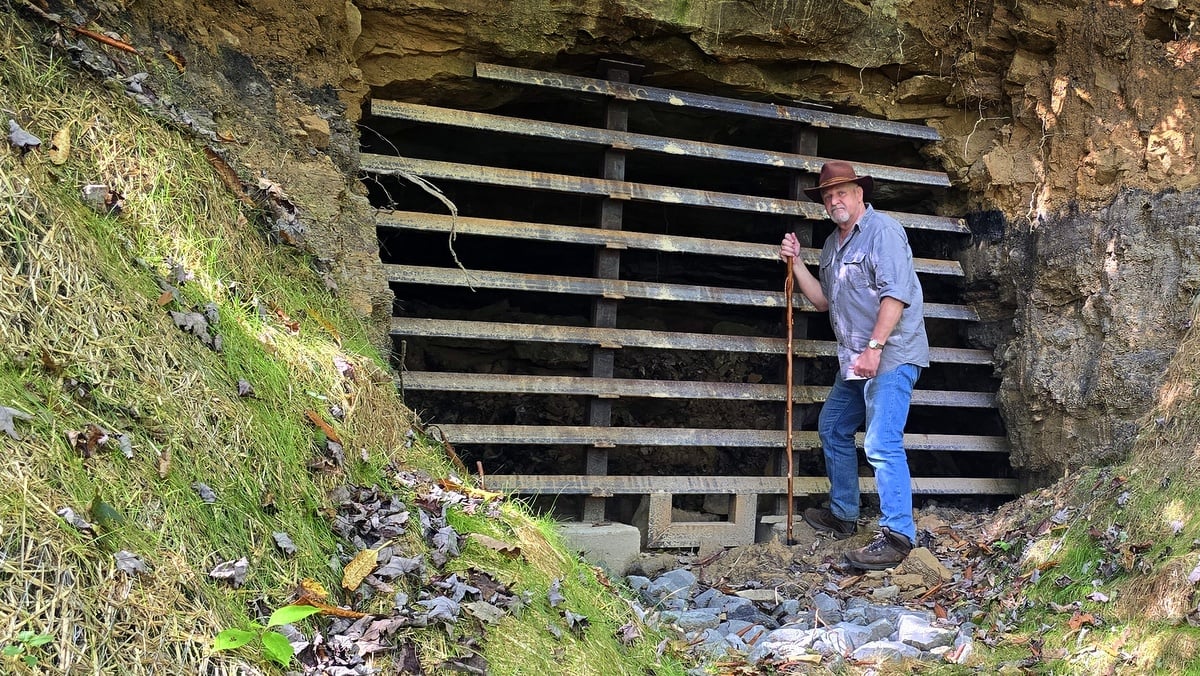
Coal companies once tunneled into the mountains along the New River, helping transform the gorge into one of the nation’s important industrial landscapes. Long after many of those operations disappeared, their underground workings remain.
The national park has roughly 155 known mine portals, Bieri says, and more than 50 have bat-friendly gates designed to let bats pass while keeping people away from hazardous underground workings.
The park service reports these abandoned mines now provide roosting and hibernating habitat for several rare bat species. The gates protect people from dangerous mine conditions and allow bats to continue entering and leaving.
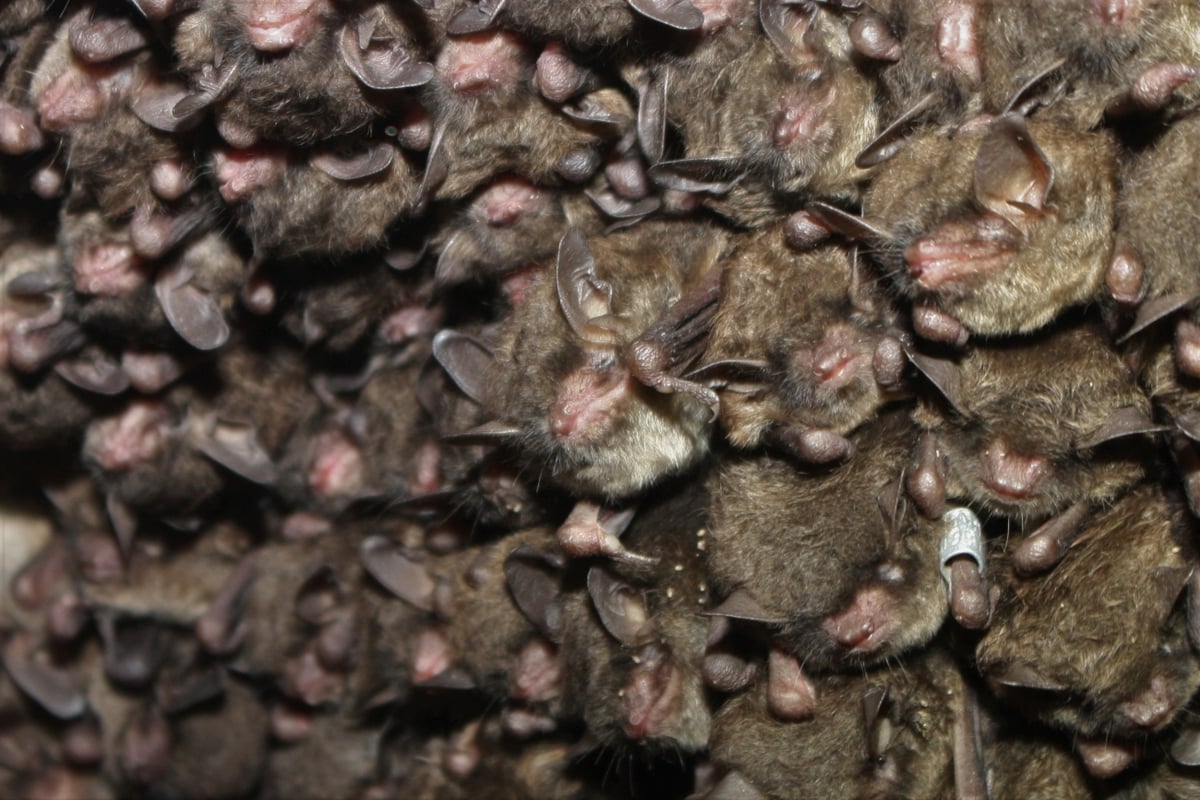
The portals are especially active in fall, when bats gather around underground openings in a behavior known as swarming. During this period, bats find mates and investigate possible winter hibernation sites. Young bats can also discover places suitable for spending the winter.
Many later retreat underground to hibernate. In spring, the portals again become important as bats emerge, begin feeding, and move toward their summer habitats.
Researchers take advantage of the fall activity by setting mist nets and harp traps near mine openings. Researchers can identify, measure, and release captured bats. In spring, when bats are recovering from hibernation, park researchers can use less invasive techniques including wildlife cameras, visual surveys, and acoustic detectors.
One mine portal produced a surprise
Scientists have monitored bats at 41 portals across the park since 2002, although monitoring has not occurred consistently at every location every year, according to information provided by Bieri.
One site has produced a striking change. Researchers recorded only three Indiana bats at the portal in 2014. In 2023, they counted 125.
That does not mean Indiana bats are recovering throughout New River Gorge. Scientists still do not know whether declines and increases are occurring across the park or are concentrated at particular sites, which is one reason the new research matters.
The U.S. Fish and Wildlife Service says Indiana bats have experienced substantial changes in their distribution and abundance at winter hibernation sites as populations have declined from white-nose syndrome.
Determining why bats favor particular places could help scientists identify the mine portals, forests, and other habitats most important to their survival.
Disease changed the bats of New River Gorge
Scientists confirmed white-nose syndrome in the New River Gorge in 2011. The fungal disease affects hibernating bats and has caused severe losses among susceptible species.
Some bat species in the park have declined dramatically since the disease arrived. The fungus is particularly dangerous during hibernation because infected bats burn through the fat reserves they need to survive the winter.
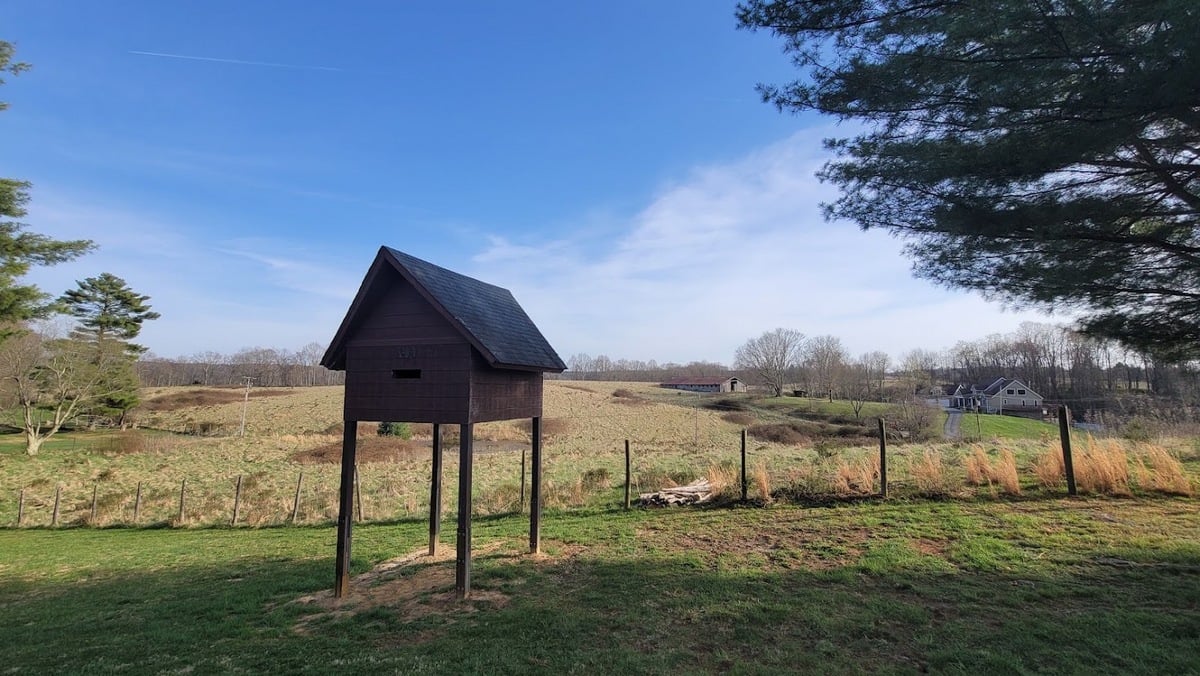
Park visitors can see the difference, too. At Grandview, the park service maintains a large artificial bat roost that can shelter thousands of bats. Before white-nose syndrome appeared, visitors could see more than 1,000 bats emerging on some evenings. The park says that in recent years the number has typically been fewer than 50.
Against that background, knowing that bats still occupy a mine portal isn’t enough. Scientists want to understand how surviving animals are using the much larger landscape around it. That’s where the tiny cellular transmitters come in.
Scientists work through the night
The tracking is being conducted alongside the park’s annual “Bat Blitz,” held during the fall swarming season.
During the 2025 Bat Blitz, researchers captured, examined, and released nearly 300 bats, Bieri said.
The work isn’t easy. Experienced bat biologists, who must have appropriate permits and be vaccinated against rabies, can hike two to four miles across variable terrain at night to reach survey locations. Teams set traps, capture bats, take measurements, and release them.
The park service does not publicly identify the specific portals where threatened and endangered bats are found, helping protect sensitive populations and keeping visitors away from hazardous mines.
The cellular tracking project adds another dimension to that work. Instead of documenting a bat only when it appears at a mine entrance or monitoring its calls with an acoustic detector, researchers can gather information about its movement after release.
That could reveal whether bats favor particular forests, cliffs, waterways, or other parts of the park, and how those places connect with the mines where they swarm or hibernate.

Why the movements matter
The national park protects more than 70,000 acres along 53 miles of the New River in southern West Virginia, where an exceptionally diverse Appalachian forest surrounds a deep river canyon. The park provides habitat for endangered mammals as well as rare birds, amphibians, and other wildlife.
Bats are an important part of that ecosystem. The species found in the park eat insects, making them nocturnal predators of moths, beetles, and other invertebrates. The park service has documented 10 bat species at New River Gorge, including the federally endangered Indiana bat and Virginia big-eared bat.
But the cellular-tracking project is ultimately trying to answer something much more specific. For more than a century, abandoned mine openings have remained scattered through the forests of the New River Gorge. Humans left many behind as the coal industry retreated and bats moved in.
Now scientists can watch a bat emerge from one of those mines, release it into the darkness, and, with a transmitter weighing barely two-tenths of a gram, begin to learn where it goes next.