
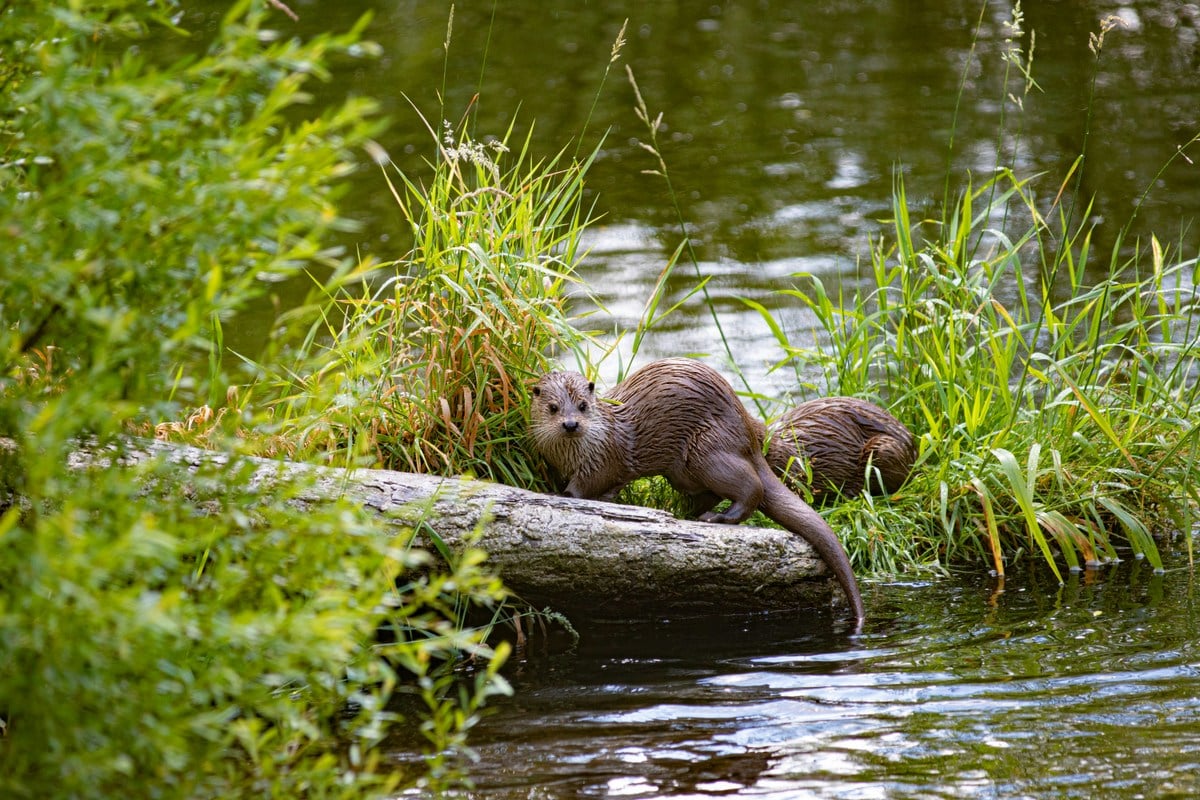
NEWBERRY, W.Va. — A collaborative study led by state wildlife officials, federal scientists, and West Virginia University researchers in Morgantown is shedding light on the secret lives of West Virginia’s river otters and directly shaping state management policy for years to come.
The research, conducted in partnership with the U.S. Geological Survey and W.Va. Division of Natural Resources, evaluated otter population dynamics, survival rates, and fine-scale movement across state waterways.
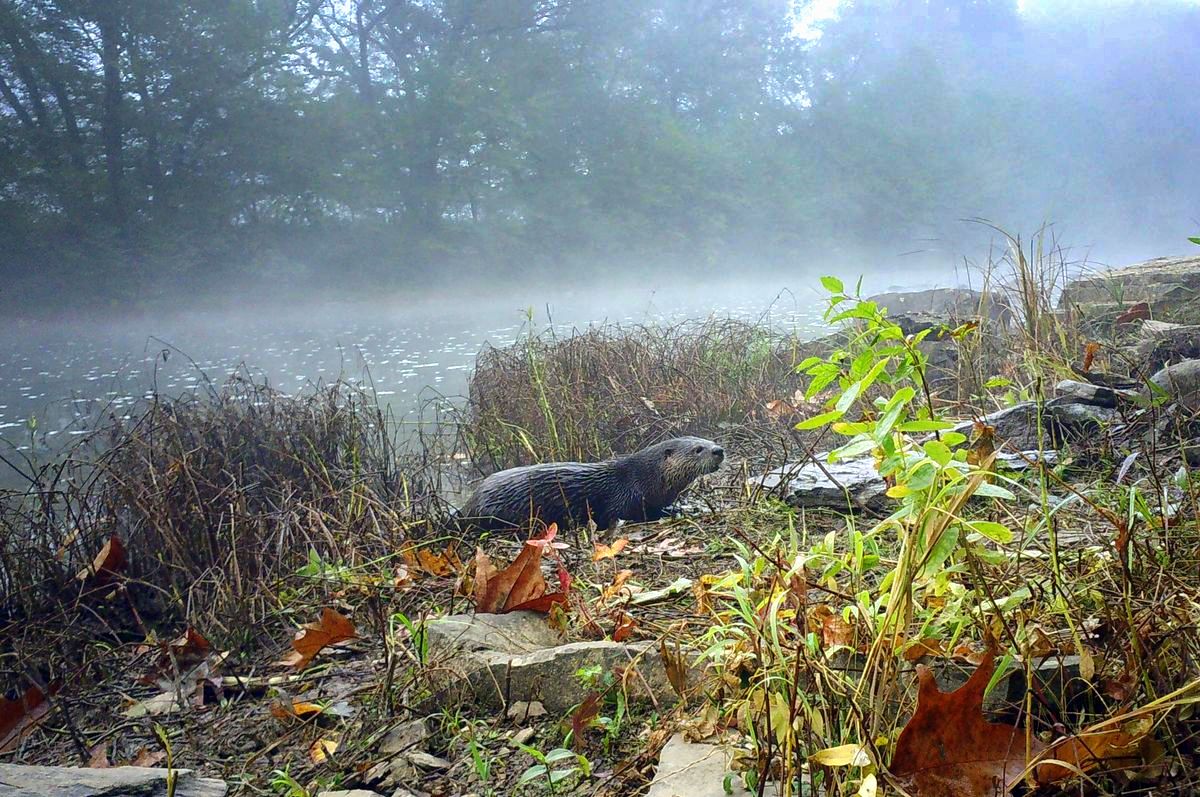
The findings led the state to increase its annual river otter trapping limit from one otter to two, beginning with the 2027–28 season. The update brings West Virginia’s regulations closer to those of neighboring states, including Maryland and Virginia.
High-tech backpacks track 30-mile treks
Central to the project’s success was deploying innovative technology never before used this way on river otters, according to lead researcher Laura Gigliotti. Lightweight GPS “backpack” transmitters were fitted between the animals’ shoulder blades to track their movements.
While traditional monitoring relied on internal implant transmitters that required manual tracking—a labor-intensive method that yielded limited location points- the new GPS units collected position data every 30 minutes.
“It was almost mind-blowing how much they moved around,” said Gigliotti, an adjunct assistant professor in the WVU Davis College of Agriculture and Natural Resources.
“My graduate student would show me the data and say, ‘Can you believe this otter went 30 miles in one night?’ It was really cool to see.”
A remarkable comeback story
The study’s findings highlight a milestone in one of the region’s greatest wildlife restoration successes. River otters (Lontra canadensis) were nearly eliminated from West Virginia by water pollution, timber runoff, and unregulated trapping.

Reintroduction efforts launched in the late 20th century successfully brought the semi-aquatic mammals back to the state’s watersheds. Today, otters thrive along Mountain State rivers, creeks, and mountain streams.
A member of the Mustelidae family (which includes weasels, minks, and fishers), otters are built for life in the water. Key characteristics include:
Underwater Vision: Transparent inner eyelids (nictitating membranes) act like natural goggles underwater.
Extreme Insulation: Extremely dense fur—up to 850,000 hairs per square inch—traps air to keep them warm in freezing mountain streams.
High-Speed Swimmers: They can swim up to 7 mph and hold their breath for up to 8 minutes, closing their nostrils to dive up to 60 feet deep.
High Metabolism: Their playful nature—sliding down muddy banks and snowbanks—is driven by a high-octane metabolism requiring constant meals of fish, crayfish, and amphibians.
Bridging Science and Wildlife Policy
In addition to mapping movements, researchers modeled how population levels would respond under potential regulatory adjustments. By analyzing baseline survival rates and primary causes of mortality, the team provided the empirical foundation wildlife managers need to evaluate sustainable harvest limits safely.

The revised regulation will take effect for trappers across West Virginia in late autumn 2027.
Where to spot otters in West Virginia
Because river otters are largely crepuscular (most active at dawn and dusk), spotting them in the wild requires patience, quiet observation, and a good pair of binoculars. Look for muddy “slides” along riverbanks, webbed tracks in shoreline mud, or ripple trails on calm pools.
The New River Gorge National Park & Preserve offers expansive, clean river habitats where river otters thrive alongside mink, beaver, and waterbirds. Quiet stretches of the river around Sandstone Falls, Glade Creek, and Brooks Island are excellent spots for early-morning observations.
- Key Spotting Area: Sandstone Falls and Glade Creek trailheads.
- Best Time: Dawn or dusk near calm eddy currents.
The Bluestone National Scenic River protects a pristine, 10.5-mile section of the Bluestone River. Because human access is primarily limited to hiking trails or paddling, otters experience minimal disturbance along this corridor.
- Key Spotting Area: Along the Bluestone River Trail from Lily to Bluestone State Park.
- Tips: Look for otters playing around boulder outcrops and deep river pools.
The Greenbrier River Trail stretches 78 miles along one of the state’s most scenic, free-flowing rivers. Cyclists and hikers frequently report seeing otters along quiet northern sections of the trail between Marlinton and Cass.
- Key Spotting Area: Watoga State Park border section and northern trailheads near Cass.
- Tips: Scan riverbanks from elevated trail bridges early in the morning.
The West Virginia State Wildlife Center in French Creek is the ideal destination for guaranteed, up-close views of native river otters. The facility features spacious, naturalistic enclosures along a wooded trail, allowing visitors to watch otters swim and dive year-round.
- Location: French Creek, W.Va.
- Best For: Families, photographers, and visitors wanting a guaranteed look at active otters.
Pro tips for capturing river otters on camera
Photographers facing West Virginia’s dark river gorges and fast-moving wildlife need a solid field strategy. Here is how to capture sharp, expressive images of otters in their natural habitat:
- Freeze the Splash (Fast Shutter Speeds): Otters move quickly and unpredictably when swimming, diving, or shaking water off their fur. Keep your shutter speed at 1/1000s or faster (go to 1/2000s for leaping or water-shaking shots).
- Gear & Optics: A telephoto lens in the 300mm to 600mm range is crucial for maintaining a respectful, safe distance so you don’t spook the animal or alter its natural behavior.
- Shoot Low for Drama: Position yourself as close to the water level as safety allows. Eye-level angles create an intimate perspective, making the viewer feel embedded in the otter’s watery world rather than looking down from above.
- Predict Movement at River Bends: Otters routinely revisit preferred haul-outs, logs, and muddy bank slides. Rather than tracking an otter while it swims, focus on a log or rock ahead of its path and let the animal move into your frame.
- Master Low-Light Camera Settings: Otters are most active in early morning and late-evening twilight. Use a wide aperture (f/2.8 to f/4), and don’t be afraid to push your ISO to 3200+ to maintain a fast enough shutter speed.