
CHARLESTON, W.Va. — Before Wikipedia, WVExplorer.com helped people navigate the Mountain State. More than 25 years later, it reaches more than 100,000 monthly readers looking for places to visit, things to do, and communities to explore.

“We bring businesses an audience that’s already interested in West Virginia,” said Lori Noble, the publication’s new advertising director. “Everybody has social media, but they don’t have the West Virginia Explorer targeted reach in which a few smaller publishing companies are pioneering.”
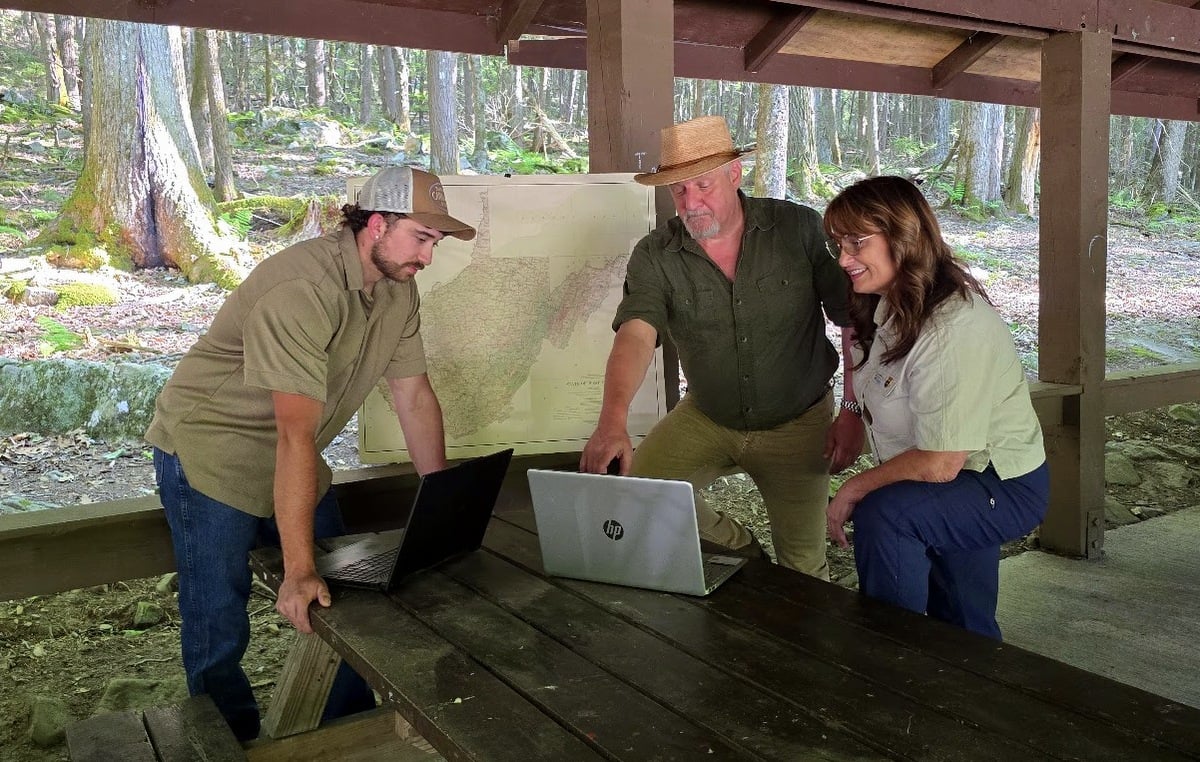
Beth Gill, marketing director for one of West Virginia’s chief tourism organizations, Experience Greenbrier Valley, says that difference shows up in its advertising results.
“Our job gets easier when travelers already have our state on their radar,” Gill said. “That’ s why WVExplorer. com works for us.
“Click- through runs well above benchmark, and the engagement rate far surpasses nearly every other paid channel we run.”

Gill’s experience with West Virginia Explorer dates back more than a decade. While working in tourism marketing at ACE Adventure Resort in 2014, she described WVExplorer as one of the resort’s top West Virginia websites for attracting rafting customers. The audience Gill describes has been developing since the Web’s earliest years.
Publisher David Sibray conceived West Virginia Explorer in the late 1990s to organize state information online.
“I realized that this new technology, the Net, would allow us to publish information with minimal expense to a much broader audience,” Sibray said in a 2022 podcast interview. “I had already been a print magazine publisher, so I knew it was a matter of adaptation to a new technology. People would learn.”
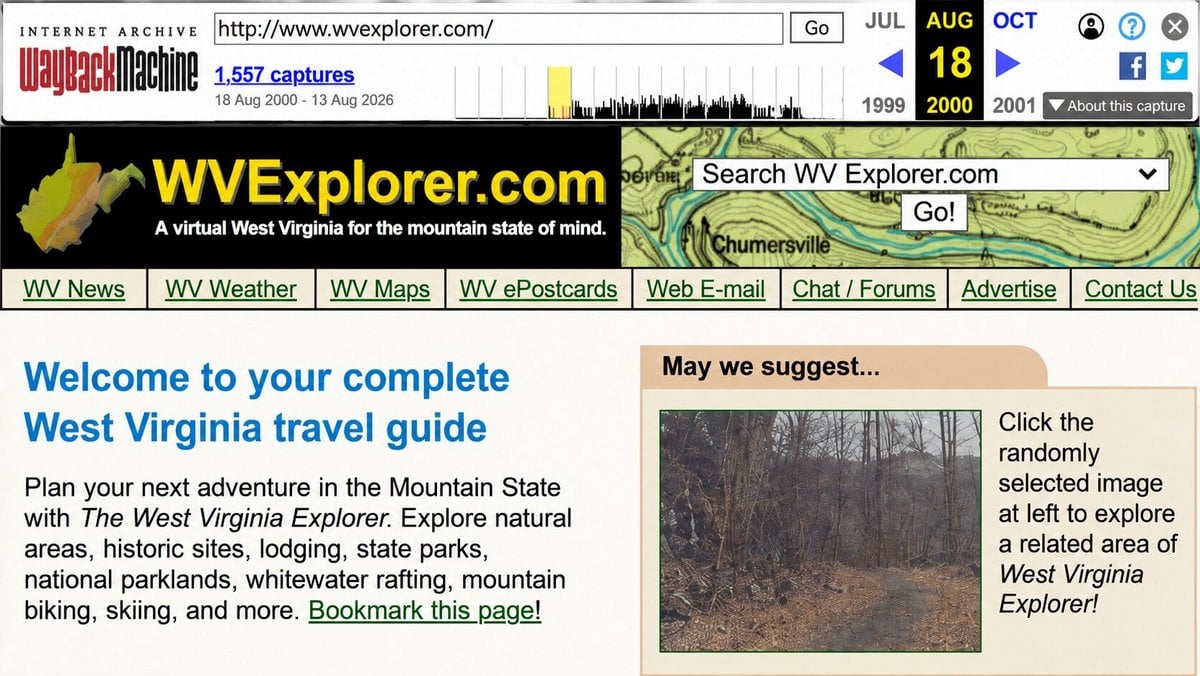
A surviving copy of WVExplorer. com from Aug. 18, 2000, shows readers could already search for information and explore West Virginia by region, history, and recreation, including hiking, fishing, skiing, rock climbing, and whitewater rafting. Wikipedia would not launch until January 2001.
Noble was there when Sibray came up with the idea nearly 30 years ago. The two were principals in West Virginia Group, a marketing and advertising organization, but Noble later left marketing and became a real estate appraiser. However, she soon discovered that the website she had watched being created had become one of the resources she relied on for her own work.
“I’ve been using it since the early 2000s,” Noble said. “I could go and find out about any town, any event, any county—anything that I ever searched.”
West Virginia Explorer pages routinely appeared prominently when she searched for information about West Virginia.
“West Virginia Explorer had become number one, and I witnessed it,” Noble said. “I know what Sibray built. I watched it. I used it. It has since been extremely meaningful to people like me who need resources for information.”
That experience is why Noble now calls the Explorer the “Wiki of West Virginia.”
Why advertisers care who is reading
The comparison is not meant to suggest that West Virginia Explorer operates like Wikipedia, a collaborative encyclopedia. Noble uses it to describe the breadth of a publication that has spent more than 25 years building interconnected information about West Virginia.
For advertisers, however, the more important consideration is why readers are there, she says.
Someone reading about Berkeley Springs may be considering a weekend there. Someone researching the New River Gorge may also need a place to stay, somewhere to eat, or an outfitter. Someone looking at a state park may be planning a family trip, while someone researching a historic community may be considering property there.
Those interests give businesses an opportunity to reach consumers in the context of something they are already considering, she says.
“West Virginia Explorer is the conduit for advertisers to reach the masses who want to explore but don’t know where to begin,” Noble said.
The publication’s approximately 100,000 monthly readers include substantial audiences both inside West Virginia and in surrounding travel markets, including Pittsburgh, Washington, Baltimore, and Columbus.
Noble says that combination is important because West Virginia tourism isn’t solely about attracting people from far away. West Virginians travel within their own state, while millions of potential visitors live within a few hours’ drive of its destinations.
The business idea was there in 2000
Advertising was part of Sibray’s concept from the start. The surviving WVExplorer.com homepage from August 2000 included “Advertise” in its main navigation.
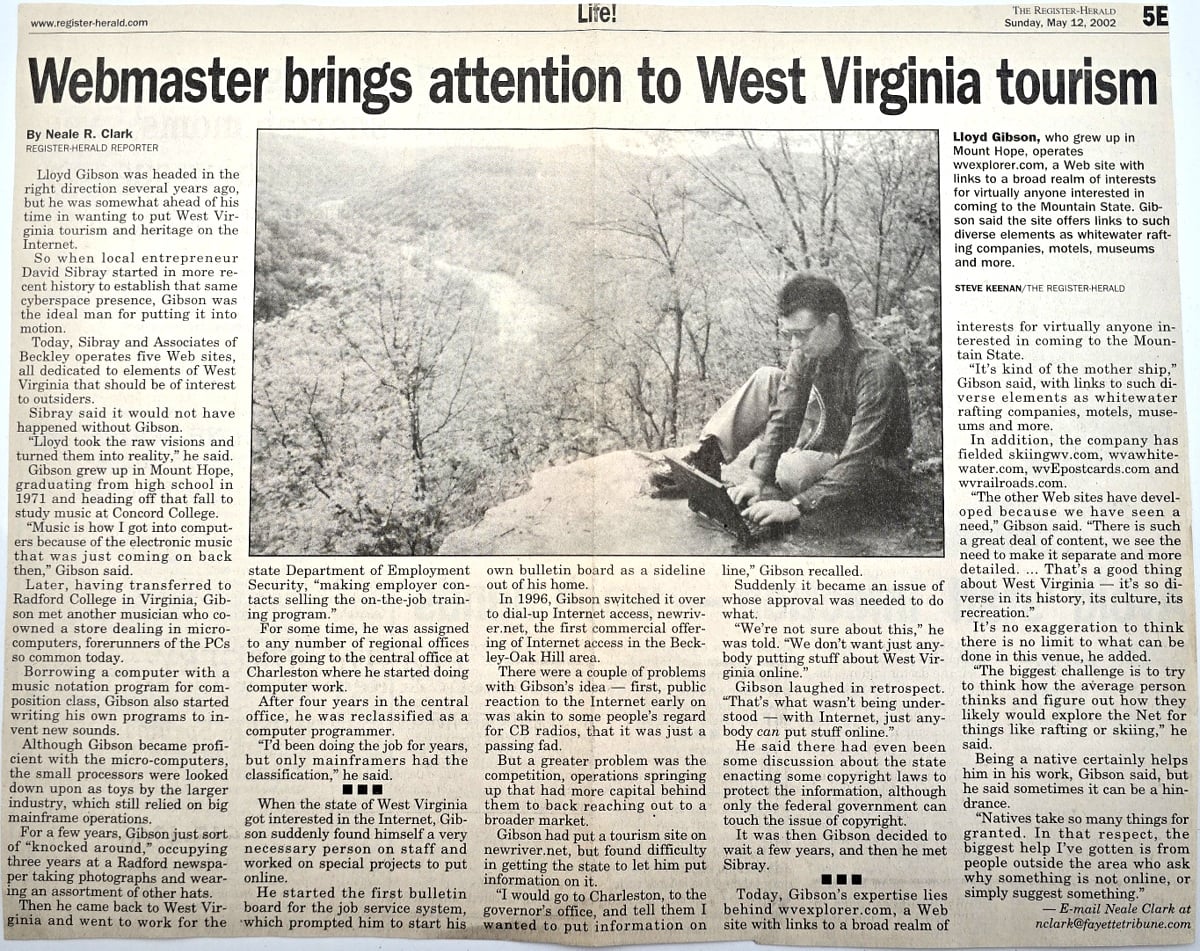
Contemporary newspaper articles show how that business model was taking shape. In 2002, reporter Neale R. Clark wrote about C. Lloyd Gibson, an early webmaster who worked with Sibray for more than a decade on a growing collection of West Virginia travel and recreation websites.
The sites were intended to help Internet users find West Virginia information while driving traffic for businesses advertising alongside it. West Virginia Explorer, at the helm, grew into a broader resource that connected subjects and destinations.
The terminology has changed considerably since then. Digital publishers now talk about search visibility, audience targeting, engagement, and user intent, but the underlying business proposition would have been recognizable to those building WVExplorer in 2000.
“Publish information people want,” Sibray said in a 2002 interview with Clarke. “Make the information easy to find, and give relevant businesses an opportunity to reach those readers.”
Gill says the audience is particularly useful to a destination marketing organization because the initial hurdle—getting someone interested in West Virginia—has often already been cleared.
“That’s why WVExplorer.com works for us,” she said.
More trips, more opportunities
Noble says the way people vacation has also changed since the Explorer was founded. Travelers increasingly supplement traditional weeklong vacations with shorter trips and long weekends throughout the year.

“It’s more often the shorter vacations, so long weekends that you do three or four times a year versus one long one,” she said.
That pattern creates opportunities for hotels, vacation rentals, restaurants, attractions, outfitters, retailers, and communities, particularly in a state surrounded by large metropolitan areas within easy driving distance.
It also gives advertisers reasons to be specific about the customers they want to attract. “Carve out the niche. Carve out that authenticity,” Noble said.
A mountain biking business doesn’t need to reach everyone who uses the Internet. A historic inn doesn’t need everyone on Facebook. A community trying to develop its tourism economy doesn’t necessarily need a national audience with no demonstrated interest in West Virginia.
Each needs to reach people whose interests align with what it offers.
Updating a resource built over 25 years
West Virginia Explorer is now rebuilding and updating thousands of pages covering communities, counties, parks, historic sites, mountains, rivers, waterfalls, recreation, folklore, lodging, and attractions.

For Noble, who watched the Explorer begin and later used it professionally, the accumulated resource is something West Virginia businesses can use rather than try to reproduce themselves.
She says she believes that resource can also contribute to an economy in which tourism, outdoor recreation, heritage destinations, and locally owned businesses are becoming increasingly important.
“We recreate, we reimagine, we reinvigorate. We keep going,” she said. “And that’s what West Virginia Explorer is here to do in this next era of the economy. So not only are we serving quality of life, we’re serving economic enterprise.”
The technology behind WVExplorer bears little resemblance to the website Sibray launched online in 2000, but its basic purpose remains the same: help people find West Virginia and help West Virginia businesses reach them.
The potential market is substantial. Visitors made 77.2 million trips to West Virginia in 2024 and spent a record $6.6 billion, according to the West Virginia Department of Tourism. That amounts to about $18 million in visitor spending each day, supporting nearly 61,000 jobs statewide.
Editor’s note: This article concerns West Virginia Explorer’s history and advertising program and includes comments from the publication’s advertising director and a current advertiser. Businesses can learn more about advertising with West Virginia Explorer.