
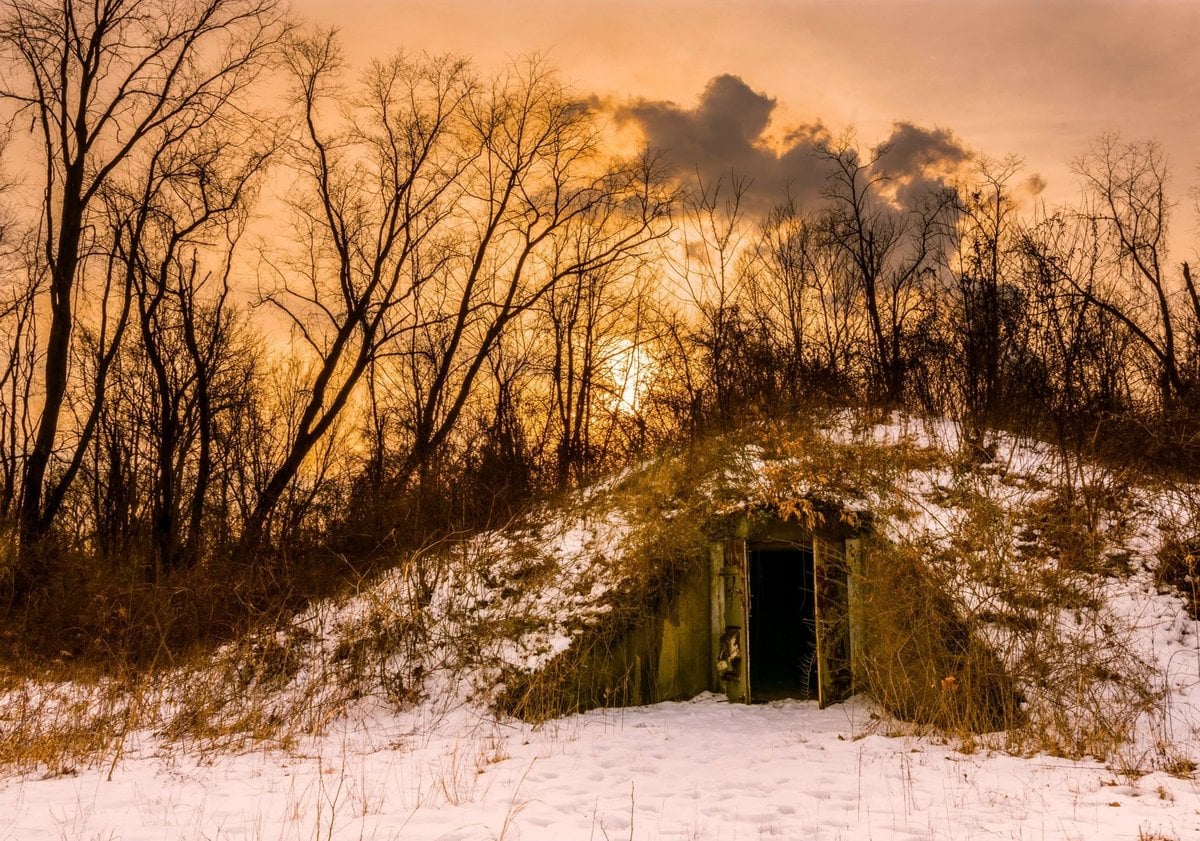
POINT PLEASANT, W.Va. — Visitors searching for the legendary Mothman in the woods near Point Pleasant are finding the remains of a massive World War II explosives factory that employed thousands of workers and supplied explosives for American military munitions.

Chris Riser, executive director of the Mason County Convention and Visitors Bureau, says relatively few visitors understand the history of the former West Virginia Ordnance Works, where the first widely reported Mothman encounter occurred in 1966.
“The people visiting aren’t coming specifically for the plant, specifically for the World War II history, but they are getting a history lesson while they’re visiting,” Riser said.
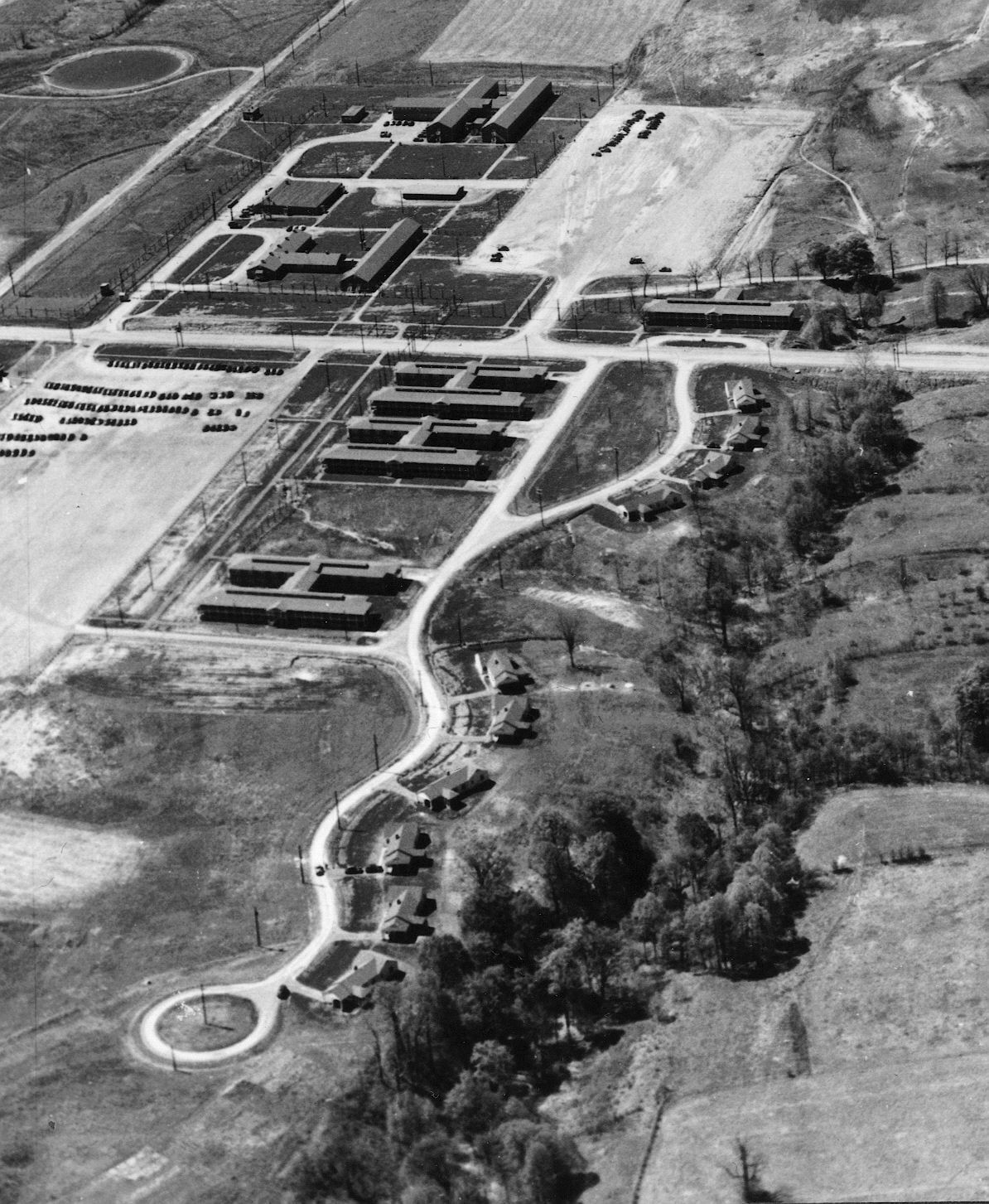
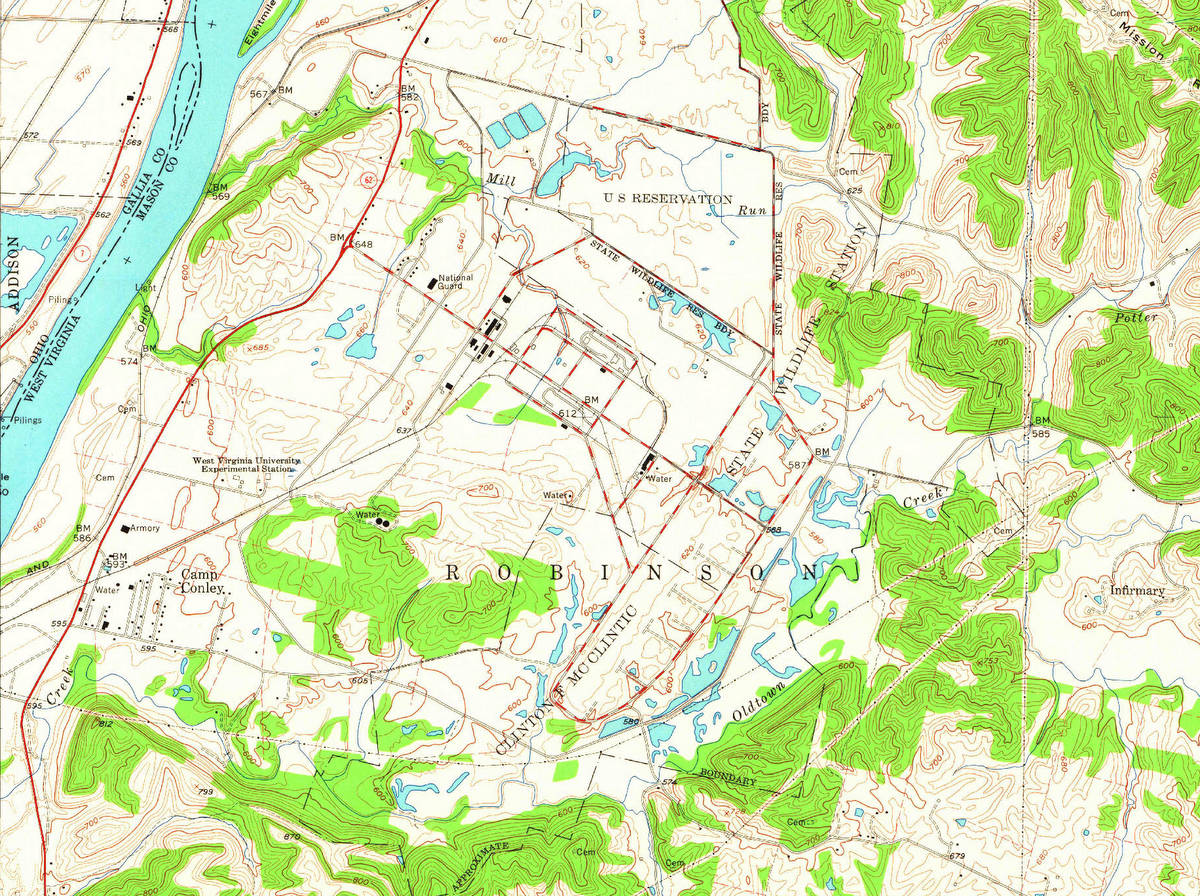
Established in 1942, the ordnance works covered about 8,320 acres along the Ohio River, and its 10 production lines manufactured TNT until the end of World War II in 1945.
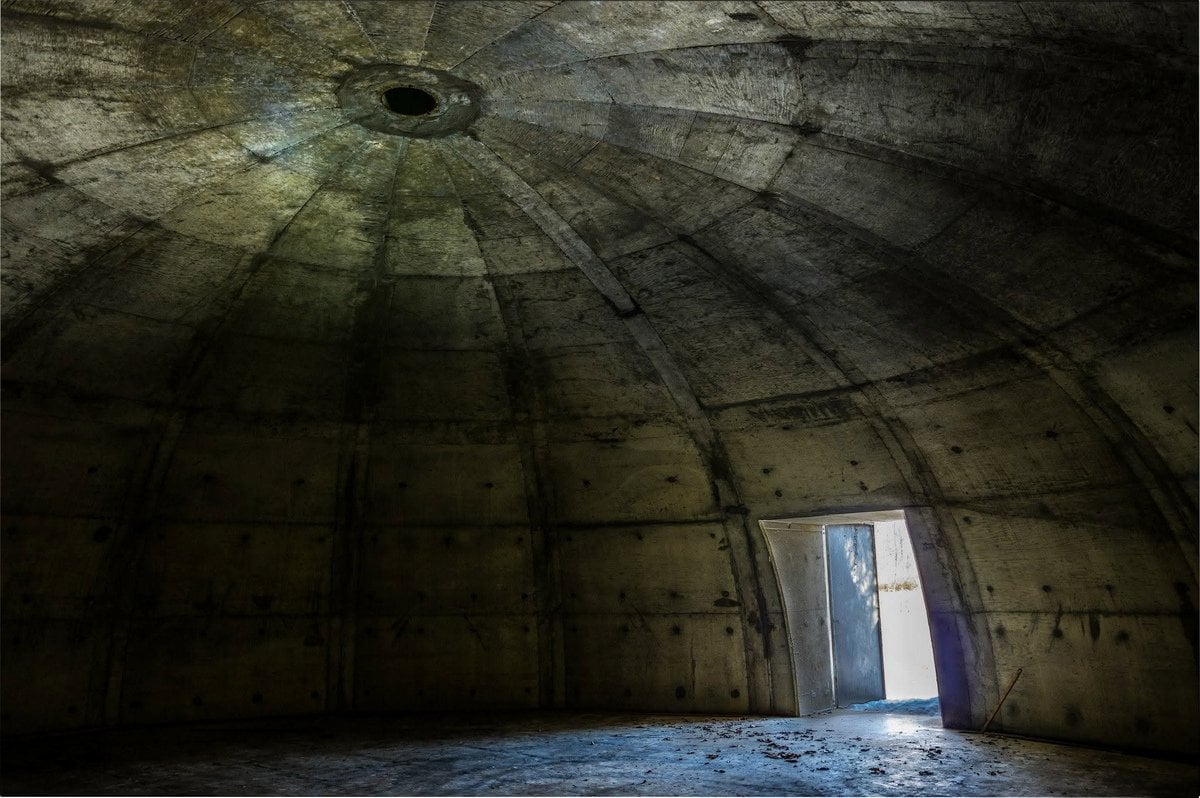
Portions of the former installation are now part of the McClintic Wildlife Management Area, where explosives-storage bunkers and industrial foundations remain among mature forests.
Riser says tourists typically start at the Mothman Museum in downtown Point Pleasant, where exhibits explain the factory’s history, before exploring the former industrial grounds.
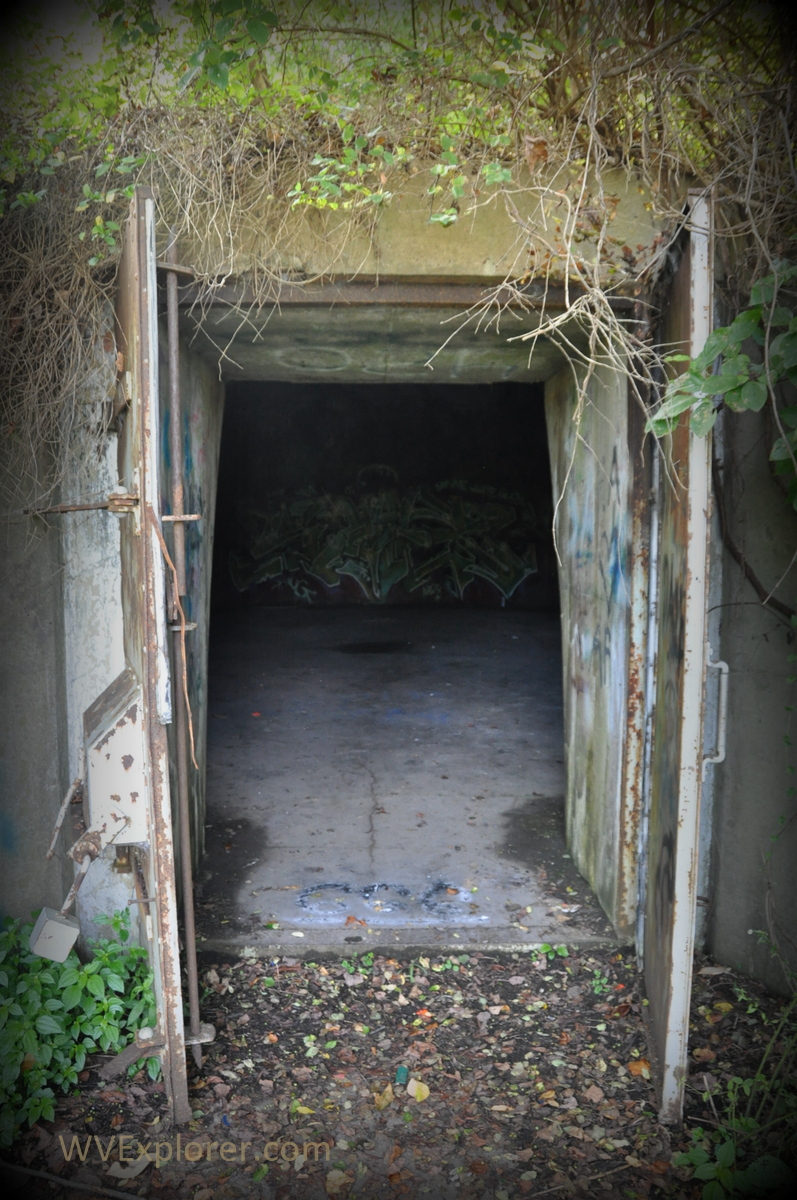
“Most people, they look at the igloos; they’re not really sure what they are,” he said. “They don’t know that they were TNT bunkers.”
A wartime factory rises from farmland
The federal government established the ordnance works at Point Pleasant as part of the expansion of American military production following Japan’s attack on Pearl Harbor.

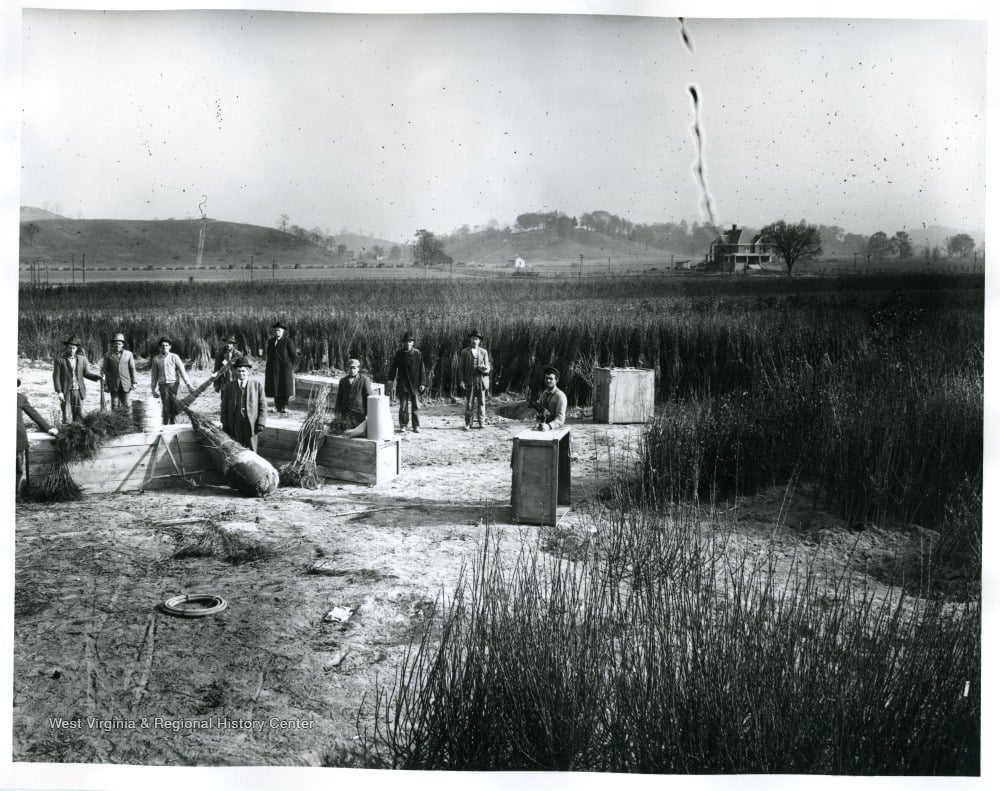
According to the U.S. Environmental Protection Agency, the installation included farmland, pasture, forest, and the former Camp Conley National Guard installation.
The government-owned factory was operated by General Chemical Defense Corp., a subsidiary of General Chemical Co., which was part of Allied Chemical and Dye Corp.
The plant manufactured TNT from toluene and nitric and sulfuric acids. Twelve production lines were installed, though federal records indicate that only 10 operated. The plant shipped finished explosives elsewhere for loading into munitions.
On October 13, 1942, the Point Pleasant Daily Register described the plant as an estimated $55 million investment occupying approximately 9,000 acres. These contemporary estimates differ from later federal records.
At a ceremony marking the formal beginning of operations, commanding officer Col. A. W. Ford described the transformation of the surrounding countryside.
“This area has been transformed in a few brief months from agricultural industry into chemical industry, and is now an important part of America’s great production front,” Ford told workers, according to the newspaper.
The ceremony on October 12 drew about 1,000 workers and included raising an American flag that had previously covered the coffin of Pvt. Clifford M. Quessenberry, a Point Pleasant soldier killed in action earlier that year and buried at Arlington National Cemetery.
His mother, Mrs. V. E. Quessenberry, donated the flag for the ceremony. She was also employed at the works.
According to the register, Ford described the flag as a symbol of the relationship between Americans serving overseas and those supporting the war effort at home. The Gallipolis High School Band provided music for the gathering.
Security extended beyond the factory itself. In October 1942, authorities restricted navigation along more than five miles of the adjacent Ohio River, where Coast Guard patrol boats could stop and inspect vessels.
Riser says the secrecy surrounding the installation contributed to limited public understanding of its operations.
He recalled that former tourism director Denny Bellamy attended Ordnance Elementary School as a child, not realizing its name referred to military munitions. Bellamy and his classmates assumed Ordnance was someone’s name.
According to Riser, the school occupied the former factory administration building.
The war ends, and the factory closes
On August 15, 1945, after Japan announced its surrender, the Point Pleasant Daily Register reported that TNT production had ceased under orders from the War Department.
Maj. J. D. Fraser, the plant’s commanding officer, said employees would return after a two-day holiday to clean the facilities and store raw materials.
“Several months will probably be required to complete the task of closing down such a large production plant, and employment will taper off as the work is completed,” the newspaper reported.
Peak production employment had reached an estimated 3,500 in 1942, according to the Register, with construction requiring additional workers.
The shutdown ended a period of rapid wartime employment growth in Mason County. Other local industries also scaled back after Japan’s surrender, including a Point Pleasant subsidiary of Sylvania Electrical Products that employed about 300 women.
Workers subsequently decontaminated the site, placed it in standby status, and declared it surplus. Salvagers took much of the equipment, and vegetation gradually reclaimed the property.
“Just after the war, it just sort of faded, and trees started growing, and everyone forgot about it,” Riser said.
What remains of the TNT factory?
Visitors to the former ordnance works can still explore substantial remnants of its wartime operations.

“The infrastructure is missing, but the concrete all stayed,” Riser said.
Among the surviving structures are dome-shaped storage bunkers commonly called TNT igloos. Riser estimates that about 104 bunkers remain, with roughly half accessible to visitors. Others are closed or isolated in the woods.
“That’s where most visitors go first,” he said.
Near the Mason County Fairgrounds, another collection of concrete structures is locally known as “Stonehenge.”
Riser identifies the large pillars as supports for tanks associated with the factory’s chemical operations. A small trail system provides access to the site.
The surrounding wildlife management area offers fishing and opportunities to observe deer, raccoons, squirrels, sandhill cranes, and great blue herons.
The property’s industrial history has also required decades of environmental investigation.
TNT manufacturing generated chemical wastes that contaminated portions of the installation, including soils, wastewater systems, and former production areas.
Federal investigations began in 1981, and the EPA later placed the property on its Superfund list. Cleanup and environmental monitoring have addressed various sections of the former factory.
How Mothman became associated with the TNT area
On November 15, 1966, two young couples reported encountering a mysterious winged creature near the abandoned ordnance works.

Roger and Linda Scarberry and Steve and Mary Mallette described a large, humanlike figure with wings and glowing red eyes that they said pursued their automobile as they fled toward Point Pleasant.
The Point Pleasant Register ran their account the following day. Additional sightings followed, establishing the Mothman legend.
Riser believes the abandoned factory’s reputation helped shape public perceptions of the reported creature. The isolated industrial grounds had become associated with deteriorating structures and, later, concerns about chemical contamination.
“So it really wasn’t that unusual to think that there might be some kind of monster creature living out there,” he said.

Such speculation is part of the folklore surrounding the property. No established scientific evidence shows that industrial contamination produced unusual creatures or explains the reported sightings.
The legend subsequently inspired books, documentaries, and the 2002 film The Mothman Prophecies. Point Pleasant established a Mothman museum, a downtown statue, and an annual festival.
Riser says international interest in the creature sometimes surprises local residents.
“Most of the locals still think this was just some weird thing that happened in Point in the ’60s,” he said. “Why is everyone so interested in it?”
The future of the TNT area
Although the former factory already draws visitors, Riser would like to see more historical interpretation of its wartime operations.
The wildlife management area offers opportunities to explore surviving industrial structures while fishing and observing wildlife.
Riser believes more could be done to explain the factory’s contribution to the American war effort, especially for tourists who discover its history through their interest in Mothman.
For now, the legendary creature remains the primary reason many visitors explore the former installation.
Riser believes its popularity reflects a continuing fascination with unexplained phenomena.
“I think it’s a little bit of escapism,” he said. “Everyone would like to believe maybe that there’s still a little bit of unknown left in this world.”