
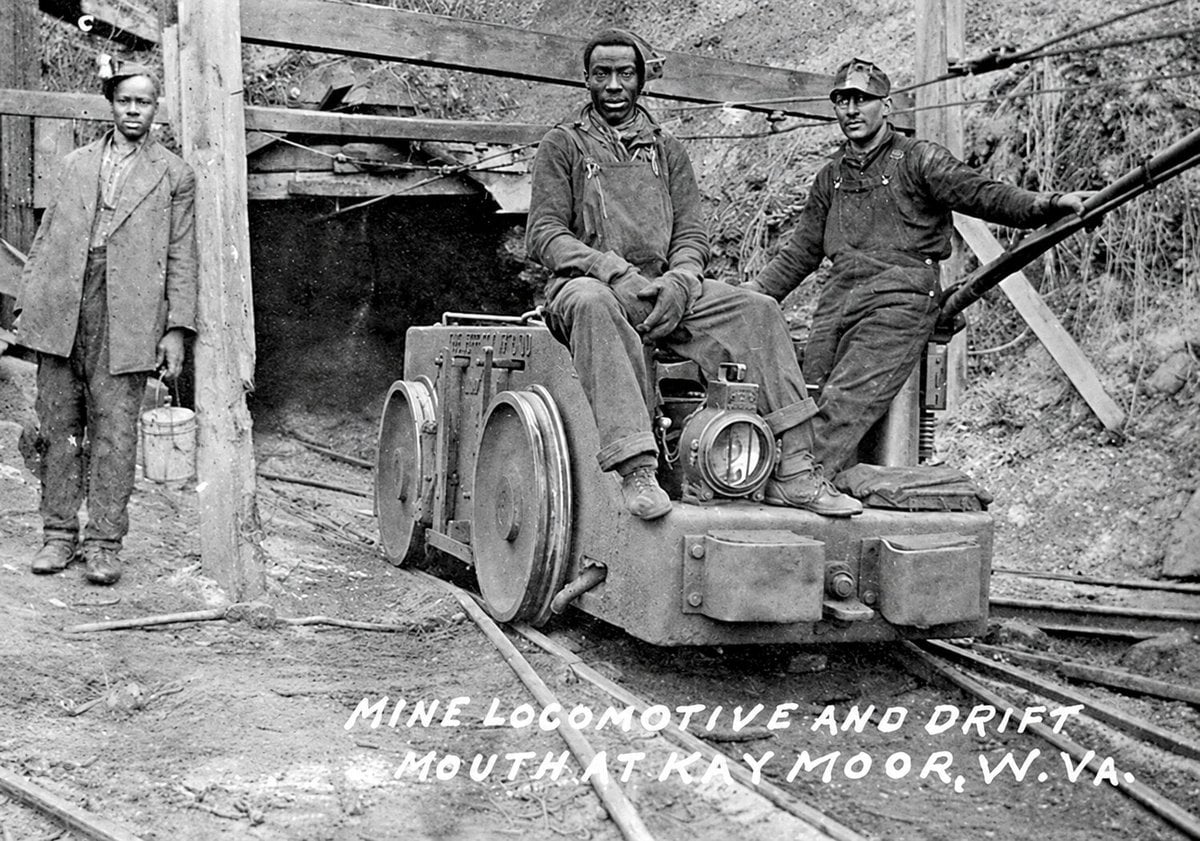
SKELTON, W.Va. — Industrialization changed the names on the map in parts of West Virginia on a scale that researchers have found unusual even among other American coal-producing regions.

As railroads and coal companies developed the state’s coalfields in the late 19th and early 20th centuries, they established hundreds of communities and became a major source of their names as older naming patterns tied to settlers, families, and the natural landscape were quickly joined by names chosen by corporations and industrialists.
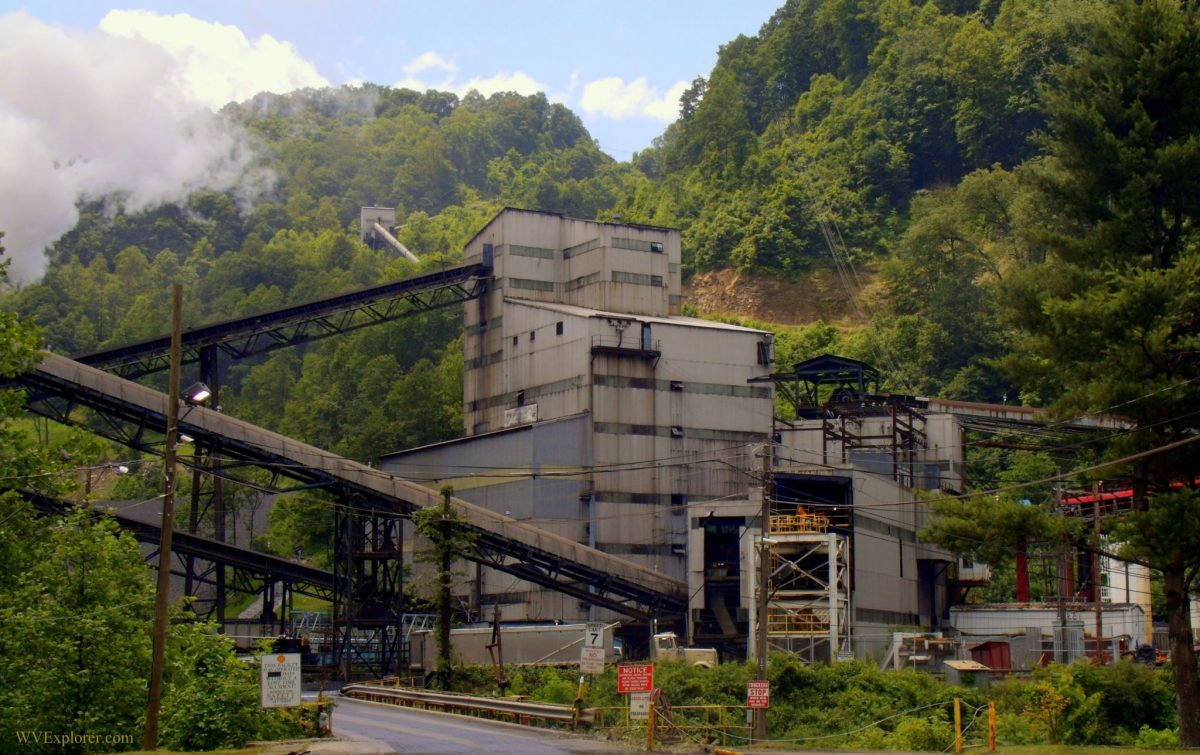
In a study of the New River basin, geographer Mack H. Gillenwater found that 54 of 76 mining towns—71 percent—derived their names from personal names, while other mining communities were named for companies or mining products.
“As coal mining developed in the northern half of the basin, there was an instant need for workers’ dwellings, thus mining towns were built in rapid fashion,” Gillenwater wrote. “The new mining towns had to be named quickly, and the coal operator had neither the time nor the inclination to be concerned with appropriate choices.”
Because the operator controlled the town, he believed he had placed “a personal imprint upon that particular landscape,” Gillenwater wrote. Consequently, operators often named communities after themselves or their family members.
Later researchers assembled a database of more than 800 coal towns to investigate how naming patterns changed over time and across the state, and the extent of company-town development helps explain why the change was so pronounced.
Gillenwater estimated that West Virginia had 465 coal company towns in 1930, but by the 1920s at least 78 percent of its miners lived in company towns—a proportion higher than in any other American coal-producing region, according to S. Allen Chambers Jr.’s essay “Coal Country” published by the Society of Architectural Historians.
“Estimates vary as to how many miners and families lived in company towns at the height of the coal boom,” Chambers wrote. “Some suggest a figure as high as 98 percent by the 1920s, some as low as 78 percent. Even the lower estimate represents a higher percentage than any other coal-producing region in America.”

Geographer Raymond Thomas Hill argued that the industrial names form part of a larger “historical succession in naming” in West Virginia, reflecting changes in what he calls the “prevailing authority.”
“There is a historical succession in naming, representing changing times and changes in prevailing authority,” Hill wrote.
Native names were followed by names introduced during European settlement, he said, and many of those were later succeeded by names supplied by industrialists. “A large part of the current place names of southern West Virginia were provided by the coal companies,” Hill wrote.
The pattern was especially extensive in the southern coalfields, where company towns were more highly concentrated, but industrial naming also occurred in coal-producing areas of northern and northeastern West Virginia.
What emerged was not simply an assortment of towns with unusual names. It was a distinct period in the state’s cultural geography in which industrial development changed the sources of community names.
Earlier names reflected settlement and the landscape
Place names can preserve evidence about the people who occupied a landscape and the language they used, Gillenwater argued in a 1982 presentation to the New River Symposium titled Place Names as a Cultural Indicator in the New River Basin.
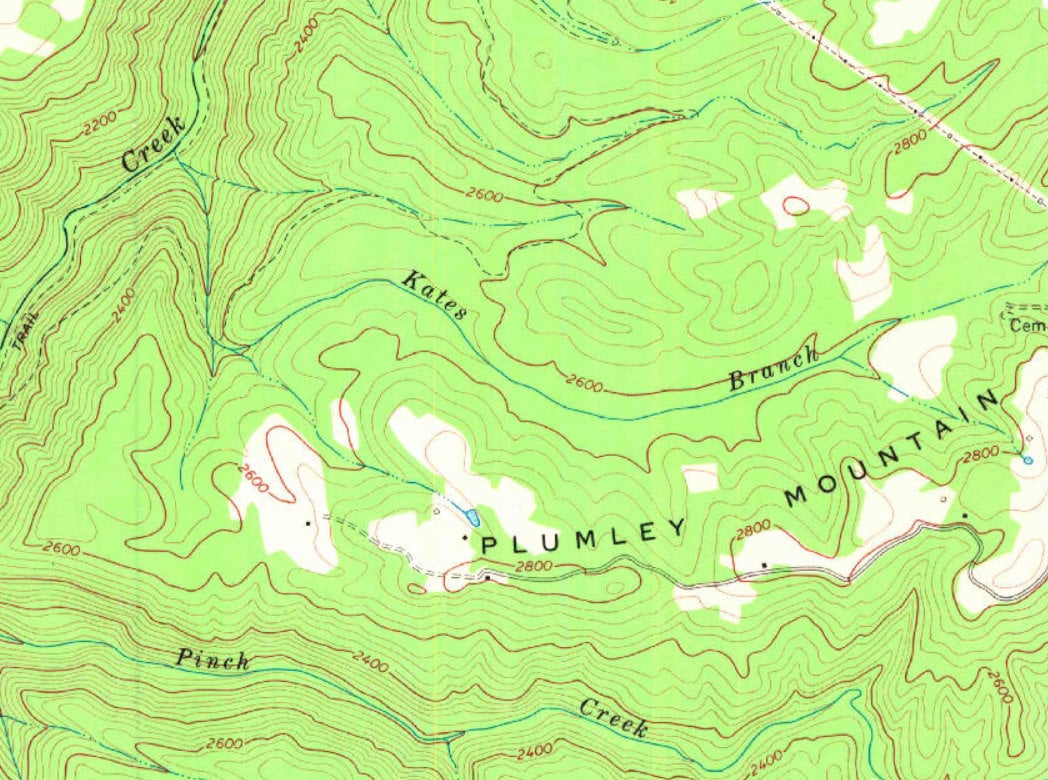
“Place names in any particular area are an accumulation from past history,” he wrote after examining 662 names across approximately 1,100 square miles, including streams, settlements, and physical features both inside and outside coal mining regions.
Among the 273 stream names he examined, personal names accounted for 110, or about 40 percent, and included surnames such as Adkins, Boone, Cook, Hale, and Smith, as well as given names in places such as Kates Branch, Hans Creek, and Molly’s Creek.
He wrote that he believed the prevalence of those names reflected “the close relationship between early settlers and their land.”
Other names described the environment. Physical characteristics accounted for 68 stream names, vegetation for 40, and animals, birds, and insects for another 25.
The names, he said, therefore retained information about settlement, land ownership, and the physical environment as it was understood by the people who lived there.
Mining towns produced a different pattern
Industrialization, however, introduced another naming process. When Gillenwater examined settlements in the same region, he separated mining towns from other communities. Of 272 settlement names, 76 belonged to mining towns, and 54 of those had personal names.
Nine had feminine names, including Tina, Prudence, Sylvia, and Variola. Others were named for companies or mining-related products, including Hotcoal and Smokeless.
Gillenwater’s research suggests that similar-looking personal names could result from different historical processes. Earlier names reflected patterns established during settlement, while many mining towns were built rapidly and named by the coal operators who controlled them.
Historian Rhonda Janney Coleman described that process plainly in a study of West Virginia mining communities. “The company operators named their towns,” she wrote.
“Some were named for wives or mistresses. The town of McAlpin was given the maiden name of the operator’s mother. Carlisle and Scarbro were named after English villages. Berwind took the name of the owner of the New River and Pocahontas Consolidated Coal and Coke Company.”
Towns, she said, were also named for their locations—North Fork, Slabfork—or given Indian names—Pocahontas, Matoaka.”
Read also: In the 1850s, a mysterious lawyer came to West Virginia and started renaming towns
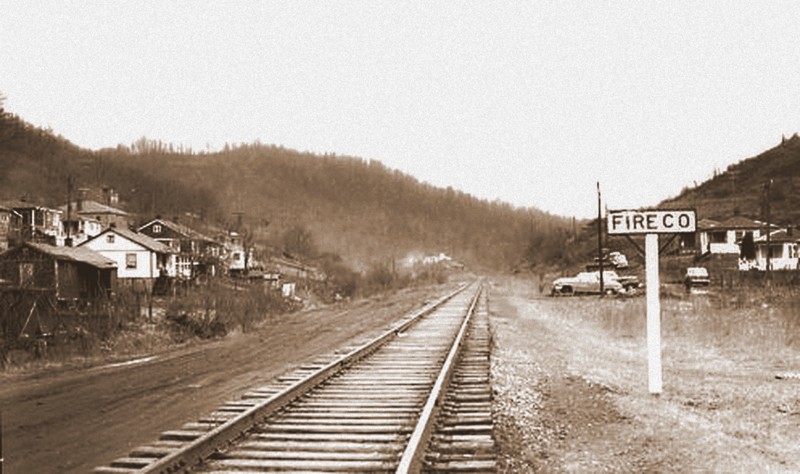
Hill likewise identified Tams and Caperton as coal-operator surnames and Fireco and Ameagle as compound names produced during coal development. The significance lies in how often this happened, not in any individual example.
West Virginia had hundreds of company towns
Of course, company towns existed in other American mining regions, and company officials elsewhere also named communities. The naming practice itself was not peculiar to West Virginia, but the scale of company-town development was different.
Before the industrial expansion beginning in the 1880s, much of rural West Virginia consisted of dispersed farms and small settlements. As railroads entered coal-bearing territory, the cultural makeup of mining regions changed remarkably.
Mining companies rapidly leased and purchased land, opened mines, and constructed communities for their workers. Gillenwater estimated that 465 coal company towns existed in West Virginia in 1930, most of them in the southern counties of Raleigh, Fayette, Logan, Mingo, and McDowell.
Company towns were especially important where mining developed in isolated valleys without an existing population or housing to shelter the workforce. By 1922, nearly 80 percent of the state’s miners lived in company housing. The West Virginia Coal Heritage program noted that companies sometimes constructed towns from scratch within weeks.
The Society of Architectural Historians estimated that 78 to 98 percent of miners lived in company towns during the 1920s. Even the lower estimate was higher than that of any other coal-producing region in the United States.
Geography contributed mightily to the system: Mines had to be located where economically recoverable coal could be reached, and before widespread automobile ownership, workers needed to live close enough to walk to them.
Company towns largely followed the coal. According to architectural historian S. Allen Chambers Jr., the West Virginia Coal Association summarized the constraint plainly: “Where the coal is, there the town must be built.”
Coal operator William Purviance Tams Jr., who established the Raleigh County community that bears his name, explained why mines created settlements around them. “The operators built towns because they had no alternative,” Tams wrote. “The mining of coal requires miners; miners require houses.”
Most mines, he explained, were opened in sparsely settled areas where housing was unavailable, leaving operators to build communities near the mines.

The result was an extensive system of company towns. Estimates cited by Chambers indicate that by the 1920s between 78 and 98 percent of West Virginia miners and their families lived in company towns. He noted that even the lower estimate exceeded the proportion in any other American coal-producing region.
“Estimates vary as to how many miners and families lived in company towns at the height of the coal boom,” Chambers wrote. “Even the lower estimate represents a higher percentage than any other coal-producing region in America.”
That sometimes produced settlements along railroad lines and in valleys that had previously supported farms, small communities, or little concentrated settlement. In southern West Virginia particularly, industrialization therefore created not only mines but a new settlement geography, and naming followed.
Industrial names appeared across the coalfields
Some of the resulting names directly identified the people who financed or managed industrial development. The town of Itmann in Wyoming County was named for banker and coal executive Isaac T. Mann. Gary in McDowell County took the name of Elbert H. Gary, chairman of U.S. Steel, whose subsidiary U.S. Coal & Coke developed a major mining complex there. Thomas G. McKell named Glen Jean in Fayette County for his wife, Jean.
Companies also incorporated corporate identities into community names. Ameagle was associated with the American Eagle Colliery. Besoco came from the Beckley Smokeless Coal Company.
The pattern was not confined to southern West Virginia. Federal Coal and Coke Company established Grant Town in Marion County in 1901 and named it for company vice president Robert Grant. The West Virginia Coal Company developed Bretz in Preston County and named it for an official of the Morgantown & Kingwood Railroad.
In the northeastern coalfields, Thomas was named for Thomas Beall Davis, brother of industrialist Henry Gassaway Davis. Nearby, Davis also carries the family name.
Industrialization sometimes replaced names already in use
The effect of industry on place names is clearest where an earlier name is known. Coleman’s research found that Summerlee in Fayette County was originally called Parrell. Lochgelly had previously been called Stuart.
In Barbour County, the community now known as Junior was called Rowtown before industrialist Henry Gassaway Davis requested that it be renamed after his son, Henry Gassaway Davis Jr., after his death.
These were not cases in which a company simply needed a name for a settlement that had never existed: An established name was displaced.
Such examples closely fit Hill’s concept of a “historical succession in naming.” A change in the people or institutions influencing a place could be accompanied by a change in its name. The process also means that a modern map can contain names produced during different periods of economic and cultural history alongside one another.
Researchers found enough coal-town names to study them as a system
Geographers Christa Smith and Margaret Gripshover later approached West Virginia’s coal-town names as a group rather than as individual curiosities.
Their study, Mine Sweet Mine: Spatial and Temporal Changes in Coal Town Place Names in West Virginia, assembled data from more than 800 coal towns to determine whether historical, economic, and cultural influences produced geographic and chronological patterns in the names.
For each name, they collected information including community location, the associated coal company, when the town was constructed, and, if applicable, when it disappeared. They divided the names into nine categories and compared them with the West Virginia coal industry’s historical development.
They noted that previous research had already identified patterns such as coal towns named for female relatives of company owners and officials, but they sought evidence of additional influences.
The surviving conference abstract does not report their full findings or the number of towns in each category, but their research matters because a dataset made it possible to study naming as part of the development of an industrial landscape rather than as a collection of anecdotes.
The naming system changed again
Hill’s interpretation does not end with coal. He argues that West Virginia’s place names kept changing as new activities gained influence.
Tourism introduced another group of names. Ski resorts named slopes, while whitewater rafters named features and rapids in the New River Gorge.
This later industry-driven change reinforces Hill’s broader argument that names accumulate as people use a landscape differently. Settlement produced one set of names. Industrialization produced another. Recreation and tourism have added still others.
The coalfield episode stands out because industrialization occurred rapidly and company-town development was so extensive. Hundreds of settlements were established around a single industry. Those findings show that industrialization created a different naming system and did more than just add names to West Virginia.
| Community | County | Name origin | Industrial connection |
|---|---|---|---|
| Gary | McDowell | Elbert H. Gary | Chairman of U.S. Steel; community developed by U.S. Coal & Coke Co. |
| Itmann | Wyoming | Isaac T. Mann (I. T. Mann) | Banker and coal executive associated with Pocahontas Fuel Co. |
| Tams | Raleigh | William Purviance Tams Jr. | Coal operator associated with Gulf Smokeless Coal Co. |
| Caperton | Fayette | Caperton family name | Identified by place-name historian Raymond Thomas Hill as a coal-operator name. |
| Berwind | Fayette | Berwind interests | Associated with New River & Pocahontas Consolidated Coal & Coke Co. |
| Glen Jean | Fayette | Jean McKell | Named for the wife of coal and land developer Thomas McKell. |
| McAlpin | Raleigh | Maiden name of a coal operator’s mother | Name selected during development of the coal community. |
| Anjean | Greenbrier | Ann + Jean | Names of the mother and daughter of coal operator Andrew Leckie. |
| Helen | Raleigh | Daughter of G. W. Stevens | Stevens was president of the Chesapeake & Ohio Railway. |
| Glen Rogers | Wyoming | H. H. Rogers | Named for an executive associated with the Virginian Railway. |
| Glen White | Raleigh | E. E. White | Named for a coal operator. |
| Freeman | Mercer | John Freeman | Named for a coal operator. |
| Jenkinjones | McDowell | Jenkin Jones | Named for a coal operator. |
| Anawalt | McDowell | Col. Anawalt | Named for a manager of Union Supply Co. |
| Herndon | Wyoming | Probably A. M. Herndon | Possibly named for an official of Winding Gulf Colliery Co.; origin requires further verification. |
| Bellwood | Fayette | J. Wade Bell + J. E. Wood | Named after men associated with establishing the coal camp. |
| Kay Moor | Fayette | James Kay | Named for a Low Moor Iron Co. employee involved in development of the community. |
| Skelton | Raleigh | Skelton, England | English place name selected by coal operator Samuel Dixon. |
| Carlisle | Fayette | Carlisle, England | English place name selected during company-town development. |
| Ameagle | Raleigh | American Eagle Colliery | Derived from the coal company name. |
| Alpoca | Wyoming | Alpha Pocahontas Coal Co. | Constructed from the company name. |
| Asco | McDowell | Atlantic Smokeless Coal Co. | Constructed from the company name. |
| Besoco | Raleigh | Beckley Smokeless Coal Co. | Constructed from the company name. |
| Hemlock | Fayette | Hemlock Hollow Coal Co. | Associated with the coal company that developed the community. |
| Gamoca | Fayette | Gauley + Moley + Campbell | Manufactured name associated with industrial development. |
Ansted was named after Dr David T. Ansted, who mapped out the coal fields under the town.
Landgraff, West Virginia, in McDowell County, was named after Constance Landgraff Andrews, the wife of a coal company executive.
Micco is an unincorporated town in Logan County. The name comes from Main Island Creek Coal Company.
Very interesting article. Thank you!!
This is a very interesting article.
Do you have any information on the Delmer Mine? Or Robinson Coal?
Thanks
Interesting article.
You’ve probably read W.P. Tams’ “The Smokeless Coal Fields of West Virginia.” In the back there’s a list of towns and what or who they were named for. I think Lanark was named by a coal operator who was from Scotland.
The conditions in the coal camps varied a lot. I remember reading in a 1930 book, “Coal and Men” of a report that was done at that time on conditions in the coal camps. Glen White, which was set up as a model town, was one of the better ones. Lillybrook one of the worst.
My view of the coal industry is likewise mixed. Whatever else, some of the miners lived in more modern circumstances in coal camps than they might otherwise have. For instance, I think Maj. Tams wrote that they had electricity in his eponymous town in 1910. Most of rural America wouldn’t be electrified until the New Deal established the Rural Electrification Administration.
Parrell and Stuart were changed because the mines were so gassy and dangerous that no one would work there. There’s a town called Cinco in kanawha county named after the owners favorite cigar.