
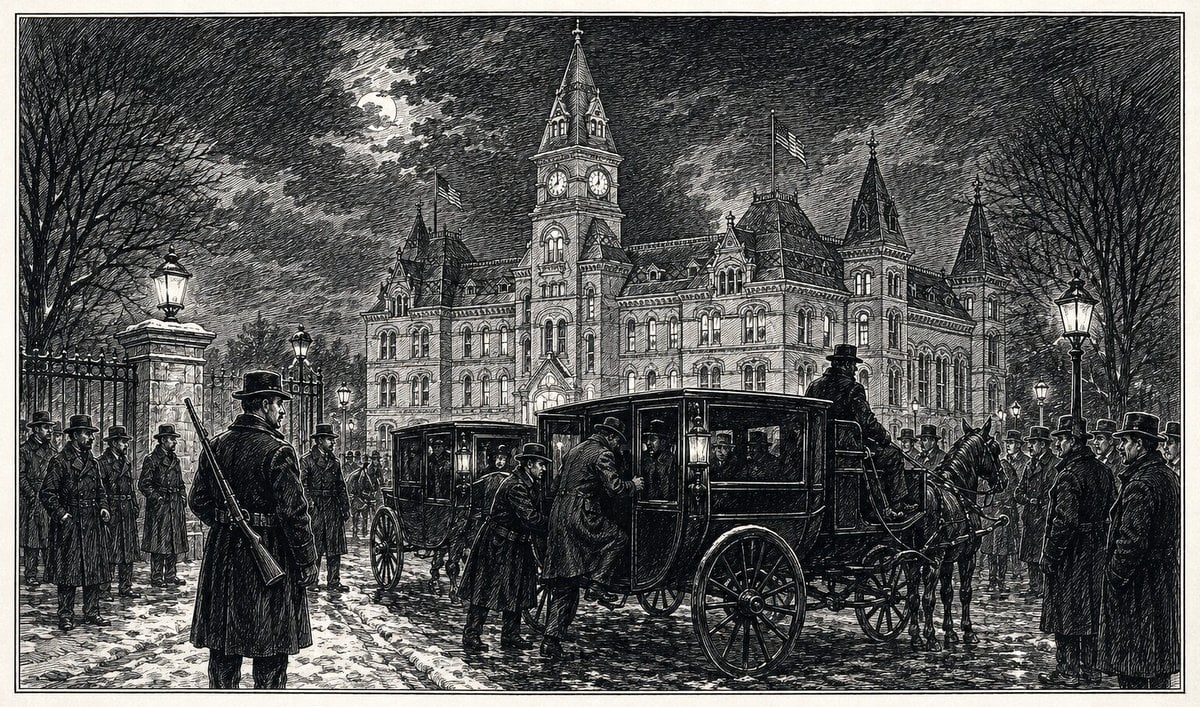
CHARLESTON, W.Va. — In one of the strangest episodes in American political history, half of the West Virginia state Senate fled the state Capitol, boarded a train to Ohio, and effectively shut down state government. They weren’t prompted by war, natural disaster, or criminal charges. It was political.
For more than a week in 1911, fifteen Republican state senators lived in a luxury hotel in Cincinnati, deliberately staying outside the state so authorities couldn’t compel them to return. Without them, the bipartisan Senate lacked the quorum needed to conduct business, preventing the Legislature from electing two U.S. senators.
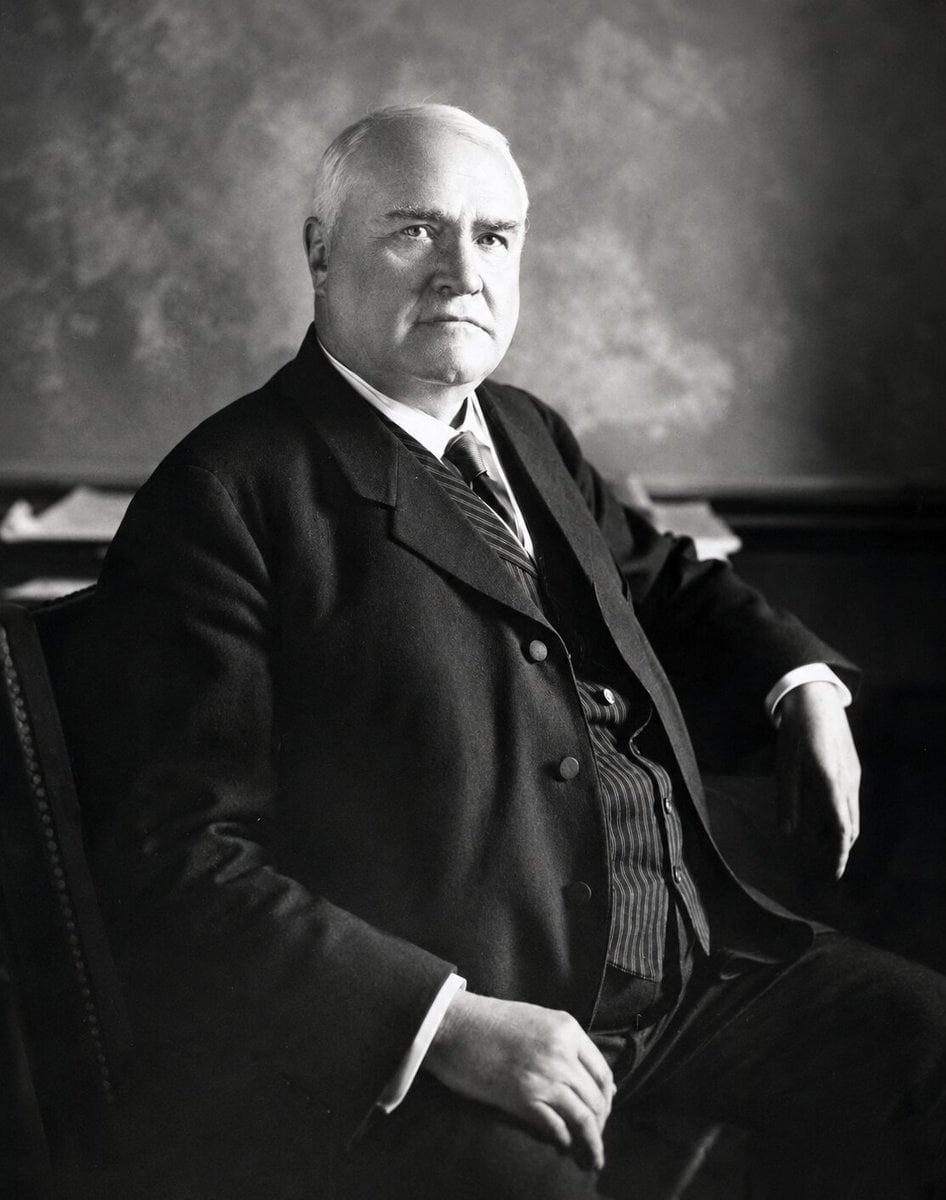
The crisis was triggered by the death of one of the nation’s most powerful political bosses, U.S. Sen. Stephen B. Elkins, who died on Jan. 4. His seat became vacant while another Senate seat was already up for election. That meant the Legislature had to choose two U.S. senators at once, dramatically raising the stakes.
The escape remains one of the most dramatic quorum-breaking episodes in American legislative history.
Before Americans elected senators themselves
Today, voters directly elect members of the U.S. Senate, but that wasn’t always the case. Before the 17th Amendment ratification in 1913, senators were selected by state legislatures.
In West Virginia, each chamber voted separately. If both chambers agreed on the same candidate, that person was elected. Otherwise, lawmakers met in a joint session, where a simple majority decided the race.
When the Legislature convened in January 1911, Democrats controlled the House of Delegates, while the Senate was evenly split, 15 Democrats and 15 Republicans. On a joint ballot, Democrats held enough votes to elect both U.S. senators.
The deadlock wasn’t just about the U.S. Senate. Democrats had unseated Republican Sen. Julian Hearne of Wheeling and seated Democrat Frank Caldwell, giving Democrats control of the Senate organization.

Republicans argued the action was illegitimate and refused to recognize it. They decided the only way to stop it was to ensure the Senate never achieved a quorum.
A government locked inside the governor’s office
Rather than simply skipping legislative sessions, Republican leaders gathered all 15 of their senators in Gov. William E. Glasscock‘s office in Charleston.
The lawmakers remained there under constant guard, effectively cut off from outside communication. Former U.S. marshal and Secret Service operative Charles D. Elliott oversaw their protection, while National Guard troops stood ready if needed.
Democrats responded with plans of their own. Their sergeant at arms, James E. Mehen, was reportedly instructed to secure enough Republican senators to restore a quorum. Both sides prepared for the possibility of armed confrontation inside the old state capitol, but, fortunately, violence never erupted.
The midnight escape
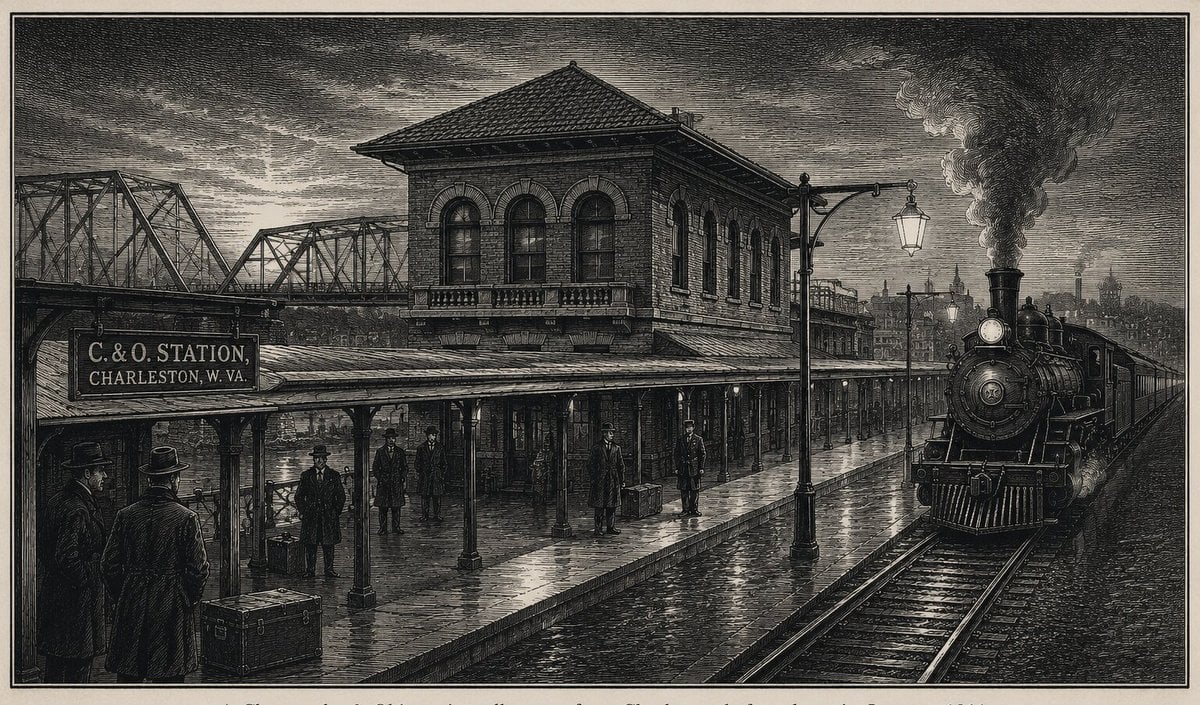
Then the surprise came. Under cover of darkness, Elliott quietly loaded the Republican senators into closed horse-drawn cabs and transported them to the Chesapeake & Ohio Railway station.
Before most of Charleston awoke, the senators were aboard a night train headed to Cincinnati. Once across the Ohio River, they were beyond the reach of West Virginia authorities.
The senators checked into one of Cincinnati’s finest hotels, but their accommodations came with a catch. Although surrounded by luxury, they remained under heavy guard and were effectively prisoners until the political crisis ended.
Rumors of kidnapping and armed confrontation
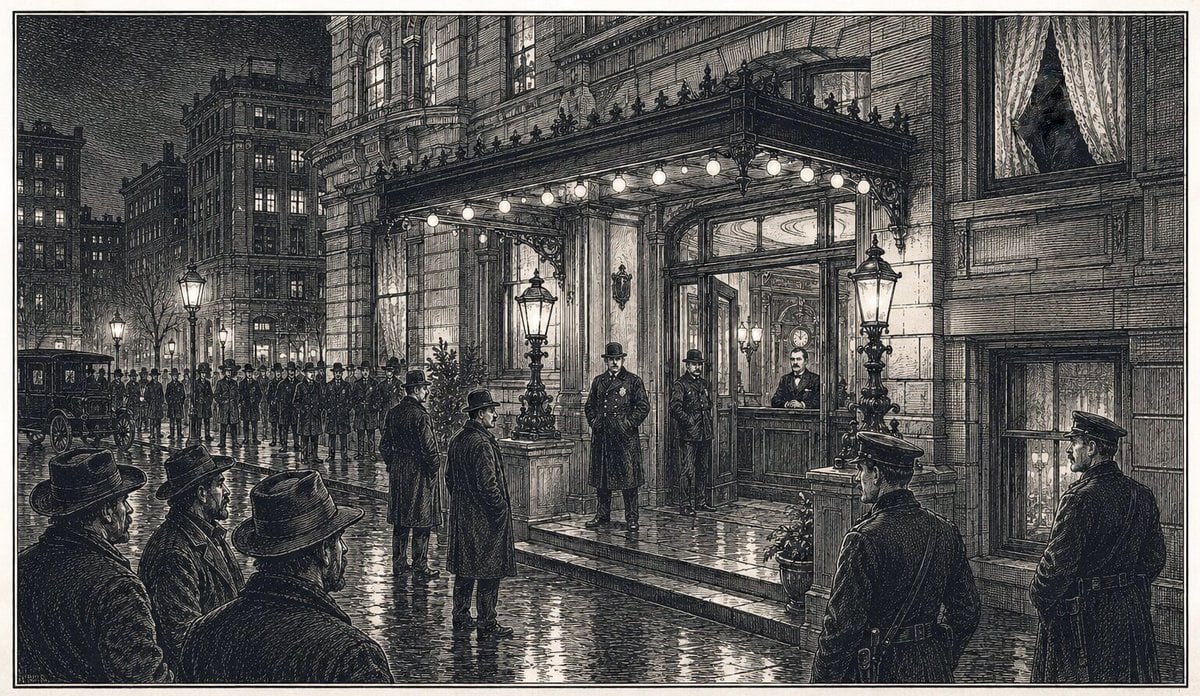
The drama only intensified in Ohio. According to contemporary newspapers, armed men from eastern Kentucky gathered outside the hotel, allegedly intending to seize one of the Republican senators and return him to Charleston to establish the missing quorum. Republicans blamed associates of Democratic interests for organizing the effort, though the accusations were never proven.
Newspapers from Oregon to Georgia carried stories on the standoff. One wire-service account said the situation had been compared with the political violence surrounding the assassination of Kentucky Gov. William Goebel only a decade earlier because observers feared bloodshed. Fortunately, negotiations prevailed.
Elliott appealed to influential Cincinnati political leader George B. Cox, who arranged for detectives and police officers to guard the hotel. Both sides appeared prepared for violence, but neither side acted. Instead, negotiations replaced confrontation.
A compromise ends the standoff
After more than a week, Democratic leaders traveled to Cincinnati to negotiate directly with the absent senators.
Thankfully, the two parties reached a compromise. Republicans agreed to return to Charleston, reorganize the Senate, and allow the Legislature to convene in joint session. Democrats, as expected, elected C. W. Watson and W. E. Chilton to the U.S. Senate.
The constitutional crisis ended without bloodshed, and the Legislature resumed its work.
Future governors, senators and congressmen
Ironically, many of the lawmakers who spent those days under armed guard would later become some of West Virginia’s most prominent political figures.
Among them were Henry D. Hatfield, who later became governor of West Virginia and served in the U.S. Senate; future U.S. Sen. Howard Sutherland; future Congressman E. T. England; and future State Treasurer William S. Johnson.
Today, legislative walkouts have become an occasional political tactic in several states. But few have matched the spectacle of West Virginia’s 1911 Senate exodus—a week when lawmakers secretly crossed a state line, hid in a Cincinnati hotel under armed guard, and temporarily brought their own government to a standstill.