
WHEELING, W.Va. — West Virginia is rarely considered a destination for Catholic pilgrimage. Settled largely by Virginians and Scots-Irish pioneers before later immigrant communities arrived, the Mountain State has long been associated more with frontier Protestantism than with Gothic cathedrals or sacred shrines.

Yet veteran ABC News correspondent Peggy Stanton found enough remarkable stories here to devote an entire chapter of her new book, The United “Saints” of America, to West Virginia’s overlooked Catholic landmarks.
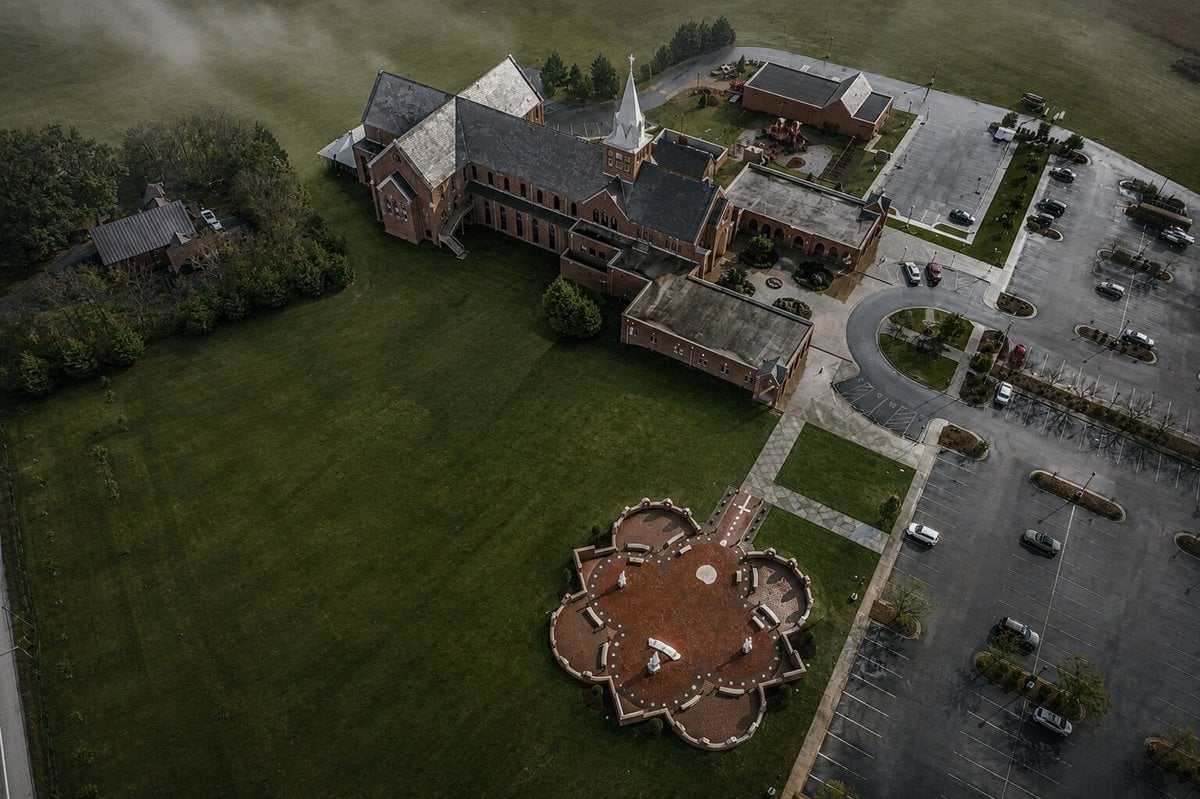
Her journey leads readers from the stained-glass splendor of Wheeling to a tiny woodland chapel in the Allegheny Mountains, a Civil War-era church that refused to fall at Harpers Ferry, a prayer garden overlooking the Shenandoah Valley, and finally to a shrine tucked into the coalfields along the Kanawha River.
Stanton said the book was designed to encourage readers to look beyond America’s famous pilgrimage destinations.
“Go in search of the famous shrines and the not-so-famous ones, those least recognized but with wonderful and intriguing backstories to tell,” she writes in the introduction.
West Virginia proved to be one of those surprises, offering stories that blend immigration, industry, frontier history and enduring faith.
Behind the scenes, West Virginia Explorer Magazine helped Stanton research one of those stories.
“One of the things we enjoy most is helping people discover parts of West Virginia they never expected to find,” said publisher David Sibray.
“Our history is much more diverse than many visitors imagine. Once you start following the immigrant communities that built our railroads, mines and industries, you uncover stories that deserve a national audience.”
The liturgical heart of West Virginia
Stanton begins in Wheeling, where St. Joseph Cathedral traces its parish history to 1822, nearly four decades before West Virginia became a state.
The current cathedral, completed in 1926, serves as the mother church of the Diocese of Wheeling-Charleston. Stanton describes its soaring architecture, brilliant mosaics, and richly decorated Stations of the Cross as among the state’s finest sacred spaces.
It reflects the prosperity northern West Virginia experienced during the industrial age, when Wheeling stood among America’s leading manufacturing cities and drew thousands of Catholic immigrants from Ireland, Germany, Italy, and Eastern Europe.
America’s smallest church
From one of the state’s grandest churches, Stanton travels to one of its tiniest.
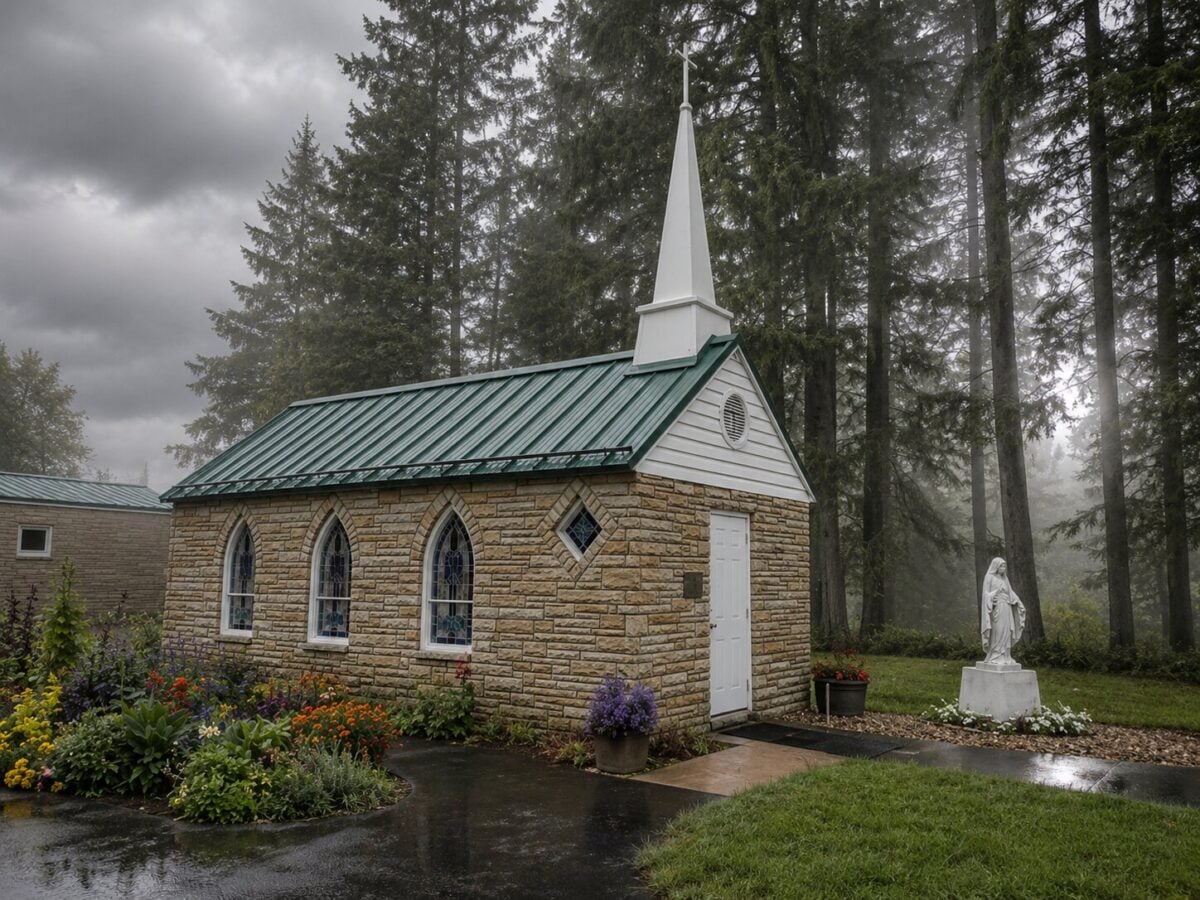
Near Silver Lake in Preston County stands Our Lady of the Pines, a chapel measuring just 24 by 12 feet. Built in 1958 by Lithuanian immigrant Peter Milkint, it seats only about a dozen worshippers.
Despite its size, the chapel has become a roadside curiosity, maintained for decades by volunteers and accompanied by what locals proudly call the World’s Smallest Post Office.
Its modest dimensions reveal another side of West Virginia’s religious history—one built not by wealthy congregations but by ordinary immigrants determined to establish places of worship wherever they settled.
A garden inspired by Fatima
In Charles Town, Stanton highlights the Our Lady of Fatima Garden, created to commemorate the 100th anniversary of the reported Marian apparitions in Portugal.
Adjacent to St. James Church, the prayer garden features a Rosary Walk laid out in a cruciform design. Pilgrims can literally pray the rosary by walking along colored stones that mark each prayer.
At its center stands a statue of Our Lady with the three shepherd children—Lucia, Jacinta, and Francisco.
Another monument honors Pope St. John Paul II, who survived an assassination attempt on May 13, 1981—the feast day of Our Lady of Fatima. Stanton recounts the pope’s famous reflection after the attack: “One hand fired the shot, but another guided the bullet.” The bullet was later placed in the crown of the original statue at Fatima, Portugal.
The church that survived Harpers Ferry
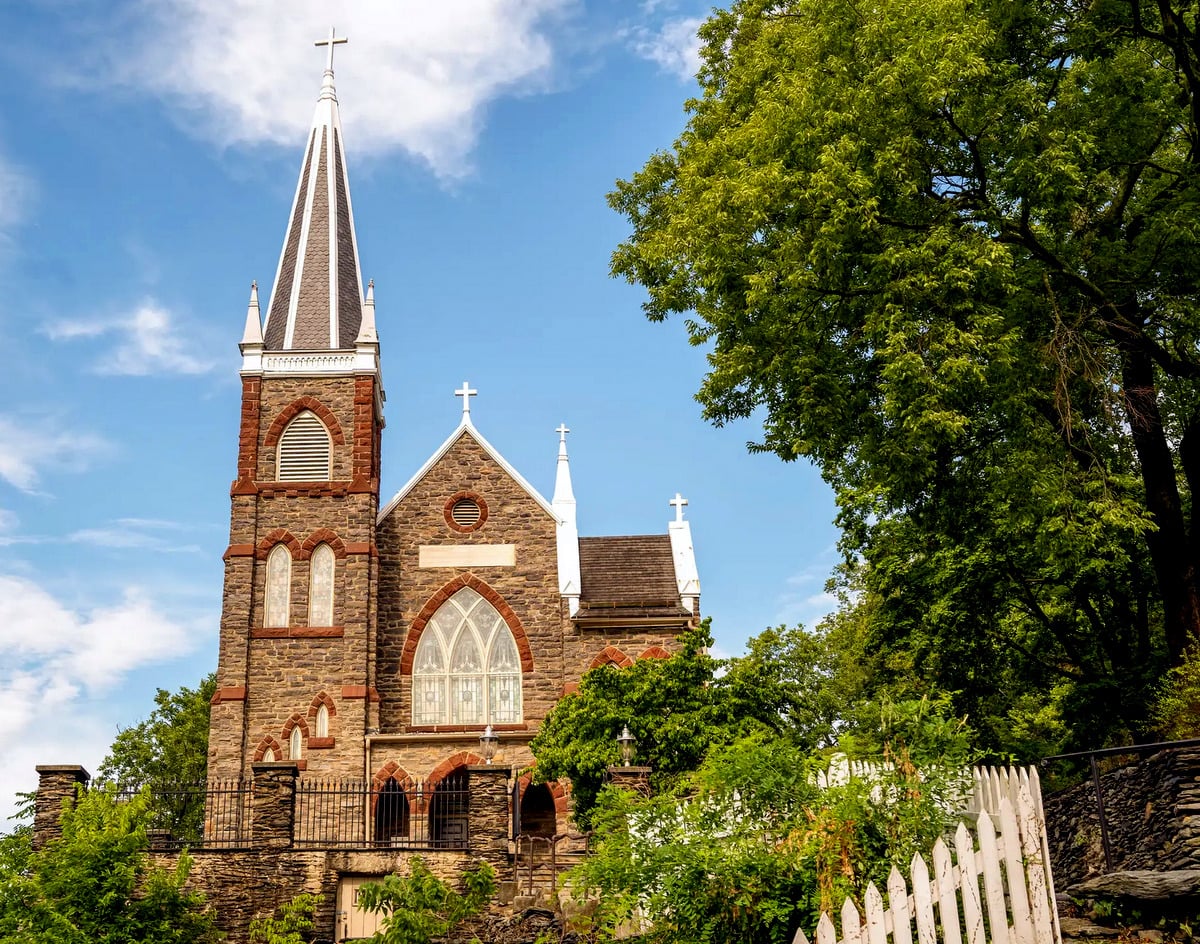
One of Stanton’s favorite historical stops is St. Peter’s Church in Harpers Ferry.
Built in 1833 to serve Irish laborers building the Baltimore & Ohio Railroad and the Chesapeake & Ohio Canal, the church witnessed some of the nation’s most turbulent years.
John Brown’s raid occurred just steps away in 1859, and Harpers Ferry changed hands repeatedly during the Civil War.
Remarkably, St. Peter’s was the only religious building in town to survive the conflict intact.
Today, it is part of Harpers Ferry National Historical Park, where visitors can explore both its religious heritage and the broader story of one of America’s most contested towns.
The mystery of Boomer’s shrine
The chapter concludes in Boomer, a former coal town and home to West Virginia’s only officially designated Catholic shrine.
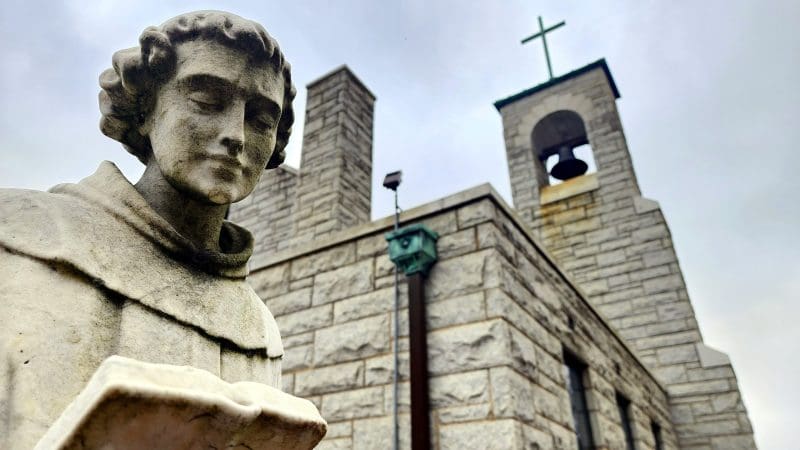
Dedicated to St. Anthony of Padua, the patron saint of lost things, the shrine preserves a first-class relic and a local story Stanton found irresistible.
According to church history, the relic temporarily disappeared from beneath St. Anthony’s statue before being unexpectedly returned.
The story echoes the centuries-old tradition that inspired the familiar prayer: “Tony, Tony, look around. Something’s lost and must be found.”
Sibray assisted Stanton in researching the shrine’s history, helping document one of West Virginia’s least-known pilgrimage sites.
A different way to see West Virginia
For Stanton, West Virginia’s Catholic landmarks tell a larger story about immigration and the communities that helped build modern Appalachia.
Irish laborers first established many of the state’s Catholic congregations while constructing canals and railroads. They were followed by Italians, Slovaks, Poles, Hungarians, Croatians and other immigrants who arrived to work in the mines, mills, glass factories and oil fields of the late 19th and early 20th centuries.
Many of the churches they left behind remain architectural masterpieces, while others survive as tiny chapels or quiet shrines that reveal a lesser-known chapter of Appalachian history.
“People often visit West Virginia for the scenery,” Sibray said. “But if they take time to explore the communities, they’ll discover remarkable stories of faith, immigration and perseverance that are every bit as compelling as the landscapes.”
For travelers willing to leave the interstate and wander into old industrial towns, river communities and mountain hollows, Stanton suggests West Virginia still holds some surprising saints and stories waiting to be discovered.
The https://wvexplorer.com/ is sending me TOO MANY popups per day, and your interfering in my work and its ANNOYING. I like your website. But you do not give options to control the frequency of popups.
And I don’t want my ino sold. You need to show info of Webster Springs & Webster County. I am ok with 1 popup PER DAY, no more than that
There’s a little Catholic Church on Irish Mountain that somehow was missed. It was built by Irish Immigrants when they first arrived in the area in the late 1900’s. I’ll give you directions, in case you want to check it out. The road is a rough one, but once you get to the top of Irish Mountain, it’s worth the drive. From Hinton, take the road that goes to Sandstone Falls. Right past the falls there is a little road on your left that goes to Irish Mountain. If I remember, there’s a fork and you head right to get to the church and cemetery. The road to the left takes you to I-64, I think. It’s been a while since I have been there, but it is well worth the visit.
Unfortunately, some local kids burned it down.
Another great story for West Virginians and tourists/travelers from around the world who love history and faith. Those churches certainly served as centers of spiritual buoyancy that lifted the hopes and dreams of those early immigrants who helped build the country, one railroad tie, one shovel and brick at a time. Thanks for sharing!