
FAYETTEVILLE, W.Va. — Thousands of visitors pass through this New River Gorge town every year, but most don’t notice one of its most unusual features—a stone well dating to the Civil War.

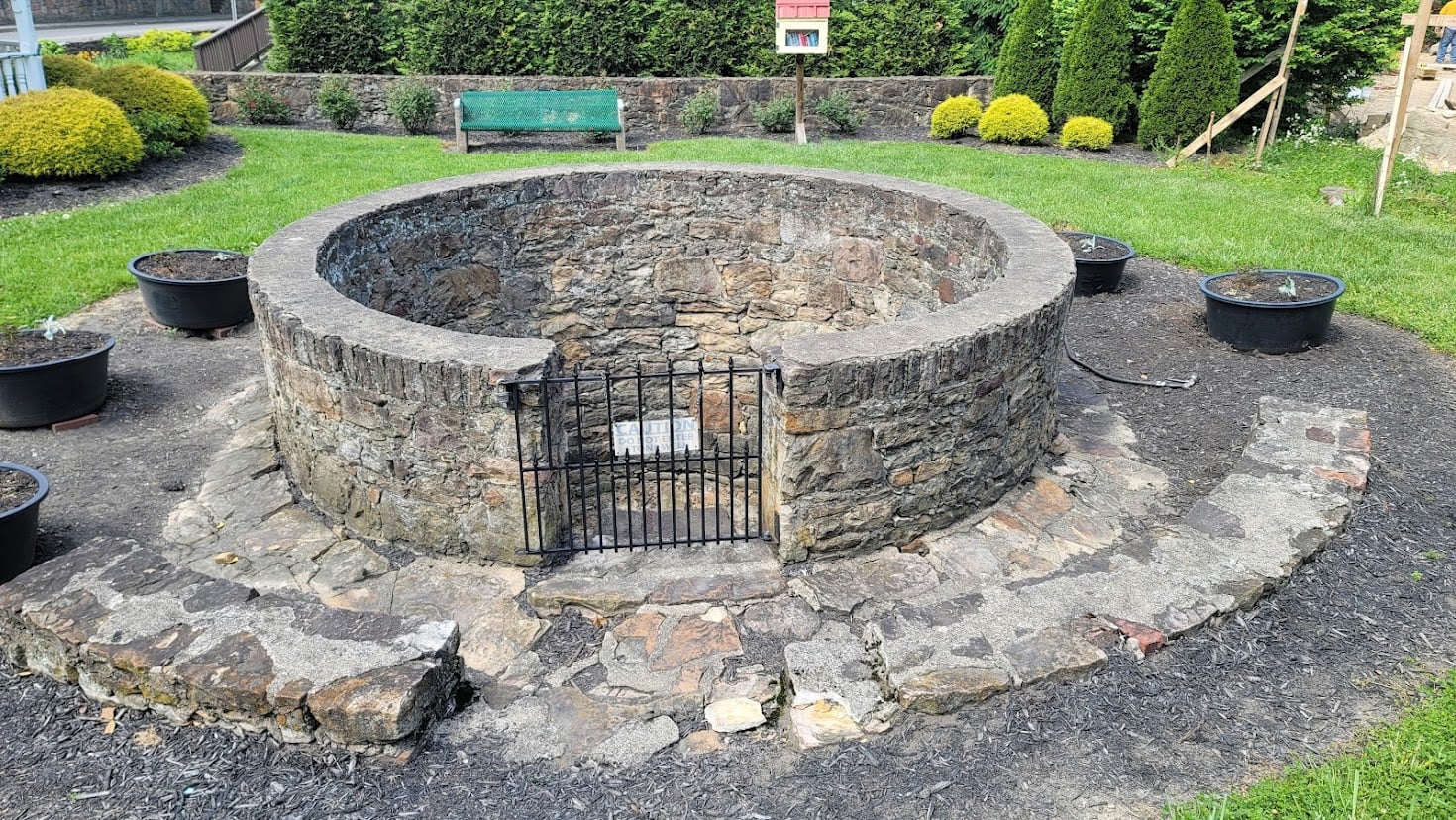
Known as the Janutolo Well, it stands in a small park along North Court Street in Fayetteville, only minutes from New River Gorge National Park and Preserve.
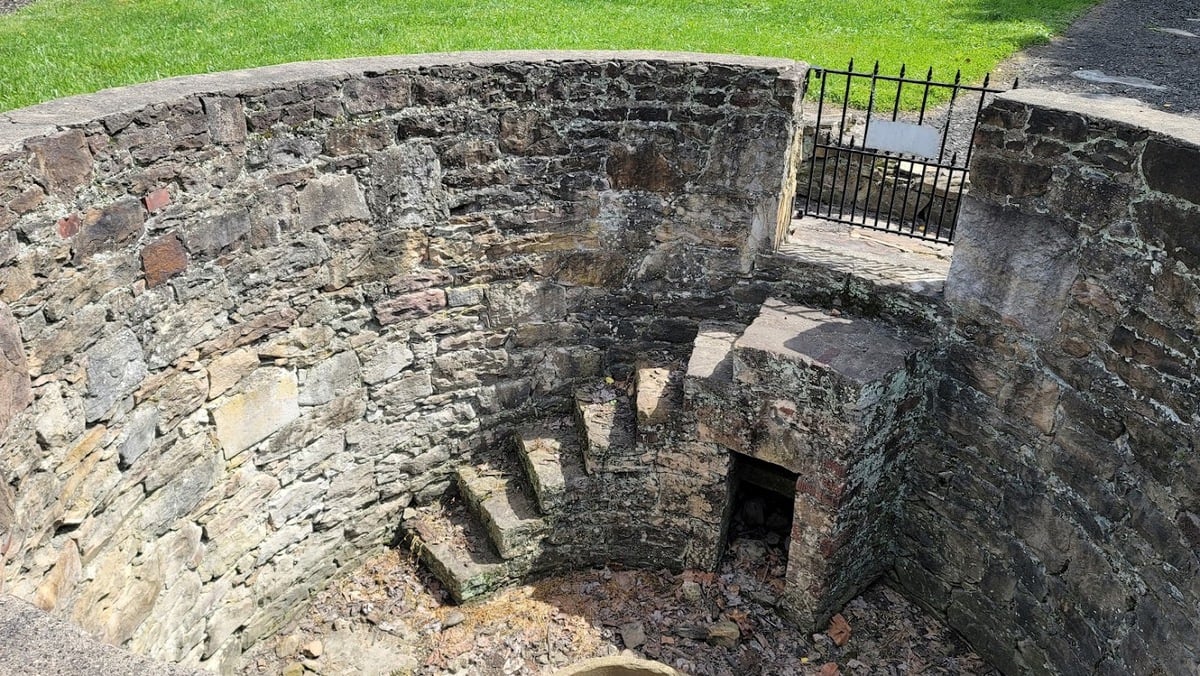
From the street, it seems like a circular stone wall. Inside, however, stairs descend below ground into an open masonry chamber to a water source that existed before West Virginia became a state.
Documentation for the Fayetteville Historic District dates the site to about 1860 and says an “open well” occupied it since the Civil War. It cites a local account that both Union and Confederate soldiers obtained water there during military operations around Fayetteville.
However, no wartime account confirms that use, so the story remains tradition rather than an established battlefield fact, but the military activity surrounding the well is well documented.
A town occupied by armies
Fayetteville grew as a village along the Giles, Fayette and Kanawha Turnpike, a wagon road connecting the valleys of the New and Kanawha rivers with southwestern Virginia.
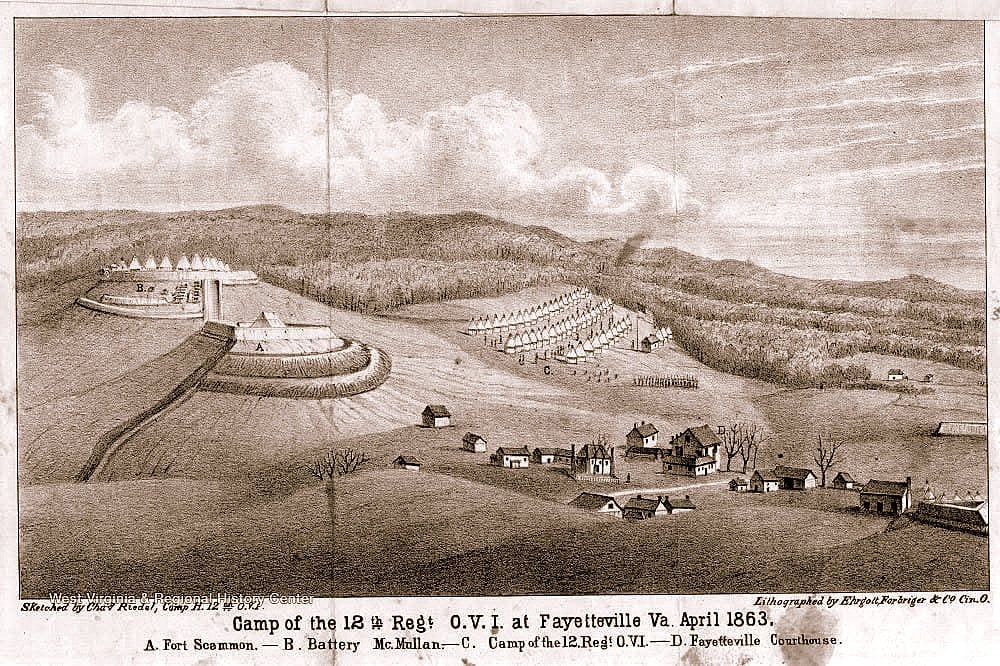
During the winter of 1861–’62, the Union transformed the small county seat into a military post. Three forts were built around Fayetteville, and in 1861, more than 1,000 Union soldiers were stationed there, according to historian Mary Elizabeth Kincaid’s study of Fayetteville during the Civil War.
Among the officers stationed at Fayetteville was Rutherford B. Hayes, who later became president of the United States.

The town became a battlefield on Sept. 10, 1862, when Confederate forces under Gen. William W. Loring attacked the Union forts. Military reports describe fighting around the courthouse and the fortified heights surrounding the town.
Both sides’ forces occupied Fayetteville at different points during the war, making the register account that soldiers from both armies used an established water source in town plausible, though its original source remains undetermined.
Italian craftsmen transformed the old well
What visitors see today appears to represent a second chapter in the site’s history.
National Register documentation dates the work to about 1910 and credits Cleante Janutolo, an Italian immigrant craftsman whose stonework helped shape early 20th-century Fayetteville.
Italian masons constructed buildings, foundations, and retaining walls throughout the growing town, leaving a distinctive architectural legacy in locally available stone.
At the old well, their work created something far more elaborate than the conventional image of a hole from which someone lowered a bucket.
A broad circular masonry enclosure surrounds steps descending below ground level. At the bottom is a smaller stone-and-brick structure containing an opening whose original function is not immediately apparent.
Whether the water source functioned strictly as a well, incorporated a developed spring, or was substantially altered when the Janutolo masonry was constructed remains unclear, and that mystery is still visible today.
Can its historic landscape be recovered?
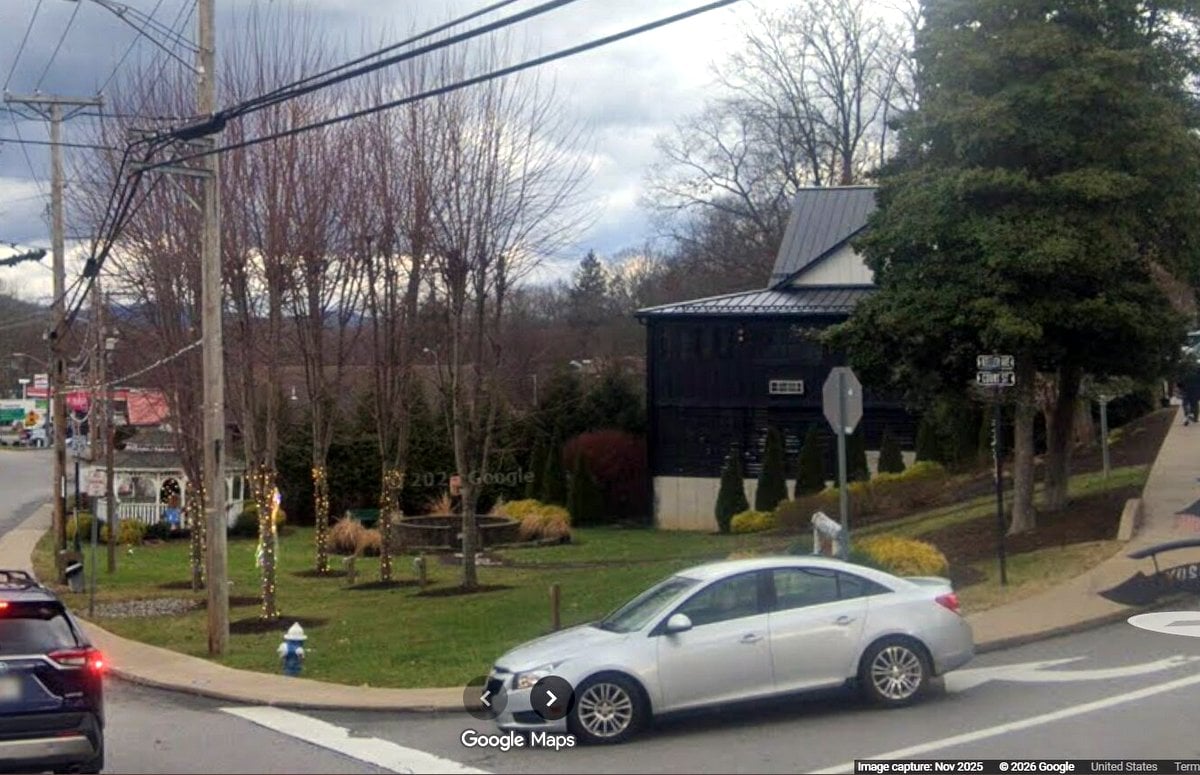
The setting around the Janutolo well has changed as Fayetteville has. Today’s small park includes a gazebo, picnic facilities, and modern landscaping around the historic masonry.
Historic descriptions suggest a different character in earlier Fayetteville. A 1941 guide described quiet streets lined with tall elms, while the stone walls along North Court Street and Keller Avenue remain part of the historic streetscape created by Italian masons.
No early photograph has yet been located showing precisely how the well itself was landscaped. Such an image could reveal another part of its history—whether the structure once stood beneath large shade trees, on an open lawn, or in some other arrangement.
For preservationists, landscapes can provide historical information just as buildings and monuments do. Trees, paths, walls, views, and vegetation can help explain how people once experienced a place.
At Janutolo Park, old photographs, maps, and newspaper accounts may eventually provide a clearer picture of the setting around the well at different points in its history.
More than a historic structure
The Janutolo Well is unusual because it preserves something historic districts often lose: evidence of how a community actually functioned.
Historic districts are commonly associated with architecture—courthouses, houses, churches, and commercial buildings—but their significance can also include streets, walls, landscapes, and other features that show how people used a place. In Fayetteville, the well survives as evidence that access to water was part of the town’s physical organization.
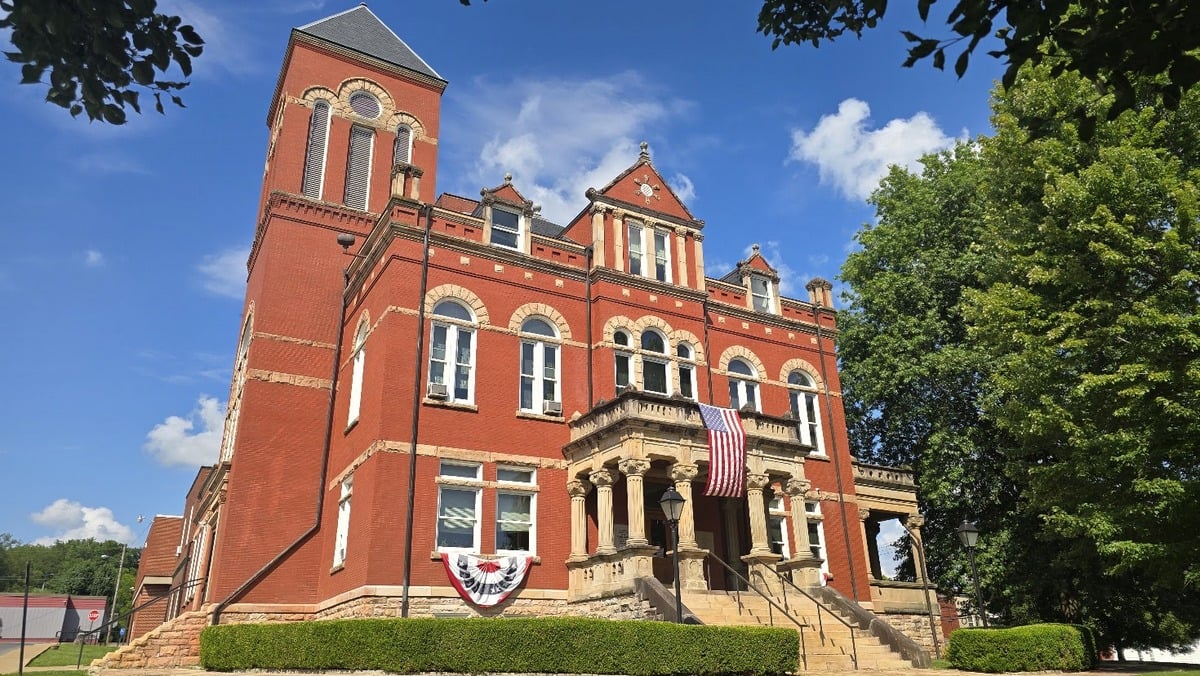
Its location adds to that significance. The well stands near North Court Street and Keller Avenue within the Fayetteville Historic District, amid a streetscape shaped by the courthouse, old transportation routes, and stonework associated with Italian immigrant craftsmen.
That makes the well more than an isolated curiosity. Together with the surrounding buildings, streets, and stonework, it helps preserve different layers of Fayetteville’s development—from the Civil War era through the early 20th century, when the Janutolo family helped reshape the water source in stone.
Unlike a museum object, the well also remains where generations of Fayetteville residents encountered it. Its survival allows visitors to experience history in the landscape where it happened, even as the town around it continues to change.
Was the site ever used like a sistern and a collection point for water access?
Fayette County is one of the if not the best County in West Virginia!
I was stationed in Oak Hill back in the mid 70’s during the construction of the New River Gorge Bridge.
I think when I arrived there the pylons for the archs had been poured and the arch on the south side of the bridge was jutting out above the canyon. I would drive through Fayette Station multiple times weekly so I was able to watch the progress incrementally. It was a great experience to witness.
Of course during that time the mines were booming all over the area and so was the nightlife. Whitewater rafting was growing by leaps and bounds and tourism was becoming a major business.
I’ve traveled the world living in almost every state and multiple countries however Fayette County back then couldn’t be matched.
The best people of anywhere else in the world. I made many friends whom I’ll never forget.
Historic towns were frequently founded around natural springs or underground water sources that provided water year-round. With West Virginia’s karst topography, some of these water sources dried up as the soluble limestone ground around them developed crevices from rainfall containing carbonic acid that dissolved the limestone and, over time, altered the flow of the water, often causing it to drop much deeper underground, only to surface again miles away. Evidence of these now-dry waterways has earned names like “Sinking Creek,” “Vanishing Creek,” and “Lost River.”
I’m admittedly not an expert, but I thought Fayette County is not part of the WV Karst Belt, which is primarily Greenbrier, Monroe, and Pocahontas counties. My understanding is that the Gorge region is mostly sandstone and shale. The limestone then being hundreds of feet below that, which protects it from the erosion that creates Karst.