
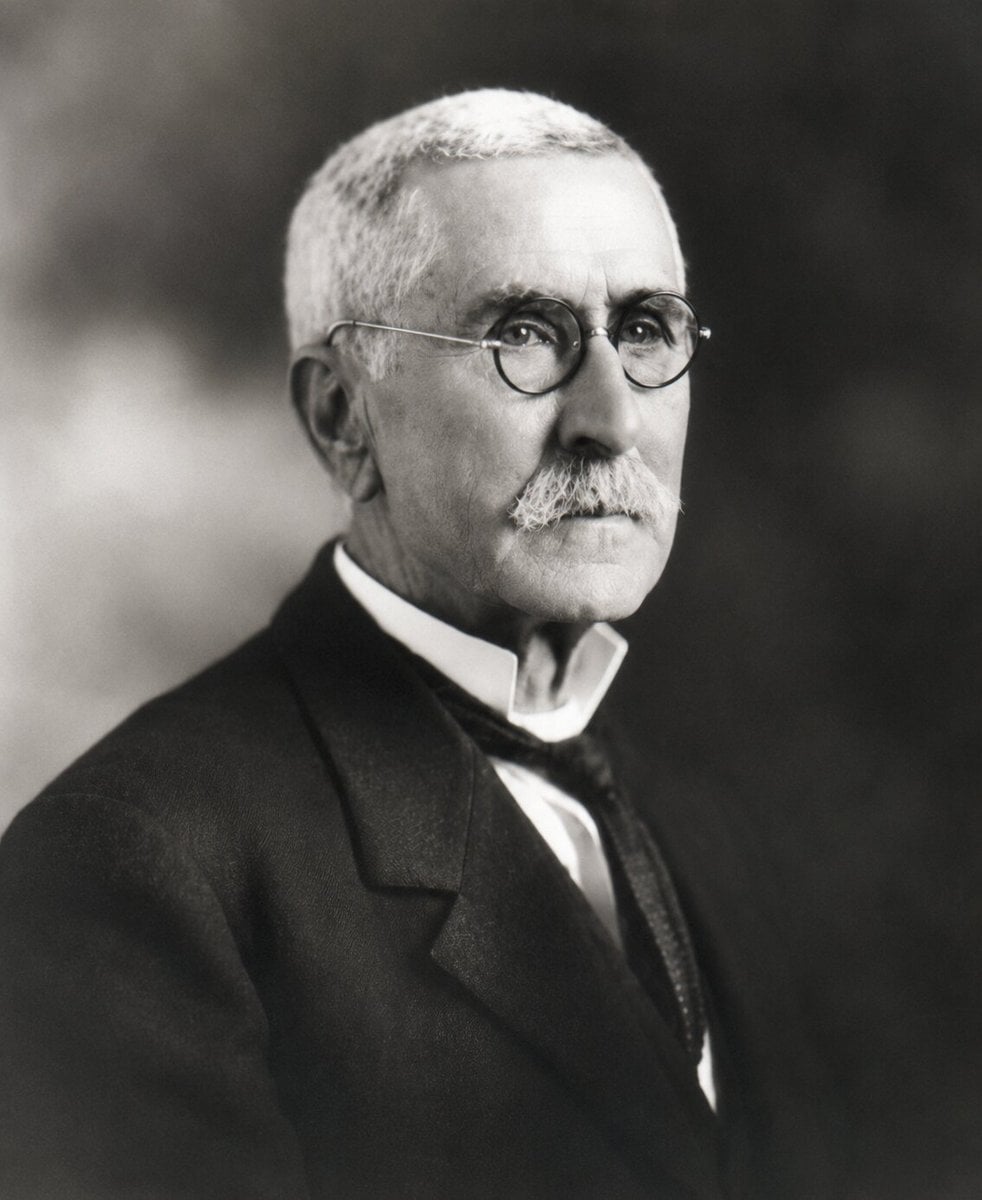
HUNTINGTON, W.Va. — One hundred seventy-five years ago this week, a boy was born along the Kanawha River in Putnam County who would become a bestselling author, a nationally known economic crusader, a presidential candidate, and, eventually, the architect of an extraordinary concrete monument intended to explain to people in the distant future why American civilization had destroyed itself.

William Hope “Coin” Harvey is little remembered today outside the places where he lived, but during the turbulent economic and political battles of the late 19th century, he became one of the country’s most recognizable advocates of monetary reform.
His 1894 book, Coin’s Financial School, sold more than a million copies, according to the West Virginia Encyclopedia, and transformed an obscure lawyer and businessman into the man Americans would know simply as “Coin.”
Harvey was born Aug. 16, 1851, in Buffalo, then a small community on the lower Kanawha River in what is now West Virginia. The 175th anniversary of his birth falls this week, offering an opportunity to reconsider the remarkable career of a West Virginian whose life carried him from the state’s formative years into some of the great national arguments of the Gilded Age—and finally to an unfinished pyramid in the Ozarks.
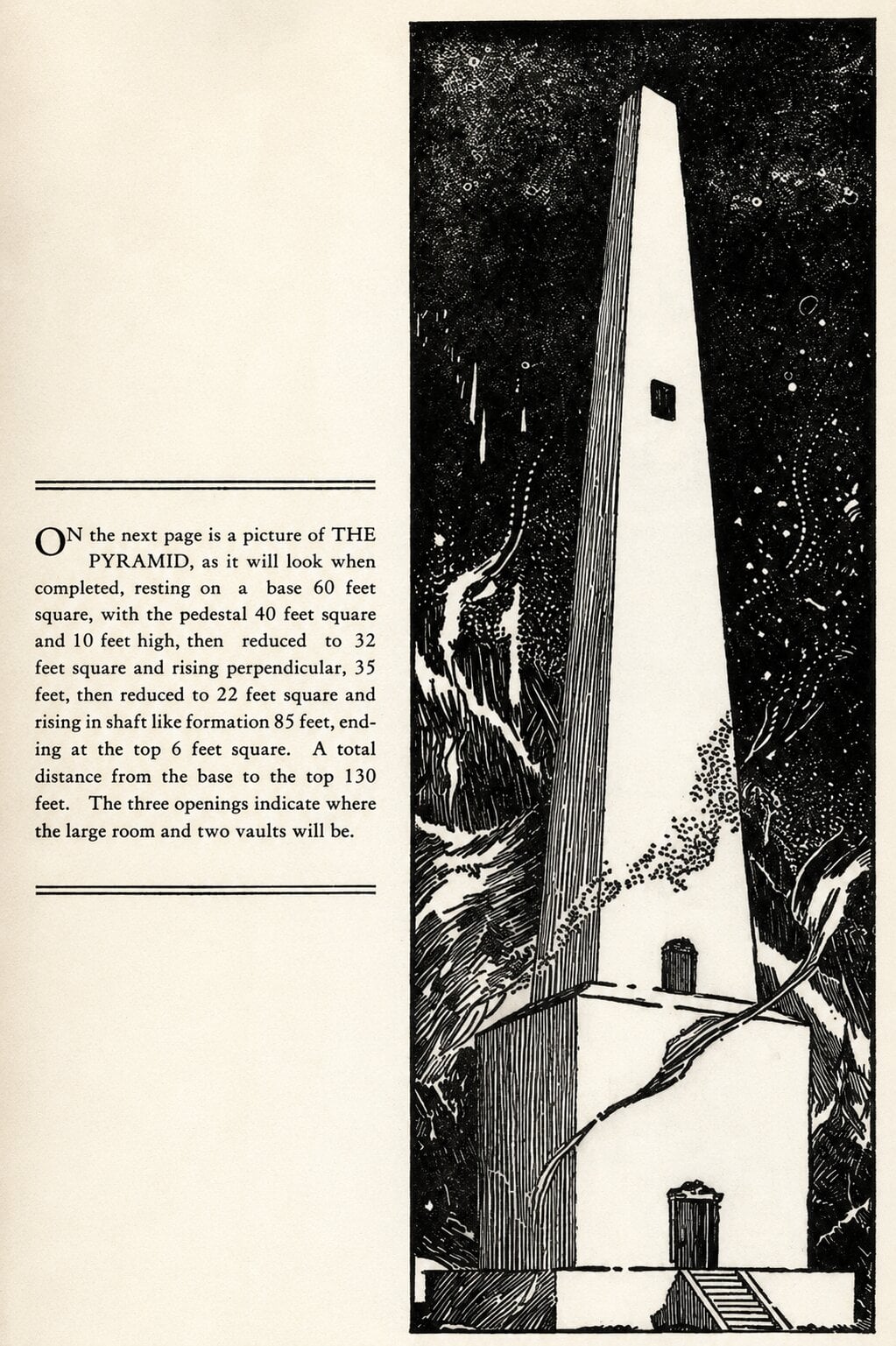
The pyramid was Harvey’s attempt to speak across an almost unimaginable gulf of time. Convinced that greed for money and power would ultimately destroy the civilization around him, Harvey planned a monument containing records of its history, achievements, inventions, people, and animals, along with an explanation of what he believed would cause its collapse. At its summit, he intended to place a message for whoever eventually found it:
“When this can be read, go below, and find the record of and cause of the death of a former civilization.”
It was an extraordinary final project for an extraordinary man, but the path that led Harvey from the Kanawha Valley to predictions of civilization’s destruction began with a much more conventional ambition.
From Putnam County to the American West
Harvey was the son of Robert and Anna Hope Harvey. He attended Buffalo Academy and Marshall College before studying law. He was admitted to the bar at 19 and, by 1874, was practicing in the newly developing city of Huntington. Contemporary accounts published after his death similarly remembered him as one of Huntington’s earliest residents and noted that he practiced law there with his brother, Judge Thomas H. Harvey.
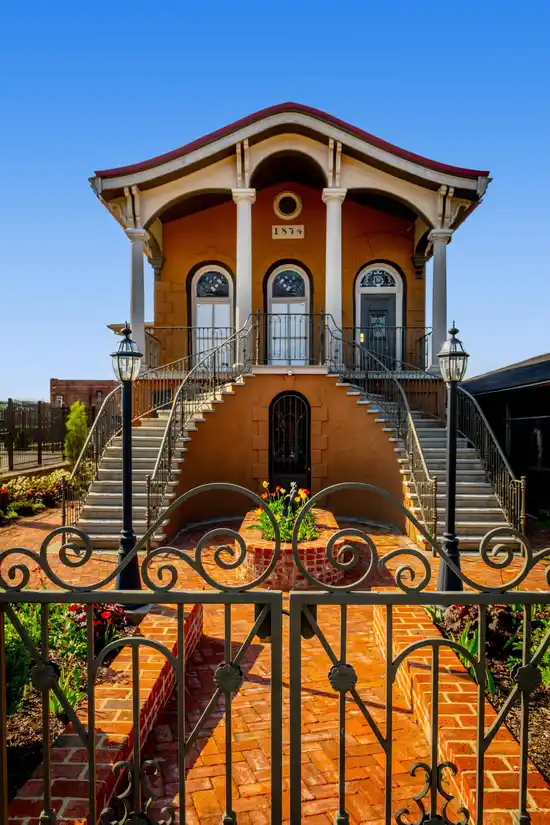
The Coin Harvey House at 1305 Third Avenue survives in Huntington and was placed on the National Register of Historic Places in 1972. Its federal nomination describes a striking early residence, inspired, according to local tradition, by classical architecture Harvey had admired in Louisiana. The original house included wrought-iron architectural details, arched windows, and an unusual interior arrangement, though substantial alterations were made over the succeeding decades.
Even the house contains an element of mystery. Although traditionally identified with Harvey and credited to his design, the National Register nomination cautions that he may never have actually lived there.
Some descendants believed that was probable, according to the document, which says Harvey left Huntington in 1872 or 1873 for Gallipolis, Ohio, before moving to Delaware, Ohio, where he married Anna R. Halliday in 1876.
Harvey eventually moved west, first pursuing business interests and then becoming involved in Colorado’s silver industry. The National Register documentation says he opened a silver mine near Silverton and encountered a monetary panic that depressed the profitability of his silver. The experience, the nomination suggests, helped inspire the economic theories that would eventually make him famous.
Those theories placed Harvey in the middle of one of the most consequential economic debates of his era.
The strange fame of ‘Coin’
To modern readers, a national political movement centered on the relative monetary value of gold and silver can seem remote. To Americans struggling through the economic upheavals of the 1890s, however, the question was immediate and intensely political.
Harvey became a forceful critic of the gold standard and an advocate of “free silver,” the movement seeking unrestricted coinage of silver alongside gold. Supporters believed that expanding the money supply would relieve deflation and debt, particularly for farmers and others who owed money. Opponents feared inflation and considered the movement economically reckless.
Harvey discovered he had an extraordinary ability to translate complex arguments into popular language.
Published in 1894, Coin’s Financial School presented monetary questions through a fictional young lecturer explaining the financial system to an audience. Its success was sensational. The West Virginia Encyclopedia credits the book with sales exceeding one million copies and says its title supplied Harvey with the nickname that followed him for the remainder of his life.
The book became influential enough to inspire published rebuttals. Material preserved by West Virginia Archives and History includes J.F. Cargill’s A Freak in Finance, billed on its elaborate cover as an answer to Coin’s Financial School. Cargill accused advocates of free silver of exploiting widespread anxiety caused by commercial and industrial depression and rejected their proposed monetary remedy.
Harvey continued publishing and lecturing. His works included A Tale of Two Nations, Patriots of America, Coin on Money, Trusts and Imperialism, and Common Sense. The National Register nomination says his economic views were shared by William Jennings Bryan, whose famous 1896 presidential campaign made free silver one of the defining issues of the election. Harvey became an enthusiastic Bryan supporter, but Republican William McKinley and the gold-standard forces prevailed.
Harvey’s ambitions were hardly confined to economics. During his years in Colorado, he helped create a mineral palace in Pueblo to showcase the state’s mineral wealth. A Huntington newspaper later recalled that one of its attractions was an enormous statue of “King Coal,” carved from a single piece of coal weighing 11,000 pounds.
By the turn of the century, however, Harvey was ready for another reinvention.
An eccentric empire in the Ozarks
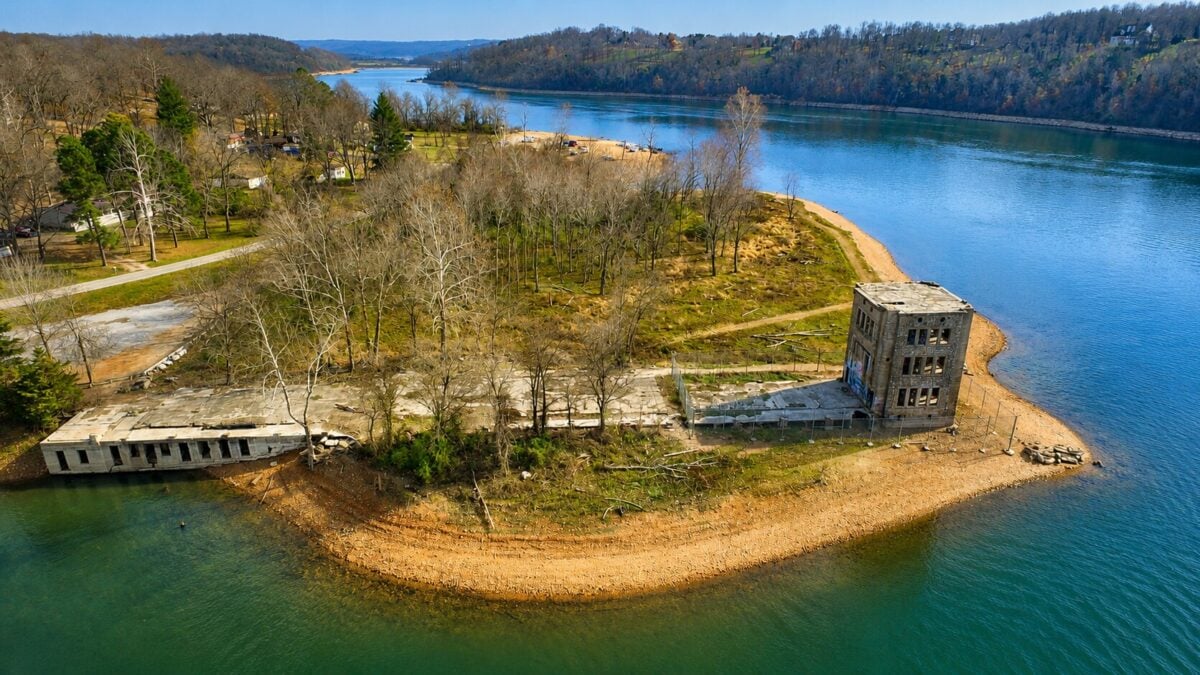
Harvey moved to Arkansas around 1900 and established himself at Monte Ne in the Ozarks. There, he attempted to develop an elaborate resort destination featuring enormous log hotels, springs, pavilions, wooded valleys, and other attractions. For a time, according to an account published after his death, tourists came from across the country, though financial difficulties and disputes with other investors eventually contributed to the resort’s failure.
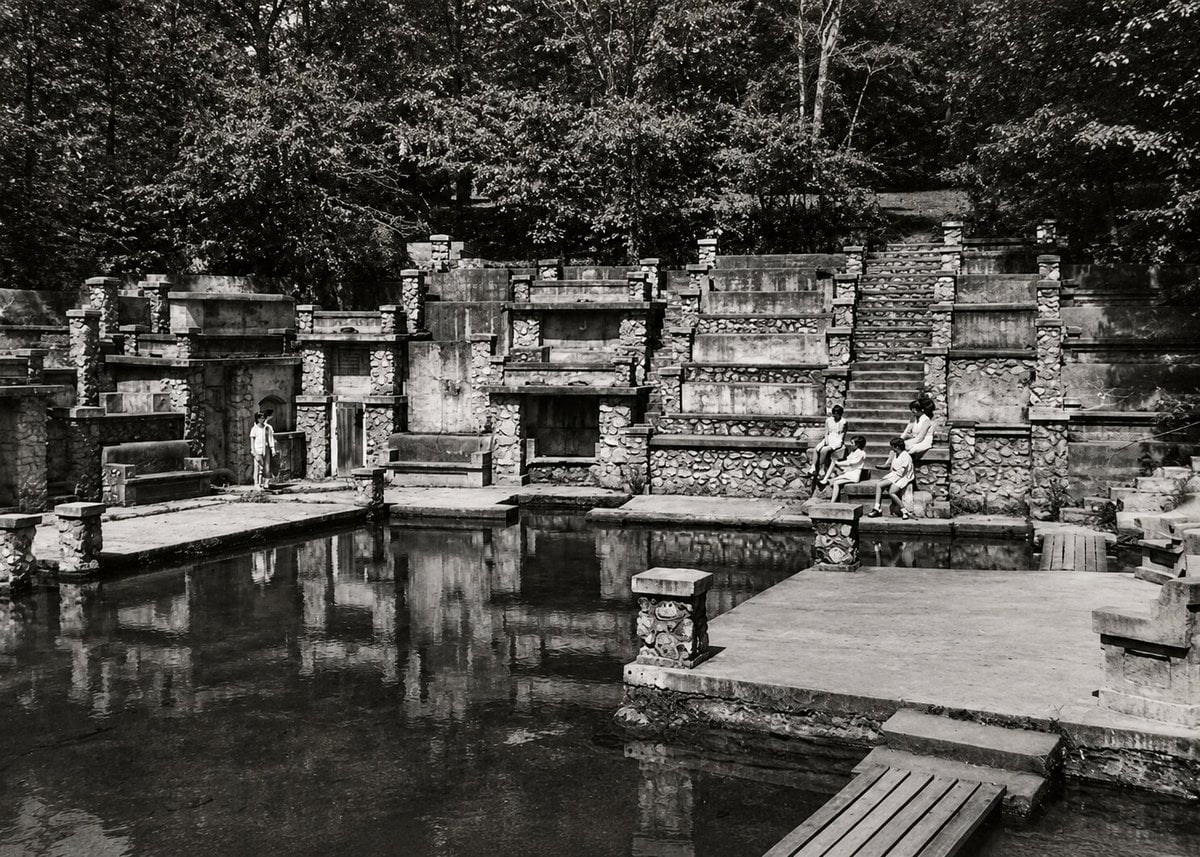
Harvey also became an energetic promoter of roads at a moment when automobile travel was transforming the United States. He organized the Ozark Trails movement and spent heavily to promote better roads through the central and western states. His transportation advocacy left a tangible legacy. The Encyclopedia of Arkansas notes that portions of what became U.S. 62 had been proposed by Harvey to encourage automobile traffic to Monte Ne.
Yet, Monte Ne would ultimately become associated with something far stranger than tourism or highways.
As Harvey aged, his pessimism about the future deepened. He studied earlier civilizations and their disappearance, becoming convinced that his own civilization was heading toward catastrophe. A 1936 Huntington newspaper account said Harvey believed society’s “greed for power and money” would eventually destroy it.
His answer was characteristically enormous. He began planning a concrete pyramid at Monte Ne to serve as a message to the future. The National Register documentation describes it as a monument intended to remain unopened for 1,000 years and dedicated to the decline and impending collapse of the civilization Harvey knew.
A contemporary account described an even more elaborate design. The proposed structure was to rise 130 feet, with a 40-foot-square base tapering to six feet square at its summit. Beneath it would be a vault preserving an account of civilization’s rise, the dangers Harvey believed threatened it, scientific and industrial achievements, photographs of inventions and discoveries, images of people and animals, and even a book intended to help the pyramid’s future discoverers translate the language of the vanished people who had built it.
Harvey never completed his grand design.
At 81, another run for the White House
Even as he contemplated civilization’s eventual destruction, Harvey had not entirely abandoned hope of reforming it.
In 1931, he organized the Liberty Party and became its presidential candidate in the 1932 election. Harvey was 81 when voters chose among him, Republican President Herbert Hoover, Democrat Franklin D. Roosevelt, and several other candidates during the depths of the Great Depression.
Harvey was never a serious contender for the presidency, but his campaign was more than a symbolic hometown exercise. Election results compiled by Dave Leip’s Atlas of U.S. Presidential Elections credit Harvey and running mate Frank Hemenway with 53,425 votes nationwide, or about 0.13% of the popular vote. Roosevelt won the election overwhelmingly with more than 22.8 million votes and 472 electoral votes.
Harvey’s support was particularly notable in parts of the West. He received nearly 5% of the vote in Washington state, according to the election compilation, and substantially higher shares in several individual counties.
The defeat was reportedly painful for him. The Huntington account published at his death said Harvey expressed deep disappointment after the votes were counted and financial support for the Liberty Bell, his party newspaper, disappeared. Still, he remained active into old age and reportedly insisted until his final months that he expected to live to 100, which he did not.
The pyramid outlived its creator
William Hope “Coin” Harvey died at Monte Ne on Feb. 11, 1936, at age 84, from peritonitis following an intestinal illness. His second wife, May Leake Harvey, who had served for decades as his private secretary before their marriage, was with him when he died. His children were notified as his condition deteriorated.
The man who had spent his later years preparing a message for people he imagined living centuries after his own death was buried at Monte Ne, at the base of the monument he never completed. The National Register nomination prepared decades later still identified the pyramid as one of the defining creations of his life.
Back in Huntington, his association with the unusual Third Avenue house also endured. When preservationists prepared its National Register nomination in 1971, they were concerned about the disappearance of Huntington’s earliest architecture and imagined the Harvey property and neighboring Enslow residence as the nucleus of a historical complex and potential tourist attraction. Photographs submitted with the nomination show the distinctive two-story structure with tall arched windows and a sweeping porch facing the street.
Today, Harvey occupies an unusual position in West Virginia history. He was neither a president nor one of the great national political figures whose names survived their era, yet he was far more than a colorful local eccentric.
He was a lawyer, businessman, silver miner, road promoter, resort developer, prolific writer, and political agitator whose bestselling explanation of monetary policy helped carry one of the great economic arguments of the 1890s into American homes. The West Virginia Encyclopedia calls him “one of the most remarkable personalities to emerge from West Virginia.”
Perhaps the most remarkable thing about Harvey, 175 years after his birth, is how thoroughly a man who spent so much of his life trying to influence the future has disappeared from popular memory. He tried books, lectures, political campaigns, and finally concrete to make his ideas endure.
The pyramid was supposed to tell some distant people what had become of Harvey’s civilization. Instead, what remains of it helps tell the present one what became of Harvey.
An interesting story about a remarkable man. Like many of the highly intelligent and accomplished individuals in our country’s history, his knowledge, pursuits and accomplishments were far-ranging and years ahead of his time. Even unfinished, his monumental pyramid may yet serve its ultimate purpose.