
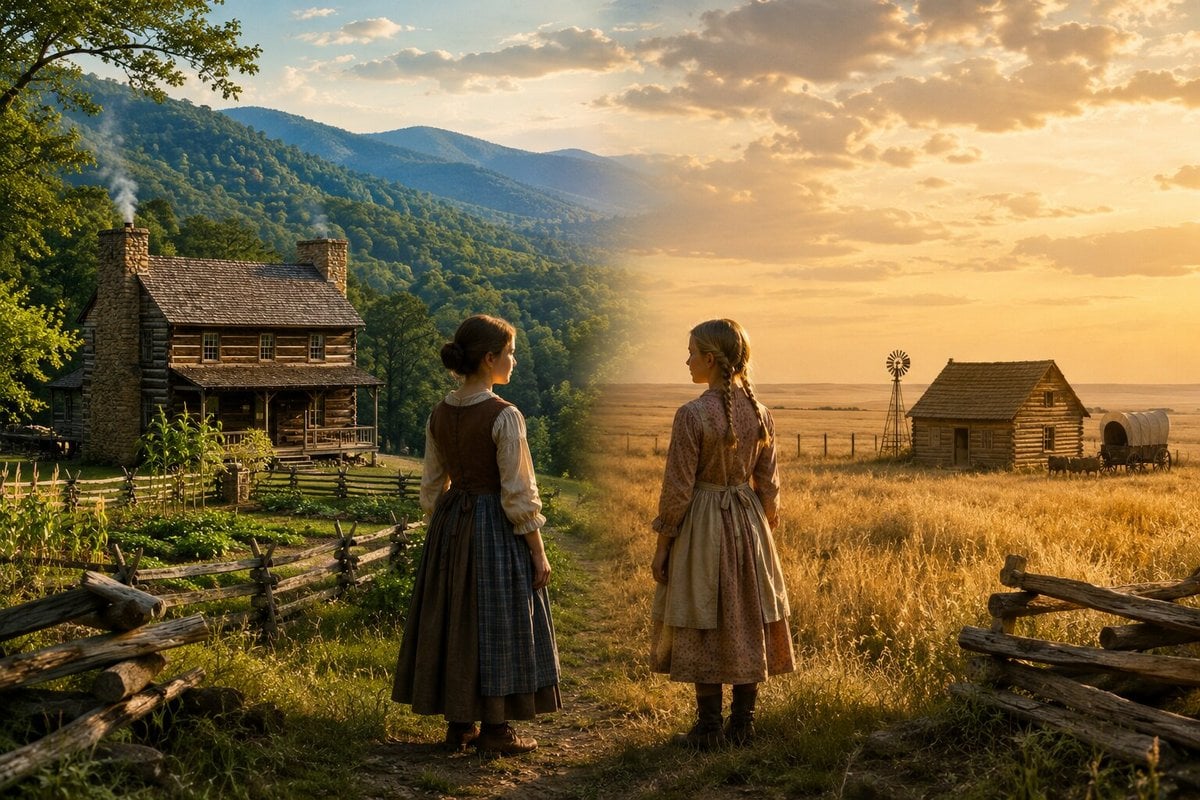
CHARLESTON, W.Va. — Netflix’s new adaptation of Little House on the Prairie is introducing a new generation to the hardships and hope of life on the American frontier. Viewers are following the Ingalls family as they struggle to build a home on the Kansas prairie, where survival depends on hard work, perseverance, and family strength.

For West Virginians—and for anyone fascinated by early American history—that story begins even earlier. Long before settlers pushed onto the Great Plains, families were carving homes from the forests of what is now West Virginia.
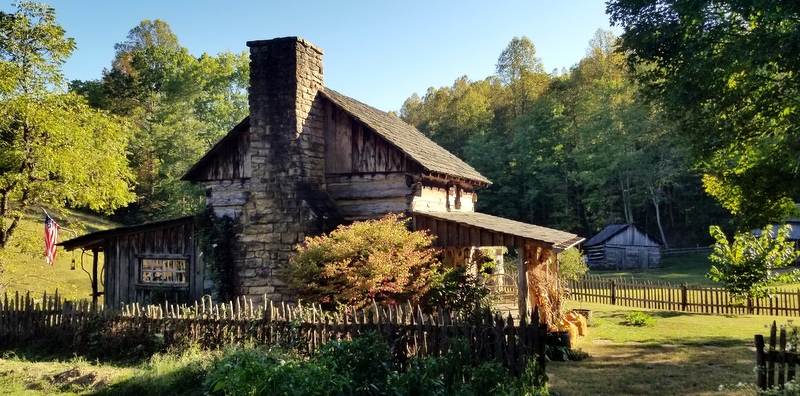
Here, the frontier was not an endless sea of grass but a rugged wilderness of steep mountains, rushing rivers, and dense hardwood forests. Every cabin had to be built from timber cut by hand, and every field had to be cleared one tree at a time.
David Sibray, publisher and historian of West Virginia Explorer, said there was a time when the American frontier lay in what’s now West Virginia.
“People often think of the prairie as America’s first frontier,” Sibray said. “In reality, what is now West Virginia was the frontier decades before Laura Ingalls Wilder’s family headed west. The challenges were different, but the courage required was every bit as great.”
A different kind of frontier
The mountain frontier required a different set of skills than life on the plains. Rather than crossing open grasslands, settlers navigated narrow valleys, rocky ridges, and swift rivers.
Travel that might have taken hours on the prairie could take days through the Appalachian wilderness. Hunting often provided as much food as farming, and communities depended heavily on neighbors because stores, doctors, and churches might be many miles away.
Isolation became both a hardship and a source of resilience. Families built homes from chestnut, oak, and poplar logs, raised livestock in small clearings, and relied on gardens, orchards, and preserved food to survive long winters. Children worked alongside their parents from an early age, helping with planting, harvesting, livestock, and countless daily chores.

“The mountains demanded self-reliance,” Sibray said. “You couldn’t simply drive to town for supplies. Families learned to make, repair, or grow almost everything they needed.”
The cabins that remain
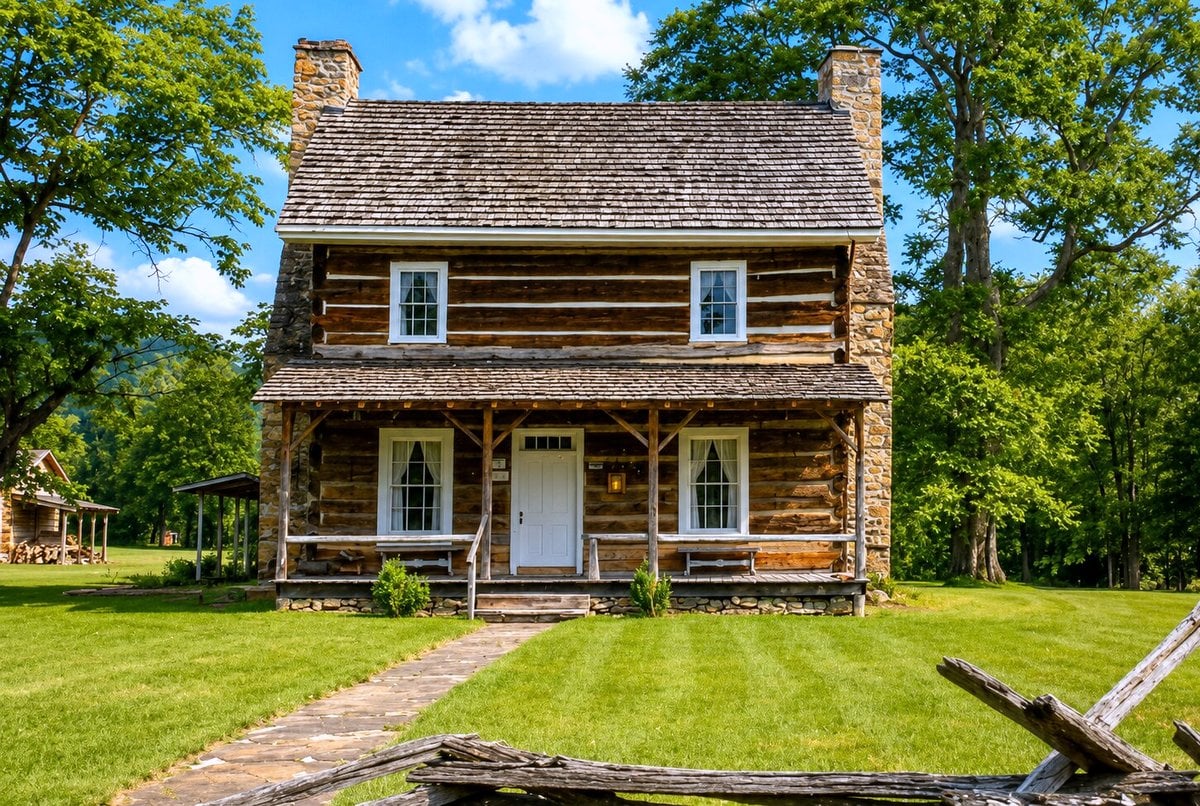
Although many frontier cabins have disappeared, several remarkable survivors still offer a glimpse into West Virginia’s earliest years.
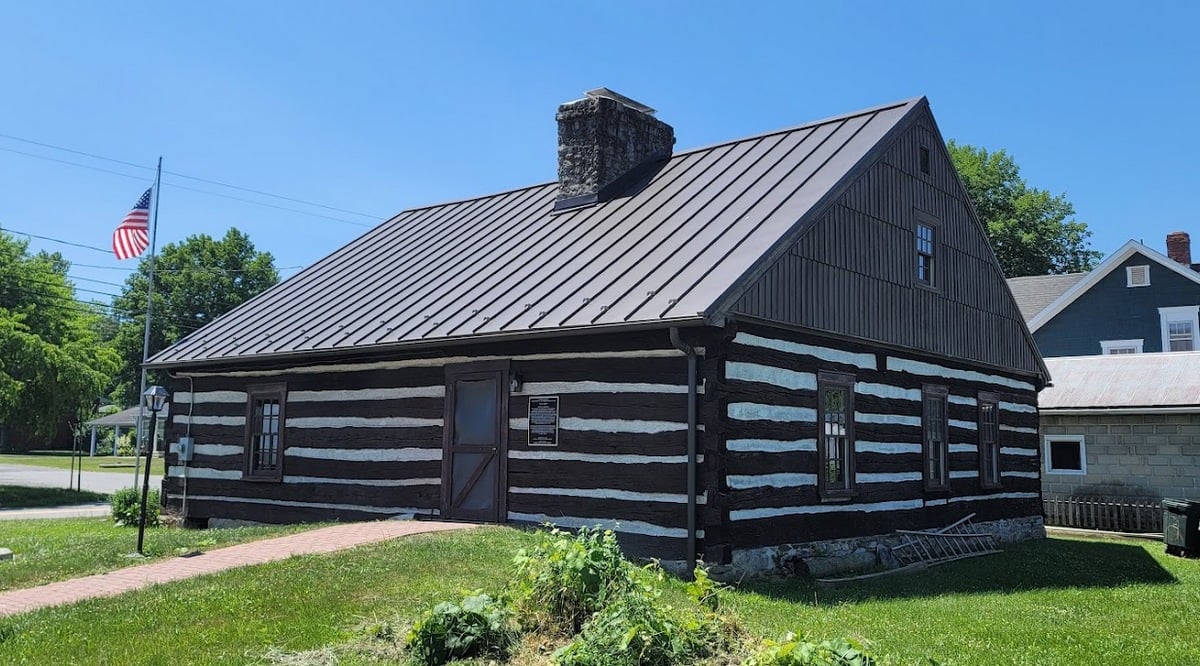
Among the oldest is the James Graham House near Lowell in Summers County, believed to date to the early 1770s. Built while the region remained Virginia’s western frontier, the sturdy log home stands as a reminder of the determination required to establish a family in the Appalachian wilderness.
Other preserved cabins, reconstructed homesteads, and living-history museums throughout the Mountain State reveal similar stories. Their rough-hewn logs, stone chimneys, and hand-crafted furnishings offer a far more authentic picture of frontier life than most visitors expect.
Unlike movie sets, these places were real homes where children were born, crops failed, illnesses spread, and generations struggled to build better lives.
More alike than different
Despite their different landscapes, West Virginia’s frontier families shared much with the pioneers later immortalized by Laura Ingalls Wilder.
Both lived in log homes. Both depended on family labor. Both endured harsh winters, uncertain harvests, and dangerous illnesses. Both celebrated the arrival of neighbors, travelers, and ministers, who broke months of isolation.

The greatest difference may have been the landscape itself. The prairie stretched to the horizon beneath enormous skies. West Virginia enclosed its settlers within forested mountains where ridges blocked the sun early each evening, and rivers often became the only practical routes through the wilderness.
Yet in both places, success depended less on geography than on determination, Sibray said.
“The stories resonate because they remind us how resilient ordinary people can be,” he said. “Whether they lived on the prairie or in the mountains, these families built communities that shaped the America we know today.”
Where to experience West Virginia’s frontier
Visitors interested in the world that preceded Little House on the Prairie can still explore several places that preserve the Mountain State’s frontier heritage:
Frontier Homeplace at Twin Falls State Park
The Frontier Homeplace at Twin Falls Resort State Park offers visitors a rare chance to step into the everyday world of a 19th-century Appalachian family. Centered on an 1835 log cabin uncovered during the park’s construction, and later incorporated into a later farmhouse, the restored homestead features period outbuildings, gardens, livestock, and demonstrations that recreate the rhythms of frontier life in southern West Virginia.
Rather than interpreting a military fort or grand estate, the living-history site focuses on ordinary mountain families whose hard work, self-reliance, and close connection to the land shaped the region’s early communities.
Prickett’s Fort at Prickett’s Fort State Park
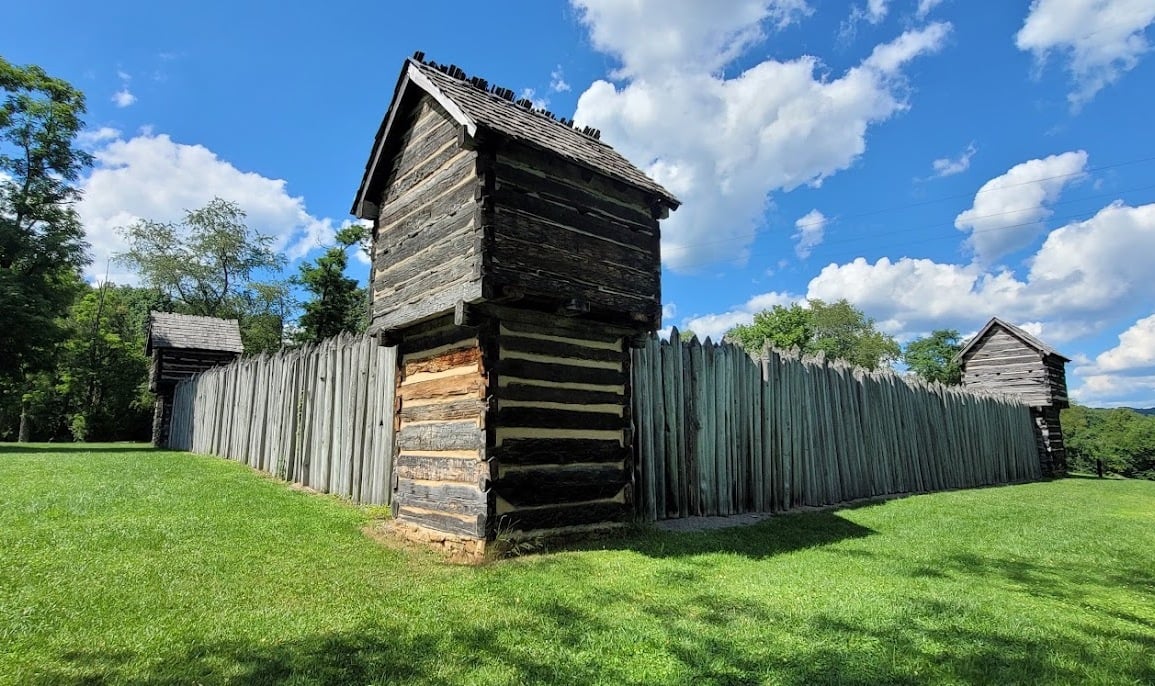
Prickett’s Fort State Park near Fairmont brings West Virginia’s colonial frontier vividly to life through one of the state’s premier living-history experiences. Centered on a reconstruction of the refuge fort established in 1774 by Jacob Prickett, the park interprets a turbulent period when settlers gathered behind log palisades for protection amid conflicts along Virginia’s western frontier.
Costumed interpreters demonstrate blacksmithing, woodworking, spinning, and other 18th-century crafts, while period cabins, blockhouses, and a visitor center help visitors imagine the daily lives of families living on the edge of European settlement. Though the reconstructed fort is more elaborate than the original, it faithfully represents the types of refuge forts that once dotted the Monongahela Valley, making it one of the best places in West Virginia to experience the state’s earliest frontier history.
Museum at Fort Ashby
The Ashby’s Fort Museum preserves the site of one of the few surviving French and Indian War forts in the United States and offers visitors a window into the dangerous years when present-day West Virginia lay at the edge of Britain’s American frontier. Built in 1755 on the orders of the young George Washington, the stockade protected settlers along Patterson Creek from attacks during the conflict between Britain and France.
Today, the reconstructed fort and museum interpret the daily lives of soldiers and frontier families through exhibits, artifacts, and special living-history events, making it one of the Mountain State’s most significant places to experience the era leading up to the American Revolution.
The Graham House on the Greenbrier River
The James Graham House near Lowell offers one of the closest experiences visitors can have to stepping inside West Virginia’s earliest frontier. Built around 1770–72 by Col. James Graham, the imposing two-story log home served not only as a family residence but also as a refuge for settlers on Virginia’s western frontier. Its history reflects both the promise and peril of frontier life.
In 1777, the house was attacked during a raid that left Graham’s young son and others dead and his daughter, Elizabeth, taken captive. Today, preserved as a museum and listed on the National Register of Historic Places, the Graham House remains the oldest surviving two-story log home in West Virginia and a powerful reminder of the courage and sacrifice that shaped the Mountain State’s earliest settlements.
Together, these sites reveal a chapter of American history that often receives less attention than the settlement of the Great Plains but helped lay the foundation for westward expansion.
A frontier worth rediscovering
The renewed popularity of Little House on the Prairie offers more than nostalgia. It reminds viewers that the American frontier was never confined to a single landscape or generation.
For thousands of families, that frontier first unfolded among the ridges and valleys of present-day West Virginia.
Their stories remain etched into weathered cabins, old farmsteads, and mountain communities that continue to preserve the spirit of America’s earliest pioneers. For travelers willing to look beyond the prairie, they offer one of the nation’s most authentic connections to frontier life.
West Virginia’s own frontier heroine
Long before Laura Ingalls Wilder introduced readers to frontier life on the Great Plains, the Appalachian frontier produced one of America’s most remarkable women. Because of a similarity in names, Virginians and West Virginians often confuse the two.
In 1755, Mary Draper Ingles was captured during the attack on Draper’s Meadow on the New River in present-day Virginia and taken west by Native warriors through what is now West Virginia and Ohio. Separated from her family, she eventually escaped and undertook an extraordinary journey of hundreds of miles on foot through the Appalachian wilderness to return home.
While Wilder’s stories celebrate perseverance, family, and the settlement of the prairie, Ingles’ ordeal reveals the far more dangerous world of the colonial frontier, where isolated settlements faced constant uncertainty of war, disease, and survival in an untamed wilderness. Together, the stories remind us that the American frontier stretched across many generations and landscapes, each producing men and women whose courage became part of the nation’s history.
“Mary Draper Ingles deserves to be remembered alongside America’s great frontier figures,” Sibray said. “Her journey through the Appalachian wilderness is every bit as remarkable as the stories that later unfolded on the prairie, yet surprisingly few Americans know her name.”
About Little House on the Prairie
Little House on the Prairie is one of America’s most enduring frontier stories, following the Ingalls family as they build a life on the expanding western frontier in the late 19th century through perseverance, faith, and hard work.
Based on Laura Ingalls Wilder’s autobiographical books, the Little House on the Prairie series has introduced generations of readers and television viewers to the challenges of pioneer life, from building log cabins and planting crops to enduring harsh winters and forging close-knit communities.
Netflix’s new adaptation has renewed interest in these themes, reminding audiences that the frontier experience shaped families across much of early America, including the forested mountains of what is now West Virginia, where pioneers faced a different but equally demanding wilderness decades before the Great Plains were settled.
The novel Little House on the Prairie was actually the third in Wilder’s series, continuing the story of the first, Little House in the Big Woods.
I don’t think there were many log homes on the prairie. Sod homes were much more common in the early days. There just weren’t enough trees around to build log cabins….at least in some areas.
Thank you for these uplifting reminders of our Mountain States history. I had never heard the story of Mary Draper Ingals! Perhaps some literary artist could write a story of her life and her family? Perhaps some genealogical connection exists between the two Ingals families?
Yes, you make a great point. Although their names are spelled differently, that happened with the settling of our Nation. Sometimes intentional so as to make them unique and sometimes inadvertently through record keeping and the passing down of names from generations before.
There is a book titled Follow the River that is true story of Mary Draper Ingals by James Alexander Thom. It was also made into a TV movie in 1995. Very interesting and authentic.
Don’t forget about Heritage Farm near Huntington West Virginia