

NEW CUMBERLAND, W.Va. — More than 20 brick plants once crowded what’s now a scenic stretch of the Ohio River, producing millions of bricks shipped to Pittsburgh and to cities hundreds of miles away, transforming a small West Virginia community into a nationally important industrial center.
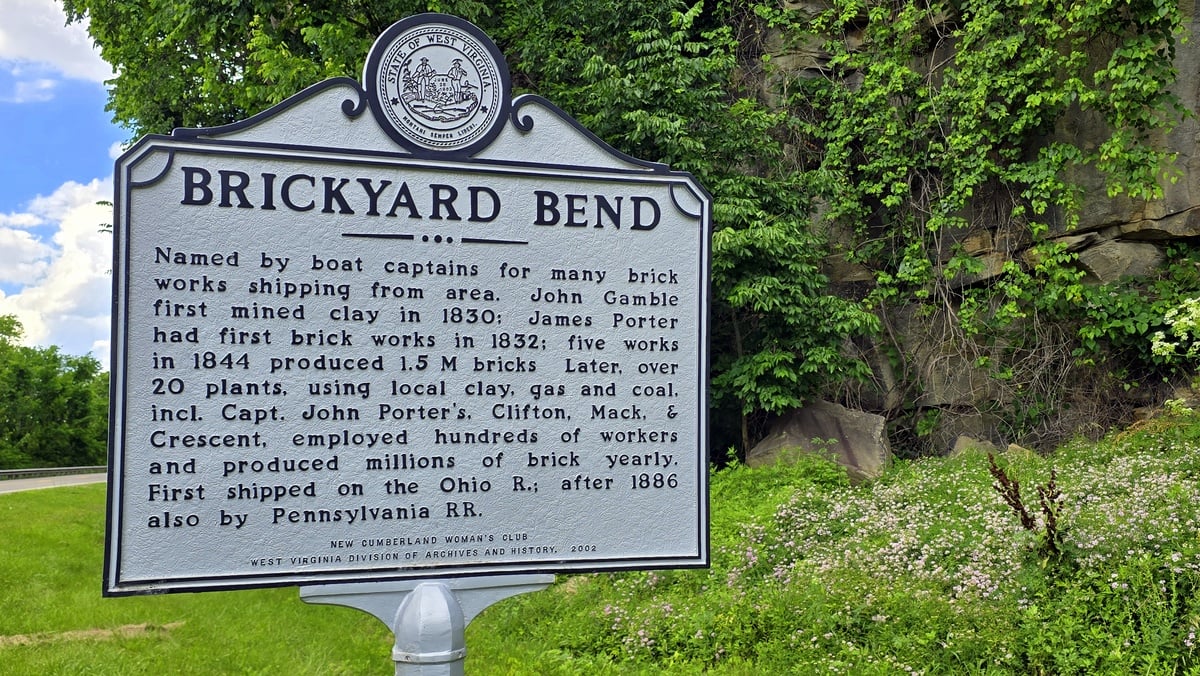
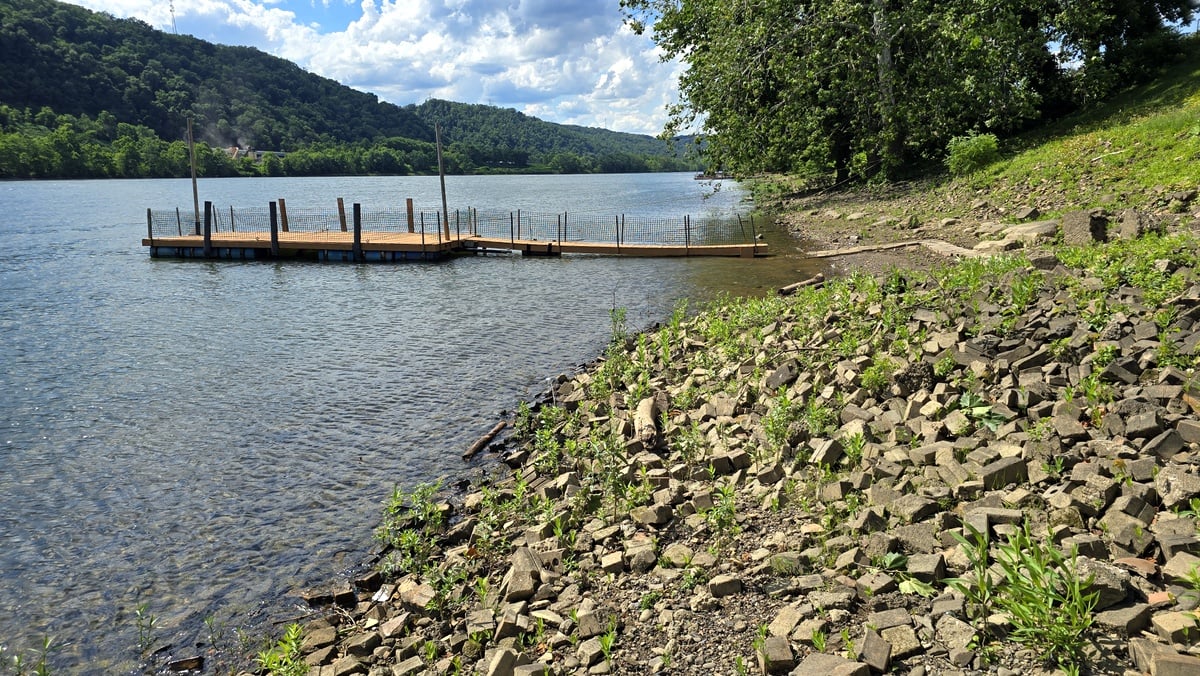
The concentration became so extensive that riverboat crews called it “Brickyard Bend.” Historian Jeanne Grimm, writing in the West Virginia Encyclopedia, says New Cumberland was considered the brick capital of the United States from about 1840 to 1910. In 1872 alone, manufacturers shipped 11 million bricks from New Cumberland by river.
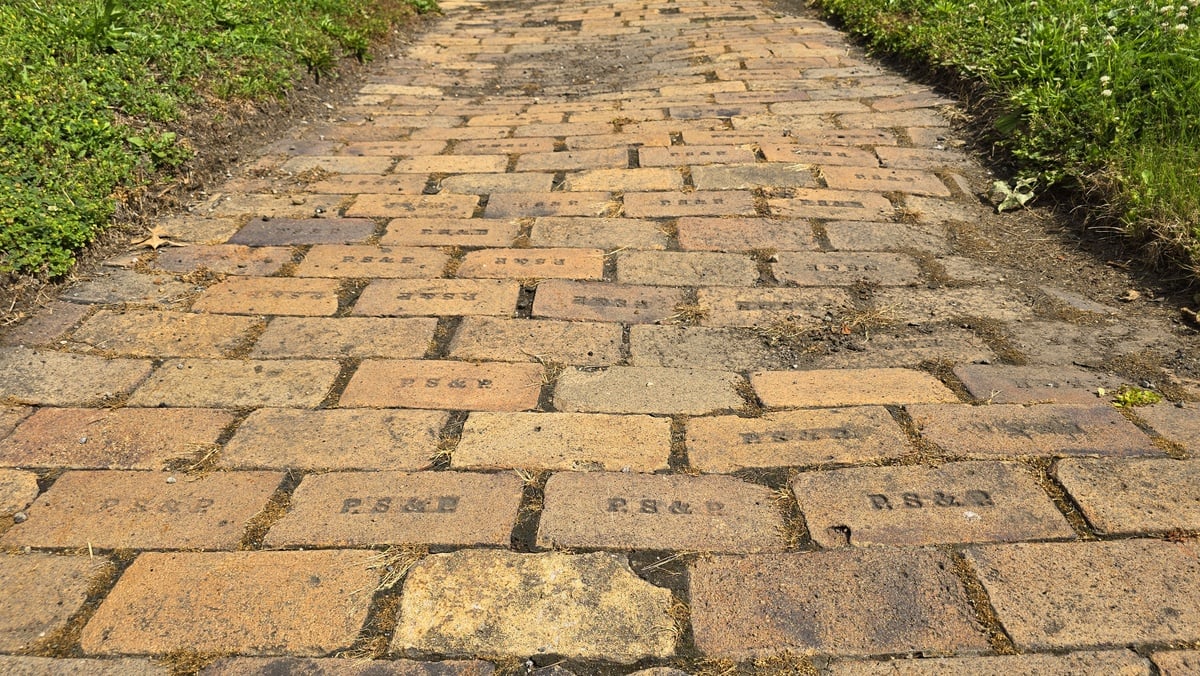
After the Pennsylvania Railroad reached the community in 1886, shipments eventually climbed to as many as 75 freight cars of bricks and other clay products a day, Grimm says. Historical records document New Cumberland paving products in Wheeling and nearby Steubenville, Ohio, and in projects as distant as Bayonne and Westfield, New Jersey, and Greenville, South Carolina.
The bricks were shipped upstream to Pittsburgh and points east, with earlier shipments traveling down the Ohio River to Cincinnati, Louisville, and New Orleans. The industry developed about 35 miles west of Pittsburgh in a section of the Upper Ohio Valley that became one of the nation’s major industrial regions.
Today, travelers passing through New Cumberland see relatively little of the enormous brickmaking district. Only maps, patents, court records, and oral histories preserve evidence of a landscape once dominated by clay mines, kilns, factories, railroad sidings, and communities built around the industry.
Why brickmaking exploded here
Brickmaking around New Cumberland dates to at least 1832, when James Porter established what historical accounts identify as the first brick plant in what would become West Virginia. According to Grimm, five works produced about 1.5 million bricks annually by 1844, and more than 20 plants eventually operated along the Ohio River near New Cumberland.
The industry’s location was closely tied to Hancock County’s geology. The West Virginia Geological Survey‘s Clays of West Virginia, published in 1948, documented extensive clay resources in the area, including fire clays valuable for manufacturing products that could withstand extreme heat.
New Cumberland also occupied an advantageous position on the Ohio River. Before railroads reached the community, manufacturers could load their products onto boats bound for markets throughout the Ohio and Mississippi river systems.
Longtime New Cumberland resident Leslie Cuppy described that trade in a 1975 oral-history interview preserved by Youngstown State University. Cuppy recalled accounts of bricks being shipped to Wheeling, Cincinnati, Louisville, and New Orleans before railroads gave manufacturers another way to reach distant markets.
Cuppy also recalled family accounts of locally constructed boats being loaded with bricks, floated downstream, and then sold for lumber after their cargo was delivered. Other boats, he said, were brought back upstream with help from men and mules traveling along the riverbank.
William Porter provided a similar account in a 1976 Youngstown State oral-history interview. Porter said his grandfather had captained boats carrying New Cumberland bricks to New Orleans and other river ports before entering the brick business himself.
West Virginia brick began appearing beneath city streets
One of New Cumberland’s most prominent manufacturers was Capt. John Porter, an industrialist remembered locally as the “brick king.” Federal patent records show that Porter received a U.S. patent in 1884 for a pavement system using courses of brick and sand to create a durable road surface.
Wheeling became an early showcase for New Cumberland paving material. An 1886 account of Wheeling city government, preserved by the Ohio County Public Library, credits Porter with manufacturing paving blocks used there and reports that the city expected to have nearly five miles of brick-paved streets by the end of that construction season.
The pavement drew attention beyond Wheeling. The same account reported that representatives of other municipalities traveled to the city to examine its brick streets, while a period engineering publication later reported that a section of Chapline Street, paved in 1883, had remained in service for several years without requiring repair.
Porter also promoted the material across the Ohio River in Steubenville. Historical accounts say he supplied municipalities with enough brick to pave experimental street sections, including a portion of Third Street in Steubenville in 1884.
A later historical account reported that Steubenville officials said in 1910 that the pavement had survived 26 years without substantial repair, except where utility and streetcar work required portions to be disturbed.
The bricks traveled hundreds of miles
The Pennsylvania Railroad’s arrival in New Cumberland in 1886 opened markets that were difficult to reach by river alone. Grimm writes that as many as 75 freight cars carrying bricks and other clay products eventually departed New Cumberland in a day.
Pennsylvania Railroad records from 1923 show separate industrial sidings serving Crescent Brick Works, Big Kiln, Etna, Union, and Rocky Side along the line north of town. Surviving contracts and court records provide evidence of some of the distant markets those transportation connections allowed manufacturers to reach.
New Jersey records from 1911 document a Mack Manufacturing Co. contract to provide approximately 450,000 paving blocks for Twenty-fourth Street in Bayonne. Another contract called for approximately 23,000 Mack paving blocks for gutters along North Avenue in Westfield.
A South Carolina Supreme Court case decided in 1920 documents approximately $12,000 worth of brick supplied by Mack Manufacturing for street paving in Greenville. The records establish that paving products manufactured along this section of the Ohio River reached cities hundreds of miles from West Virginia.
An industrial district stretched along the Ohio
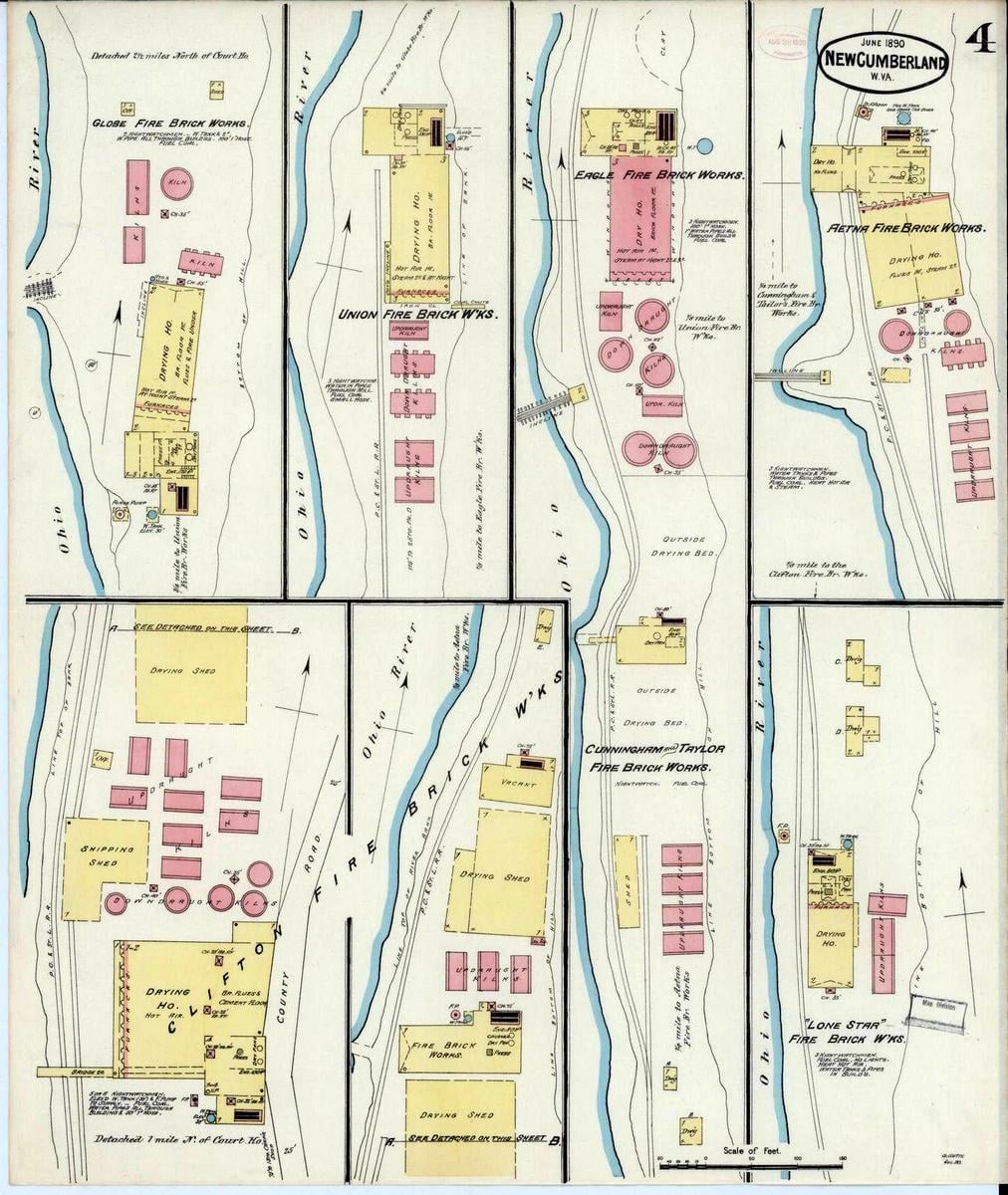
Historical maps provide some of the clearest evidence of the industry’s scale. Sanborn fire insurance maps identify operations, including Rocky Side fire brick works, Eagle sewer-pipe works, Etna, Union, Crescent, Clifton, and Sligo, around New Cumberland.
Later maps continued to document substantial clay-products operations, including the American Vitrified Product Co., Acme Fire Clay and Coal Co., and Freeman Fire Brick Co. Historical accounts of Mack Manufacturing describe company plants extending along roughly eight miles of the river corridor, including Crescent, Aetna, Union, and Rocky Side north of New Cumberland, and Sligo to the south.
Those accounts put Mack’s combined capacity at approximately 300,000 paving bricks a day and its workforce at about 400 employees, including roughly 125 clay miners. Pennsylvania Railroad records showing numerous industrial sidings along the same corridor reinforce the picture of a district filled with clay workings, factories, kilns, and transportation infrastructure.
According to Grimm, the concentration of brick plants was so conspicuous from the Ohio River that passing boat crews began referring to the area as Brickyard Bend.
Hundreds of people lived above the brickyards
The brick industry also supported communities closely connected to the plants and mines. Rockyside developed in the hills above the brickworks north of New Cumberland. Historical research presented by the Ohio County Public Library indicates that more than 300 people lived there between approximately 1870 and 1950.
According to that research, Rockyside lacked electricity, running water, and indoor plumbing for much of its existence, but the community supported a one-room school and a Catholic church built in 1904. Its location above the industrial corridor placed residents near the clay mines and brick plants that provided employment.
Cuppy’s oral history offers a firsthand account of that labor. He told interviewers that he began working in a brickyard at age 13, earning 50 cents for a 10-hour day, and recalled that by age 16 he was performing what he considered a man’s job for $1.45 a day.
At its height, the industry employed hundreds of workers. Historical accounts of Mack Manufacturing alone place its workforce at approximately 400, including about 125 clay miners.
From city streets to steel mills
New Cumberland’s period as the nation’s brick capital is generally dated from about 1840 to 1910, but manufacturing continued even as paving brick began to lose ground to newer materials, as local producers adapted to changing industrial markets.

In his Youngstown State oral-history interview, Porter recalled that local manufacturers produced building brick, road brick, and paving blocks before increasingly shifting toward fire brick in the late 1920s and early 1930s. The transition connected New Cumberland more closely to Pittsburgh’s industrial economy and the Upper Ohio Valley because refractory brick, capable of withstanding extreme heat, was essential to furnaces and other equipment used in steelmaking.
Federal transportation records show that the market survived well into the 20th century. A 1971 filing involving Crescent Brick Co. documents proposed shipments of ladle brick from New Cumberland to industrial centers including Chicago, Gary, Cleveland, Lorain, Warren, Canton, Middletown, Steubenville, Butler, and Erie.
The records trace a shift in the market for New Cumberland clay products. During the 19th and early 20th centuries, Brickyard Bend manufacturers supplied paving and building materials to growing cities, while later operations increasingly produced refractory products for steelmaking and other heavy industries.
The factories disappeared, but Brickyard Bend survived
Grimm attributes the eventual decline of New Cumberland’s brick industry to depleted clay deposits, rising railroad freight costs after World War I, and competition from newer paving and construction materials. Federal records documenting disputes over freight rates for fire brick, building brick, and paving brick shipped from the New Cumberland area provide additional evidence that transportation costs became a concern for manufacturers serving distant markets.
As plants closed, much of the physical landscape that had defined Brickyard Bend disappeared. Its history now survives largely in maps, railroad records, patents, court cases, oral histories, and bricks stamped with the names of New Cumberland manufacturers.
Those records document an industry that reached far beyond Hancock County. From a bend in the Ohio River near Pittsburgh, West Virginia workers dug clay from the hills and transformed it into millions of bricks carried by river and railroad to cities across the country. Some became streets in communities hundreds of miles away, while later refractory products went to industrial centers that helped power American steelmaking.
For about 70 years, Grimm writes, New Cumberland’s concentration of brick manufacturers was significant enough for the community to be considered the brick capital of the United States. Riverboat crews had their own name for the industrial landscape they encountered along the Ohio—Brickyard Bend.

Man, West Virginia really helped build this country, at least the east side (some of the south) and then was all but forgotten. This state has so much history.
When I moved into my current home in Queens, NY I found in my backyard many scattered bricks with “Fairmont, WVA” stamped on them. I’ve no idea how they got there, but I’m now using them to border my plants. Thank you for providing some history to them!