West Virginia is a premier rock-climbing destination in the eastern United States, home to thousands of established routes and boulder problems on sandstone cliffs that rise above some of the state’s most spectacular mountain landscapes.

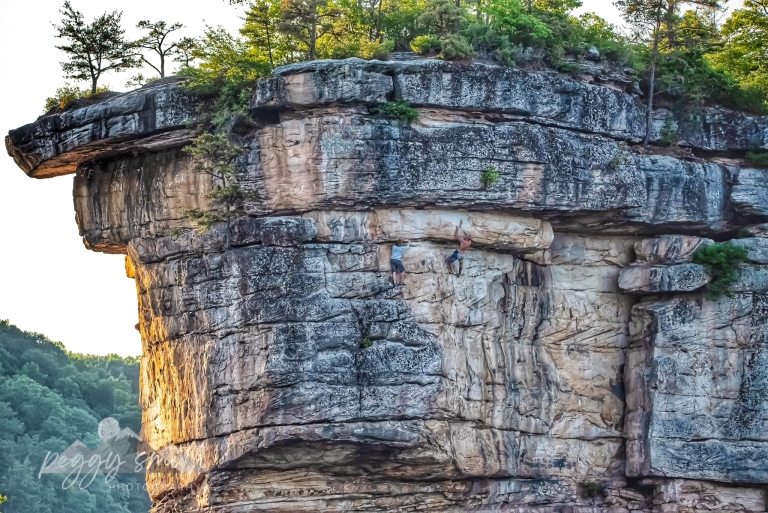
The New River Gorge anchors the state’s climbing culture, with more than 1,400 established climbs within the national park alone. Seneca Rocks, Summersville Lake, Meadow River, Coopers Rock, and other destinations offer everything from traditional multi-pitch climbs to sport routes and bouldering.
Rock Climbing Areas
- Coopers Rock Climbing
- Meadow River Climbing
- Nelson Rocks Climbing
- New River Gorge Climbing
- Seneca Rocks Climbing
- Summersville Lake Climbing
Map showing climbing areas in West Virginia
The map above shows major climbing destinations. Individual climbing-area guides provide more detail on access, terrain, and nearby communities.
Types of rock climbing in West Virginia
West Virginia supports several distinct forms of climbing, and the experience can vary considerably from one destination to another.
Traditional climbing, often called trad climbing, requires the lead climber to place removable protection while ascending. West Virginia has a strong traditional-climbing heritage, particularly at Seneca Rocks and the New River Gorge.
Sport climbing uses permanent bolts as the primary protection along established routes. The New River Gorge region and Summersville Lake are particularly well known for sport routes.
Bouldering involves climbing shorter formations without ropes, generally with crash pads and spotters used to help manage falls. Coopers Rock is among West Virginia’s best-known bouldering destinations.
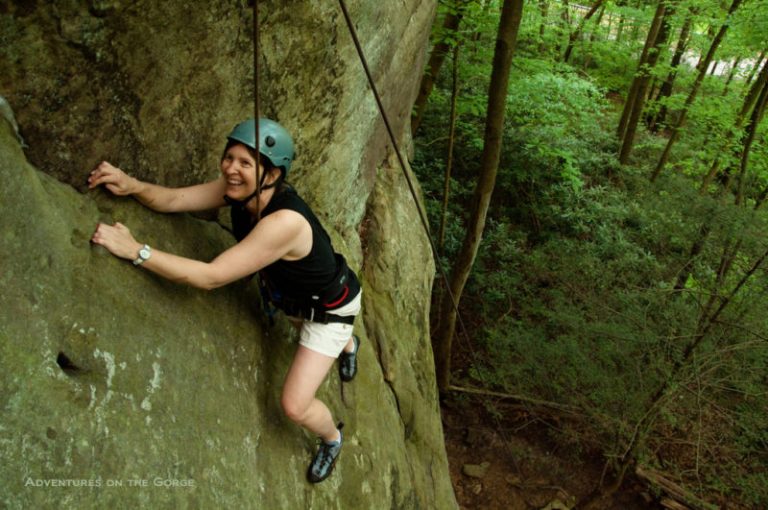
Top-roping uses a rope running through an anchor above the climber to a belayer below. It can be useful for instruction and climbing established routes, but it still requires competent belaying and properly constructed systems.
Multi-pitch climbing divides a longer climb into sections with intermediate belay stations. Seneca Rocks is particularly well known for this style of climbing.
New to the vocabulary? See our Rock Climbing Terms: A Beginner’s Guide to Climbing Terminology for explanations of common climbing language.
Why West Virginia has exceptional rock climbing
Geology largely defines West Virginia’s standing as a climbing destination. Much of the state lies within the Appalachian Plateau and Valley and Ridge physiographic provinces, where hundreds of millions of years of uplift and erosion have exposed resistant rock formations as cliffs, ledges, fins, and boulder fields.
The New River has carved deeply through the Appalachian Plateau, exposing exceptionally hard sandstone along the walls of its gorge. These resistant layers form the vertical and overhanging cliffs climbers encounter throughout the region.
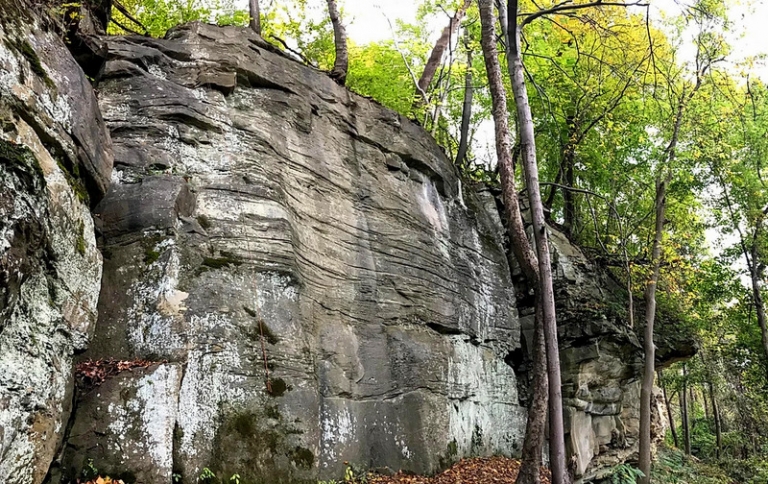
Cracks, corners, pockets, edges, and other features in the sandstone create an extraordinary variety of climbing movements and routes.
The result is a landscape where geology and recreation are inseparable: the same processes that produced West Virginia’s dramatic gorges and mountain scenery also created some of its finest climbing terrain.
Rock climbing for beginners in West Virginia
Climbers interested in West Virginia’s cliffs don’t need to start with an advanced route at New River Gorge or a multi-pitch ascent at Seneca Rocks.

Professional guides and climbing instructors operate in several of the state’s major climbing regions, and indoor climbing facilities also offer a place for beginners to learn basic movement and equipment use.
Hands-on instruction is especially important for technical skills such as belaying, rappelling, anchor systems, lead climbing, and placing traditional protection.
West Virginia Explorer maintains several resources for people learning more about the sport:
Rock Climbing Information
- Climbing Gear & Outfitters
- Climbing Guides & Instruction
- Climbing Terminology
- Climbing Tips & Safety
- Climbing Regulations
- Climbing Gallery
- Climbing Maps
- The West Virginia Crag
Help us improve this guide
West Virginia Explorer continues to expand and update its climbing coverage throughout the Mountain State. Know of a climbing area we’ve overlooked, an access condition that has changed, or information that needs correction? Contact the West Virginia Explorer newsroom.
We welcome information from climbers, land managers, historians, climbing organizations, guides, and readers who can help us maintain an accurate and useful guide to rock climbing in West Virginia.