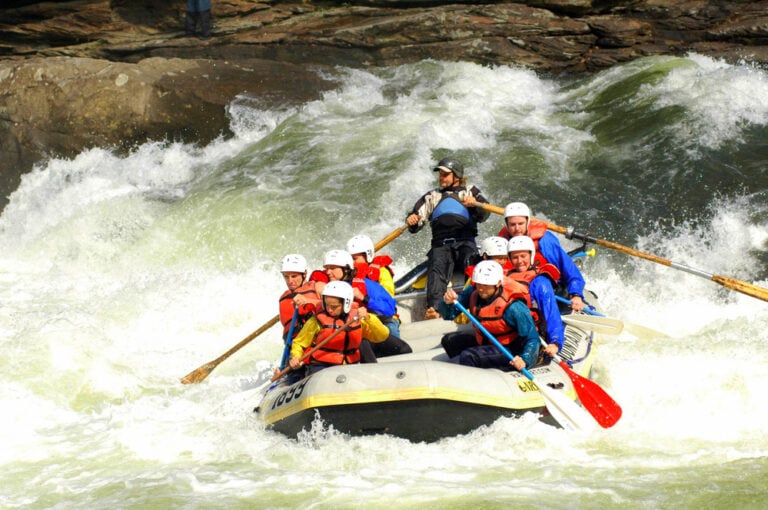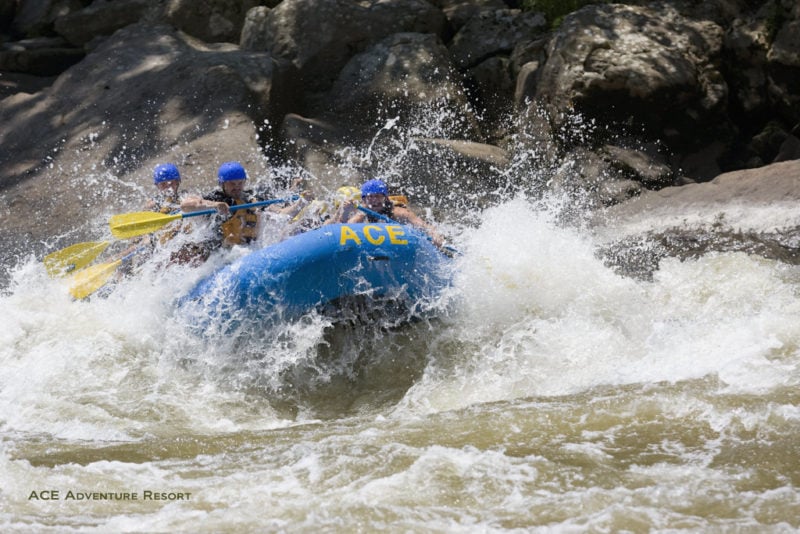
Whitewater rafting is one of West Virginia’s most significant outdoor recreation industries and is among the activities most closely associated with tourism in the Mountain State. West Virginia’s rugged terrain, steep-gradient rivers, and reliable water flows have helped make it a leading whitewater destination in the eastern United States.

Commercial rafting operations are concentrated primarily in southern West Virginia, where the New River and Gauley River attract visitors from across the country. Additional rafting opportunities occur on rivers such as the Cheat, Potomac, Tygart Valley, and Shenandoah, though the New and Gauley remain the state’s best-known whitewater rivers.
History
Modern commercial rafting in West Virginia began in the late 1960s. In 1968, Jon Dragan founded the state’s first rafting company at Thurmond in the New River Gorge, helping establish a new outdoor recreation industry in a region historically dependent on coal mining and rail transportation. At the time, few regulations existed governing commercial rafting, and much of the New River Gorge remained relatively inaccessible.
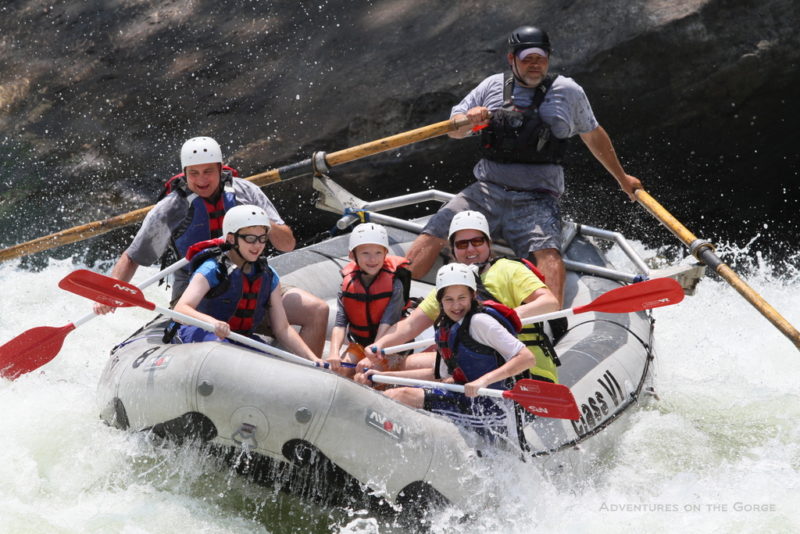
As commercial rafting expanded on the New, Cheat, and Gauley rivers during the 1980s, state officials developed a regulatory framework to manage safety, environmental concerns, and river congestion. In 1992, lawmakers created the W.Va. Whitewater Commission, providing a formal mechanism to oversee one of its fastest-growing tourism industries.
As participation in outdoor recreation increased, rafting companies expanded throughout the New River Gorge region. The industry grew alongside the development of public recreation lands and the designation of the New River Gorge as a national river in 1978, which was later redesignated as a national park and preserve in 2020.
Today, rafting is a major part of West Virginia’s tourism economy and supports guides, outfitters, restaurants, lodging providers, and related businesses throughout the state.
The New River
The New River is the center of West Virginia’s rafting industry. Flowing north through the Allegheny Mountains, it is among the oldest rivers in North America and forms the deep gorge now protected within the New River Gorge National Park and Preserve. Rafting on the New River is generally divided into two sections:
Upper New River Gorge
The Upper New River features broad valleys, moderate currents, and smaller rapids. It is often used for family trips, beginner rafting excursions, and scenic float trips. Commercial outfitters commonly recommend the Upper New for first-time rafters and younger participants.
Lower New River Gorge
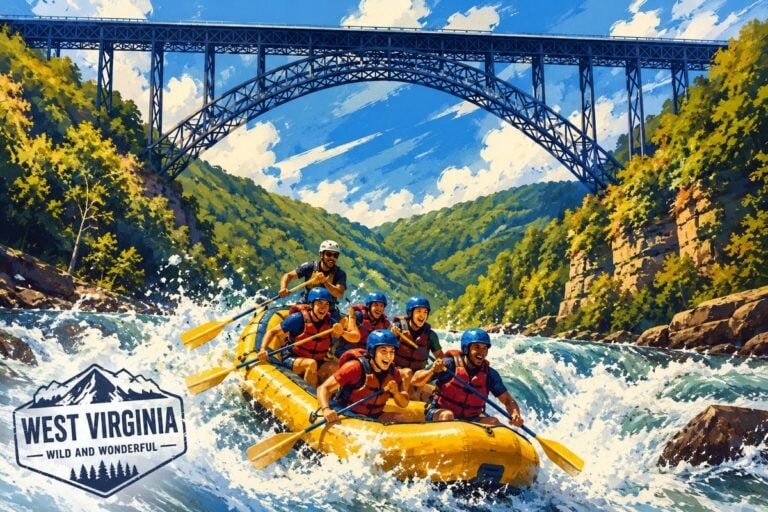
The Lower New River passes through the heart of the New River Gorge and contains some of the most famous rapids in the eastern United States. Rafters encounter a series of Class III-V rapids amid steep, forested cliffs and views of the New River Gorge Bridge. The Lower New is considered the state’s signature rafting trip and attracts both beginners seeking adventure and experienced paddlers.
The Gauley River
The Gauley River is widely regarded as one of the premier whitewater rivers in the world. Fed by releases from Summersville Dam, the river experiences controlled high-water flows during autumn, creating the annual rafting season known as Gauley Season.
The river descends more than 600 feet through a rugged canyon and contains more than 100 rapids. During scheduled releases, thousands of rafters travel to West Virginia to experience the river’s powerful whitewater. The National Park Service estimates that more than 60,000 visitors participate in Gauley River rafting each year.
Upper Gauley
The Upper Gauley is considered one of the most challenging commercially rafted rivers in the United States. It contains numerous Class V rapids, including the famous “Big Five” rapids—Insignificant, Pillow Rock, Lost Paddle, Iron Ring, and Sweet’s Falls. Previous rafting experience is often recommended.
Lower Gauley
The Lower Gauley offers large waves and challenging rapids while generally providing a less technical experience than the Upper Gauley. It is frequently chosen by adventurous first-time rafters seeking a major whitewater experience.
Other Rafting Rivers
Although less well-known than the New and Gauley, several additional rivers offer commercial rafting and paddling opportunities in West Virginia.
Cheat River
The Cheat River in northern West Virginia is known for spring rafting when snowmelt and seasonal rains create powerful flows through Cheat Canyon. The river hosts annual paddling events and attracts experienced whitewater enthusiasts. Explore: Cheat River Rafting

Tygart Valley River
Sections of the Tygart Valley River offer whitewater opportunities during periods of high water and have long been popular with recreational paddlers.
Potomac River
The South Branch Potomac and portions of the main Potomac River offer rafting, canoeing, and kayaking opportunities, particularly in the eastern panhandle region. Explore: Potomac River Rafting
Shenandoah River
The lower Shenandoah River provides rafting and paddling near Harpers Ferry, where it joins the Potomac River. The Shenandoah is known for its generally moderate Class I-III rapids, making it popular with families, first-time rafters, and recreational paddlers. Explore: Shenandoah River Rafting
Bluestone River
The lower Bluestone River within the Bluestone National Scenic River offers limited whitewater opportunities under suitable water conditions, especially for experienced paddlers.
River Classification
Whitewater rivers are commonly rated using the International Scale of River Difficulty.
Class I: Moving water with small waves.
Class II: Straightforward rapids requiring basic maneuvering.
Class III: Moderate rapids with irregular waves.
Class IV: Intense rapids requiring precise boat handling.
Class V: Extremely difficult rapids with significant hazards.
Class VI: Rapids are considered nearly unrunnable except under exceptional circumstances.
West Virginia offers commercially guided rafting experiences ranging from Class I family float trips to advanced Class V whitewater runs.
Economic Importance
Rafting helped transform portions of southern West Virginia from former coal-dependent communities into nationally recognized outdoor recreation destinations. Communities such as Fayetteville, Lansing, Hico, Oak Hill, and Summersville developed tourism economies around rafting, rock climbing, mountain biking, and other outdoor activities. The designation of New River Gorge National Park and Preserve further increased national attention on the region’s recreation opportunities.
Today, rafting remains one of West Virginia’s most important adventure tourism activities and is widely regarded as a defining experience for visitors exploring the Mountain State.
Whitewater Rafting Vacations
Whitewater Rafting Rivers
Map showing whitewater rafting areas
Additional Rafting Information
- Whitewater Rafting Safety
- Whitewater Responsibility Act
- International Scale of River Difficulty
- West Virginia Whitewater Regulations
Whitewater: Rafting v. Kayaking
The terms “rafting,” “paddling,” and “whitewater” are sometimes applied inexactly, which can lead to confusion. Rafting and kayaking are both paddling sports enjoyed on whitewater. Rafting, however, is more often a commercial endeavor enjoyed by a group, and though it is a form of recreation, it is not a sport. Though many rivers and streams in West Virginia include whitewater and may be kayaked, only a few are wide enough to support watercraft is large as rafts, which may accommodate up to eight rafters.
Request info from all West Virginia whitewater rafting outfitters at once!
Are you having trouble deciding which whitewater rafting outfitter and which rafting package to secure? Fill out one form, and we’ll automatically distribute your request to all participating whitewater rafting guides and outfitters.
Ask a specific question about whitewater rafting packages or simply request information.