
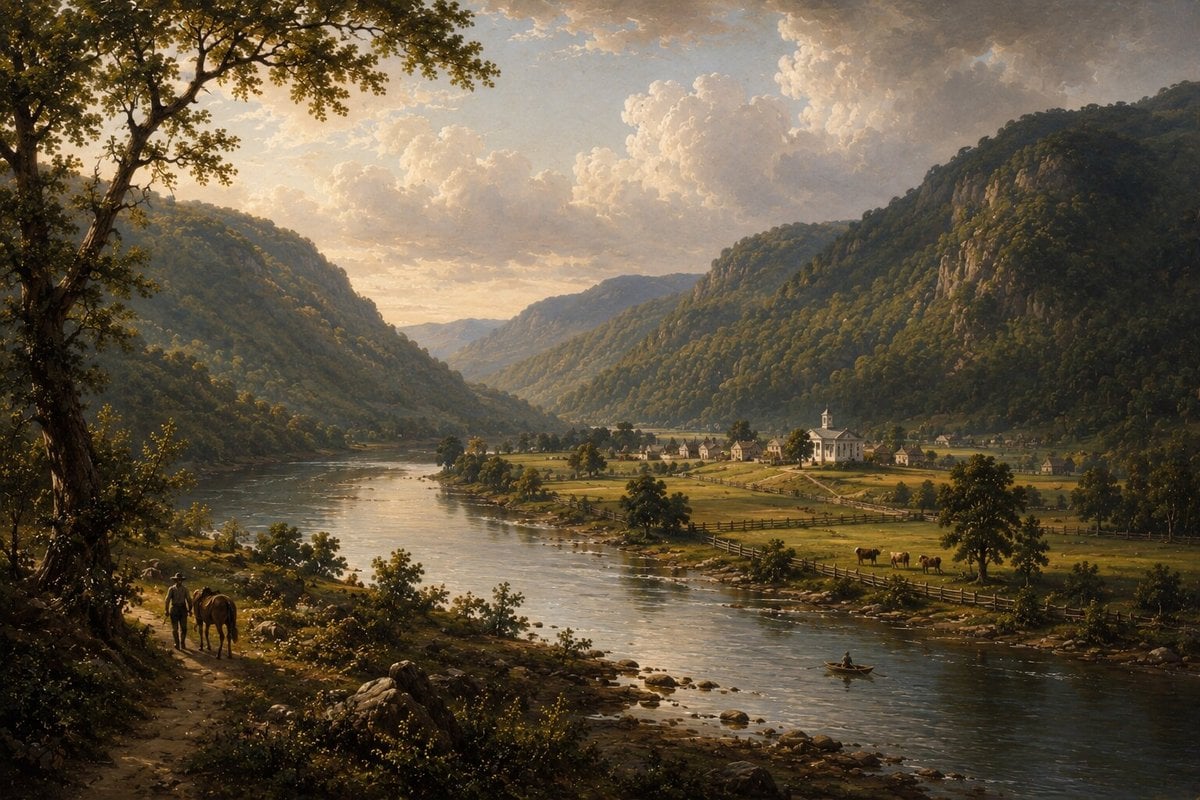
LOGAN, W.Va. — In the early 1850s, a remarkable stranger appeared in the rugged Guyandotte River country of what was then western Virginia.

He was a lawyer and physician from Philadelphia. But those occupations hardly explained him. He had edited newspapers and magazines and written poetry, fiction, and plays. He had been part of New York City’s turbulent literary world and engaged in an infamous feud with Edgar Allan Poe.
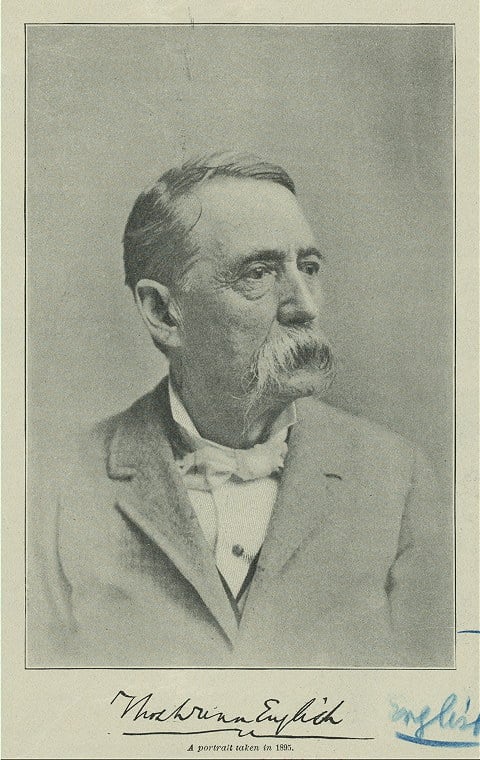
Most remarkably, he’d written a poem that became one of the best-known songs of the 19th century—”Ben Bolt.”
His name was Thomas Dunn English, and during a relatively brief stay in the mountains of what would become West Virginia, he became a coal speculator, postmaster, and mayor.
He wrote about the people and landscape around him. He also helped name two communities that still carry those names today.
More than 170 years later, an intriguing question remains: What was a nationally known literary figure doing in Logan County?
A famous writer comes to the Guyandotte
Born in Philadelphia in 1819, English was trained in medicine at the University of Pennsylvania and later studied law, gaining admission to the Philadelphia bar in 1842. He then became deeply involved in journalism and literature in New York.
In 1852, English and his wife moved to Logan County in one of the most rugged and mountainous areas in the western state.
The West Virginia Encyclopedia notes that the region’s vast coal reserves and virgin timber may have attracted him. Whatever his motivation, he quickly became far more than an observer of mountain life.
By 1853, he had acquired 27 coal leases and incorporated two coal companies with holdings in Logan and Wayne counties. He tried to develop the coalfields decades before railroads made large-scale mining practical, but the transportation needed to make his plans profitable simply did not exist.
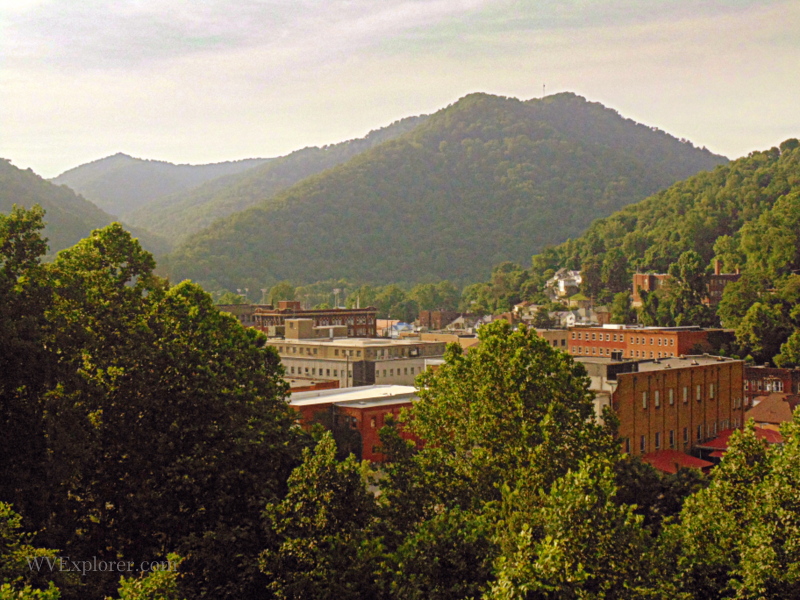
He nevertheless immersed himself in the region. He wrote works including “The Logan Grazier,” “Guyandotte Musings,” “The Boone Wagoner,” “Gauley River,” and “Rafting on the Guyandotte.”
His “Logan Grazier” closely examined the economic life of the mountain farmer, imagining the grazier (one who grazes livestock) looking at his cattle and seeing future prosperity:
“The ship was wrecked, the steamboat was blown up, and the horse turned out to be a ‘plater.’”
The lines suggest he was paying attention not only to the scenery of the Guyandotte Valley but also to how its inhabitants made a living. He was also about to leave his mark on its map.
The lawyer who renamed Logan
The settlement that became Logan had previously been known as Lawnsville, or Lawnsville Courthouse. English became involved in local government and joined other residents in petitioning the Virginia General Assembly to incorporate the community, and in 1853, it was chartered as “Aracoma.”
The W.Va. Encyclopedia credits him with having the village chartered under that name and identifies him as its first mayor. He also served as postmaster. The town would not become Logan until 1907.
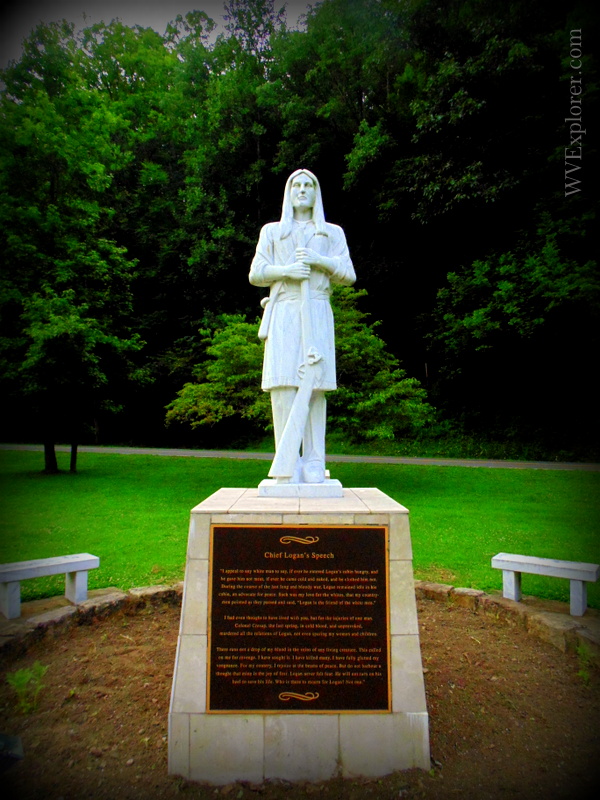
Aracoma was supposedly the daughter of Shawnee war leader Cornstalk, whose death at Point Pleasant in 1777 became a defining episode of frontier history.
But here is an important complication—Aracoma belongs at least partly to legend. A tale of “Indian princess” Aracoma and the European-American renegade Boling Baker appeared in an early form in George W.L. Bickley’s 1852 history of the region. The tale was “likely” embellished by English himself during the 1850s.
In other words, English may not simply have named a town for a regional legend. He may have helped shape the legend itself. And Aracoma apparently wasn’t his only attempt at naming a community.
Then there was Oceana
About 30 miles to the southeast of Logan, the new county of Wyoming was establishing its own county seat upstream on the Clear Fork of the Guyandotte.
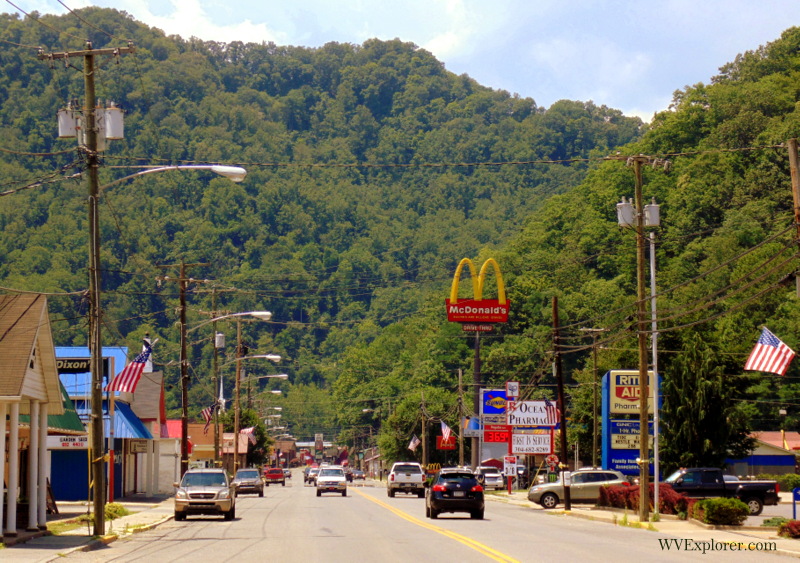
The community that became “Oceana” went through several early names, and accounts of its origin conflict. One longstanding account says English persuaded Wyoming County officials in the 1850s to call the settlement Oceana, supposedly after another of Cornstalk’s daughters.
However, historian Hamill Kenny argues that tradition should be treated more cautiously than the documented Aracoma connection, noting that the Cornstalk explanation is contested and that other theories for the name Oceana have circulated for generations.
But if the Thomas Dunn English account is correct, something curious was happening. Within a short period, the lawyer had promoted Native American-themed names for communities in two neighboring mountain counties
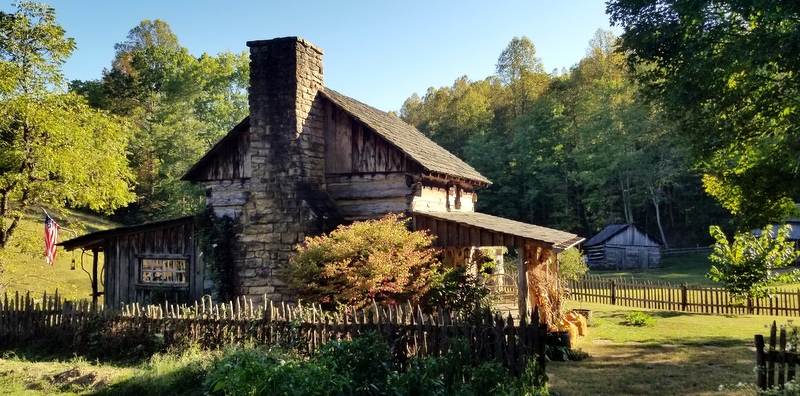
However, he arrived decades before coal and railroad developers would scatter similar names across southern West Virginia. Matoaka. Hiawatha. Mohawk. Mohegan. Powhatan. Algonquin. Matewan.
These later coalfield names cannot presently be attributed to English, and no evidence shows he personally named those communities. The chronology, however, makes his earlier activity noteworthy.
The author romanticized Native American history before the great coal boom began.
He had already written a song the world knew
All of this would be unusual enough if English had simply been an ambitious lawyer, but he wasn’t. Years before arriving, he wrote “Ben Bolt,” a sentimental poem that became an international sensation when it was set to music.

He wrote it at the request of his friend and New York editor Nathaniel Parker Willis. A contemporary account says Willis asked him for a sea song. English managed a passing reference to the sea, but the resulting poem became vastly more successful than anyone anticipated.
The song’s melancholy comes not from Ben Bolt’s death, but from his return to a world altered by time. Old places have changed, familiar people are gone, and Alice, the woman who once smiled at him, is dead. Its theme of memory and a vanished past helped give the song its enduring emotional power.
It spread throughout the English-speaking world. Ships and steamboats were named for it, as was a racehorse. English later joked about their unfortunate fates:
Don’t you remember sweet Alice, Ben Bolt?—
Sweet Alice, with hair so brown,
Who blushed with delight if you gave her a smile,
And trembled with fear at your frown?
Its fame became so enduring that a legend eventually developed in Logan County that English had written “Ben Bolt” beneath a local tree. It was a good story, but impossible, as English wrote “Ben Bolt” nine years before he moved to Logan County.
Then there was the fight with Edgar Allan Poe
English’s literary life also placed him in the orbit of one of the most famous American writers, and for a time, he and Edgar Allan Poe were friends.

English later remembered his first impression of Poe favorably, describing his eyes as “large, bright, and piercing” and his manner as “easy and refined.” Their relationship would not remain cordial.
It collapsed amid a notorious literary and personal scandal in New York involving Poe and writers Frances Sargent Osgood and Elizabeth F. Ellet. The dispute escalated into a physical confrontation between Poe and English, followed by increasingly vicious attacks in print.
The scandal involved flirtation, private letters, accusations of impropriety, and ultimately Poe asking Thomas Dunn English for a pistol.
Poe subsequently savaged English in his “Literati of New York” series, and English responded with his own accusations. Poe sued the publishers of the New York Mirror for libel over material English had supplied.
Their hostility lasted long after Poe’s death, though English later defended him against one allegation that became attached to Poe’s reputation. Writing from his own experience as a physician who had known Poe personally, he rejected claims that Poe habitually used opium.
“I saw no signs of it,” English wrote, calling the accusation “a baseless slander.”
Only a few years after the extraordinary New York quarrel, English was hundreds of miles away among the mountains along the Guyandotte.
A coal developer decades too early
Perhaps the most revealing part of English’s story is that he seems to have recognized the region’s economic potential long before the infrastructure existed to exploit it.

His 27 coal leases and two coal companies place him among the early speculators who understood what lay beneath the mountains. But coal without economical transportation had limited value, and his schemes failed.
English left Logan County in 1856 and moved beyond the coalfields to Tazewell, Virginia, before eventually returning north. He later entered politics in New Jersey and served two terms in the U.S. House of Representatives from 1891 to 1895.
The transformation he anticipated came long after he was gone. Railroads eventually penetrated the regions, mines opened by the hundreds, and new communities appeared along narrow valleys where coal companies needed places for thousands of workers and their families to live.
By then, Native American-inspired names had become conspicuous on the southern West Virginia map, notably in the coalfields. Mohawk, Matoaka, Naugatuk, Iroquois.
Whether English’s Aracoma and the tradition surrounding Oceana influenced that later naming fashion is unknown. No evidence currently establishes such a connection, and the later names had their own origins, but English was undeniably first.
Decades before the coal boom transformed southern West Virginia, he arrived in the valley, invested heavily in its coal, helped transform Lawnsville into Aracoma, and apparently encouraged another Native-themed name nearby. Then he left.
English’s strange West Virginia legacy
Thomas Dunn English died in Newark, New Jersey, in 1902 after a life that seems almost implausibly varied. He had been a physician, attorney, journalist, poet, novelist, editor, politician, and congressman.
His gravestone identifies him by the accomplishment that followed him throughout his life: “Author of Ben Bolt.”
In southern West Virginia, however, English left a different kind of monument. The industry he sought to develop became the region’s foundation. His writings preserved glimpses of the Guyandotte country before industrialization transformed it. The community he helped incorporate as Aracoma became Logan, though the Aracoma name survives throughout the area.

And in Wyoming County, Oceana still bears the other name that tradition says English helped put on the map.
The mysterious lawyer who appeared in the mountains in 1852 did not stay long, but more than 170 years later, some of the names and stories he left behind have proved considerably harder to erase.
A great historical clarification of the life of the subject ! Keep up the great explanations. It’s important for all future generations!
I’m pretty sure Aracoma was not “supposedly” a real person and was in fact Cornstalks daughter OR I WOULDNT BE ALIVE. That was my 6th great aunt, Cornstalk is my 6th great grandpa. DNA and Ancestry lookups, not stories told to me by family . Supposedly. Lol