
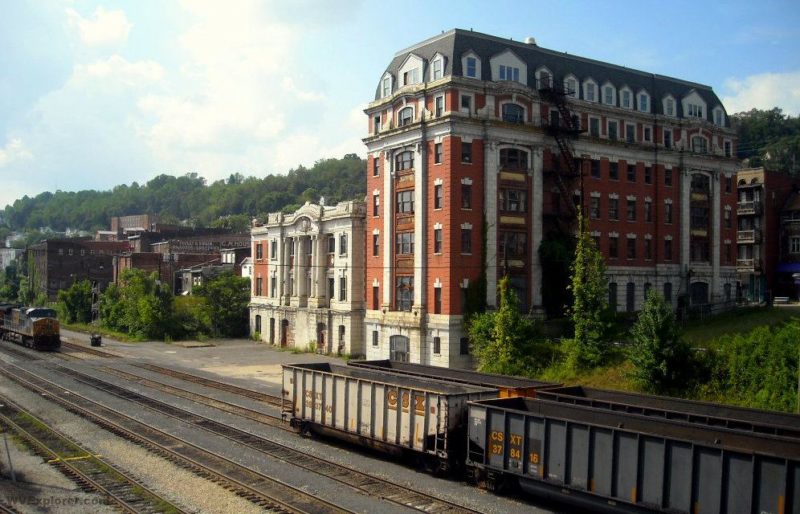
Grafton, West Virginia (WV), is the county seat of Taylor County and one of the state’s most historically significant railroad towns. Along the Tygart Valley River in northern West Virginia, the city grew around the Baltimore & Ohio Railroad and later became nationally known for founding Mother’s Day and commemorating Civil War veterans.
Chartered in 1856, it developed where major railroad routes converged and became a major freight and passenger hub. Today, its historic downtown features the International Mother’s Day Shrine, while the nearby Grafton National Cemetery reflects the city’s important role during and after the Civil War.
History of Grafton

Grafton’s growth was closely tied to the Baltimore & Ohio Railroad’s arrival in the early 1850s. The railroad established a junction near the Tygart Valley River, where its main line connected with a route west toward Parkersburg. A community quickly grew around the tracks.
The city was named for John Grafton, a prominent B&O civil engineer. Railroad employment and commerce fueled its growth, and it became an important switching point for freight and passenger trains crossing the central Appalachian Mountains. Coal and timber passed through the city, and passenger service linked the town to major cities, including Baltimore, Washington, Cincinnati, and St. Louis.
The railroad’s importance remains visible in its downtown. The Grafton Historic District contains commercial, civic, and religious buildings dating largely from the late 19th and early 20th centuries. The historic B&O station and Grafton Hotel, both built in 1911, reflect an era when the railroad drove the city’s economy and physical development.
Grafton and the Civil War
Grafton’s railroad made the community strategically important at the start of the Civil War. Union forces valued control of the B&O, and Taylor County residents were divided between Union and Confederate loyalties.
On May 22, 1861, Thornsberry Bailey Brown was killed in a clash between opposing militia units near the town. Brown is widely recognized as the first Union soldier killed by a Confederate soldier in the Civil War.
The fighting soon spread beyond Grafton into the surrounding mountains as Union and Confederate forces vied for control of northwestern Virginia and its transportation routes. Those early campaigns preceded West Virginia’s creation as a separate state in 1863.

Grafton’s connection to the war continued after the fighting ended.
Grafton National Cemetery
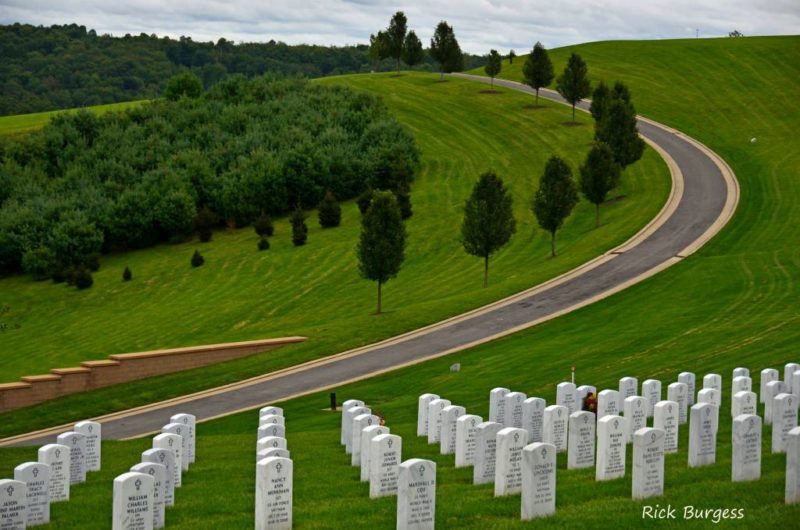
Established in 1867, Grafton National Cemetery became the final resting place for Union soldiers whose remains were recovered from battlefields and temporary graves across West Virginia and surrounding areas.
The cemetery was dedicated on June 14, 1868, with West Virginia’s first governor, Arthur I. Boreman, participating in the ceremonies. Among those buried there is Thornsberry Bailey Brown.
The cemetery contains the remains of veterans from conflicts beyond the Civil War and has long been a focal point of Memorial Day observances in West Virginia.
Mother’s Day began in Grafton
Grafton’s best-known contribution to American cultural history is its association with Mother’s Day.
Anna Jarvis spent much of her early life in the community. Her mother, Ann Reeves Jarvis, organized Mothers’ Day Work Clubs before and during the Civil War to improve health and sanitation and to assist people affected by disease. During the war, the clubs cared for sick and wounded soldiers regardless of which side they supported.
After her mother’s death in 1905, Anna Jarvis began campaigning for a national day honoring mothers.

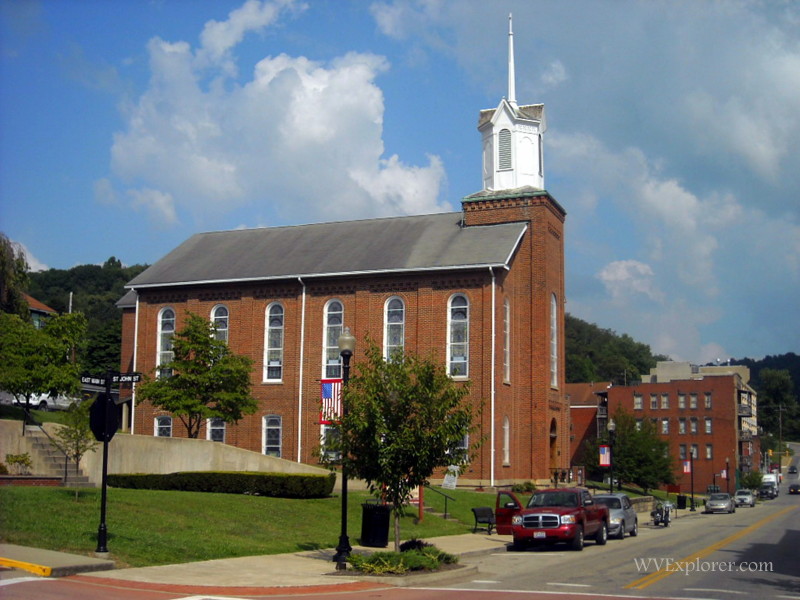
On May 10, 1908, the first formal Mother’s Day church service was held at Andrews Methodist Episcopal Church. Jarvis was in Philadelphia that day but sent 500 white carnations for those attending the Grafton service. Her campaign eventually gained national support, and President Woodrow Wilson proclaimed Mother’s Day a national observance in 1914.
The historic church is now known as the International Mother’s Day Shrine and was designated a National Historic Landmark in 1992.
Parks and outdoor recreation near Grafton
Grafton is surrounded by several of northern West Virginia’s better-known outdoor recreation areas.
Tygart Lake State Park, south of the city, offers boating, fishing, hiking, and lodging around Tygart Lake. North of the town, Valley Falls State Park protects a scenic series of waterfalls along the Tygart Valley River and offers hiking and mountain biking.
The Pleasant Creek Wildlife Management Area also extends through the region near Tygart Lake, providing additional opportunities for fishing, hunting, and wildlife viewing.
These public lands make Grafton a convenient base for exploring the Tygart Valley and the surrounding hills of north-central West Virginia.
Grafton in Fallout 76

Read Also: The top five monsters from the West Virginia Hills
A fictionalized version of the community appears in Bethesda Game Studios’ Fallout 76, which draws on numerous real West Virginia communities and landmarks as settings.
Players can meet the fictional Grafton mayor and start the “Bureau of Tourism” quest in the city. Bethesda also incorporated the legendary Grafton Monster into the game, introducing a piece of local West Virginia folklore to an international gaming audience.
Lodging near Grafton
Visitors can find accommodations in and around Grafton, Tygart Lake, and neighboring communities.
Location
Grafton is located along the Tygart Valley River in Taylor County in northern West Virginia. U.S. 50 and U.S. 119 provide the city’s primary highway access.
Grafton is approximately 20 miles east of Clarksburg, about 20 miles southeast of Fairmont, and roughly 35 miles south of Morgantown.
The city is part of West Virginia Explorer’s Monongahela Valley Region.