
Counties in West Virginia vary greatly in shape—patterns largely determined by topographic features such as ridges, watercourses, and mountain ranges. The practicality of travel to a central county seat also controlled boundaries during periods of settlement. Most counties were established before the state separated from Virginia in 1863, though a secondary settlement began during the Industrial Revolution, and boundaries were adjusted.

West Virginia Counties in Brief
According to an inventory of counties published by the W.Va. Division of Cultural & History, Randolph County is the largest West Virginia county at 1,040 square miles; Hancock County is the smallest at 83 square miles.
According to an inventory of counties published by the W.Va. Division of Cultural & History, Randolph County is the largest West Virginia county at 1,040 square miles; Hancock County is the smallest at 83 square miles.
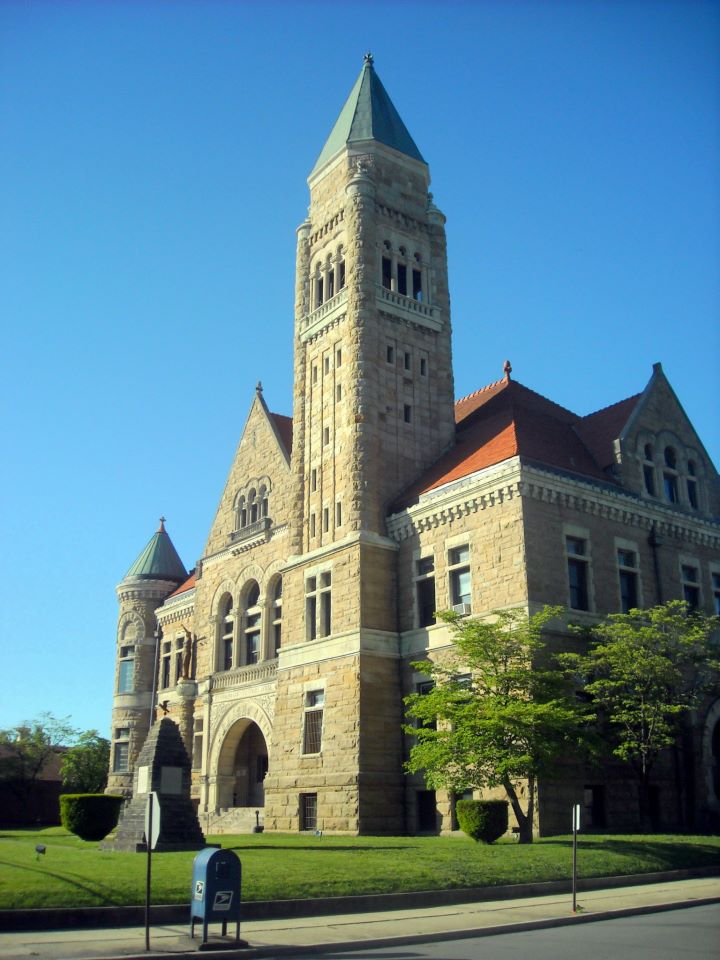
Kanawha County boasts the largest population among West Virginia counties, with 193,063 residents, according to the 2010 census; Wirt County, the smallest, has 5,717. The oldest county is Hampshire, established in 1754; the newest is Mingo, established in 1895.
West Virginia counties are charged with funding libraries, maintaining infrastructure, enforcing state and county statutes, and managing waste disposal. County school systems in West Virginia are managed by school districts that are independent of county administration.
Incorporated communities in West Virginia — cities and towns — are also wholly independent of county statutes and administration and operate under what West Virginia law terms “home rule.”
Gallery of West Virginia county courthouses
Fifty-five diverse county courthouses are located in 55 equally diverse West Virginia counties. Each seems to embody the social and economic quality of the county in which is was built. See: county courthouses