
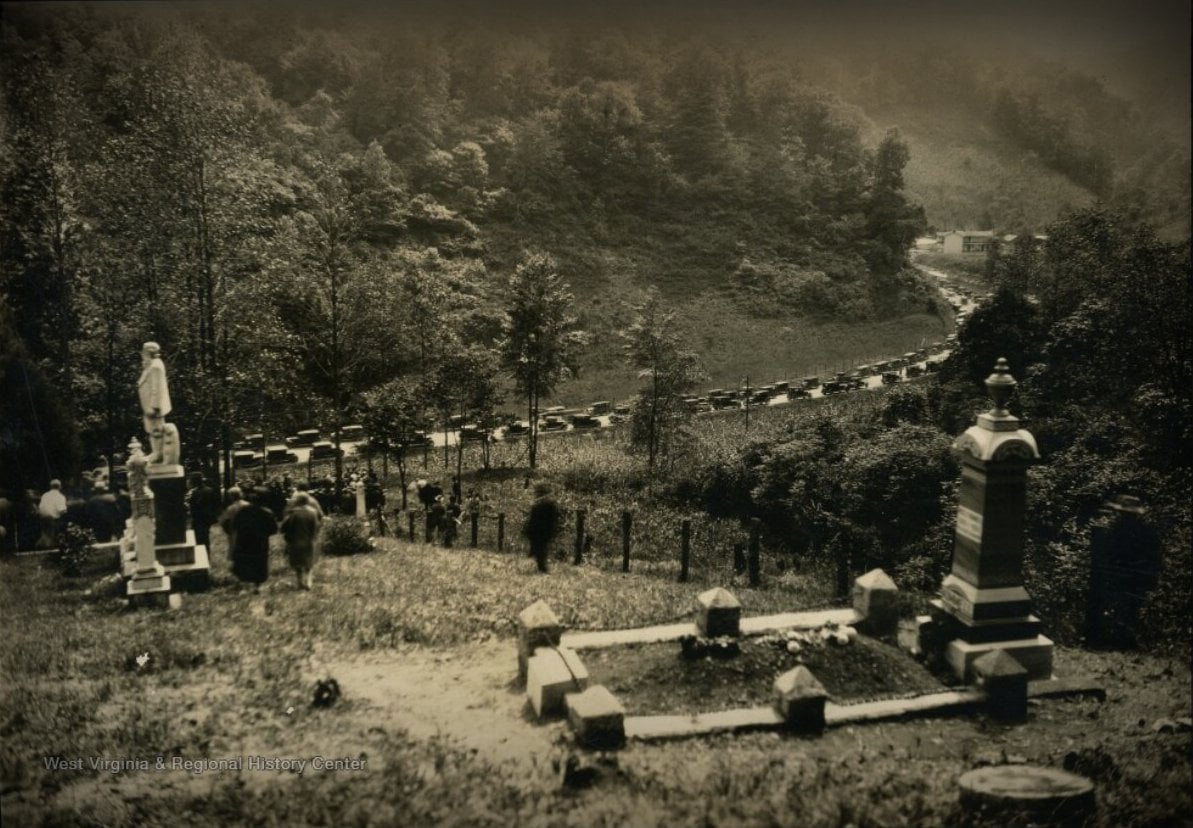
RICHWOOD, W.Va. — Before funeral homes became commonplace in West Virginia, a death could put an entire community to work.

Someone washed and dressed the body. A carpenter or neighbor might build the coffin. Men dug the grave. Friends and relatives brought food and stayed through the night with the deceased, keeping a vigil traditionally known as “setting up.”
By morning, a wagon might be waiting to carry the coffin to church, according to historian and newspaper publisher Jim Comstock, who preserved a detailed account of these traditions in the 1976 West Virginia Heritage Encyclopedia.
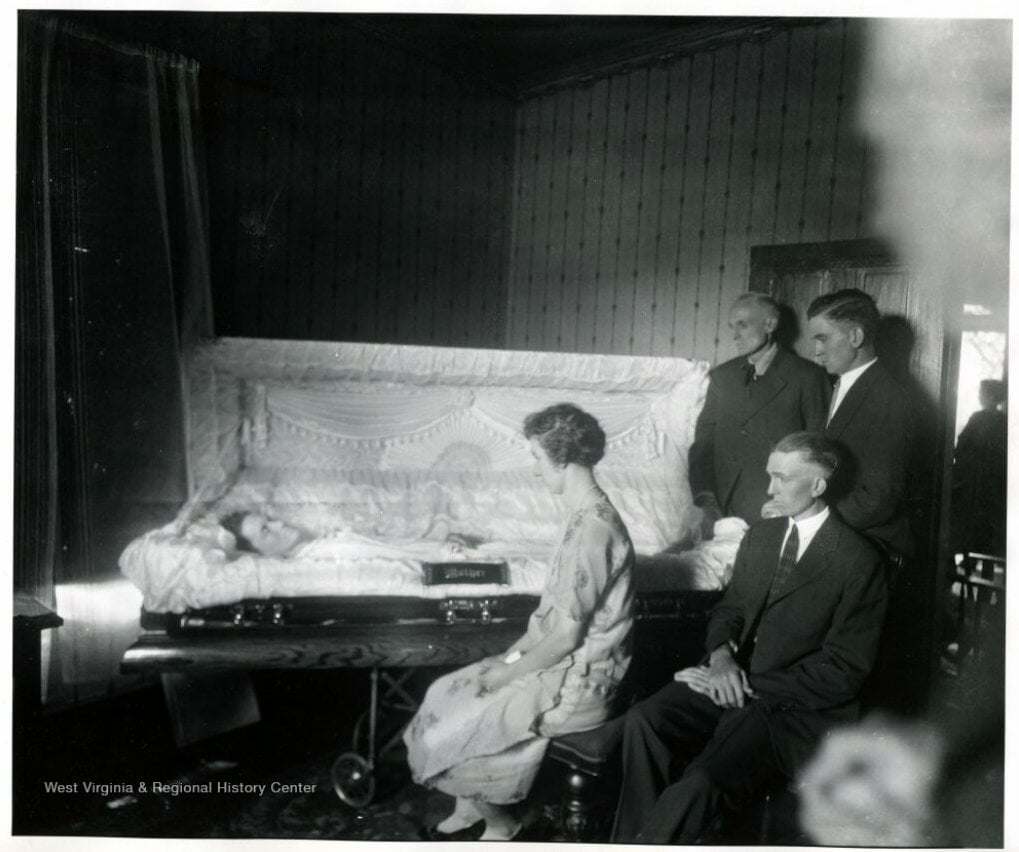
His description portrays death and burial not principally as services purchased from professionals, but as responsibilities divided among family members, neighbors, and the church.
Later scholarship on death in Central Appalachia supports that larger picture. Historian James K. Crissman interviewed more than 400 Appalachian residents for his 1994 book Death and Dying in Central Appalachia, documenting the importance of family and neighborliness in older death practices.
When someone died
In the West Virginia communities Comstock described, news of a death might begin with the tolling of a church bell, if the community had one.
Relatives were notified as quickly as circumstances permitted. Those living nearby could be reached by word of mouth, while distant family members might have to be summoned by letter or messenger. Burial generally followed quickly, although it could be delayed while relatives were fetched from farther away.
Meanwhile, the body remained at home, Comstock said. He described the gathering that followed in a sentence that preserves an old West Virginia expression: “The wake was held that night and people came with food and stayed all night to ‘set up’ with the corpse.”

He added simply: “Hymns were sung softly during the night.”
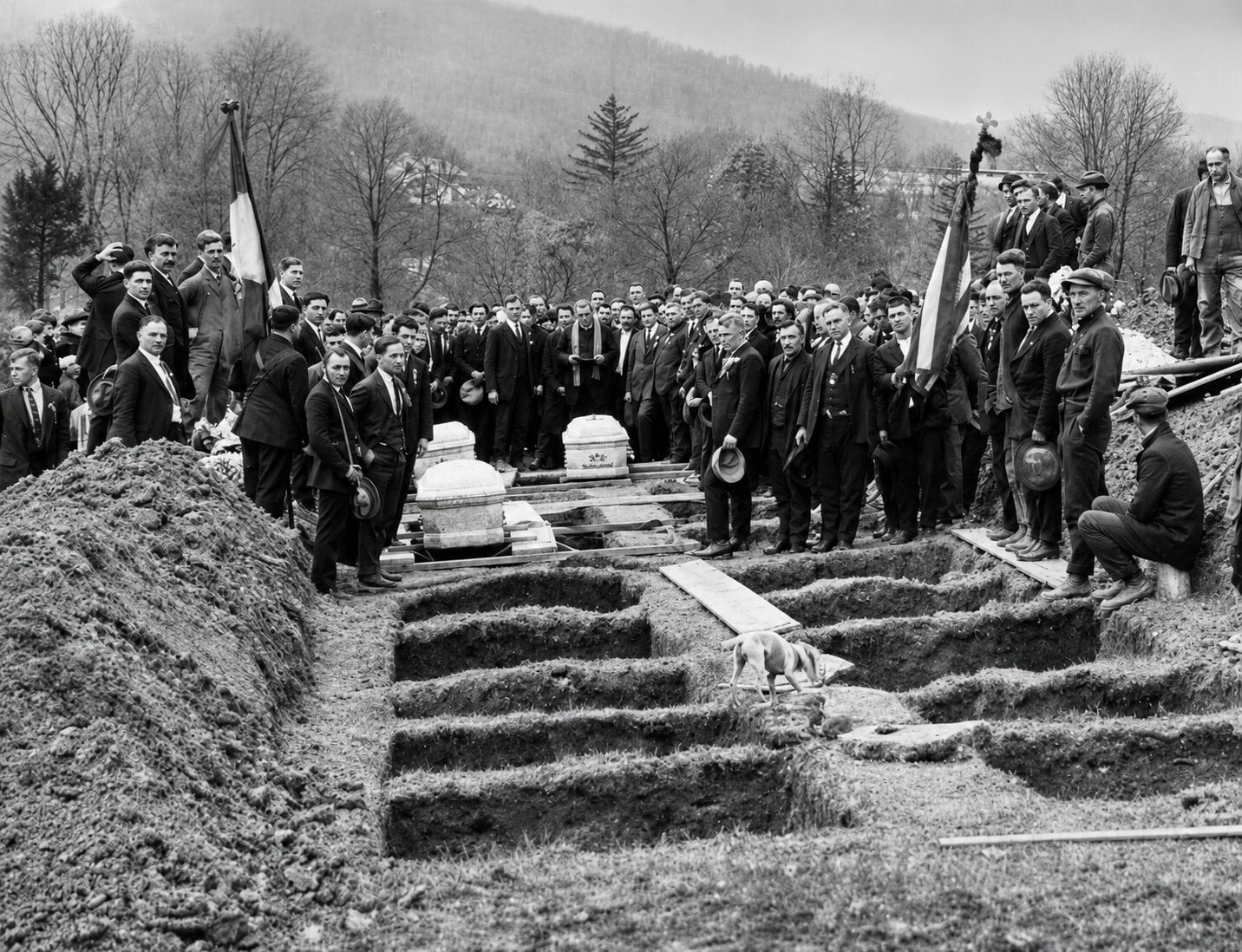
Setting up was more than what we would now call visitation. The deceased remained physically present in the home while relatives, friends and neighbors kept company with one another through the night. Food, singing and conversation surrounded a family during hours when it otherwise might have been alone with its loss.
The body also had to be prepared for burial. Comstock wrote that they washed it and laid it out before the gathering began. Because embalming was not necessarily part of the older practice he described, they prepared the body soon after death.
The eyes were closed, and the cheeks were massaged. Comstock recorded the practice of placing coins over the eyelids to keep them shut and sometimes laying a cloth dampened with soda water over the face to discourage discoloration.
The deceased would then be dressed. A man might be buried in a good suit and a woman in a dress or shroud. According to Comstock, some people prepared special burial clothing long before they expected to need it and kept the garments unworn for that purpose.
Such details should not be understood as customs followed by every West Virginia family. Practices differed by community, denomination, economic circumstances, and time period. They nevertheless provide a rare description of how death could be handled in an era when much of the work occurred inside the home.
The coffin might come from a neighbor
The coffin itself could be another community responsibility. If one had not already been made, they might order it from a local carpenter or simply from someone nearby who was handy with tools. The coffins he described were simple wooden structures, generally rectangular but wider at the head than at the foot.
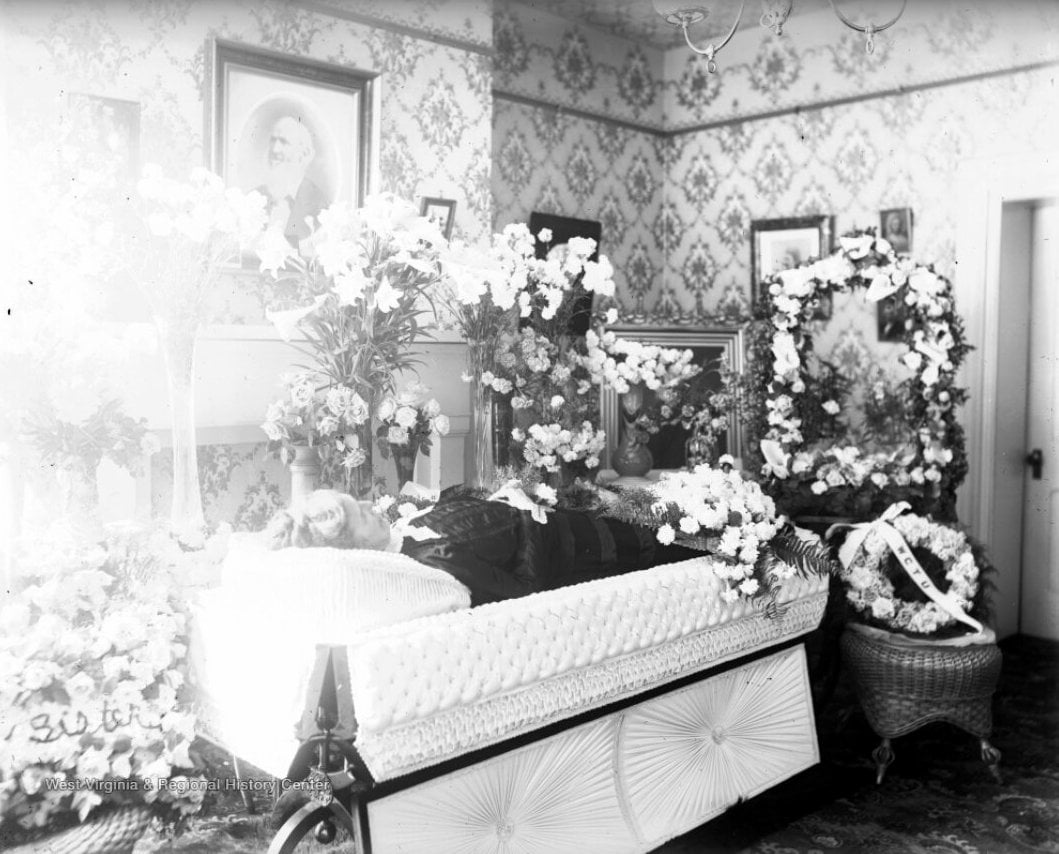
Other research into West Virginia burial customs records a similar division of labor. Barbara Smith, writing for the West Virginia Encyclopedia, says coffins were once made at home or by local craftsmen. Men traditionally made the coffin and dug the grave, while women washed and dressed the deceased, lined the coffin, cleaned the house, and prepared food for the wake.
Crissman’s research documents variations of this system across central Appalachia, examining the death watch, body preparation, coffin construction, grave digging, wakes, funerals, and memorial practices.
For the grieving family, that arrangement meant more than practicality. A death activated a network of people who knew what to do and divided the work.
Neighbors stayed through the night
As people gathered for the wake, others were already preparing for what would happen the following day.
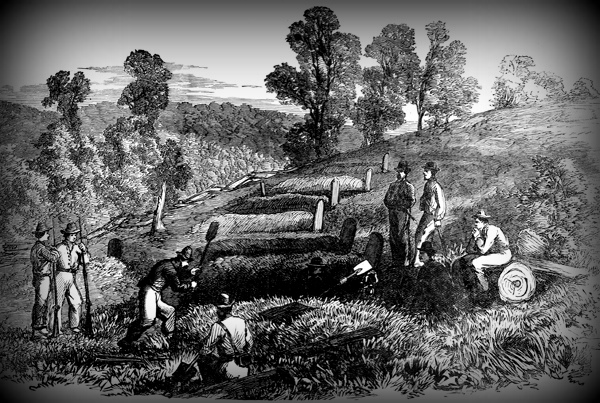
Some men might go to the cemetery to open the grave with shovels and other simple tools. Others helped with the coffin, transportation, or church arrangements. Those remaining at the house kept vigil with the family.
Crissman’s later research identified family ties and neighborliness as fundamental to understanding traditional Appalachian responses to death. The community’s involvement extended from watching over the dying to preparing the body, burying it, and remembering afterward.
That helps explain what can otherwise seem like a collection of curious old customs. Building the coffin, bringing food, digging the grave, and sitting through the night were parts of the same system: neighbors assumed responsibilities that later shifted largely to professionals.
A wagon carried the dead to church
When morning came, the deceased began a final journey through the community. As Comstock put it, “The coffin was put in a wagon and taken to the church.”

A horse or mule might pull the wagon. In earlier times, Comstock wrote, an ox might be used if one was available. As the funeral procession approached the church, its bell could begin to ring.
They carried the coffin inside and placed it near the pulpit. The preacher prayed, read from the Bible, and spoke about the deceased. The coffin was then opened so members of the congregation could pass by for a final viewing, with members of the immediate family coming last.
Afterward, they closed the coffin and carried it to the grave. Mourners followed, and friends and relatives might themselves fill the grave.
Members of fraternal organizations such as the Masons, Woodmen, or Moose could receive additional rites associated with those organizations.
From preparing the body to the final shovelful of earth, the process required relatively little involvement from anyone outside the community.
Sometimes the funeral came later
Burial did not necessarily mark the end of the observance. In areas served by circuit-riding preachers, a minister could not always reach a community when someone died. A later memorial service known as “funeralizing” might therefore be held when a preacher became available, sometimes in the cemetery rather than the church.
Smith writes that such services were preferably held around Memorial Day. She also connects the tradition with a familiar Appalachian tree, the serviceberry, widely called the “sarvis” tree. Its late-spring blossoms could decorate graves for the services.
Memorialization could be equally homemade. Comstock wrote that a formal tombstone might eventually be erected, but a grave could initially be marked by something as simple as wood bearing the person’s name and dates.
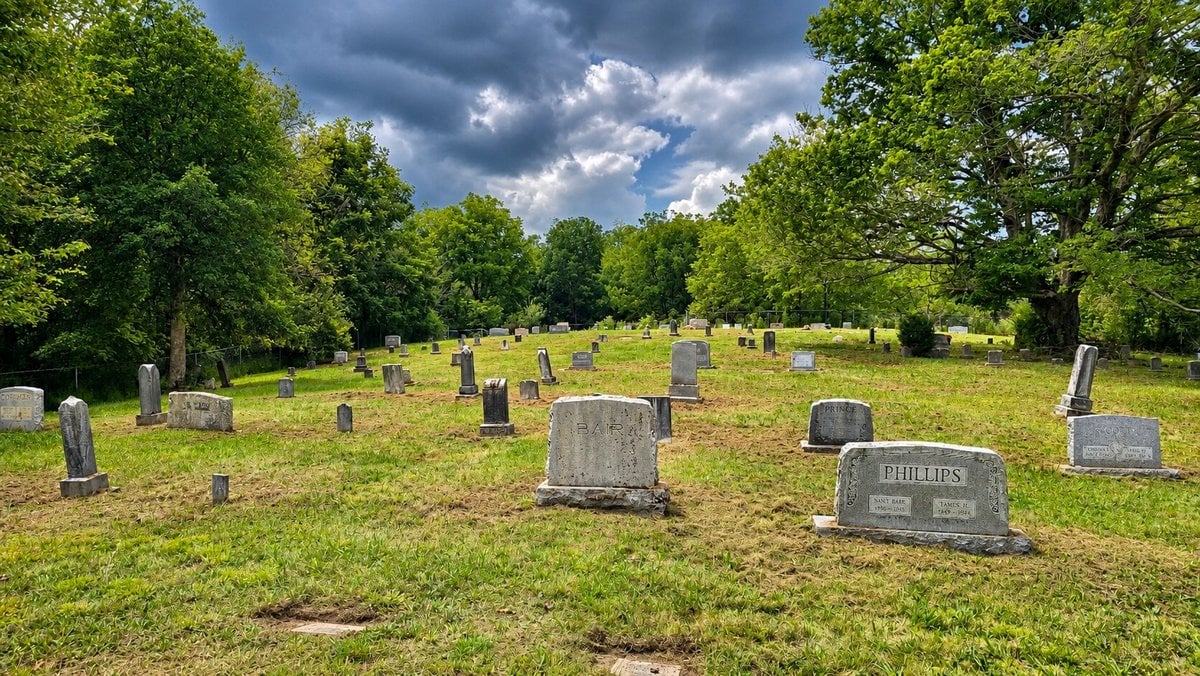
Thousands of small family and church cemeteries scattered across West Virginia remain physical evidence of a time when burial grounds were closely connected with the places where people lived, worshiped, and worked. Some continue to receive burials, while others have become isolated as families moved away and land changed ownership.
Funeral homes gradually changed the tradition
The old system did not disappear overnight, Comstock said.
Instead, professional undertakers and funeral homes gradually assumed duties that relatives and neighbors had once performed themselves. By the middle of the 20th century, bodies were commonly prepared at funeral homes in West Virginia, according to Smith, but they could still be returned to the family residence for the traditional wake.
By the end of the century, shorter visitations at funeral homes had largely replaced home wakes.
The physical work changed as well. Coffins became manufactured caskets. Embalming and professional preparation became customary. Motor hearses replaced wagons, and funeral directors assumed responsibility for many arrangements once divided among relatives and neighbors.
Yet much of the social structure surrounding death survived. West Virginians still bring food to grieving families. Friends gather for visitation. Churches host funerals and meals. Family cemeteries remain part of the landscape, and communities continue to gather around people who have lost someone.
The coffin may no longer be made by the man down the road, and few funeral processions arrive behind a horse or ox. The deceased is now generally entrusted to professionals rather than prepared at home by neighbors.
But beneath those changes remains something recognizable from the West Virginia Comstock recorded half a century ago: when someone died, other people showed up.
In the older tradition, that was more than sympathy. It was how a community buried its dead.
THANK YOU FOR THIS NEWS LETTER
I remember my grandmother passing away in the early 70’s in West Virginia. Her visitation was at the funeral home, and they brought her home afterwards. My Grandfather and my dad stayed all night with her in the living room. I didn’t sleep much, worried that she might come out of the coffin.