

MORGANTOWN, W.Va. — As millions of Americans head out on summer vacations, many will discover that the first “person” they interact with at their hotel isn’t a person at all.

Instead of waiting at the front desk, travelers may check in through a smartphone app. Questions about nearby restaurants or hotel amenities might be answered instantly by an AI-powered chatbot. Extra towels, late checkout requests, and housekeeping needs may be handled through automated messaging systems rather than by phone.
Artificial intelligence is quickly becoming part of the modern hotel experience, but as technology changes how many hotels operate, a West Virginia University hospitality expert says travelers still expect something AI cannot easily deliver: genuine human hospitality.
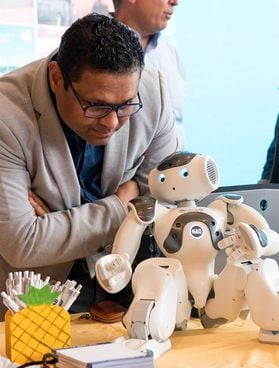
Recent studies by Ajay Aluri, associate professor in the West Virginia University John Chambers College of Business and Economics in Morgantown, examine how artificial intelligence is reshaping guest experiences, trust, and service delivery in the hospitality industry.
His research, published in the Journal of Hospitality and Tourism Cases and the Journal of Hospitality and Tourism Technology, suggests that the future of lodging will rely on both advanced technology and personal service rather than one replacing the other.
“As a people-centric industry, hospitality should be centered on humans and high-touch service to them,” Aluri said. “However, travelers’ use of generative AI and technology has evolved, and many hotel guests now want both the flexibility and efficiency provided by high-tech, fully automated AI solutions and the authenticity, empathy, and focused engagement of human service.”
AI is becoming part of everyday travel
Artificial intelligence is no longer limited to technology companies. Increasingly, travelers are encountering it throughout their vacations, beginning before they even arrive at their destinations.
Many hotel websites now use conversational chatbots to answer common questions about room availability, amenities, parking, pet policies, or nearby attractions. Mobile apps allow guests to check in, receive digital room keys, and communicate with hotel staff without visiting the front desk.
Once checked in, AI-powered systems can help guests request housekeeping, reserve restaurant tables, obtain directions, recommend attractions, or answer questions about hotel services at any hour, day, or night.
The goal is not simply to impress guests with new technology. Hotel operators are looking for ways to streamline routine interactions and make them more convenient, while allowing employees to spend more time assisting guests with problems that require personal attention.
According to Aluri’s research, many travelers appreciate AI when it saves time and simplifies repetitive tasks.
“Research shows that when hospitality and tourism consumers use conversational AI, they appreciate its multilingual capabilities and helpfulness with repetitive tasks,” he said. “Guests find AI most useful for quick answers about the hotel stay and experiences.”
For international travelers, multilingual AI tools can also make communication easier by translating questions and responses in real time, reducing language barriers that once required bilingual staff members.
Technology still has limits
Despite its growing role, artificial intelligence has not eliminated the need for hotel employees.
When travel plans go awry—a delayed flight, an overbooked reservation, a maintenance issue, or a family emergency—many guests still want to speak with someone who understands their situation and can make informed decisions.
Those moments often shape a guest’s opinion of a hotel far more than how quickly they checked in.
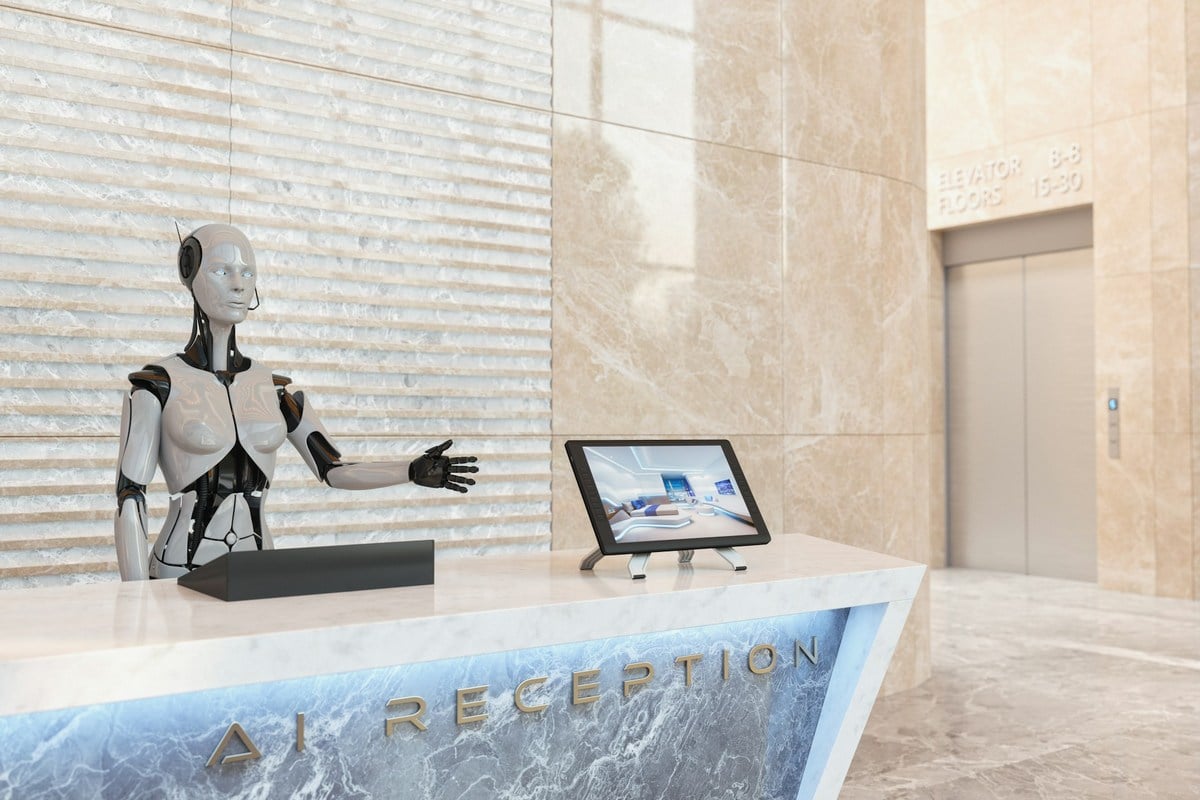
Aluri’s research found that while travelers appreciate AI’s speed and convenience, many remain cautious about relying on it entirely.
Guests continue to question whether AI-generated information is always accurate and express concerns about how companies collect and use voice recordings and personal information.
That uncertainty helps explain why many hotels continue to invest in both technology and trained employees rather than replace one with the other.
AI is changing hotel jobs
Instead of eliminating hospitality workers, artificial intelligence is changing the types of work employees do.
Routine requests that once occupied front-desk staff—answering common questions, scheduling housekeeping, making restaurant reservations or providing basic concierge information—can increasingly be handled automatically.
“AI can handle most routine jobs — housekeeping requests, restaurant reservations and concierge support services, allowing employees to focus on solving problems and delivering guest experiences,” Aluri said.

That shift allows hotel employees to devote more attention to situations where judgment, empathy and creativity matter most.
Whether helping a family whose luggage was lost, arranging accommodations for a special celebration or assisting travelers during severe weather, human employees remain central to the guest experience.
Hospitality has long depended on personal interactions, and Aluri believes that will remain true even as technology becomes more sophisticated.
Not every hotel is adopting AI in the same way
Artificial intelligence is being adopted at different speeds across hotel types.
Luxury properties continue to emphasize highly personalized service, with employees learning guest preferences, anticipating needs, and creating memorable experiences that distinguish premium accommodations from competitors.
“Luxury and 5-star hotels continue to focus on personalized high-touch services,” Aluri said.
Upscale and midscale hotels increasingly combine traditional customer service with technology such as mobile check-in, digital room keys, and automated guest communication.
These hotels aim to offer both convenience and personal interaction, allowing guests to choose how they prefer to communicate.
Budget and economy lodging may see the biggest transformation.
“Budget and economy lodging, on the other hand, can soon be fully automated with limited staffing,” Aluri said.
For travelers, that could mean faster service for routine needs but fewer face-to-face interactions than they may have experienced only a few years ago.
What travelers should expect
As AI becomes more common, travelers are likely to notice changes across the hotel experience.
Checking in may require little more than confirming identity on a smartphone. Questions about hotel amenities may be answered instantly via an app rather than by phone. Digital assistants may recommend restaurants, attractions, or transportation based on a guest’s location or interests.
At the same time, the most important aspects of hospitality are likely to remain firmly in human hands.
Guests celebrating anniversaries, dealing with travel disruptions, or seeking personalized recommendations often value conversations with knowledgeable employees who understand both the destination and the unique circumstances of their visit.
For many travelers, convenience and personal attention are not competing priorities—they expect both.
That expectation, Aluri said, is helping shape the next generation of hotel service.
A balance between technology and hospitality
Hotels have continually adopted new technologies over the decades, from computerized reservation systems and online booking to electronic room keys and mobile apps.
Artificial intelligence marks the latest stage in that evolution.
Rather than replacing hospitality altogether, it is becoming another tool hotels can use to improve efficiency while allowing employees to focus on creating memorable guest experiences.
“Human intervention and intuition are foundational in the hotel industry, but hospitality technology is evolving at a rapid pace,” Aluri said. “Existing jobs are changing, and new jobs are being created. The hotel of the future will offer guests services and experiences that are both high-touch and high-tech.”
For Americans planning road trips and vacations this summer, the hotel experience may feel noticeably different from what it was just a few years ago.
The fastest answers may come from artificial intelligence. The most memorable moments, however, are still likely to come from the people behind the front desk.
Not looking forward to talking to a robot checking in . My experience so far with AI has been nothing but confusing and time consuming. Give me a friendly front desk clerk anytime.