
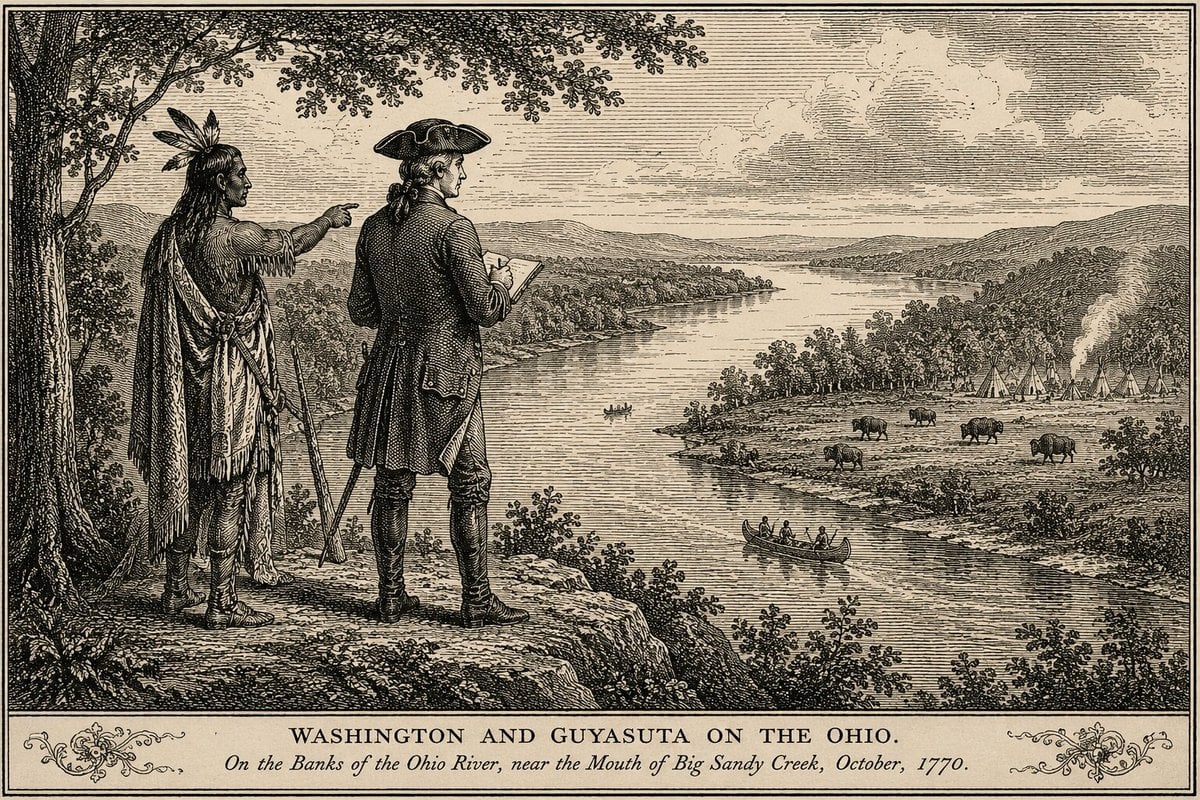
RAVENSWOOD, W.Va. — Long before he became the first president of the United States, George Washington was an explorer, surveyor, soldier, and ambitious young land speculator drawn to the vast wilderness beyond the Appalachian Mountains. Much of what is now West Virginia was then the Virginian frontier—an untamed wilderness of towering forests, broad rivers, and Native American hunting grounds that few Europeans had seen.

Washington returned to this country repeatedly between the late 1740s and the eve of the American Revolution. He surveyed its valleys, crossed its rivers, negotiated with Native leaders, and recorded observations that today provide an extraordinary glimpse into the Mountain State before settlement transformed it.
Remarkably, many of the places Washington knew can still be visited. While towns have grown and highways have replaced buffalo paths, the mountains, rivers, and landscapes that impressed the young Virginian remain surprisingly recognizable.
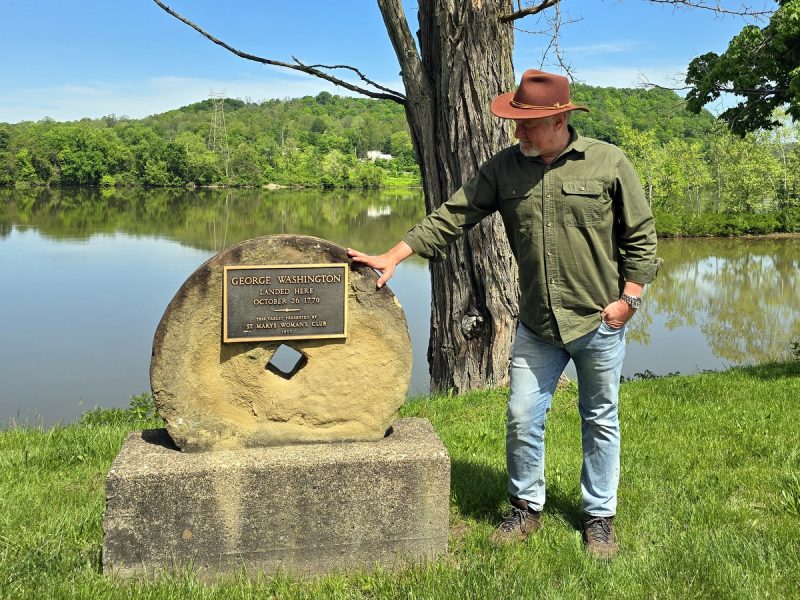
Historian and West Virginia Explorer publisher David Sibray says a cross-state exploration of Washington’s haunts might make an excellent excursion, extending between Berkeley Springs and the eastern panhandle in the east and Ravenswood and Point Pleasant in the west.
Sibray said he would venture outside West Virginia to visit Washingtonian sites such as Fort Necessity Battlefield in Pennsylvania, following the National Road (U.S. Route 40) from the eastern panhandle to the northern panhandle at Wheeling, then following the Ohio River south.
“What fascinates me isn’t simply that George Washington came here,” Sibray says. “It’s that visitors can still experience many of the same landscapes that shaped his understanding of the American frontier.”
Here are five places where travelers can still experience Washington’s West Virginia.
1. Ravenswood and the Ohio River
Perhaps no stop on Washington’s western journeys is less known or more intriguing than the Ohio River near present-day Ravenswood, Sibray says.
In the fall of 1770, 38-year-old George Washington traveled down the Ohio River to inspect lands and evaluate opportunities for western settlement. Near the mouth of Big Sandy Creek, he encountered an old acquaintance—Guyasuta, the influential Seneca leader who had guided Washington through the wilderness during his diplomatic mission to the French nearly two decades earlier.
“The meeting between Washington and Guyasuta is one of the most remarkable—and overlooked—moments in West Virginia history,” Sibray says. “Two future leaders of very different worlds spent an evening together discussing a frontier neither knew would soon change forever.”
The two men camped together beside the Ohio River, sharing a meal while discussing the lands farther west. Washington’s journal records that Native ceremonial customs delayed his departure the following morning, before the expedition continued north.
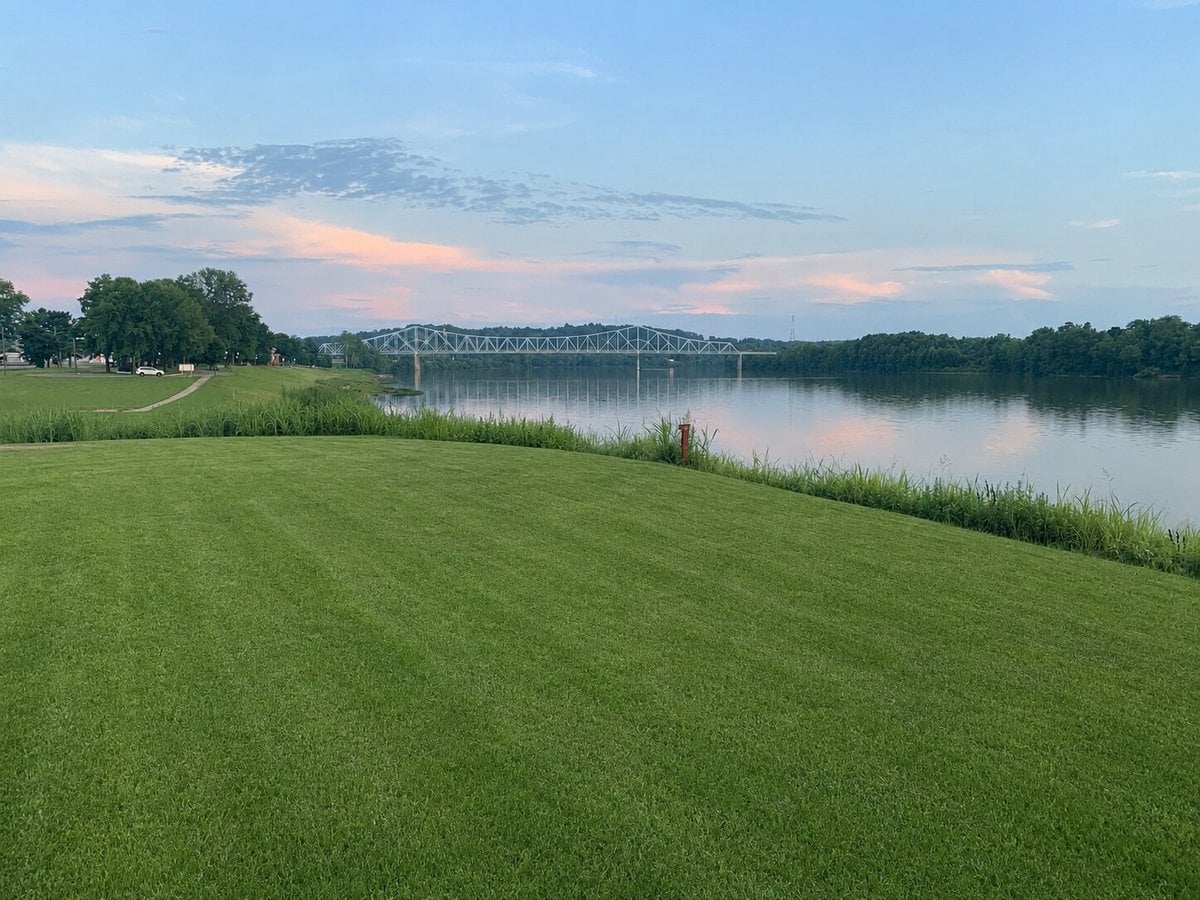
Today, visitors can stand along the riverbank near Ravenswood and imagine the same broad waterway Washington described. Although modern development has altered portions of the shoreline, the river itself remains remarkably unchanged, flowing through wooded hills much as it did in 1770.
It is one of the few places where the future president and one of North America’s most influential Native leaders are known to have spent an evening together.
Read more: George Washington’s Frontier Adventure Through the Ohio Valley.
2. Point Pleasant
Where the Great Kanawha River meets the Ohio, Washington saw one of the most impressive landscapes of his journey.
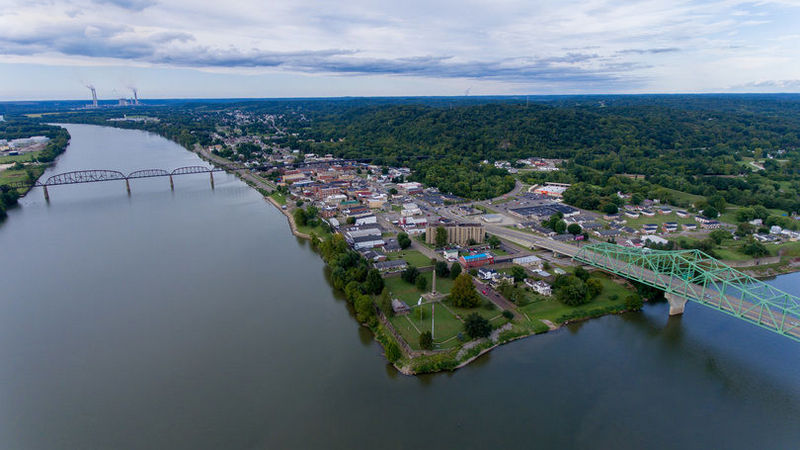
He carefully examined the broad river bottoms, commenting on the fertile soils, abundant wildlife, and extraordinary potential for future settlement. Buffalo, elk, deer, and waterfowl were common throughout the valley, and Washington recognized that this junction could become one of the most valuable locations in the western country.
Nearly two centuries later, Point Pleasant became famous for another reason as the site of the 1774 Battle of Point Pleasant, but Washington’s visit came four years earlier, when the region remained almost entirely wilderness.
Visitors today can walk the riverfront at Tu-Endie-Wei Park, where the Ohio and Kanawha continue to meet much as they did during Washington’s expedition. The sweeping views help explain why the young surveyor immediately appreciated the area’s strategic and economic importance.
“It’s easy to understand why Washington was captivated,” Sibray says. “Standing where the Kanawha joins the Ohio, you’re looking at one of the great gateways to the American interior. Even today, the landscape conveys the same sense of opportunity that Washington recognized more than 250 years ago.”
3. Berkeley Springs
No place in West Virginia is more closely associated with George Washington than Berkeley Springs.
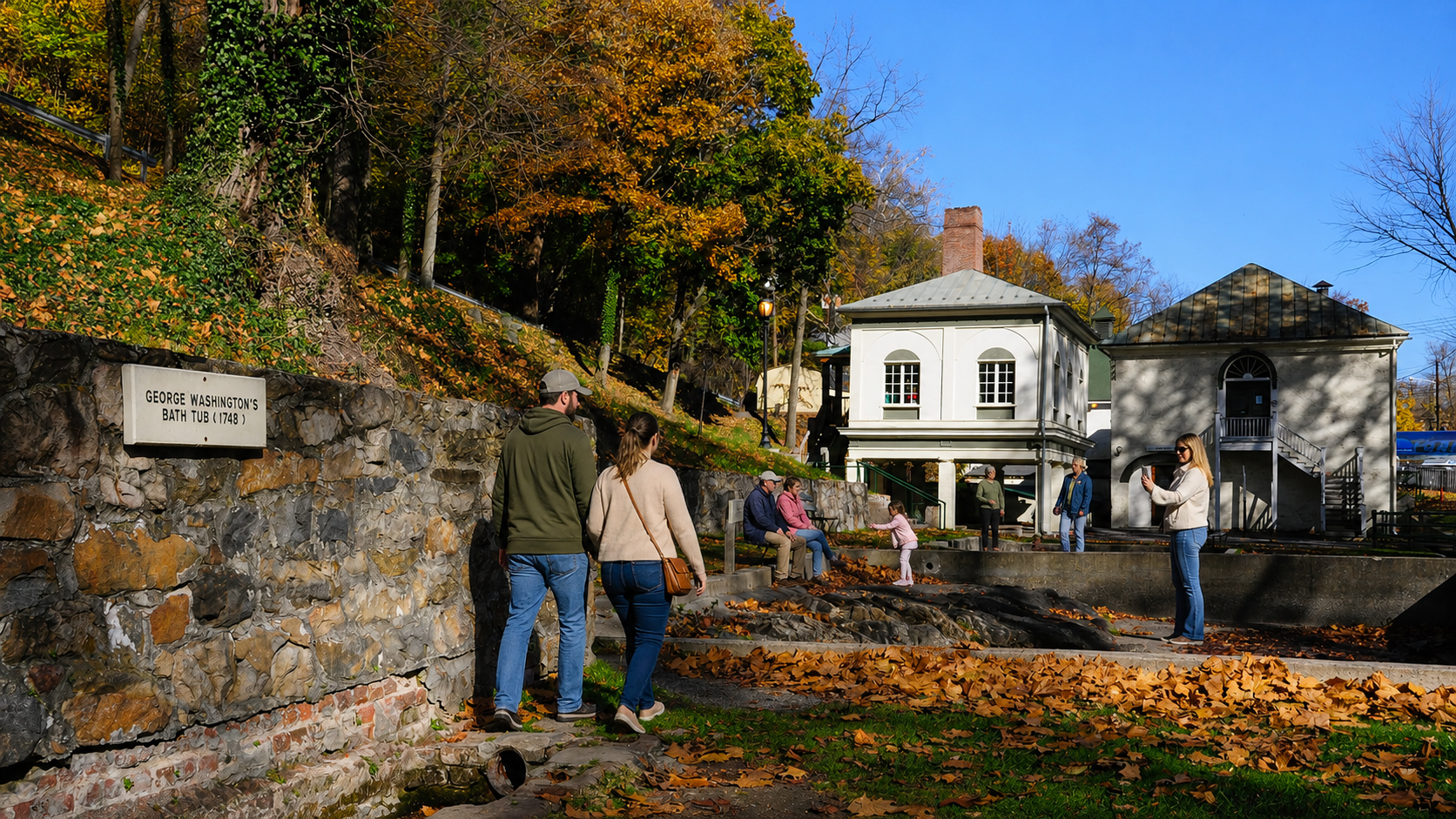
Washington first visited the warm mineral springs as a teenager in 1748, accompanying members of Virginia’s colonial elite who believed the waters possessed remarkable healing properties. He returned several times throughout his life, helping establish Berkeley Springs as one of America’s earliest resort destinations.
“Standing beside the warm springs, it’s surprisingly easy to imagine Washington arriving on horseback after days of travel,” Sibray says. “Few places associated with him feel so immediate.”

The town proudly preserves that connection today. Visitors can see the famous stone tub known as George Washington’s Bathtub inside Berkeley Springs State Park, where warm mineral water continues to flow from the same springs Washington enjoyed nearly 280 years ago. Historic buildings, spas, and the surrounding town preserve much of the atmosphere that first attracted wealthy Virginians during the colonial period.
For many travelers, Berkeley Springs offers the easiest opportunity to experience a destination Washington himself would immediately recognize.
4. Harewood, Jefferson County
George Washington’s ties to West Virginia extended beyond exploration.
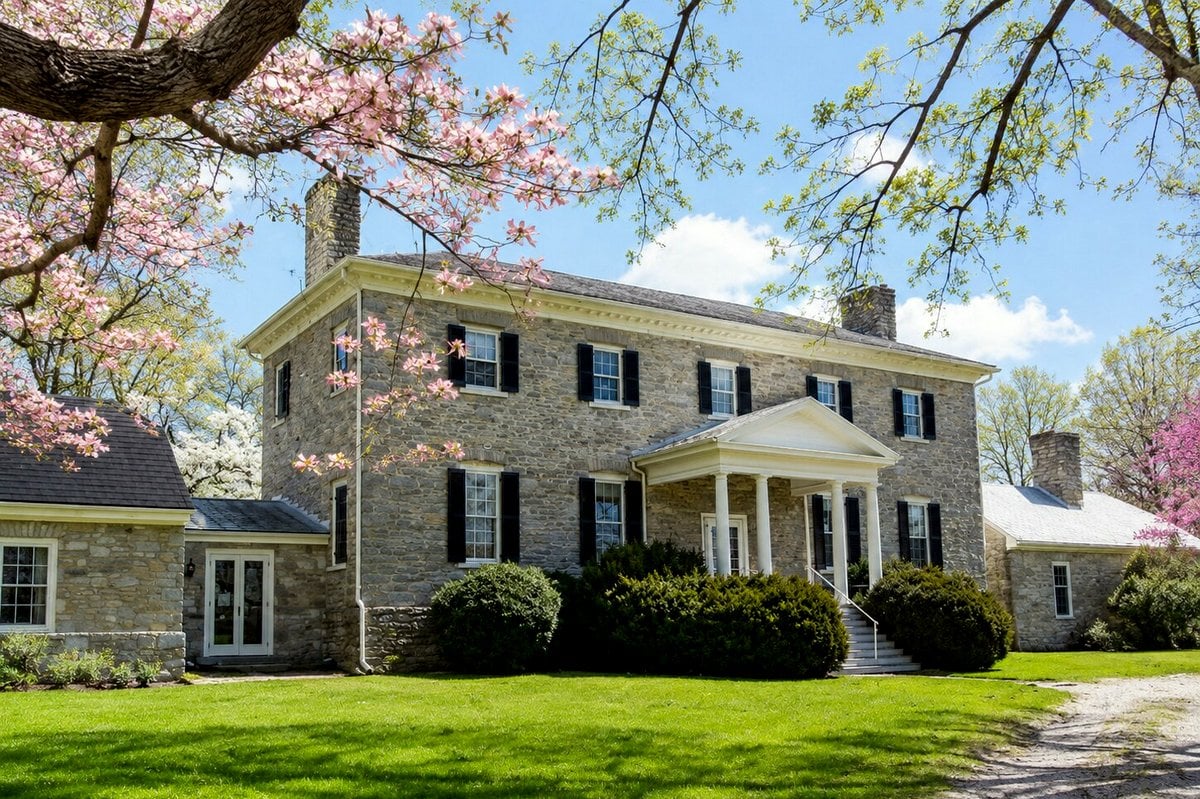
Harewood, the elegant estate built by his younger brother Samuel Washington near present-day Charles Town, became an important gathering place for the Washington family during the late eighteenth century. George visited frequently, enjoying family occasions and conducting business while traveling through the lower Shenandoah Valley.
Harewood also occupies a unique place in American history. In 1794, James Madison married Dolley Payne Todd here, uniting two figures who would later become one of the nation’s most influential presidential couples.
Although the privately owned mansion is generally open only during special events, the surrounding countryside remains much as Washington would have known it, with rolling farmland framed by the Blue Ridge Mountains.
“I’ve had the honor of visiting the Washington family and touring the estate on several occasions,” Sibray said. “It’s good to know the Washington bloodline lives on in West Virginia.”
5. Great Cacapon
Long before his Ohio River expedition, Washington was already learning the frontier as a teenage surveyor.
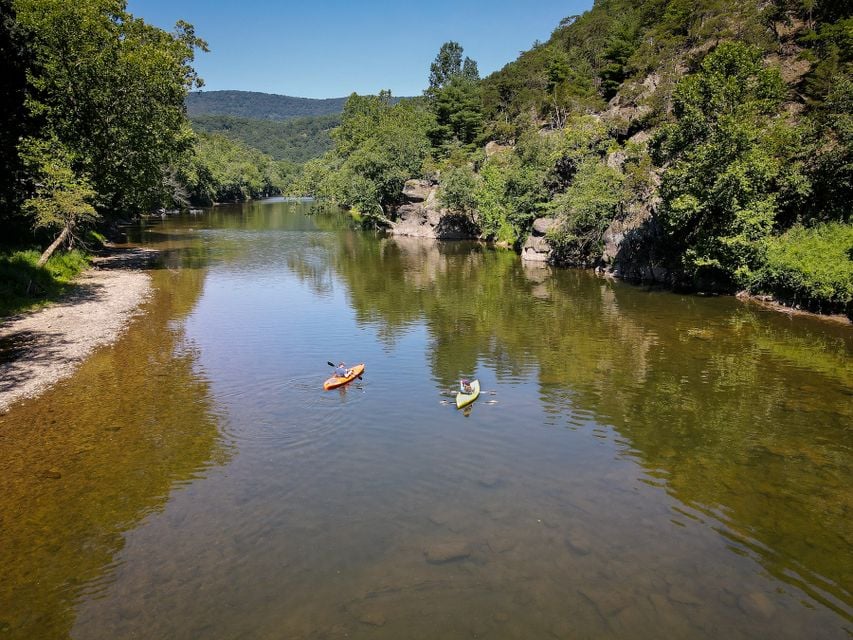
In 1748, at just sixteen years old, he joined a surveying expedition through Virginia’s western frontier, spending weeks crossing rugged mountains and following the Potomac River into what is now the Eastern Panhandle of West Virginia.
The Great Cacapon area became one of the landscapes that shaped his lifelong fascination with western lands.
Here, Washington learned practical surveying skills, endured harsh weather, and gained firsthand knowledge of the forests and valleys that would later influence his military career and land investments.
Modern visitors driving along the Potomac or exploring nearby public lands still encounter many of the same ridges, river bends, and wooded slopes that introduced Washington to the American frontier.
Walking through Washington’s frontier
Washington’s journals reveal a man fascinated by geography as much as politics. He carefully measured river depths, evaluated farmland, estimated timber resources, noted wildlife, and assessed transportation routes that might someday connect the Atlantic coast with the interior of North America.
Those observations helped shape his understanding of the growing nation decades before he assumed the presidency.
Today, travelers following Washington’s path discover something equally valuable: much of West Virginia’s greatest scenery has changed remarkably little.
“History isn’t confined to museums,” Sibray says. “It’s preserved in rivers that still follow the same bends, mountain ridges that haven’t moved in millions of years, and valleys where a young surveyor named George Washington began imagining the future of a nation.”
The Ohio still winds between forested hills. Warm springs continue bubbling from ancient limestone. Mountain valleys remain framed by ridges that Washington himself surveyed nearly three centuries ago.
“Every time I retrace one of Washington’s routes through West Virginia, I’m reminded that history is often hiding in plain sight,” Sibray said. “Sometimes all it takes is stopping beside a quiet river or looking across an unchanged mountain valley to realize that the landscape before us is the same one that inspired a young explorer who would one day help shape a nation.”
For visitors interested in American history, these places offer something increasingly rare—a chance to stand where one of the nation’s founders once stood and experience landscapes that continue to tell the story of the country’s earliest western frontier.
Just found this site. Keep up the great work for us native mountaineers.
A beautiful reminder of our historical history and the ones who shaped our future. I hope lots of people take you up on the offer to just sit by a river or go to the top of a ridge and allow your imagination to whisk you back. Our history is richer, when writers like yourself bring these memories to us
KMundstock, wv
I’m from Hampshire County, WV – Va in Washington’s day. Great Cacapon runs thru my county. But there is more. In Romney you can see were George Washington slept while 16 when he was surviving. It’s been torn down or fell down, but the foundation is still there. You can also visit the cliffs where he stated in his journal that he found foreign speakers were camping. Also you should mention that during the American War, he drew heavy on the “, gorilla fighters” of the day.
I am so glad you shared this information about Romney!
Great Cacapon is in Morgan County, do mean the Cacapon River runs through Hampshire County?
I am so glad you shared this information about Romney!
A simple map of West Virginia with the numbered locations discussed on it would improve the article’s usefulness. Perhaps you could add one.
I actually live in Charles Town WVa born and raised in the area I used to ride my bike by this house I’ve never been inside of it but I’d like to there is also a restaurant and bar in the area called the Charles Washington Inn I think they changed the name but i have been told that the Charles Washington Inn was haunted I mean this area had the John Brown stuff and slaves so im not surprised that this area is a hot bed for spirits
Love this history, the stories about our first president and geographical facts. Fascinating stuff Craig.
Very interesting information…as I just saw the movie about Young George Washington…quite informative and speaks to me because of the importance of Virginia and West Virginia in settling our great nation!