
CHARLESTON, W.Va. — Black bears roam the mountains. Timber rattlesnakes hide among rocks. Copperheads turn up around homes and woodpiles. But the animal most likely to be involved in a fatal encounter with a person in West Virginia may be one residents see almost every day.

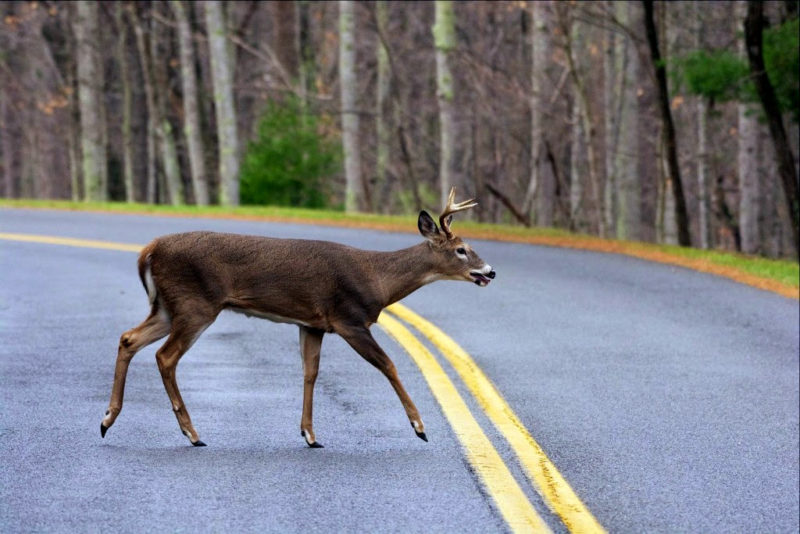
The white-tailed deer poses an often-overlooked danger in the Mountain State, not because it commonly attacks people, but because thousands of deer cross highways and roads traveled by motorists.
Federal highway research shows that West Virginia averaged about 1,795 reported animal-vehicle crashes annually during the period studied, including an average of 3.2 fatal crashes each year. The Federal Highway Administration estimated that animal-vehicle crashes accounted for more than 5 percent of crashes in West Virginia.
While federal crash statistics do not identify every animal involved by species, white-tailed deer account for the overwhelming share of wildlife collisions across much of the eastern United States and are extraordinarily abundant in West Virginia. That makes the familiar deer a much more substantial everyday threat than some of the animals people are more inclined to fear.
Bears aren’t West Virginia’s biggest wildlife danger
West Virginia’s black bear population has expanded dramatically over the past several decades, and sightings are now common across much of the state. Yet attacks on people remain rare.
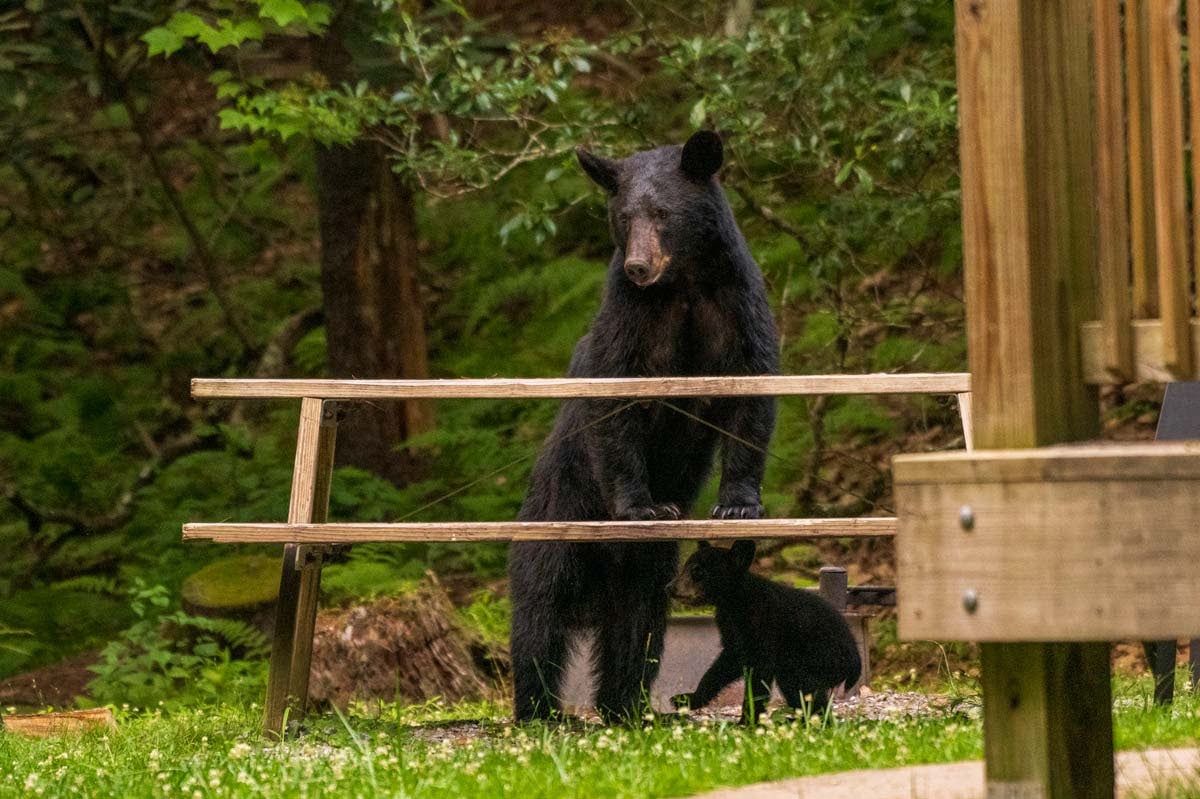
Black bears generally try to avoid people, and wildlife officials routinely emphasize practices that reduce conflicts, such as securing garbage, keeping food away from campsites and avoiding intentional feeding.
The contrast between perception and actual risk is striking. A bear walking across a trail may trigger an immediate sense of danger, while a deer standing beside a highway may hardly merit a second glance. Yet the second encounter can turn deadly in seconds.
Deer are particularly hazardous when they suddenly enter a roadway, leaving motorists little time to brake or maneuver. Swerving to avoid an animal can also lead to a collision with another vehicle, a tree, or a roadside object.
West Virginia’s venomous snakes are less deadly than many imagine
Snakes may inspire even more fear than bears, but West Virginia wildlife officials have long emphasized that fatal snakebites are rare. Only two of the state’s native snake species are venomous: the northern copperhead and timber rattlesnake.
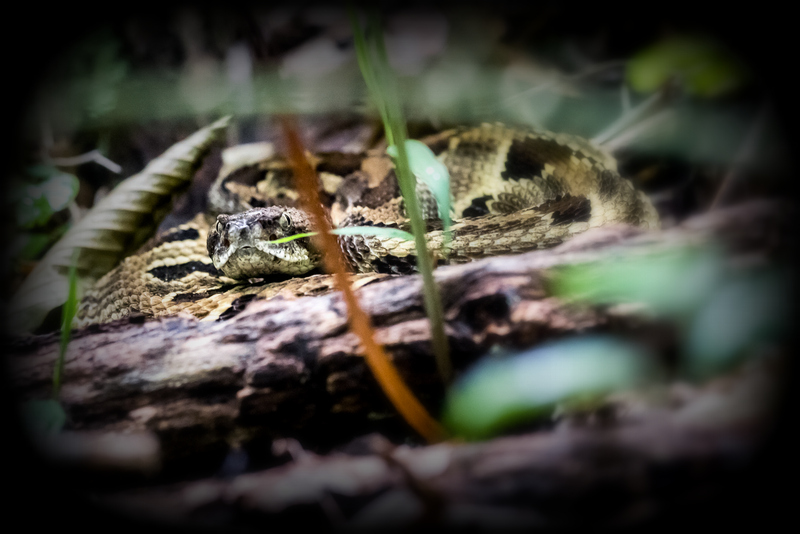
In a publication intended to counter misconceptions about snakes, the W.Va. Department of Natural Resources reported that no copperhead fatalities had been recorded in the state for more than 30 years at the time of publication. The agency found only four deaths from wild rattlesnake bites in West Virginia from 1969 through 1992.
The agency made an even more surprising comparison: bee stings, cows, and horses had caused 15 times as many deaths as snakes. Modern medical treatment has further improved the outlook for people bitten by venomous snakes, though any suspected venomous bite remains a medical emergency.
Read also: Praise the Lord, and pass the rattlesnakes! West Virginia’s fading snake handling tradition
What about rabid animals?
Raccoons, skunks, foxes, and bats pose another wildlife risk in West Virginia because they can carry rabies. The disease is virtually always fatal once symptoms develop, making potential exposure a serious medical concern, but human rabies deaths in West Virginia are exceptionally rare.
State health officials report that West Virginia’s last human rabies case occurred in 1994, despite the virus’s continued presence among wild animals. Dogs and cats account for the majority of animal-bite and potential rabies-exposure reports investigated by local health departments, according to state health officials.
Anyone bitten or scratched by a potentially rabid animal should wash the affected area thoroughly and seek medical attention immediately.
Why deer are different
The danger associated with deer stems largely from their numbers and proximity. West Virginia’s forests, farms, and suburban landscapes provide extensive habitat for white-tailed deer, and the state’s winding highways frequently pass directly through that habitat.
Unlike an encounter with a bear or rattlesnake, motorists may encounter deer almost anywhere in the state. The danger also increases seasonally, as deer movement becomes especially pronounced during the fall breeding season, when animals may cross highways unpredictably.
Dawn and dusk can be particularly hazardous because deer are active while motorists’ visibility is reduced. A driver who sees one deer should also expect others nearby, as deer frequently travel in groups, meaning the animal that crosses safely may be followed immediately by another.
The deadliest animal depends on how it’s measured
Calling any species West Virginia’s “deadliest animal” requires some qualification. Deaths directly caused by bites, stings, or attacks are different from those caused when an animal enters a highway. Federal mortality statistics group animal-related deaths into categories that don’t always allow state-by-state species comparisons.
But if the question is which wild animal poses the greatest recurring risk of a fatal encounter in West Virginia, vehicle collisions change the answer dramatically.
It isn’t the black bear looming beside a hiking trail or the timber rattlesnake coiled among the rocks. It may be the white-tailed deer standing quietly beside the road, and that may be precisely why it is so easy to underestimate.
Hey there sir I remember a time when people from southern wv would travel to the northern part of the state to hunt deer because of the abundance of deer has the statistics changed from the 80’s until today and a big part of the northern counties income has went away because of the low deer population why doesn’t DNR transplant some of the southern deer herd bucks included to try to bring back the northern population thanks for your time and keep up the good work