
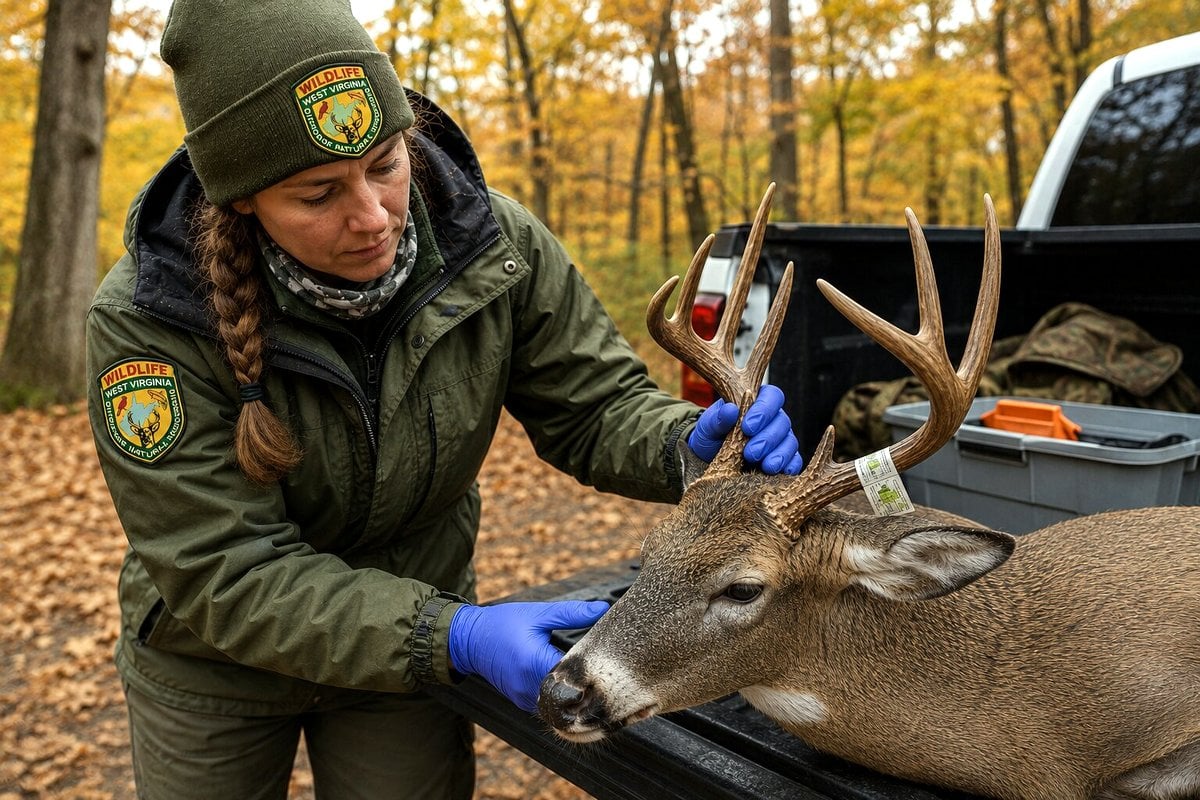
CHARLESTON, W.Va. — West Virginia wildlife officials are proposing new regulations to slow the spread of diseases such as chronic wasting disease, with changes that could affect how hunters, landowners, and even backyard wildlife enthusiasts feed wildlife and transport harvested deer.

The W.Va. Division of Natural Resources is accepting public comments through July 27 on proposed amendments to its Wildlife Disease Management rule, which governs the state’s response to contagious diseases affecting wild animals.
The proposed changes would expand and clarify definitions of feeding and baiting wildlife, update restrictions on transporting deer carcasses from disease containment areas, and give state officials additional flexibility to respond to future wildlife disease outbreaks.
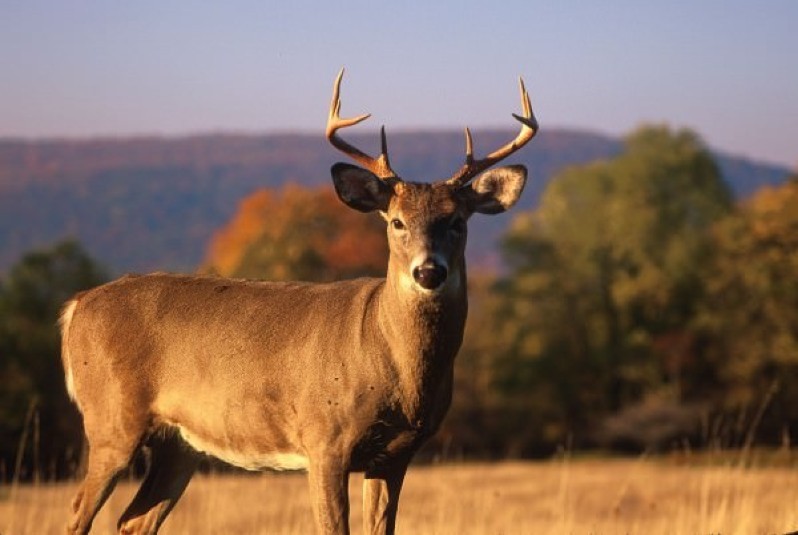
Hunters preparing for the upcoming season should also review West Virginia’s 2026–27 hunting regulations, which outline this year’s season dates, licensing requirements, and other statewide hunting rules. The proposed changes to wildlife disease regulations would, if approved, supplement those regulations.
Why the changes matter
Wildlife diseases have become an increasing concern across North America, particularly chronic wasting disease, a fatal neurological illness that affects members of the deer family, including white-tailed deer and elk.
Scientists believe the disease spreads more easily where deer congregate around food sources, making feeding and baiting restrictions an important tool to slow transmission.
The proposed rule would broaden the definition of “feeding” to include placing natural or artificial foods, minerals, or other attractants that draw wildlife together. Likewise, the definition of “baiting” would apply not only to hunting but also to the placement of edible attractants that lure wildlife for viewing or other purposes. Food plots, standing crops, and naturally fallen fruit would continue to be exempt.
Carcass restrictions would remain an important tool
The proposal also updates rules governing the movement of harvested deer from chronic wasting disease containment areas.

Under the regulations, hunters may generally transport only boned-out meat, cleaned hides, cleaned skull plates with antlers attached, antlers free of tissue, and finished taxidermy mounts outside designated containment areas. These restrictions are intended to reduce the risk of moving infectious material into new regions.
The proposed rule would also authorize the division to impose carcass movement restrictions if other significant wildlife diseases—including avian influenza, bovine tuberculosis, or emerging animal diseases—pose threats to wildlife, livestock, or public health.
Bird feeders could be affected in some areas
The proposal also clarifies that bird feeding may continue within disease containment areas, provided feeders do not attract deer or other wildlife.
Birdseed should not be placed directly on the ground where deer can easily reach it, and bird or squirrel feeders may need to be removed if they attract wildlife other than songbirds or squirrels.
Containment areas are reviewed annually
The proposed amendments would require the Division of Natural Resources to review disease containment areas at least once a year, using the latest available scientific information. Any changes would be reported annually in the West Virginia Hunting and Trapping Regulations Summary, making it easier for hunters to identify where restrictions are in effect.
The proposal also adds definitions for emerging and foreign animal diseases, giving the agency greater flexibility to respond if new wildlife diseases appear in West Virginia.
What is Chronic Wasting Disease?
Chronic wasting disease is a fatal neurological disease that affects members of the deer family, including white-tailed deer, elk, and moose. It is caused not by a virus or bacterium but by abnormal proteins called prions, which gradually damage the brain and nervous system.
Infected animals may appear healthy for months or even years before developing symptoms such as severe weight loss, drooping ears, excessive salivation, lack of coordination, and unusual behavior. There is no known treatment or vaccine, and the disease is always fatal.
The disease spreads through direct contact between infected animals and through contaminated saliva, urine, feces, and carcasses. Prions can also persist in soil and the environment for years, making chronic wasting disease particularly difficult to control once it becomes established.
Wildlife agencies across North America have responded by increasing surveillance, restricting the movement of deer carcasses, and discouraging practices such as feeding and baiting that cause deer to congregate in unnaturally high numbers, where diseases can spread more easily.
Although there is currently no evidence that chronic wasting disease infects humans, the Centers for Disease Control and Prevention recommends that hunters avoid consuming meat from animals that test positive for the disease.
Wildlife officials encourage hunters in affected areas to have harvested deer tested when testing is available and to follow state regulations regarding carcass disposal and transportation to help slow the disease’s spread.
How to comment
The proposed Wildlife Disease Management rule is available for public review through the Secretary of State’s pending rules process.
The W.Va. Division of Natural Resources will accept written comments by July 27 via email at DNRComments@wv.gov or by mail to:
West Virginia Division of Natural Resources
Attn: Wendy Greene
112 California Avenue
Charleston, WV 25305
Additional information on hunting, fishing, and boating regulations is available from the West Virginia Division of Natural Resources.
WHY IS THERE NOT A NONE CURE .DOES ANY ONE TRY TO FIND A CURE. OR TEST DIFFERENT ANTIBIOTICS OR VACCINE FOR IT
Easier to slap more rules and regulations on the public.
The same reason there’s no cure for a lot of diseases. Plenty of work is being done looking into it, it just hasn’t been solved yet. The public needs to do their part to assist until one is found.
What they should do is put vaccines in deer hunting food for hunters to treat them from getting infectious diseases and that should be the only food you can purchase from any wv store selling deer baits.
You ever check the poison they spray power lines? How does it effect wildlife?and I think land owners should be able to feed,we feed our livestock.
Well well it all started in the deer farming feed lots that y’all allowed for people to kill a 10 thousand dollar deer (I didn’t call them hunters) now here we are stopping me from putting a couple apples out because you are saying they( think) it spreads that way
Amen, get to the root cause. I don’t have faith that the Department of Agriculture will do one thing to control CWD.in pen raised deer.
Am I the only one that notices the dwindling number of hunters? There used to be someone at every spot on the side of the road. Now, I can go out and only see a few people in some places that were packed. I don’t know if it’s all the regulations, and I understand the need for some of them, or it’s the cost of everything going up. I know people that quit because of the price of a license being so high. I can’t blame them, I’m almost in the same boat. I remember paying $15 for a license and $20 something for hunting and fishing. You can’t even enjoy the outdoors anymore, it costs too much.
I believe the decline is very much due to the ridiculous regulations on transporting deer carcasses and bait restrictions. Tell me you’re not trying to terminate hunting without trying to terminate hunting. I’d buy all the b.s. on CWD for a dollar but the truth is they have no clue. And that’s what pisses a lot of people off. Trying to hit the dart board with your eyes closed.
Exactly I have only bought liscense since then maybe 4 times since the raise. I went and talked to dnr at civic center back then and told them it was too much for average guy they said it was gonna put more money into the program and make everything better look at where we are now
Will the proceeds from the violations go toward research for a cure, or salaries? Seems like a wild jump when no results have come from the affected areas other than violation money.
Stopping feeding them isn’t going to work
From my understanding, I think DNR are more responsible than anyone else. Reason being is you want us to debone the meat and leave the remains in the woods. My understanding is the area where that carcass is and rots up affects and contaminates that area, when grass or something else grows there and a deer comes and eats that grass ( maybe few years down the road) he gets the disease. If that is the case, why isn’t there a incinerator so we could burn these remains and help solve a growing problem. Thanks
I believe the hunter has a right to decide on there property, or there lease, what is appropriate, as far as feeding wild life, granted the state claims ownership of the animals, and they don’t show ownership of the animals, everything evolves around politics and money, I take more care of my wild deer herd, than the state does, it’s called common sense, something that has been long forgotten about, stop all these laws and rules, that affects the common man that doesn’t really have time to hunt !!! I promise, there will be properties and lease, that will be exempt from any new guidelines and rules, that are placed against the common hunters !!!!!
I think feeding deer should be suspended for 5 years and see if there is a difference in the numbers with affected deer. The deer will spred out. I know in certain counties deer population is way down anyways. And counties that had the ehd outbreaks need to doe season suspended.
So it’s not ok to feed the deer but it is ok to have a food plot with the same deer gathering every day in the same spot as the day before , that’s real smart . Mother nature takes care of itself , it’s something that will have to run its course and the strong survive and the weak die . Just sounds like another rule to catch a poor hunter and take his money !!! The DNR claims there’s not enough money coming in , well maybe they should have thought about that when they came up with buying a lifetime license , did they invest that money or spend it as soon as it came in . Hunting season use to be simple , but now you have to stay on top of the regulations or their just setting there with their hands out wanting money !!!!
EHD is more of a threat to the deer population than chronic wasting. It has nothing to do with feeding areas. I think they are seeing dollar signs from violations
I’d be more worried about the blood sucking ticks and fleas these animals have to deal with and mosquitoes they probably transfer most diseases. I highly doubt a bait station or backyard feeders are the problem since most animals including deer are territorial.
Pennsylvania allows no baiting and still has cwd. If you do away with baiting you might as well do away with youth season. I don t even believe we have game commissioner who know what’s right or wrong. We have lost so many hunters it’s ridiculous. It seems our state is totally for tourism.
I’ve been saying it for years that the rise in chronic wasting happened right after “feeding” became legal. Guys in here complaining because they might have to actually learn to hunt.