
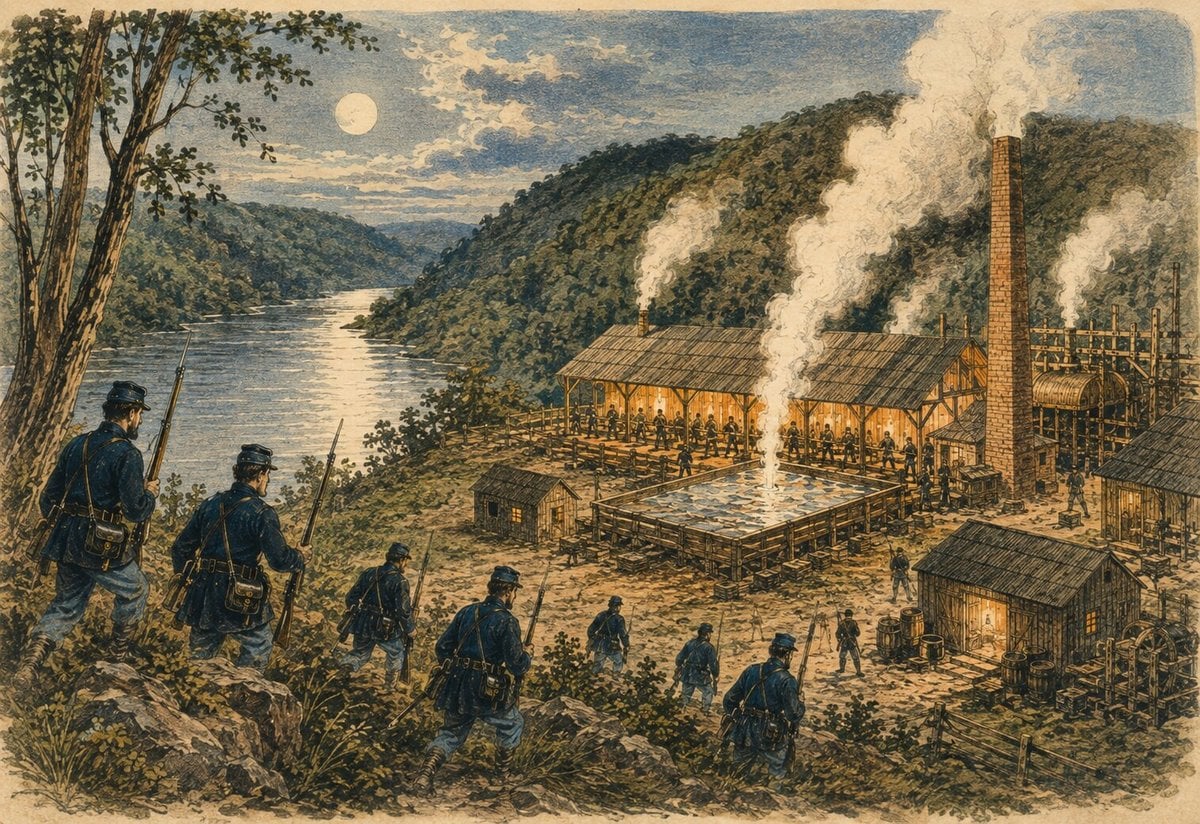
HINTON, W.Va. — In the darkness of Aug. 10, 1862, about 150 Union soldiers moved through the mountains of southern West Virginia toward an isolated industrial complex along the New River, carrying orders from an Ohio officer who would eventually become president of the United States.
Their objective was the Mercer Saltworks, a salt-producing operation near the mouth of Lick Creek that had become an important supplier to a region where salt was indispensable for preserving meat and other foods. By daylight, its furnaces and buildings were burning, and Lt. Col. Rutherford B. Hayes was recording the outcome in his diary.
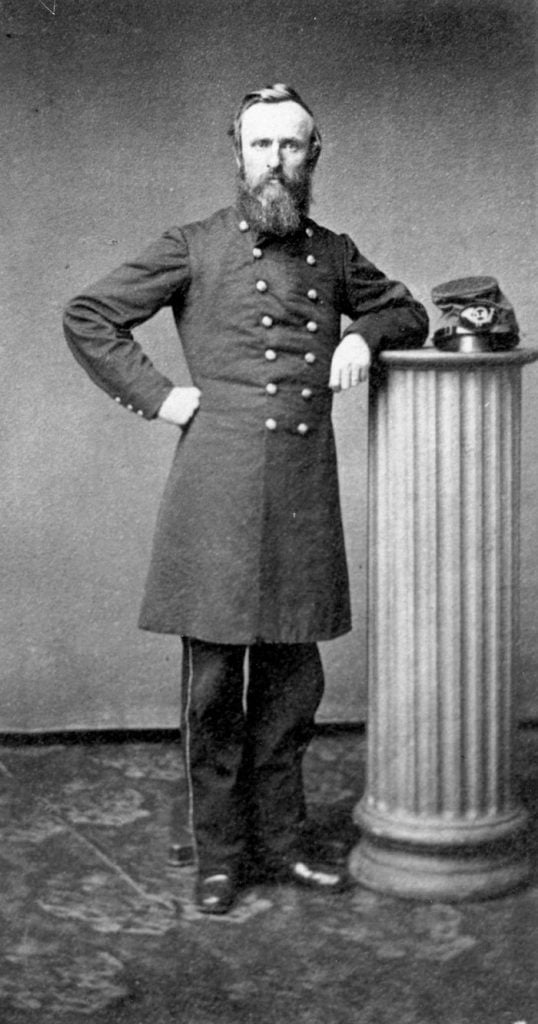
“The expedition was completely successful, and was of more importance than I supposed it would be,” Hayes wrote on Aug. 10.
The raid occurred 164 years ago today, long before Hayes entered the White House as the nation’s 19th president and only months before West Virginia became a state. His diary and a letter written to his wife that same day preserve an unusually vivid account of the operation, including a description of the saltworks while its machinery was still running.
The raid was only one episode in the history of a remarkable industrial site whose surviving records document salt production, transportation, commerce and the labor of both free and enslaved workers in the mountains along the New River. Though the works disappeared generations ago, historical accounts indicate that the natural salt seep that inspired the industry survived after the furnaces went cold.
Salt created an industry along the New River
The Mercer Saltworks stood near the junction of Lick Creek and the New River in what was then Mercer County, Virginia. The area became part of West Virginia in 1863 and of Summers County when that county was established in 1871.
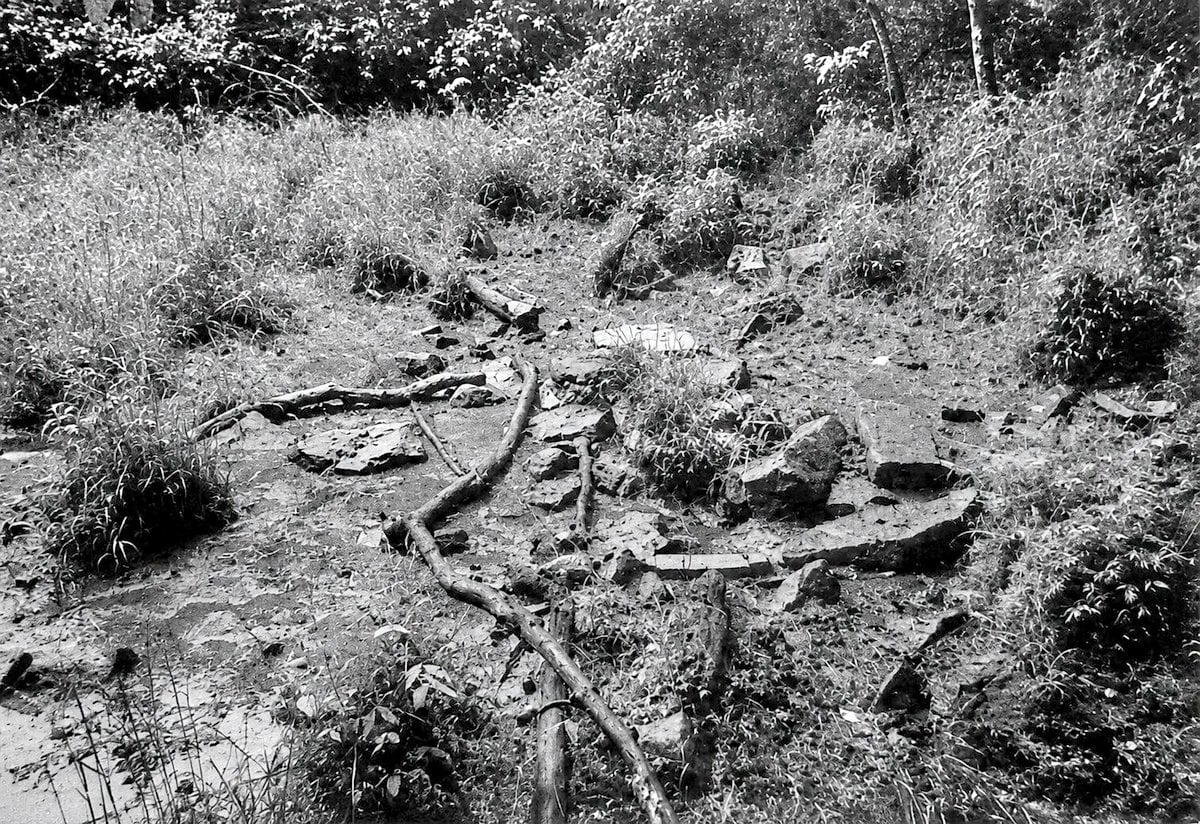
Salt occurs naturally at the site, and local historian William Sanders described an original salt seep or spring approximately 200 feet uphill from the later drilled well and industrial works. In New River Heritage, Vol. 2, Sanders wrote that Native Americans and early settlers had obtained salt there by boiling water before the commercial well was drilled.
That tradition should be distinguished from what can be established about the later commercial operation. National Park Service research identifies the Mercer Salt Works as having been established near Lick Creek in 1850, when it became the most prominent industry in the surrounding New River country. Surplus salt was transported from the area by river and along the Red Sulphur Turnpike.

The location was advantageous but rugged. Sanders described two old turnpikes converging near the salt spring and well, with a high bridge carrying the road across Lick Creek near its mouth. The natural seep was above the industrial site, while the drilled well, sheds, and large boiling equipment occupied the lower ground.
Salt production required much more than collecting salty water. Brine brought to the surface had to be heated so that its water evaporated, leaving the salt behind, an operation that demanded substantial equipment, labor, and enormous quantities of fuel.
The scale of the Mercer operation would eventually be recorded by the soldiers sent to destroy it.
Surviving ledgers document enslaved labor
Unlike many vanished Appalachian industries whose workings are known primarily through later recollections, Mercer Saltworks left behind part of its business archive.
The Library of Virginia preserves six volumes of Mercer Salt Works business records dating from 1851 through 1856, including a daybook, cashbook, salt ledger and other account books. One surviving volume is identified as the “Wood Account and Negro Clothing Ledger.”
Those records establish that the saltworks relied on both white laborers and enslaved workers. According to the Library of Virginia, enslaved people were hired from owners in Virginia, including Thomas J. Michie and Alexander Turk, and were put to work at the furnace.
The records provide an important qualification to the otherwise familiar image of slavery as principally an agricultural institution. At Mercer Saltworks, enslaved people were incorporated into an industrial enterprise, working alongside free laborers in the production of a commodity essential to households and armies.
A West Virginia historical marker erected for the site similarly describes Mercer Salt Works as supplying southwestern Virginia through the labor of both free and enslaved workers.
Sanders also preserved a local tradition that slave auctions had once taken place at the high bridge over Lick Creek. He attributed that information to Walter Bowling, a local resident who accompanied him on visits to the site. Without additional documentary evidence, however, the account is best understood as local oral history rather than a confirmed part of the saltworks record.
The Civil War made salt a military target
When Virginia descended into civil war in 1861, the value of a functioning saltworks became considerably greater.
Before mechanical refrigeration, salt was critical to preserving meat and other foods for extended periods. An operation capable of producing it in quantity therefore had importance beyond the immediate communities surrounding the New River.
By the summer of 1862, Union forces operating in the region included the 23rd Ohio Infantry, whose officers included a 39-year-old lawyer and politician named Rutherford Birchard Hayes.
Hayes would eventually serve as governor of Ohio and, following the disputed presidential election of 1876, president of the United States. In August 1862, however, he was a Union lieutenant colonel operating in the mountains of what remained of western Virginia.
On Saturday, Aug. 9, Hayes recorded a new objective in his diary. He was planning an expedition, he wrote, “to go to Salt Well and destroy it.”
The operation was to be considerably more than a small scouting party. Hayes recorded sending detachments from several companies along with cavalry, placing the total strength at approximately 150 men.
Their assignment included another objective—attempting to capture a man Hayes identified as “old Crump”—but the destruction of the Mercer salt operation was explicit. “This is the programme,” Hayes wrote.
Soldiers marched through the mountains at night
Hayes later described the operation in considerably greater detail in a letter to his wife, Lucy Webb Hayes.
He had received what he characterized as reluctant permission to attack the saltworks, which he placed approximately 25 miles away through “rough mountain country.” Captains James M. Drake and Joseph H. Zimmerman commanded the expedition, consisting of about 130 infantrymen and 20 cavalrymen. Hayes remained behind.
The force departed at about 6 p.m., intending to make the journey at night, destroy the works and begin its return before daylight.
After the men had been gone for several hours, however, a scout arrived with disturbing intelligence: The saltworks was reportedly strongly guarded. It was too late to recall or warn the expedition.
“I slept none during that night,” Hayes later told Lucy. The report proved largely unfounded.
At approximately 2 to 2:30 on the morning of Sunday, Aug. 10, the Union soldiers reached Mercer Saltworks. What they saw gave Hayes’ diary one of the most valuable surviving descriptions of the operation. The works were “in full blast,” he wrote.
A steam engine was pumping, two boiling pans approximately 30 feet long were operating, and a considerable quantity of finished salt was already on hand.
“The salt is good,” Hayes observed in his diary after receiving the returning soldiers’ report. Then the Union troops destroyed the operation. “All the works were destroyed by fire,” Hayes wrote.
‘Burned out root and branch’
The soldiers began their return journey before daylight. Hayes spent the early morning waiting for some indication of what had happened.
In his letter to Lucy, he described walking around camp at dawn and fearing that the sound of a galloping horse would bring news of disaster. As the morning passed without a messenger arriving, he began to reason that silence was probably favorable. At about 9:30 a.m., Capt. Drake returned.
The expedition had covered approximately 50 miles through mountainous country and accomplished its principal objective without losing a soldier. Hayes’ diary records that the cavalry was fired upon during the return and that horses were wounded and men’s clothing was struck or cut, but no Union soldier was hurt.
Only then did Hayes appear to appreciate fully what his men had destroyed. In the private letter to Lucy, he characterized Mercer as the salt well supplying a “saltless region.” It had been, he told her, “burned out root and branch.”
Hayes’ contemporary account also clarifies an important point sometimes obscured in later retellings of the event: Hayes did not personally ride into Mercer Saltworks and set it ablaze. He planned and dispatched the expedition. Drake and Zimmerman commanded the men who made the nighttime march and carried out the destruction.
The account survives in Diary and Letters of Rutherford Birchard Hayes, Volume 2, edited by Charles Richard Williams and published by the Ohio State Archaeological and Historical Society in 1922.
The saltworks came back—briefly
The fire of Aug. 10, 1862, did not quite end the Mercer salt industry. The works were rebuilt after the Civil War raid and resumed production. The state historical account says the operation continued until 1866, when declining salt prices and a scarcity of fuel finally forced it to close.
Sanders provides additional detail about the difficult postwar years. He wrote that the works attempted to recover their former market but increasingly faced competition from western salt that could now be brought into the region by railroad.
He also recorded a complicated transition in ownership. According to Sanders, the Peters family eventually took over the works from Ballard Shumate, while Shumate and the Crump family became involved in a prominent lawsuit concerning a purchase made with Confederate currency.
Whatever combination of circumstances ultimately proved decisive, the world in which Mercer Saltworks had prospered was disappearing. Rail transportation increasingly connected southern West Virginia with distant producers, reducing the economic advantage once enjoyed by a salt well hidden deep in the New River country.
The landscape outlived the industry
Little about the wooded landscape at Lick Creek today suggests the industrial activity that once occurred there.

Sanders, writing from visits made with Walter Bowling, described traces that remained in the landscape generations later. A clearing survived between an old homesite and the spring, while remnants associated with the old roads and bridge helped reveal how people once moved through the settlement.
Most evocative was the salt seep itself. Sanders described the spring area as heavily marked by deer approaching it through the surrounding vegetation. The animals appeared to be consuming the salty gray earth around the seep—essentially repeating the attraction to natural salt that had brought wildlife to the place long before an industrial well was drilled.
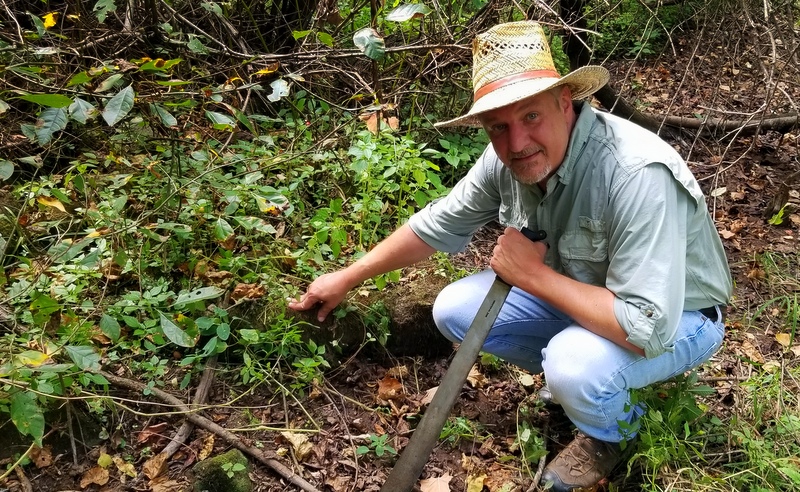
The Mercer Saltworks has largely disappeared, but its documentary record has not.
Ledgers preserved by the Library of Virginia still record the commerce and labor that sustained it. Local history preserves descriptions of the spring and surrounding landscape. And Rutherford B. Hayes left an unusually immediate account of the night when Union soldiers found its steam engine running, its enormous pans boiling and salt waiting to be carried away.
On Aug. 10, 1862, the future president waited anxiously miles away while soldiers followed his orders into the New River Gorge.
By morning, the furnaces at Mercer Saltworks were gone.
The site of the Mercer Saltworks is now hidden in the wooded valley of Lick Creek, where scattered remnants of the operation still remain. WVExplorer visited and documented the abandoned saltworks in 2024, exploring the difficult-to-reach site and its remaining features.
Sources: Rutherford B. Hayes, Diary and Letters of Rutherford Birchard Hayes, Vol. 2, Charles Richard Williams, ed. (Columbus: Ohio State Archaeological and Historical Society, 1922), 321–324; William Sanders, New River Heritage, Vol. 2 (Princeton, W.Va.: William Sanders, 1992), 73–74; Mercer Salt Works Business Records, 1851–1856, Library of Virginia; National Park Service historical research concerning the New River corridor; West Virginia Archives and History historical marker documentation.