
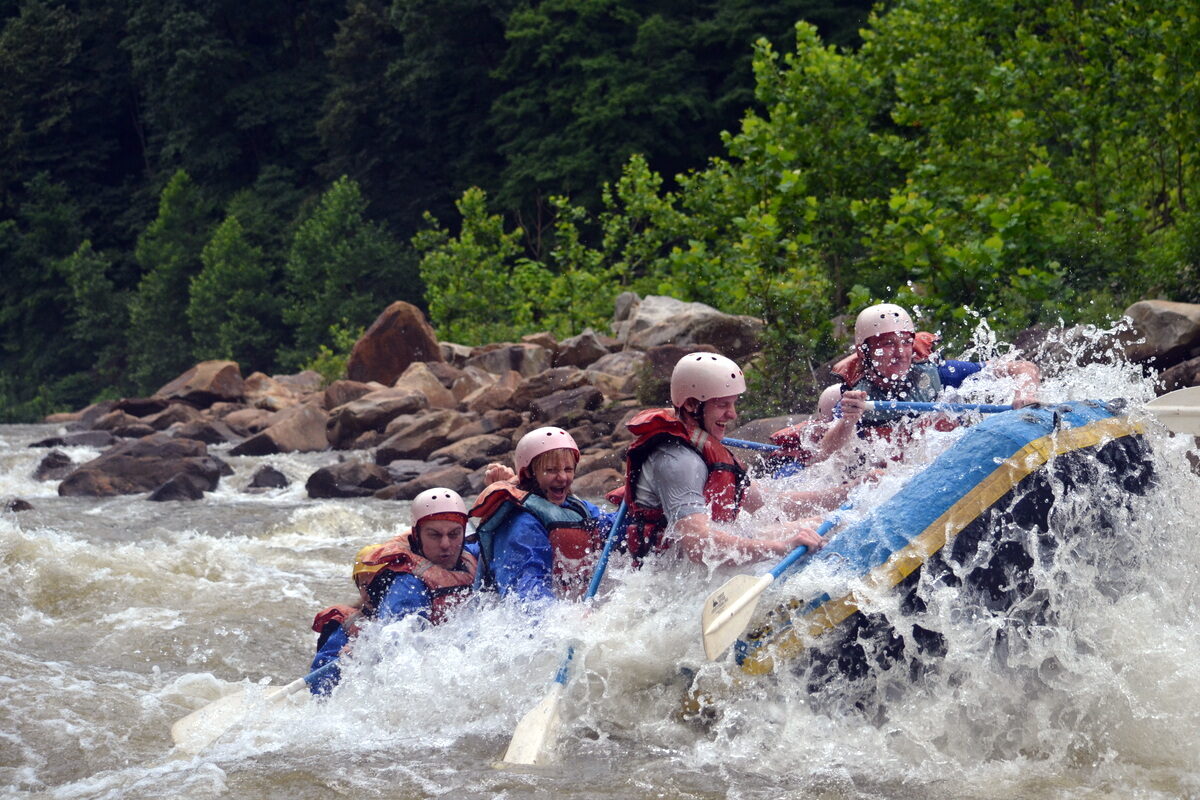
The Cheat River offers some of the most challenging and rewarding whitewater rafting in West Virginia. Flowing through the rugged Cheat Canyon in the state’s northern mountains, the river is known for powerful spring runoff, remote wilderness scenery, and rapids ranging from Class III to Class V.

Unlike many popular whitewater rivers in the eastern United States, the Cheat remains largely dependent on natural rainfall and snowmelt. As water levels rise each spring, the river becomes one of Appalachia’s premier destinations for adventure seekers, drawing rafters, kayakers, and outdoor enthusiasts from across the region.
Commercial rafting trips operate on both the “Cheat Canyon” and the less demanding “Cheat Narrows,” offering experiences for everyone from first-time rafters to seasoned paddlers. Combined with its forested mountains, abundant wildlife, and reputation for big-water excitement, the Cheat River has earned a place among West Virginia’s most celebrated outdoor recreation destinations.
Why rafters travel to the Cheat River
The Cheat River offers a whitewater experience unlike any other in West Virginia. While the New River is known for its long commercial rafting season and the Gauley River for its scheduled dam releases, the Cheat is prized for its natural character. Water levels depend largely on rainfall and snowmelt, so the river can change dramatically from one day to the next. During spring runoff, Cheat Canyon delivers powerful waves, technical rapids, and fast-moving currents that draw experienced paddlers from across the eastern United States.
Many rafters are equally drawn to the canyon itself. The river flows through a remote mountain gorge where steep, forested slopes rise above the water and signs of development are scarce. Much of the trip passes through terrain accessible only by river, creating a sense of isolation uncommon at many commercial rafting destinations. Wildlife sightings, rocky cliffs, and uninterrupted stretches of Appalachian forest enhance the experience.
The Cheat also appeals to paddlers seeking a challenge. Rapids such as Big Nasty, Coliseum, and High Falls have earned national recognition among whitewater enthusiasts, particularly during high-water conditions. Yet the river is not limited to experts. The Cheat Narrows offers a more moderate alternative, allowing families and beginners to experience the watershed while enjoying many of the same mountain views and natural surroundings that make the Cheat River one of West Virginia’s premier rafting destinations.
Cheat River Whitewater Rafting
Cheat River whitewater rafting is among the most challenging and scenic river adventures in West Virginia. Centered on the rugged Cheat Canyon in Preston and Monongalia counties, the river offers a mix of remote wilderness, powerful rapids, and spring runoff that draws experienced rafters and kayakers from across the eastern United States.
The Cheat River is one of the largest free-flowing watersheds in the eastern United States. Unlike many major whitewater rivers that rely on scheduled dam releases, rafting on the Cheat is driven primarily by rainfall and snowmelt, making water conditions highly seasonal and often unpredictable. The result is a river known for big water, technical rapids, and a wilderness setting rarely found elsewhere in Appalachia.
Cheat Canyon
Most commercial rafting trips occur in Cheat Canyon, a steep-sided gorge that extends roughly 10 to 13 miles below Albright. Forested mountains rise hundreds of feet above the river, creating a remote setting where roads, homes, and development are largely absent. The canyon is accessible only by river or via a limited number of trails and overlooks.
The canyon contains more than 30 significant rapids, with difficulty ranging from Class III to Class V depending on water levels. Notable rapids include Big Nasty, High Falls, Coliseum, Maze, Tear Drop, and Decision, each offering a distinct mix of waves, holes, drops, and technical maneuvers. At higher flows, the Cheat can rival some of the most demanding commercially rafted rivers in the East.
Whitewater Difficulty
The Cheat Canyon is widely regarded as an advanced whitewater destination. During spring runoff, rapids frequently reach Class IV and Class V levels. Commercial outfitters typically recommend the canyon for physically fit participants with prior rafting experience, though requirements vary by company and water conditions.
The river’s character changes markedly with water levels. Lower flows expose rocks and demand precise maneuvering, while higher flows produce large standing waves, powerful hydraulics, and continuous whitewater.
Because the river is naturally flowing, rafting opportunities depend heavily on seasonal precipitation. Outfitters closely monitor river gauges and often schedule trips only when adequate water is available.
Cheat Narrows
A less demanding section, the Cheat Narrows, offers an alternative for beginners and families seeking a more moderate whitewater experience. Located upstream of Cheat Canyon, this stretch features primarily Class II and Class III rapids and is commonly used for introductory rafting trips.
The Cheat Narrows combines wave trains, swimming opportunities, and scenic mountain views, providing a gentler introduction to river recreation than the canyon below.
Best time to go
The prime rafting season on the Cheat River typically runs from late March through early June, when snowmelt and spring rains produce reliable flows. April and early May often offer the largest and most exciting whitewater.
Trips may also run after substantial rainfall at other times of year, but water levels become less predictable as summer progresses. Unlike the nearby Gauley River, which is known for scheduled fall releases, the Cheat remains dependent on natural conditions.
History of whitewater recreation
The Cheat River has long drawn paddlers seeking wilderness whitewater. Improvements in water quality over recent decades helped transform the river from an area affected by acid mine drainage into one of West Virginia’s most celebrated outdoor recreation resources. River conservation efforts by local organizations played a significant role in restoring public interest in the watershed.
Today, the river hosts annual paddling events, races, and festivals that attract participants from across the Mid-Atlantic and Appalachian regions. The popular Cheat River Festival, commonly known as Cheat Fest, celebrates both river recreation and watershed conservation.
Wildlife and scenery
One of the Cheat Canyon’s greatest attractions is its wilderness character. The river passes through a landscape of sandstone cliffs, dense hardwood forests, boulder fields, and secluded tributary streams. Bald eagles, river otters, black bears, white-tailed deer, and numerous songbirds may be seen within the watershed.
During autumn, the canyon becomes one of the most colorful river corridors in the state as hardwood forests display vibrant fall foliage.
Planning a Cheat River rafting trip
Because the Cheat River relies largely on natural rainfall and snowmelt, water levels can vary significantly throughout the rafting season. Visitors planning a trip should check current river conditions and weather forecasts before arriving. River flows can affect both the difficulty of the rapids and the availability of commercial rafting trips.
Additional Resources
- American Whitewater Cheat River Information
- National Weather Service River Forecasts
- West Virginia Division of Natural Resources
Commercial Rafting Trips
Several outfitters operate guided rafting excursions on the Cheat River. Trips typically include professional river guides, safety equipment, transportation, and instruction. Because conditions can change rapidly, participants should verify age restrictions, fitness requirements, and current water levels before booking.
Most Cheat Canyon trips require a full day, while Narrows trips can often be completed in a half day.
Cheat River Rafting At A Glance
- Location: Preston and Monongalia counties, West Virginia
- Primary Section: Cheat Canyon
- River Length Rafted: Approximately 10–13 miles
- Difficulty: Class III–V
- Season: Primarily March through June
- Suitable For: Experienced rafters, adventure travelers, paddlers
- Family Option: Cheat Narrows (Class II–III)
- Nearest Communities: Albright, Rowlesburg, Bruceton Mills, Morgantown
- Known For: Wilderness scenery, spring runoff, large rapids, remote canyon environment
The Cheat River remains one of West Virginia’s premier whitewater destinations and is widely regarded as one of the finest naturally flowing rafting rivers in the eastern United States. Its combination of powerful rapids, dramatic scenery, and seasonal unpredictability has made it a favorite among paddlers seeking a more remote alternative to the state’s better-known New and Gauley rivers.
Rafting Area Location
The Cheat River whitewater rafting area is located in the Monongahela Valley Region in northern West Virginia, downstream of the Allegheny Highlands Region. Further information on lodging, dining, and travel in the area can be found by exploring these regions.
Map of Cheat River Rafting Area
Help build our guide to Cheat River whitewater rafting
We’re continually looking for writers to help build our guide to whitewater rafting in West Virginia. Interested in contributing? Please let a member of our editorial team know.
Read More
