

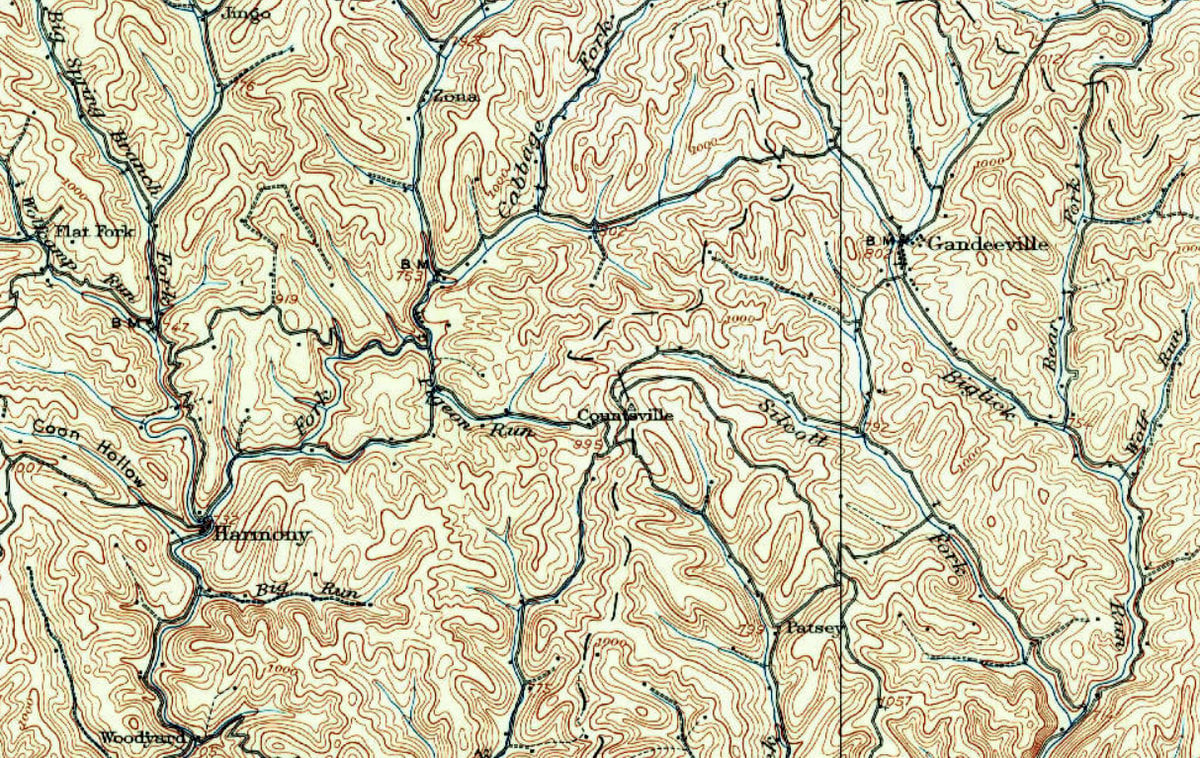
GANDEEVILLE, W.Va. — In the turbulent years after the Civil War, a remote corner of the border country between Roane and Jackson counties became the scene of one of West Virginia’s least remembered outbreaks of vigilante violence.
A string of ambushes, assassinations, lynchings, and retaliatory killings shattered the isolated farming community of Countsville in 1877, leaving neighbors afraid to leave their homes after dark and fueling rumors that would endure for generations. At the center of the violence was farmer Waid Counts, whom many blamed for the bloodshed despite the absence of any conviction or clear proof of his guilt.
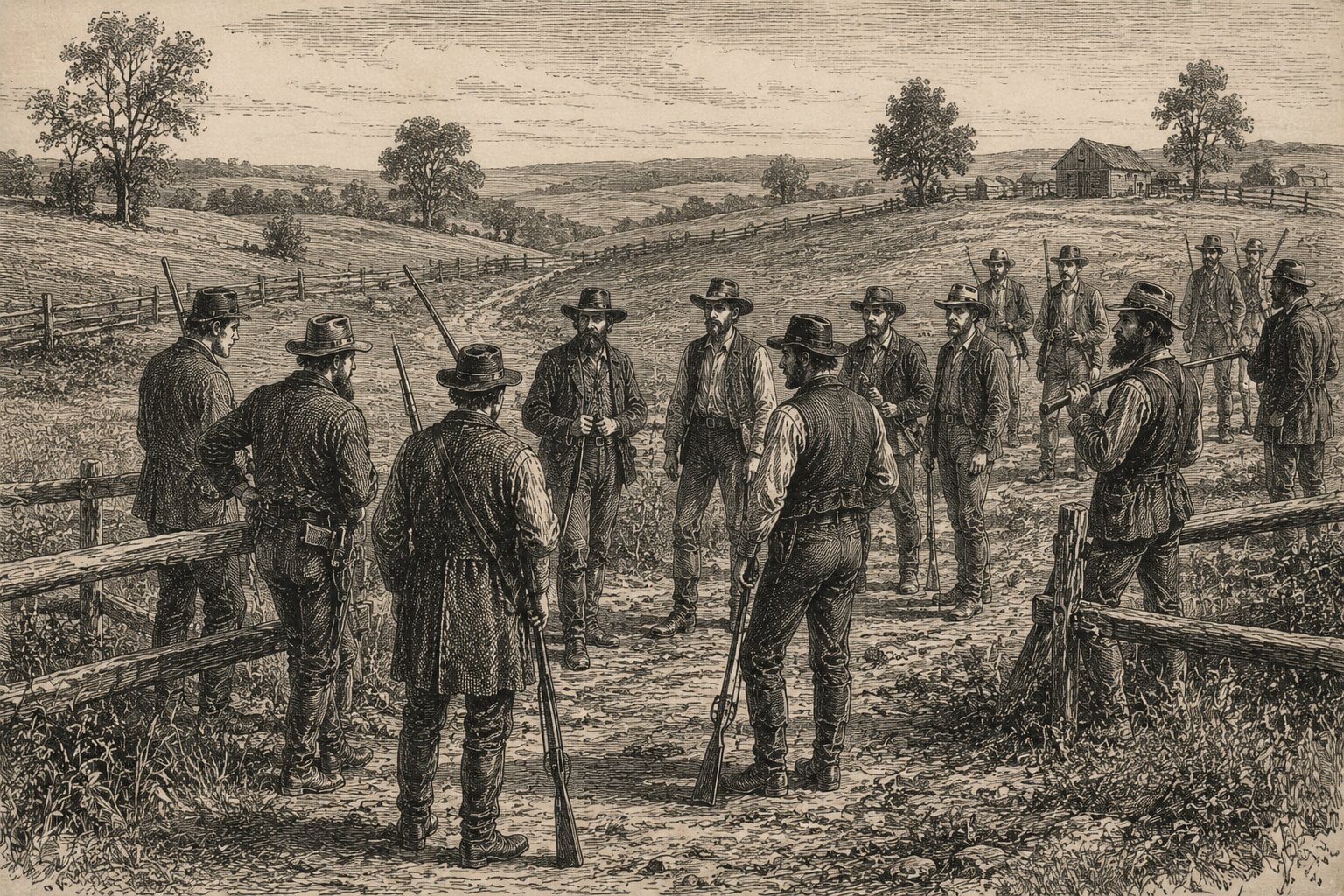
The mystery deepened years later when Counts and his young son were found dead beside a lonely road, both apparently killed by a lightning bolt that struck from an otherwise clear summer sky. To many local residents, the bizarre tragedy was no accident but divine judgment for the unsolved murders that had terrorized the countryside.
Whether Counts was a killer, a victim of suspicion, or something in between may never be known, but the story of the Roane-Jackson troubles remains one of the most haunting episodes in West Virginia history, where fact, rumor, and folklore have become almost impossible to separate.
The following account of the incident was published by Jim Comstock, editor and owner of the West Virginia Hillbilly and a collector of much Mountain State lore.
A summer lightning strike becomes a legend
When lightning came out of a clear sky on a summer day near the Roane-Jackson county line, the report was heard for miles around. Everyone wondered just where the freak bolt had struck. Four days later they found out. Beside an unfrequented road lay Waid Counts and his small son, both dead and their bodies badly burned by lightning.
Enemies of Waid Counts immediately declared his death “was the vengeance of the Almighty,” because of certain bloody murders that occurred in that region. Just why divine power had struck down the young child who had committed no crimes whatever, the superstitious folks could not answer.
They had long held the opinion that Counts was responsible for the wave of murders in Roane and Jackson, and they had awaited heaven to wreak vengeance. If anyone was around when heaven struck, it was just too bad.
The story of the Roane-Jackson troubles is ancient history. It would probably be impossible to learn the facts at this late day. Guilty or innocent, Waid Counts was involved. So were many other old citizens. It all may have been a continuation of Civil War enmities with the added traffic in moonshine liquor to fan them to murderous flame.
The murders that terrorized the Roane-Jackson border
In August, 1877, Nathan Cunningham, who had been a deputy marshal and agent for a timber company, was ambushed by a man hidden behind a big rock. He was shot in the breast and abdomen.
Dying, he said to his 11-year-old son, who was with him: “Go home and tell your mother Waid Counts has killed me!” To the hidden assassin he called out: “Counts, don’t kill my little boy!” A daughter who came to administer to him was not allowed to approach for three hours by the hidden murderer.
The identity of the hidden assassin was a matter of speculation throughout the region. People took sides, quarreled, and out of it all came the deadly affair of Oct. 13, 1877.
Dan Cunningham, brother of the slain Nathan, was a U.S. deputy marshal. With J.E. Mehen of Parkersburg, another marshal, Cunningham conducted a series of moonshine raids near the county line of Roane. A Rev. P.T. Ryan of Countsville, a Methodist minister, was said to have talked too freely with the marshals. Threats were made, and on the night stated above, he was shot to death by a rifleman hidden by darkness who fired through a window.
Mob justice takes hold
On the following day, a mob surrounded the home of George Duff Jr., and although he defended himself, he was shot down and died.
The next night, the mob arrested Ches Coon and Bob Duff, a school teacher, and hanged Coon and cut Duff’s throat.

Preacher Ryan had retired for the night when the mob surrounded his home. Ryan fired into the crowd. A volley from the strangers killed him. The fatal bullet passed through the footboard of a bed, through Ryan’s body, and was embedded in the outer wall.
Ryan lived a few hours and said he recognized one of the mob, but nothing was ever done about it. A brass shell found outside was said to fit a gun owned by Counts. But nobody said it out loud. The mob was on the prowl.
Having a taste of blood, the mob appeared at the home of Robert Duff, who was securely tied and taken away. Moving on to the home of George Duff Jr., they found him reading by a window. A volley was fired into the house. Duff tried to get out of the house but was felled by a rifle bullet. But he was able, with the help of a visitor, Ches Coon, to drive the mob away. Later Coon was captured and taken along with Bob Duff to the Ryan home and heavily guarded while the mob adjourned to the Lynn Camp schoolhouse to discuss a plan of action.
By this time the news of the killings had drawn a great number of curious and morbid people from surrounding sections who joined the mob.
It was said that a relative of Ches Coon was leader of the band. The cruelties of the mob seem unreal to this day and age. Ches Coon was hanged to a water beech tree with a rope just long enough to allow his toes to touch. All night he swayed with the rope around his neck while he begged for his life. In the morning he was dead, but the toes of his shoes were worn through, and his toes were bleeding.
Robert Duff put up a fight. He was a strong man and was flailing about manfully when a member of the mob, some said it was Waid Counts, ran up and cut Duff’s throat with a knife.
A mystery that was never solved
This revelry of crime ended in a few days, but the threats and recriminations went on for years. People were afraid to go outside their homes at night, and guns were carried openly by men at work. A few families moved out of the neighborhood to other counties.
No attempt so far as is known was made to apprehend the members of the mob. Many were known, but, as explained, it was safer to keep silent. Several mysterious shootings occurred here and there along the Roane-Jackson border, and one farmer, en route from Charleston, was beaten to death by unknown assailants.
Dan Cunningham, who figured in the back country troubles, became in later years a widely known peace officer, and is remembered by many in the Charleston area.
Just what part Waid Counts, the Roane farmer, played, if any, in the killings and mob violence, in all probability will never be known. Certainly he was never convicted of any of the crimes of the period. But many old-timers pronounced the verdict 80 years ago that he came to his death from a bolt of lightning from a clear sky, “the vengeance of the Almighty.”
The lightning that became a legend
For nearly 150 years, the truth behind the Roane-Jackson killings has remained buried with the people who lived through them. Witnesses died, records disappeared, and the line between rumor and fact grew ever thinner as the story passed from one generation to the next. Whether Waid Counts was a murderer, a participant swept up in mob violence, or simply the victim of suspicion may never be known. No court ever convicted him, and no definitive account has emerged to settle the question.
Yet the image that survived was not of the killings themselves, but of the lightning. When a bolt fell from a seemingly clear summer sky and killed Counts and his young son, many neighbors believed justice had finally arrived from above. Others saw only a tragic accident that claimed two lives and deepened an already haunting mystery. Even today, the strange deaths of Waid Counts and his child remain inseparable from one of West Virginia’s most enduring legends, where history and folklore continue to meet along a lonely country road.
Editor’s Note: Can lightning strike from a clear sky?
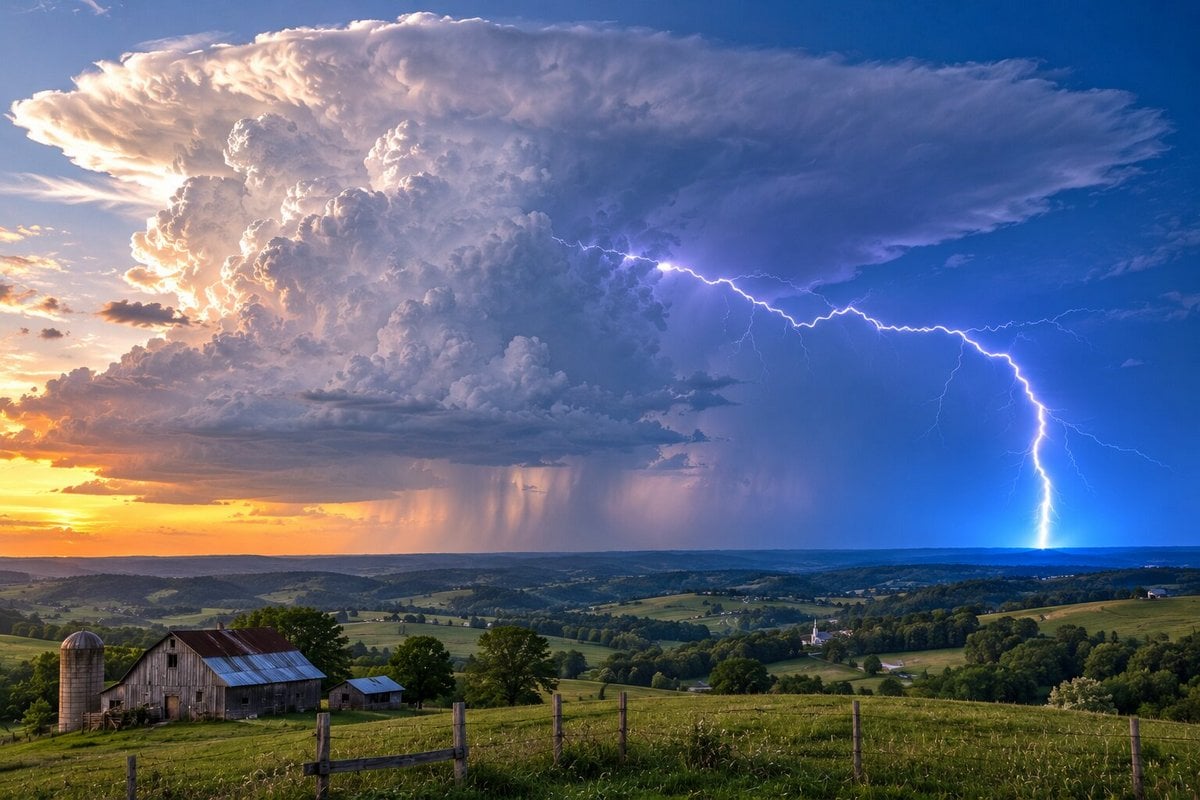
The strange deaths of Waid Counts and his son have long fueled stories that the pair were struck by lightning on an otherwise cloudless summer day. While such an event may seem impossible, meteorologists say it can happen.
The phenomenon, known as a “bolt from the blue,” occurs when lightning leaves the upper portion of a distant thunderstorm, travels for miles through clear air, and then strikes the ground well away from the storm itself. To someone at the point of impact, the sky overhead may appear sunny or nearly cloudless even though the lightning originated from a storm beyond the horizon.
Although there is no way to determine exactly what weather conditions existed when Waid Counts died, modern science shows that a seemingly inexplicable lightning strike is entirely possible. Readers interested in the phenomenon can learn more from the National Weather Service’s explanation of bolts from the blue, which includes photographs and diagrams of these rare but well-documented lightning events.
I love these historical stories .Thank you for sharing
Why doesn’t the story explain anything about the background of the slain deputy marshal/timber company agent or the farmer? Did lots of people have a motive to murder Nathan Cunningham? What was the alleged motive for the farmer to have killed him? Political, economic, personal, revenge, meanness?
The so called consolidated band all came to the area from Russell County, Virginia before the civil war after buying land from Bruen land company. After the war, the titles to the land were lost and Nathan Cunngham was among the agents enlisted to evict the farmers.
There is a pretty good summary of this on the WV E encyclopedia website.
Also after reading this, I figured out Wade Counts is my first cousin three times removed.
Look under Bruen Land Wars
Wait, I live there and have all my life. Right on Harmony Rd near the Roane/Jackson Co line. I have never heard this story.