
White Sulphur Springs, West Virginia (WV), is a historic resort town in the Greenbrier Valley, best known for The Greenbrier, its celebrated mineral springs, and the secret Cold War bunker built to shelter Congress. Located in the Allegheny Mountains near the Virginia border, the community also offers convenient access to hiking, fishing, swimming, camping, and some of the most scenic mountain country in southeastern West Virginia.

Long before modern travelers arrived via Interstate 64, visitors came here to “take the waters” at the White Sulphur Spring. The resort that developed around the spring became one of the most famous in the United States, while the town that grew alongside it evolved into a small mountain community with shops, restaurants, lodging, and historic neighborhoods.
Things to do in White Sulphur Springs
Most visits begin at The Greenbrier, though travelers will find much more to explore in and around White Sulphur Springs. Downtown shops and restaurants line the historic U.S. 60 corridor, while thousands of acres of public forest and recreation lands lie within a short drive.
Popular things to do in and near White Sulphur Springs include visiting The Greenbrier and its famous springhouse, touring the Cold War bunker, exploring downtown, hiking and mountain biking in Greenbrier State Forest, swimming and fishing at Blue Bend Recreation Area, and taking scenic drives through the surrounding Allegheny Mountains.
Lewisburg, one of West Virginia’s best-known historic towns, is about 10 miles west, making it easy to explore both communities in the same trip.
The Greenbrier
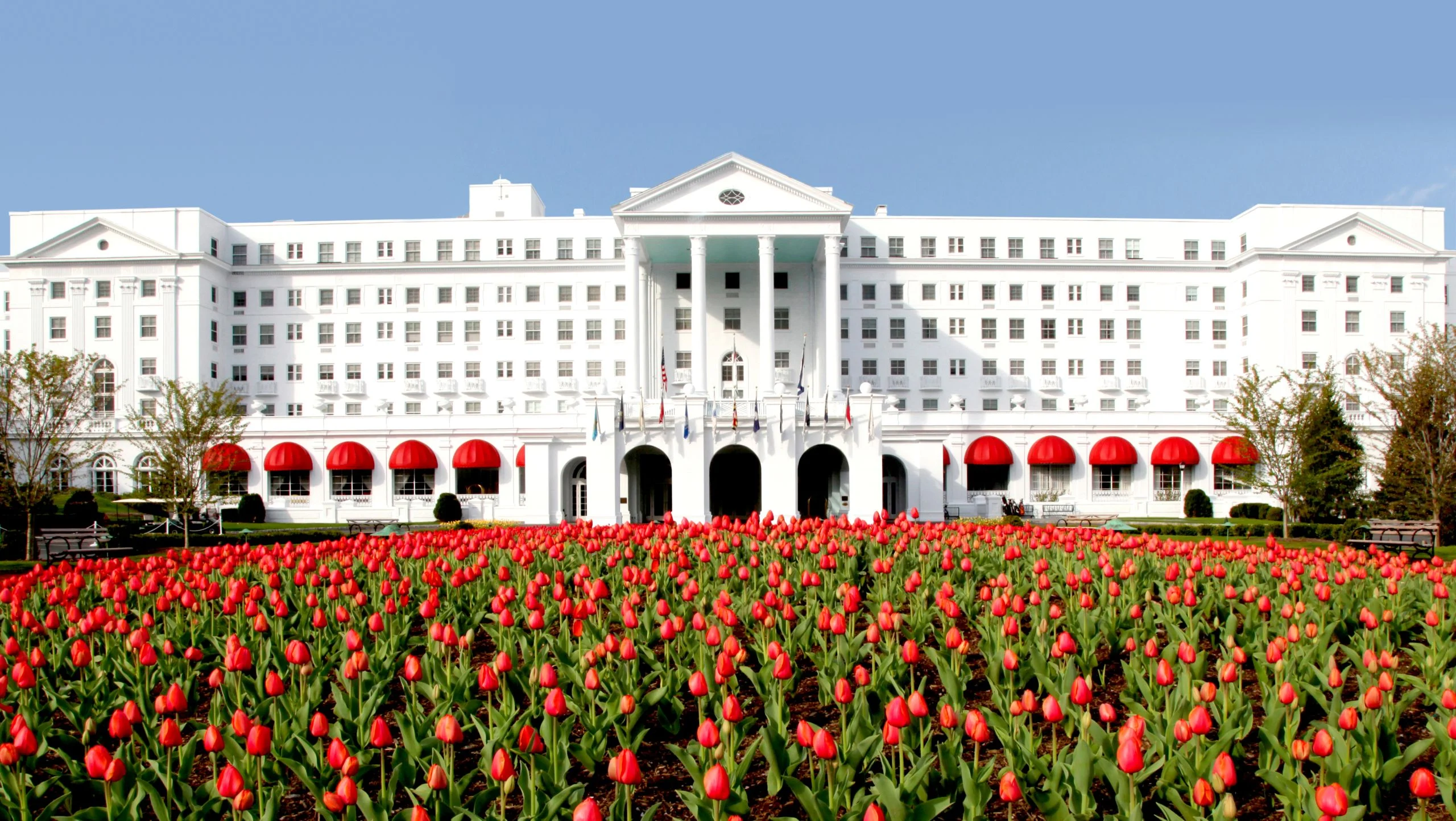
The history of White Sulphur Springs is inseparable from The Greenbrier, one of America’s most celebrated historic resorts. In the late 18th century, guests began arriving in greater numbers, drawn by the belief that the sulfur-bearing mineral water could relieve a variety of ailments.
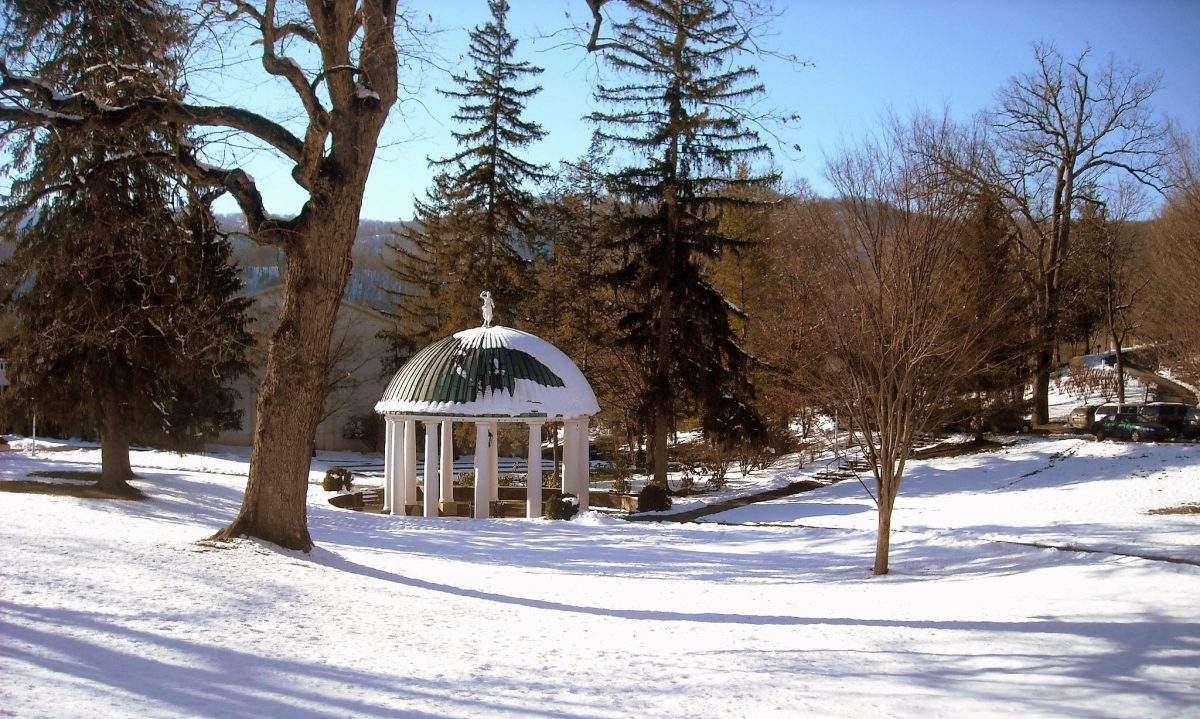
Over time, cottages, boarding houses, and gathering halls created an early resort landscape around the spring. What became The Greenbrier grew out of this tradition of “taking the waters,” and its white-columned, green-domed springhouse still shelters the sulfur spring at the heart of the property.
The arrival of the Chesapeake & Ohio Railway in 1870 transformed access to the resort. The railroad purchased the property in 1910 and commissioned a central hotel that opened in 1913. The grand resort seen today grew from this early 20th-century expansion, layered over more than a century of springs culture.

Over the centuries, The Greenbrier has attracted presidents, diplomats, celebrities, business leaders, and generations of vacationers, giving this relatively small West Virginia community an outsized place in American resort history.
Downtown White Sulphur Springs
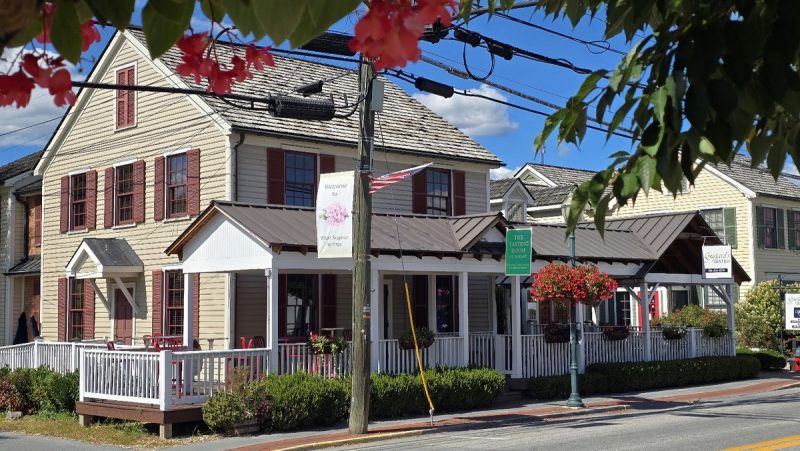
Beyond The Greenbrier, downtown White Sulphur Springs has developed its own visitor appeal. Shops, restaurants, lodging, and other businesses line the historic U.S. 60 corridor, traditionally the community’s main route.
The downtown offers a useful contrast to the resort’s scale and formality and gives travelers a chance to experience White Sulphur Springs as a living mountain community. Its revival has also included the adaptive reuse of older buildings, including the former White Sulphur Springs High School, now The Schoolhouse Hotel.
Outdoor recreation near White Sulphur Springs
White Sulphur Springs lies near an unusually large concentration of public recreation lands. Greenbrier State Forest is about six miles southwest of the community, while the Monongahela National Forest approaches from the north and the George Washington and Jefferson National Forests extend through the mountains to the east.
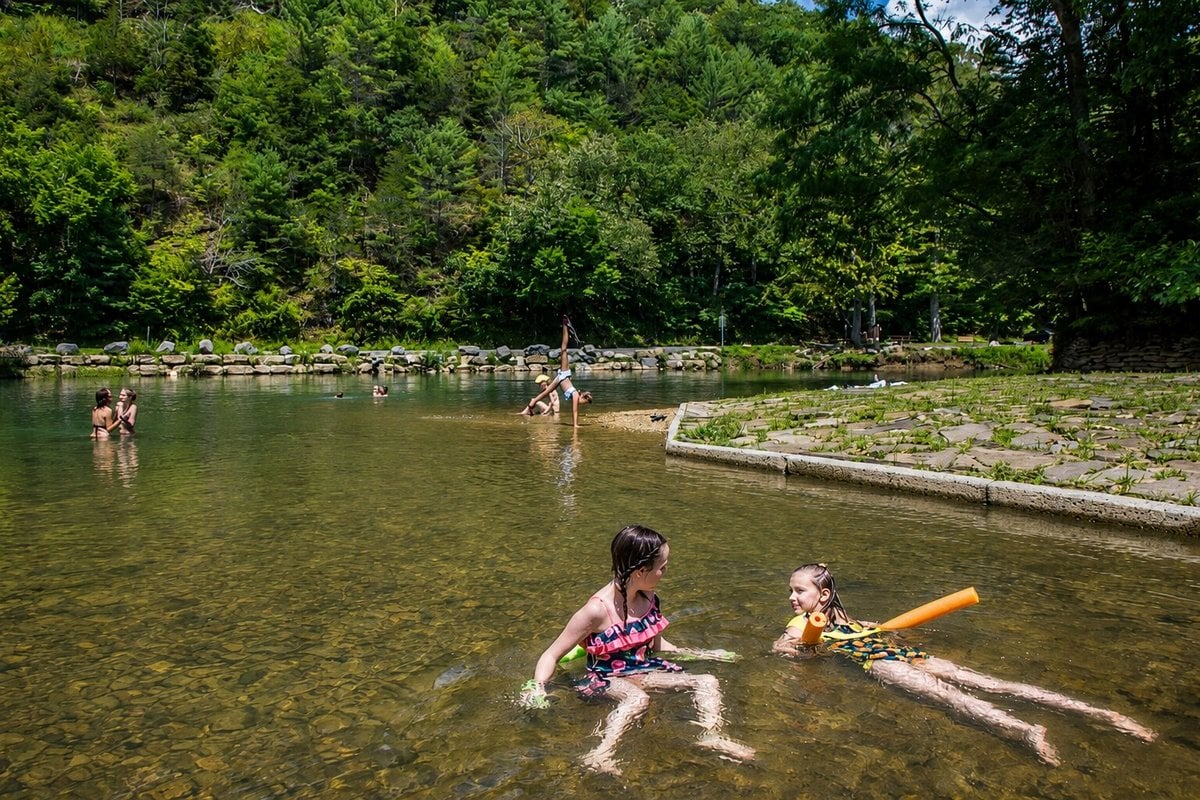
Greenbrier State Forest encompasses more than 5,000 acres and offers hiking, mountain biking, fishing, swimming, camping, and cabins amid the forested mountains of the Greenbrier Valley.
North of White Sulphur Springs, Blue Bend Recreation Area lies along Anthony Creek in the Monongahela National Forest. The recreation area offers swimming, fishing, camping, and hiking, and provides access to additional national forest lands.
These public lands make White Sulphur Springs a convenient base for travelers seeking to combine the history and attractions of the Greenbrier Valley with outdoor recreation in the Allegheny Mountains.
History of White Sulphur Springs
Settlement in the area dates to the mid-18th century, but the mineral spring shaped the community’s unusual development. By the late 1700s, visitors were traveling into the mountains to seek the reputed health benefits of its sulfur water.
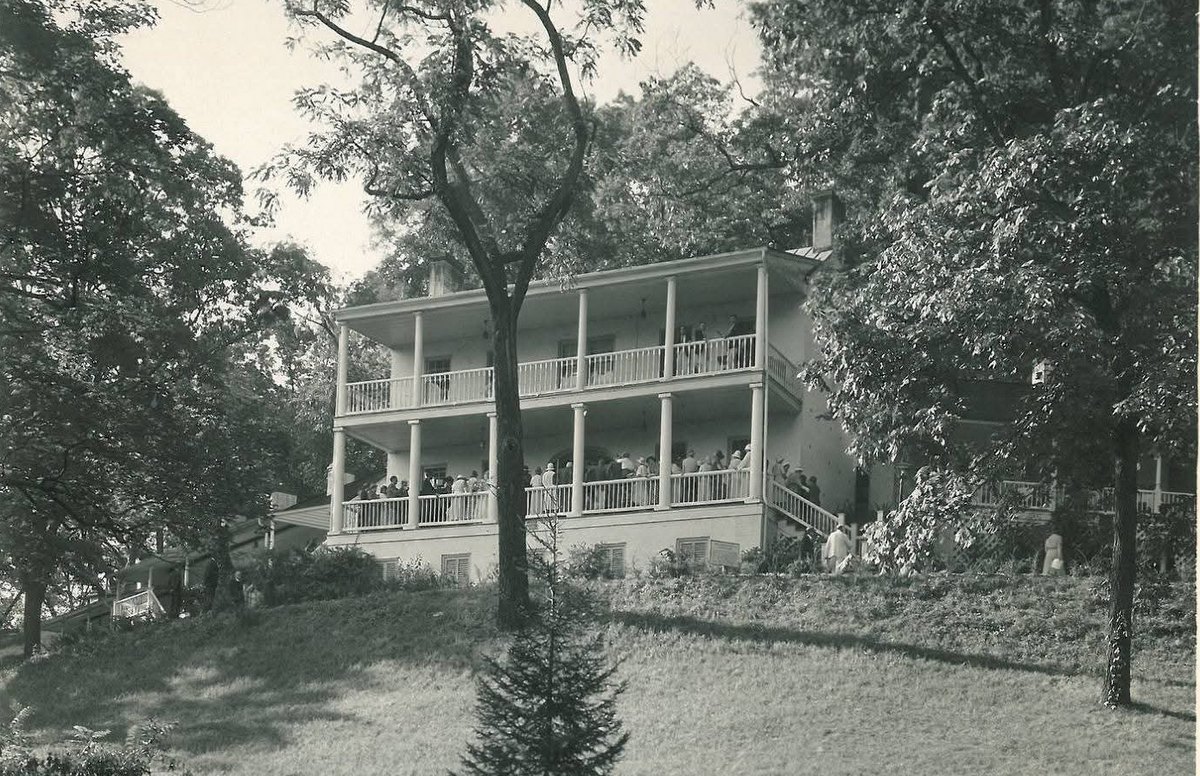
The community sits at an elevation of approximately 1,880 feet. Cottages, boarding houses, and gathering places grew around the spring as more visitors came to drink and bathe in the water.
By the 19th century, White Sulphur Springs had become one of the country’s notable summer resort destinations. Wealthy families and political figures escaped the heat of lower elevations to socialize and “take the waters,” establishing a resort tradition that endured wars, economic changes, and transformations in American travel.
Civil War comes to the springs
The Civil War reached this small mountain resort community in August 1863, when Union Brig. Gen. William W. Averell clashed with Confederate forces under Col. George S. Patton, grandfather of World War II Gen. George S. Patton, at the Battle of White Sulphur Springs.
The two-day engagement ended with Averell’s withdrawal. The battle became another example of how national events repeatedly intersected with this small mountain resort community.
World War II and Ashford General Hospital
White Sulphur Springs again played an unexpected national role during World War II.
After the United States entered the war, the State Department used The Greenbrier to house Japanese, German, and Italian diplomats and their families while arranging exchanges for American diplomats stranded overseas.
The U.S. Army then converted the resort into Ashford General Hospital, a large military hospital where thousands of servicemen were treated and rehabilitated.
After the war, the property returned to civilian use. A celebrated redesign introduced bold colors, patterns, and theatrical interiors that became closely associated with The Greenbrier’s postwar identity.
The secret Greenbrier bunker
Few small American towns can claim a Cold War secret as remarkable as White Sulphur Springs.
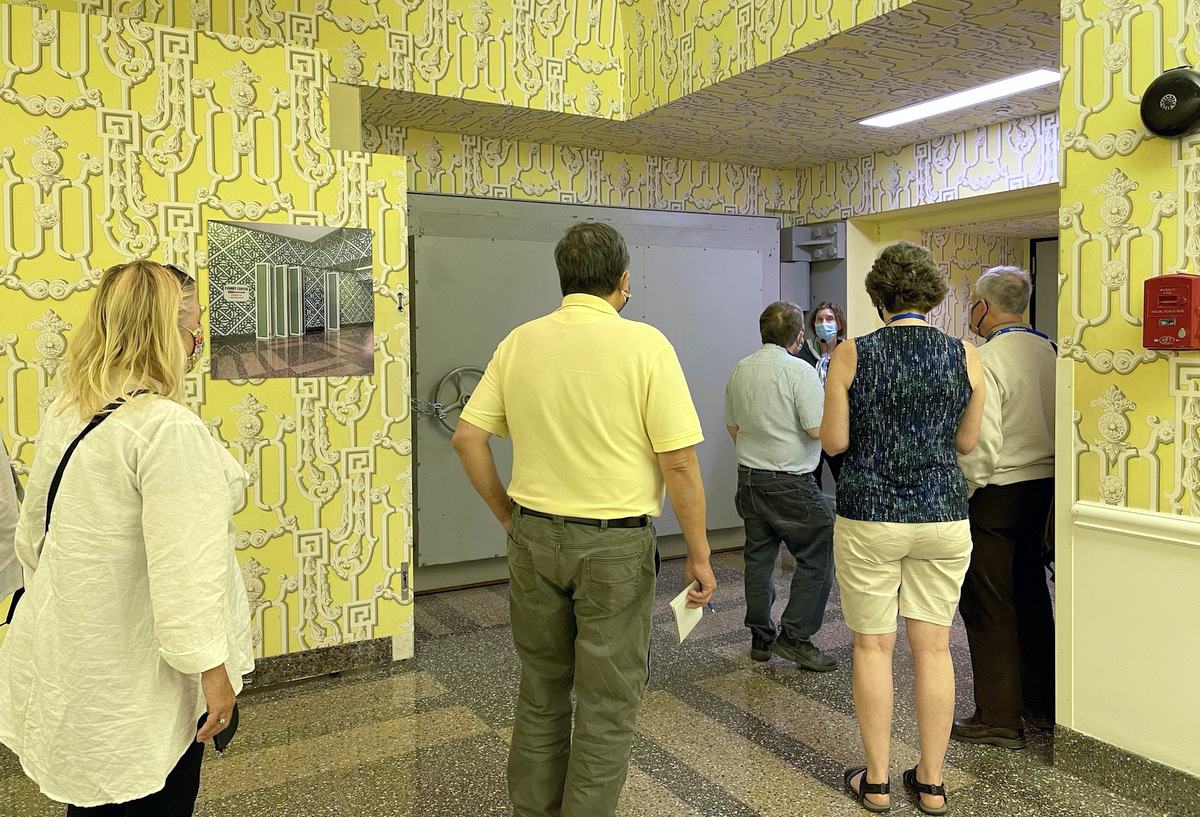
Beginning in the late 1950s, a massive underground facility was secretly built beneath The Greenbrier to shelter the United States Congress in the event of a nuclear attack. Associated with the continuity-of-government program known as Project Greek Island, the facility was concealed behind the construction of the resort’s West Virginia Wing.
The bunker included congressional chambers, dormitories, communications facilities, and infrastructure designed to let the legislative branch keep functioning during a national emergency.
Its existence remained secret until a 1992 exposé led to its decommissioning. Today, visitors can tour the former bunker, making it one of West Virginia’s most unusual historic attractions.
The White Sulphur Spring
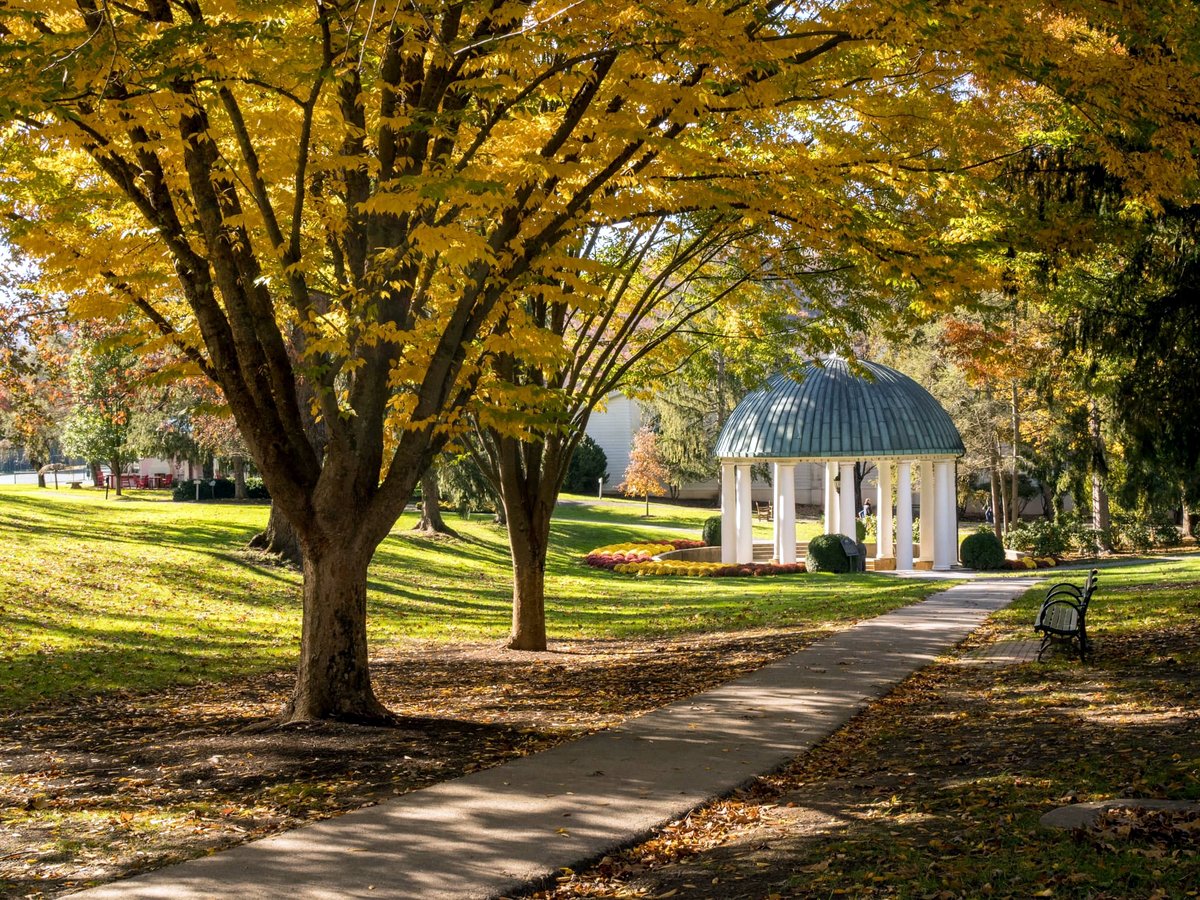
While owners, buildings, and styles have changed, the mineral water that gave White Sulphur Springs its name remains central to the community’s identity.
Nineteenth-century visitors traveled great distances to drink and bathe in the sulfur water, following elaborate regimens then believed to relieve ailments ranging from rheumatism to digestive disorders. The spring helped establish a broader culture of mineral-spring resorts throughout the Greenbrier Valley and neighboring Virginia.
The Greenbrier’s classical springhouse remains the most visible symbol of that tradition. Its white colonnade and green dome shelter the spring that helped create both the resort and the town.
Railroads, design, and resort culture
The railroad did more than deliver guests to White Sulphur Springs. The arrival of the Chesapeake & Ohio in 1870 connected the community more closely with eastern population centers and helped create a new era of resort tourism.
The Greenbrier’s post-World War II redesign later gave the property another distinctive identity, combining bold interiors with the traditions of a Southern mountain resort.
The resort also accumulated an unusual collection of associations with American cultural history. Among its better-known employees was Ettore Boiardi, later famous as Chef Boyardee, who worked at The Greenbrier early in his culinary career.
Hotels and lodging in White Sulphur Springs
Lodging in White Sulphur Springs ranges from The Greenbrier to smaller hotels and other accommodations in and around the community. Additional lodging is available approximately 10 miles west in Lewisburg and throughout the Greenbrier Valley.
Find hotels and lodging in White Sulphur Springs.
Visiting White Sulphur Springs today
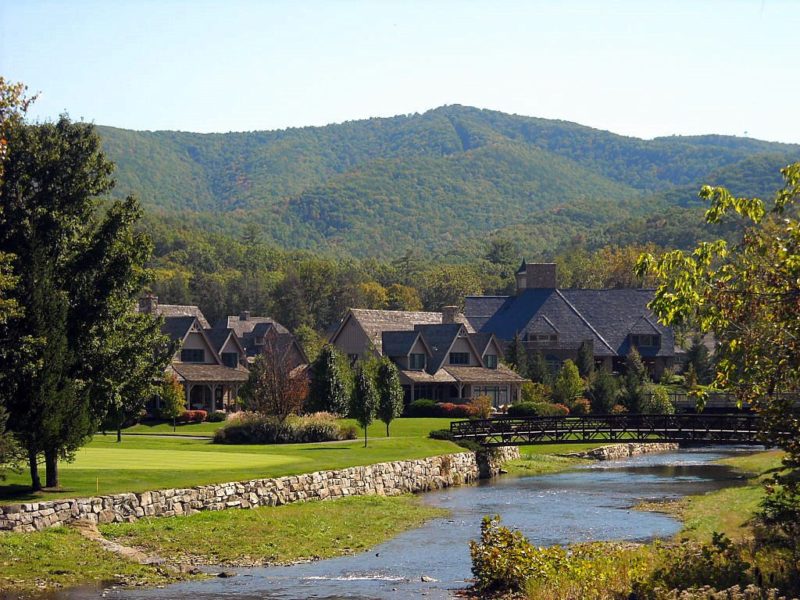
White Sulphur Springs offers an unusual combination of small-town Appalachian character and grand-resort tradition. Visitors can explore downtown, see the springhouse that gave the community its name, tour one of America’s most remarkable Cold War sites, and reach extensive state and national forest lands within minutes.
The enduring appeal of White Sulphur Springs is its continuity. The same mineral spring that drew 18th-century travelers still flows beneath its distinctive springhouse, while the surrounding community continues to evolve around a tourism tradition more than two centuries old.
Where is White Sulphur Springs?
White Sulphur Springs is located in Greenbrier County in southeastern West Virginia on U.S. 60 and WV 92 and along Interstate 64. It is approximately 10 miles east of Lewisburg and approximately 20 miles west of Covington, Virginia.
Map of White Sulphur Springs, West Virginia
Frequently asked questions
What is White Sulphur Springs, West Virginia, known for?
White Sulphur Springs is best known as the home of The Greenbrier, the mineral spring that gave the community its name, and the once-secret Cold War bunker built to shelter the U.S. Congress.
Can you tour the Greenbrier bunker?
Yes. Guided tours are offered of the decommissioned Cold War bunker beneath The Greenbrier. Visitors should check current schedules and reservation requirements with the resort before traveling.
What are the best things to do in White Sulphur Springs?
Popular activities include visiting The Greenbrier and its historic springhouse, touring the Cold War bunker, exploring downtown White Sulphur Springs, hiking and mountain biking in Greenbrier State Forest, and enjoying swimming, fishing, hiking, and camping in nearby public recreation areas.
What outdoor recreation is near White Sulphur Springs?
Greenbrier State Forest and the Monongahela National Forest provide opportunities for hiking, mountain biking, fishing, swimming, and camping. National forest lands also extend eastward across the Virginia state line.
How far is White Sulphur Springs from Lewisburg?
White Sulphur Springs is approximately 10 miles east of Lewisburg. Interstate 64 and U.S. 60 connect the two Greenbrier Valley communities.
Why is it called White Sulphur Springs?
The community is named for the White Sulphur Spring, a sulfur-bearing mineral spring that began attracting visitors seeking its reputed health benefits in the 18th century.
Regional information
White Sulphur Springs is located in the Greenbrier Valley Region in southeastern West Virginia.