
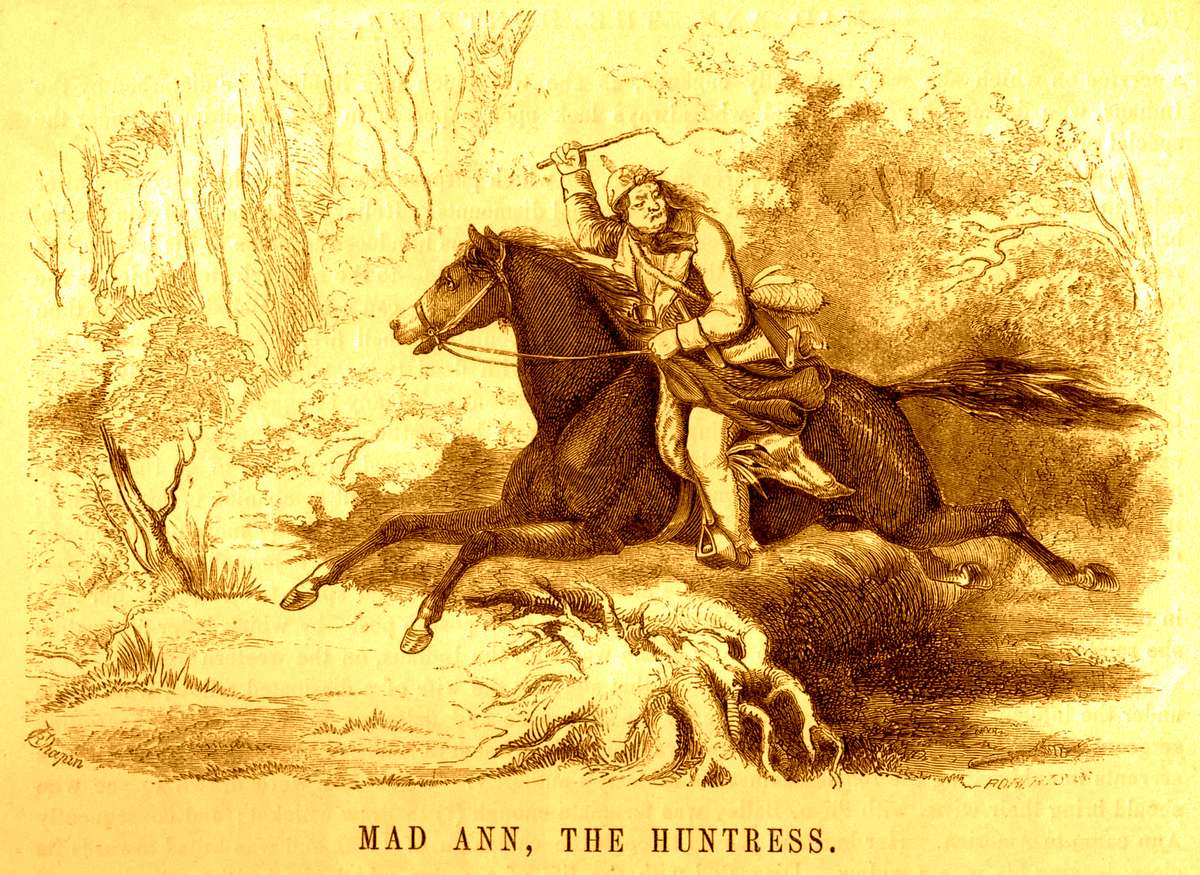
POINT PLEASANT, W.Va. — Long before West Virginia became a state, a woman born in Liverpool, England, crossed the Atlantic, settled on the Virginia frontier, survived widowhood amid one of the region’s most violent conflicts, and became one of the best-known figures in Appalachian history. Her name was Anne Bailey.

Known to later generations as “Mad Anne” Bailey, she served as a frontier messenger, scout, and guide during the settlement of western Virginia. Her travels linked communities that would later become Lewisburg, Charleston, and Point Pleasant. Her most famous exploit—a perilous ride to obtain gunpowder for a threatened frontier fort—remains one of the state’s most enduring legends.
More than two centuries after her death, Anne Bailey continues to occupy a unique place in West Virginia history.
From Liverpool to the Virginia frontier
According to an article by historian Jim Comstock in the West Virginia Heritage Encyclopedia, Bailey was born Anne Hennis in Liverpool about 1742. Little is known about her early life, though family tradition held that her father was an English soldier who fought under Queen Anne, for whom his daughter was named.
At some point in her youth, Anne left England for America. How she made the journey remains uncertain. The Heritage Encyclopedia records that she secured passage aboard a Virginia-bound vessel and eventually reached the Shenandoah Valley, likely traveling inland to the Staunton area after arriving on the Atlantic coast.
The move placed her in a world far different from the one she had left behind. Colonial western Virginia remained a rugged frontier, with settlements separated by forests, mountains, and long distances. Survival depended on determination, self-reliance, and hard work. Those qualities defined Anne Bailey’s life.
In about 1765, she married Richard Trotter, a frontiersman who had served during the French and Indian War. The couple established a home on the Virginia frontier and had a son.
Widowhood at Point Pleasant changed her life
Everything changed on October 10, 1774. On that day, Richard Trotter was killed at the Battle of Point Pleasant, a frontier conflict fought at the junction of the Ohio and Kanawha rivers during Lord Dunmore’s War.

The battle remains one of the most important events in the early history of western Virginia. Many historians regard it as a turning point in the struggle for control of the trans-Appalachian frontier. For Anne Bailey, however, it was a personal tragedy.
According to Comstock, she left her young son in the care of neighbors and chose a path few women of the era would have considered. Rather than withdraw from frontier life, she became increasingly involved in it.
She reportedly took up duties as a scout and messenger, traveling among settlements and military outposts throughout the region.
Anne Bailey became a messenger across the frontier
In 1778, Fort Savannah was established at the site of present-day Lewisburg. It became an important outpost protecting settlers living along Virginia’s western frontier, and Anne Bailey soon became a messenger between Fort Savannah and communities in the upper Shenandoah Valley. Her travels eventually carried her farther west to Fort Randolph at Point Pleasant, the very place where her husband had lost his life.
While serving on the frontier, she met ranger John Bailey. The two married in Lewisburg on November 3, 1785, and afterward moved west to Fort Clendenin, near the site of present-day Charleston.
At the time, western Virginia remained sparsely populated. Settlements were isolated, transportation was difficult, and communication between communities often depended on individuals willing to travel long distances through the wilderness. Anne Bailey became one of those individuals.
The ride to save Fort Clendenin
Bailey’s most famous achievement occurred in 1791. According to most accounts, scouts near the fort discovered signs of a major Native American attack against settlements in the Kanawha Valley, and defenders at Fort Clendenin soon realized they lacked enough gunpowder to withstand a prolonged siege.
Colonel George Clendenin asked for volunteers willing to make the dangerous journey to Fort Savannah, roughly 100 miles away at what’s now Lewisburg, and return with supplies. According to the tale, the men hesitated, but Anne Bailey did not.
Mounted on one of the fort’s best horses, she set out across the wilderness, reached Fort Savannah, secured gunpowder, and returned successfully to Fort Clendenin. The feat became one of the most celebrated stories in West Virginia folklore.
Modern historians note that contemporary documentation of the ride is limited. Comstock observes that some scholars regard portions of the story as legendary rather than fully documented history.
Historian Christine M. Kreiser, in an article on Bailey in the W.Va. Encyclopedia, writes that Anne Bailey’s place in West Virginia history is “tied to an event that may not have happened.”
“She is often credited with carrying gunpowder from Lewisburg to relieve a 1790 siege on Fort Lee at the site of present Charleston,” Kreiser says, but “contemporary chroniclers make no mention of this siege, and subsequent historians consider the tale apocryphal.”
Even so, historians agree that Anne Bailey served as a frontier messenger and that her reputation reflects the real dangers faced by those who traveled among isolated settlements during the late eighteenth century. According to tradition, she was rewarded with the horse she rode on the mission. Remembering her birthplace in England, she named the animal “Liverpool.”
Why Anne Bailey is still remembered today
Anne Bailey remained in the Kanawha Valley for nearly three decades before moving to Ohio at the urging of her son. She died there in 1825 and was buried near Gallipolis.
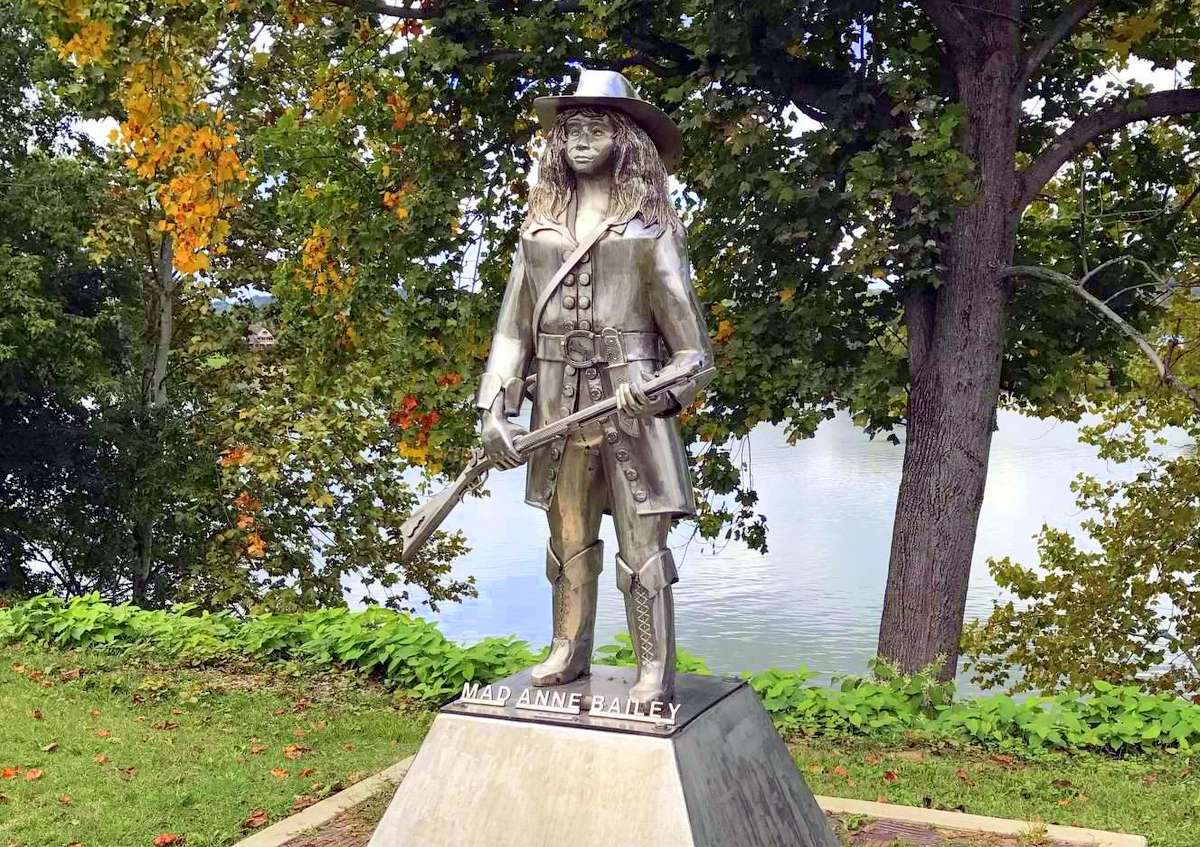
In 1901, her remains were returned to Point Pleasant and reinterred at Tu-Endie-Wei Park near the battlefield where Richard Trotter had been killed more than a century earlier. Monuments, historical markers, and local traditions continue to commemorate her life.
Whether every detail of her famous gunpowder ride occurred exactly as later generations described may never be known. What is beyond dispute, however, is that Anne Bailey traveled repeatedly across a dangerous frontier, connecting settlements that would later become some of West Virginia’s most important communities.
At a time when even routine travel could be hazardous, she earned a reputation for courage, endurance, and independence. And for that reason, Anne Bailey remains one of the most remarkable women in the history of West Virginia’s frontier.
How Anne Bailey compares to other frontier women
Anne Bailey occupies a unique place among the women of the American frontier. While many are remembered for surviving extraordinary hardships, Bailey became known for actively confronting danger. Her reputation as a scout, horsewoman, and defender of isolated settlements set her apart from many of her contemporaries.
Perhaps the best-known frontier woman associated with present-day West Virginia is Mary Draper Ingles. Captured during the 1755 Shawnee attack on Draper’s Meadow in Virginia, Ingles became famous for her remarkable escape from captivity and her nearly 800-mile journey home through the wilderness.
Read more: What Historians Often Get Wrong About Mary Draper Ingles
Like Bailey, Ingles displayed extraordinary courage and endurance. However, Ingles is remembered primarily for a single epic survival story, while Bailey spent much of her adult life directly involved in frontier defense and military activities.
Anne Bailey also differed from women such as Rebecca Boone, wife of famed frontiersman Daniel Boone. Rebecca Boone endured the hardships of frontier settlement and helped establish new communities in the wilderness, but she generally remained in the domestic sphere expected of women during the eighteenth century.
Bailey, by contrast, frequently crossed those social boundaries. She traveled alone through dangerous territory, carried messages between settlements, hunted game, and became known for skills more commonly associated with frontiersmen.
Her closest comparison may be to women such as Jane McCrea, Lydia Boggs Shepherd, or other frontier figures whose lives became woven into regional folklore. Yet even among these women, Bailey’s reputation for independence stands out. Stories describe her riding horseback across rugged mountain country, carrying supplies to frontier forts, and volunteering for missions many men were reluctant to undertake.
This independence helped earn her the nickname “Mad Anne,” though contemporaries often used the term to describe her fearless and unconventional behavior rather than mental instability. In an era when women’s opportunities were sharply limited, Bailey forged her own path and earned respect on a frontier where survival depended on courage and resourcefulness.
For that reason, Anne Bailey remains one of Appalachia’s most remarkable historical figures. While many frontier women became symbols of endurance, Bailey became something rarer: a symbol of action, leadership, and determination in one of the most dangerous regions of early America.
Read Also
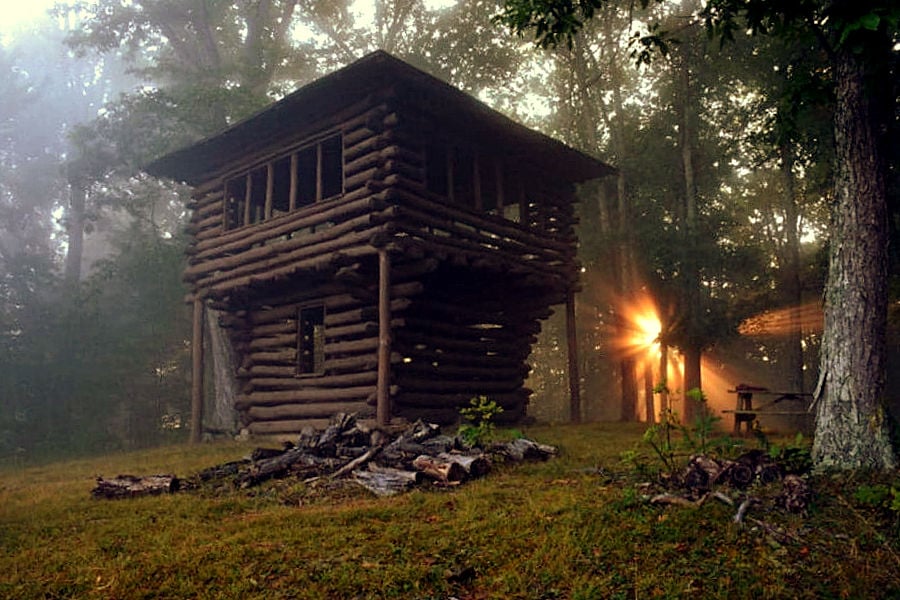
Thanks Dave! Wondered about her after visiting the Anne Bailey tower at Watoga
It’s well worth the hike!
What a fascinating article. Many thanks!
As a young girl, I went to camp Ann Bailey
It was a Girl Scout camp. I went there for four years and loved it.
thanks for sharing this wonderful article. We plan a trip to Watoga and will visit the tower while there.
Love this ,Even though my husband had an ancestor named Anne Bailey, his was not the famed woman Mad Anne Bailey, his ancestor was during or possibly before that Anne and she lived in Mercer country and is buried just inside the property of the Federal prison next to her husband Richard Bailey.
Very fascinating , I love reading your articles !!!
I appreciate your articles so much. I appreciate good informative writing.
I attended Anne Bailey elementary school in St. Albans from 1966-1971. Even back then, I thought it was cool to go to a school named for a woman.