
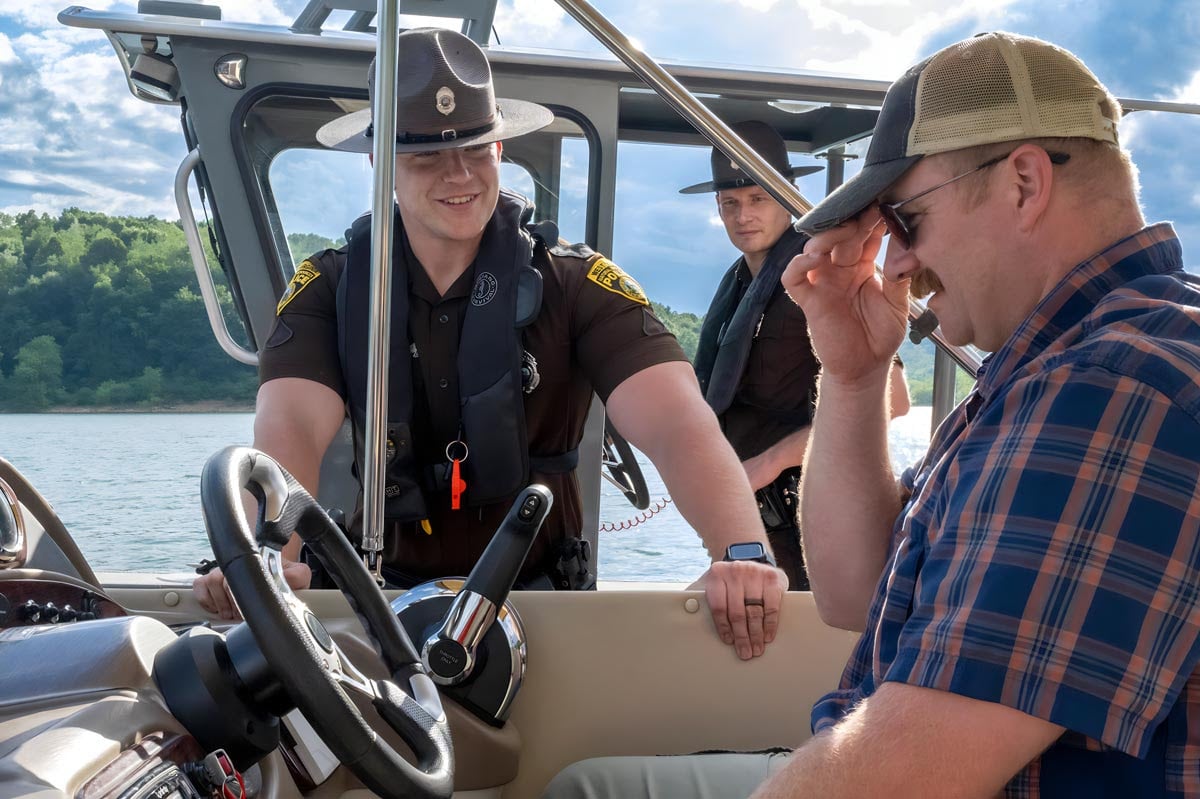
CHARLESTON, W.Va. — As thousands of boaters head to West Virginia’s lakes and rivers for the Independence Day holiday, state natural resources police are reminding visitors that alcohol can be dangerous long before anyone takes the helm.

Read more: Best swimming holes in West Virginia
While many people associate boating under the influence with an impaired operator, officers say alcohol also increases the risk of falls, ejections, drownings, and other serious injuries among passengers. Combined with summer heat, sun exposure, wind, wave action, and dehydration, even moderate drinking can quickly impair balance, judgment, and reaction time on the water.
Those dangers are the focus of Operation Dry Water, a nationwide boating safety campaign taking place July 3–5. During the holiday weekend, the W.Va. Division of Natural Resources Police will join hundreds of law enforcement agencies across the country to encourage sober boating, promote life jacket use, and educate the public about safe recreation on the water.

Capt. Warren Goodson of the state natural resources police says alcohol use by anyone on a watercraft can be dangerous.
“Boating safety depends on everyone making responsible choices,” Goodson said. “Operation Dry Water helps boaters understand that alcohol affects more than just the person at the helm. Impairment anywhere on a boat can lead to dangerous situations, and staying sober helps protect everyone on the water.”
Alcohol is the leading factor in fatal boating accidents
According to the U.S. Coast Guard, alcohol remains the leading known contributing factor in recreational boating fatalities. Unlike driving on a highway, boating exposes people to glare from the water, intense sunlight, engine vibration, wind, heat, and constant motion, which together place additional stress on the body.
These conditions can magnify the effects of alcohol, slowing reaction times and impairing coordination more quickly than many people expect.

Passengers who have been drinking are more likely to lose their balance while moving around a boat, fall overboard, or have difficulty responding during an emergency. Even experienced swimmers can quickly become victims if they enter the water unexpectedly without a life jacket.
For that reason, Operation Dry Water encourages everyone aboard—not just the operator—to avoid alcohol and drugs while on the water.
Officers will increase boating safety patrols
Throughout the holiday weekend, state police will patrol many of the state’s busiest lakes, rivers, and reservoirs, conducting routine safety inspections and monitoring for impaired operators.
Popular recreation areas expected to see increased patrols include:
- Summersville Lake
- Sutton Lake
- Stonewall Jackson Lake
- Tygart Lake
- Beech Fork Lake
- New River
- Kanawha River
- Ohio River and its tributaries
Officers will also check for required safety equipment and compliance with state boating regulations.
West Virginia law prohibits boating under the influence
Operating a boat while impaired carries many of the same consequences as driving under the influence.
West Virginia law prohibits operating a motorboat or personal watercraft with a blood alcohol concentration of 0.08% or higher. Violators may face criminal charges, substantial fines, jail time, impoundment of their watercraft, and other penalties.
Officials emphasize that the safest approach is to designate a sober operator before leaving the dock.
Five ways to stay safe on the water
Natural Resources Police recommend several simple precautions for anyone planning to boat during the holiday weekend:
- Designate a sober boat operator before launching.
- Ensure everyone aboard wears a properly fitted, U.S. Coast Guard-approved life jacket.
- Check that required safety equipment—including navigation lights, fire extinguishers, flotation devices, and sound-producing devices—is on board and in working order.
- Avoid swimming near docks or boats connected to shore power, where faulty electrical systems can create dangerous electric currents in the water.
- Pay attention to changing weather, water conditions, and heavy holiday boat traffic.
Officials say most boating tragedies are preventable with preparation and responsible decision-making.
Whether you’re boating, fishing, tubing, paddling, or whitewater rafting, the same safety principles apply. Wearing a life jacket, designating a sober operator, and staying alert to changing weather and water conditions can prevent accidents before they happen.
Read more: Planning to get on the water this summer? Explore our guides to whitewater rafting in West Virginia.
Some boaters must complete a safety course
West Virginia law requires anyone born after Dec. 31, 1986, to complete a boating safety education course approved by the National Association of State Boating Law Administrators before operating a motorboat or personal watercraft on the state’s waters. The course covers navigation rules, emergency procedures, required equipment, and other safe boating practices.
As families gather to celebrate Independence Day on West Virginia’s lakes and rivers, officers say the goal of Operation Dry Water is simple: ensuring that everyone returns safely at the end of the holiday.

More information about boating safety education is available from the W.Va. Division of Natural Resources, while additional information about the national campaign is available from Operation Dry Water.
Related: How to stay safe during West Virginia’s summer heat
About the West Virginia Natural Resources Police
The West Virginia Natural Resources Police is the state’s oldest statewide law enforcement agency, tracing its origins to 1897. While many people know officers for enforcing hunting, fishing, and boating laws, their responsibilities extend far beyond wildlife conservation. They are sworn law enforcement officers with statewide jurisdiction who patrol state parks, lakes, rivers, and public lands while enforcing a wide range of state laws.
In addition to boating safety patrols, natural resources police officers conduct search-and-rescue missions, respond to floods and other natural disasters, investigate environmental crimes, and assist other law enforcement agencies when needed. They also play a leading role in hunter education and boating safety education programs designed to prevent accidents before they occur, making them one of West Virginia’s most visible public safety agencies in the outdoors.