
BECKLEY, W.Va. — By late afternoon in Washington, D.C., summer settles over the city like a heavy blanket. Heat radiates from sidewalks and office buildings. The marble monuments along the National Mall shimmer in the haze, while commuters hurry between air-conditioned offices, Metro stations, and cars. Even after sunset, the pavement continues releasing the warmth it absorbed throughout the day.

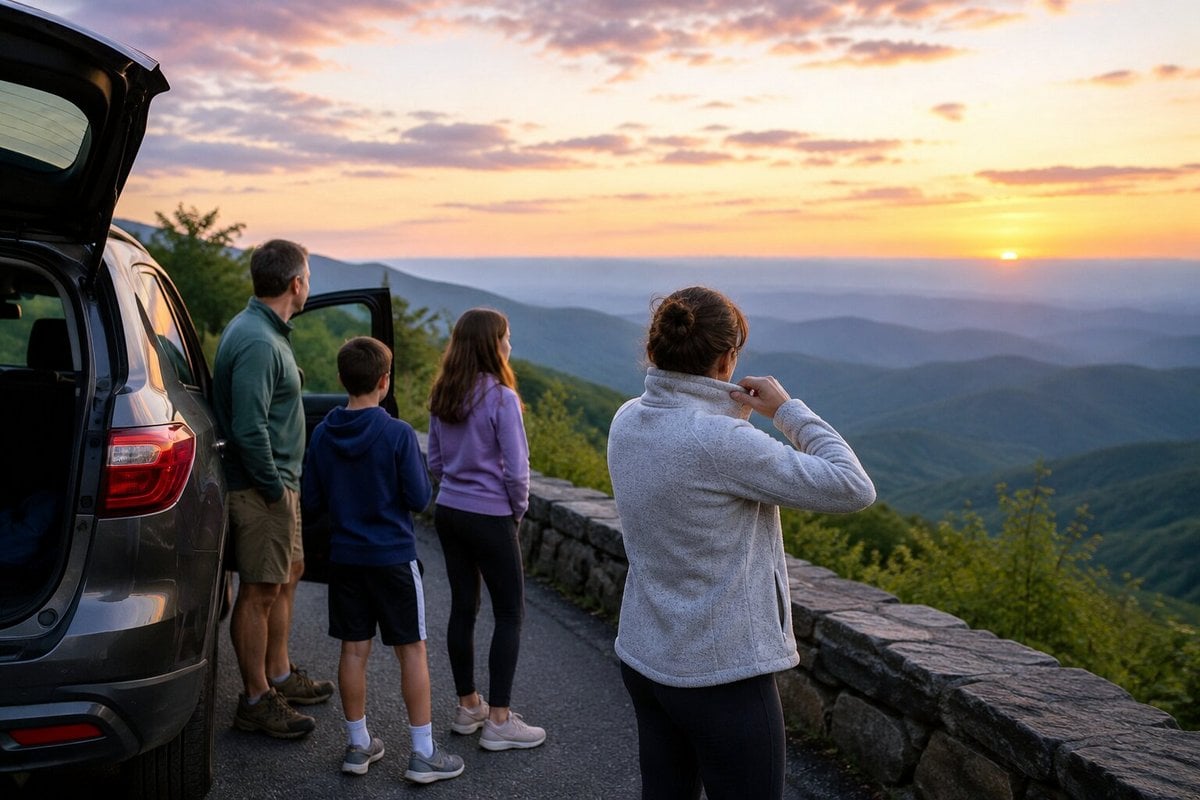
Drive west for three hours, however, and summer feels altogether different. Beyond the Blue Ridge, where the Appalachian Mountains rise into the Allegheny Highlands of eastern West Virginia, evening temperatures begin to fall. Mountain breezes stir red spruce forests, cool air settles into broad valleys, and visitors lingering around campfires often reach for a light jacket before the night is over.
For generations, travelers from Washington, Baltimore, Richmond, Pittsburgh, and countless other eastern cities made that same journey. Long before air conditioning transformed American life, escaping to the mountains was one of the nation’s most enduring summer traditions.
Families boarded trains bound for mineral springs and mountain resorts, seeking cool nights, fresh air, and relief from the oppressive heat of the lowlands. The trains are gone, and the grand hotels are fewer, but the mountains remain much as they always have.
Read Also: Why West Virginia may be the wildest state east of the Mississippi
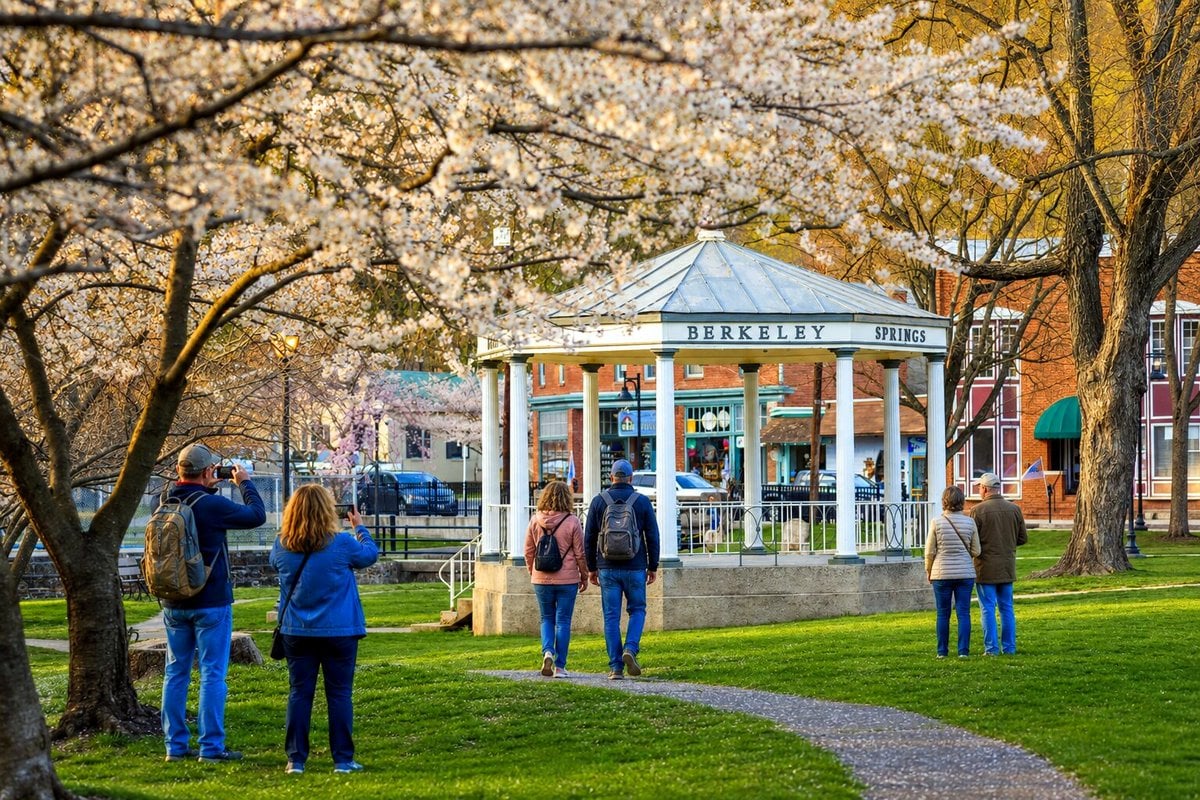
That centuries-old tradition continues today, especially among travelers from the Washington metropolitan area, where West Virginia’s eastern mountains remain one of the closest escapes from summer heat, according to Dusty Martin, executive director of the Berkeley Springs Convention and Visitors Bureau.
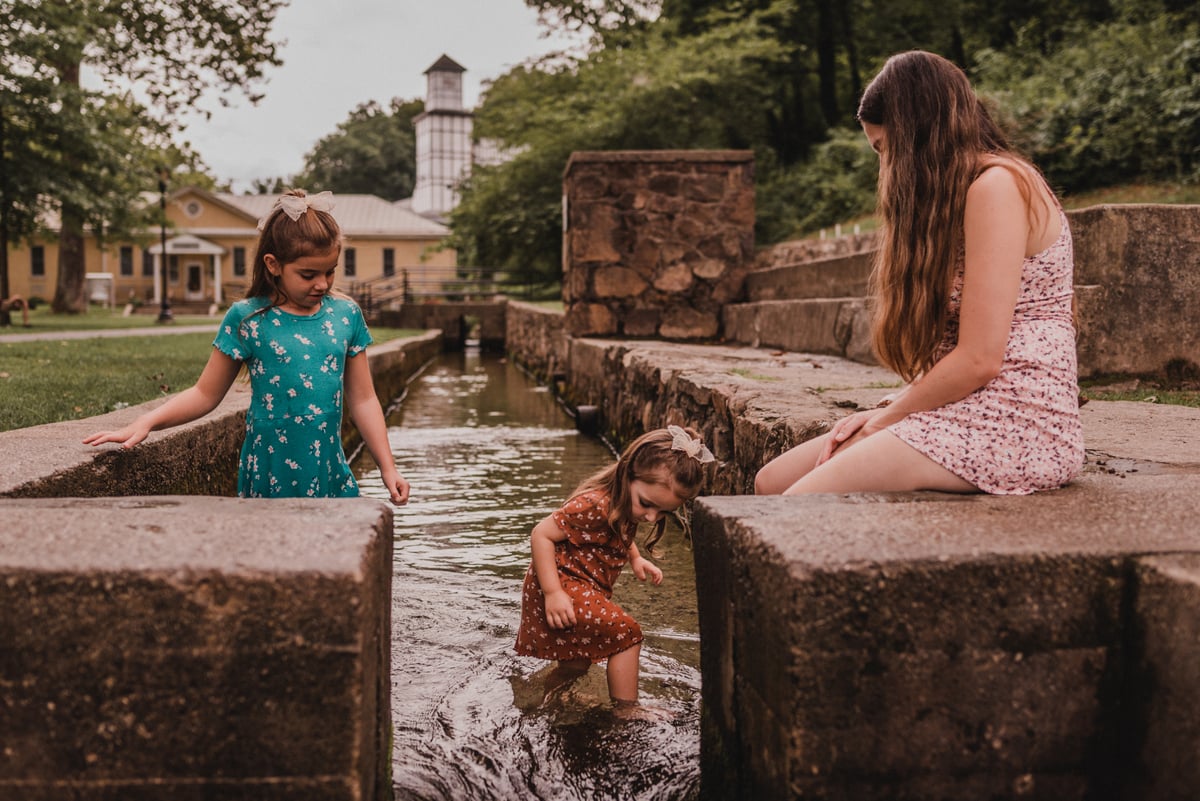
“Visitors from the Washington, D.C., metro have flocked to Berkeley Springs as an oasis from summer heat for 250 years, and we see that trend growing even more now,” Martin said. “Access to free, clean spring water bubbling in the valley between two towering mountains is an experience folks from larger cities can’t find at home.”
Martin said many visitors are equally surprised by how quickly they can leave the congestion behind, whether they’re coming from Pittsburgh, Washington, Columbus, Philadelphia, or Baltimore.

“Beyond the breathtaking scenery and cool water, visitors comment on the ease of the drive,” he said. “No need to hop on a beltway or fight the traffic they are accustomed to daily. Once heading west, it is smooth sailing to the West Virginia line.”
America once escaped to the mountains
For most of American history, relief from summer heat could not be found by lowering a thermostat: it required leaving the city.
Throughout the nineteenth century, rapidly growing cities became increasingly uncomfortable during July and August. Brick buildings absorbed heat throughout the day, crowded neighborhoods trapped warm air after sunset, and poor sanitation compounded already difficult conditions. Physicians routinely warned patients about the dangers of prolonged exposure to heat, while families with the means to travel looked toward higher elevations, where temperatures were naturally cooler.
Railroads transformed that search into one of America’s defining vacation traditions. As new lines crossed the Appalachians after the Civil War, they connected eastern cities with mountain communities that had once required days of difficult travel. Railroad companies enthusiastically promoted the Allegheny Mountains as places where cool breezes, mineral springs, and forested landscapes offered welcome relief from urban heat and smoke.
West Virginia quickly became one of the movement’s great beneficiaries. Elegant hotels rose near celebrated mineral springs. Resort communities flourished along mountain rail lines. White Sulphur Springs, home of The Greenbrier, became internationally known, while smaller hotels and boarding houses throughout the Alleghenies welcomed visitors who often stayed for weeks rather than days.
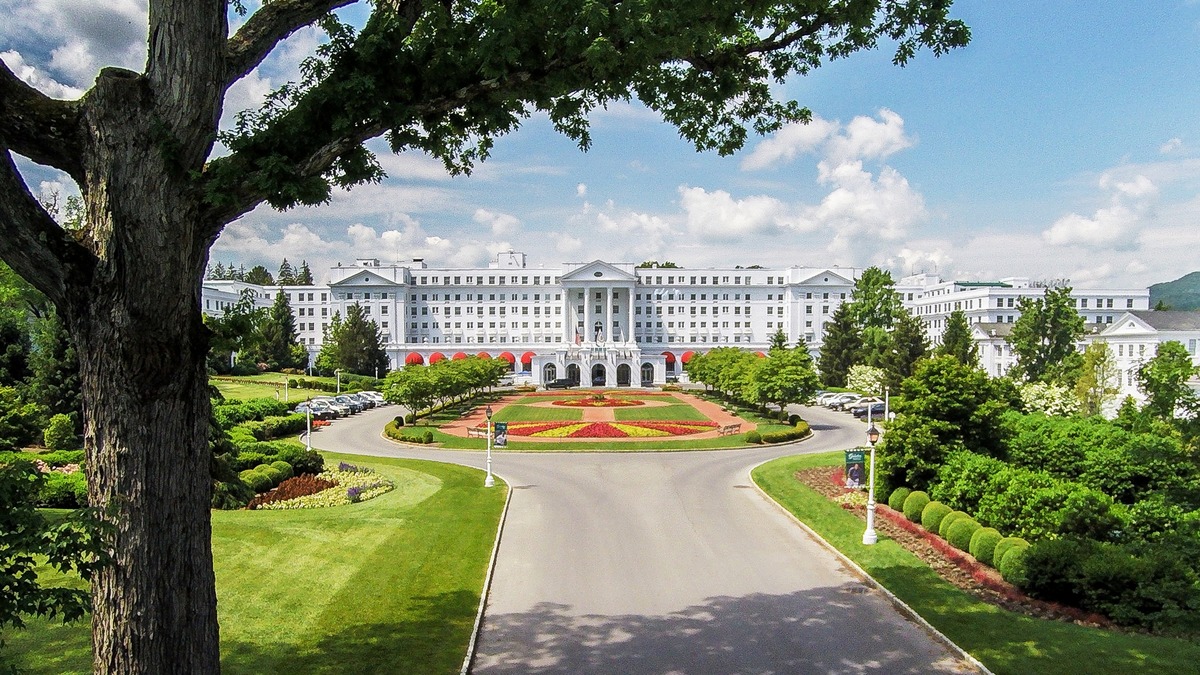
Their days followed an easy rhythm. Morning walks beneath towering trees gave way to horseback rides, trout fishing, picnics beside mountain streams, and evenings spent on broad hotel porches overlooking distant ridges. Doctors frequently prescribed mountain climates for patients suffering from exhaustion or respiratory ailments, believing that cool air and higher elevations promoted recovery. Modern medicine has revised many of those conclusions, but the appeal of spending summer in the mountains has changed remarkably little.
For several generations, “going to the mountains” became as familiar to many Americans as going to the seashore, but that tradition began fading after World War II. Residential air conditioning spread rapidly during the 1950s and 1960s, making it possible to remain comfortable almost anywhere. Families no longer needed to escape the city simply to find a cool night’s sleep. Many mountain resorts reinvented themselves, while others quietly disappeared into history.
Yet the reason they had existed never disappeared. Each evening, cool air continued drifting into West Virginia’s highest valleys. Forests shaded countless mountain streams. Summer nights remained comfortable at elevations where blankets could still feel welcome, even in July. The mountains simply waited.
Why the high country stays cool
West Virginia’s summer climate is not the product of chance. It is the result of geography. Unlike neighboring states, where broad coastal plains and rolling piedmont dominate the landscape, West Virginia rises into one of the most mountainous regions east of the Mississippi River. Much of the state lies between 1,000 and 3,000 feet above sea level, while dozens of peaks exceed 4,000 feet. Spruce Knob, at 4,863 feet, is the state’s highest summit and among the tallest mountains in the central Appalachians.
That elevation changes everything. Under ordinary atmospheric conditions, temperatures generally decrease by about 3.5 degrees Fahrenheit for every thousand feet of elevation gained. A drive from the Potomac Valley into the Allegheny Highlands can therefore mean leaving behind sweltering afternoon heat for temperatures that feel noticeably more comfortable before travelers even reach the highest ridges.
The greatest difference often comes after sunset. Cities store heat in concrete, brick, rooftops, and pavement, slowly releasing it well into the evening through what meteorologists call the urban heat island effect. West Virginia’s high country behaves differently. Dense forests shield the ground from direct sunlight. Mountain streams carry cold water from thousands of springs. With comparatively little pavement to trap the day’s warmth, temperatures frequently fall quickly once daylight fades.
Some landscapes magnify that effect. About three hours west of Washington, the Canaan Valley sits at more than 3,000 feet above sea level, making it one of the highest large mountain valleys in the eastern United States. Cool, dense air naturally settles into the basin overnight, producing temperatures that can resemble those found much farther north. Frost has been recorded there during every month of the year.
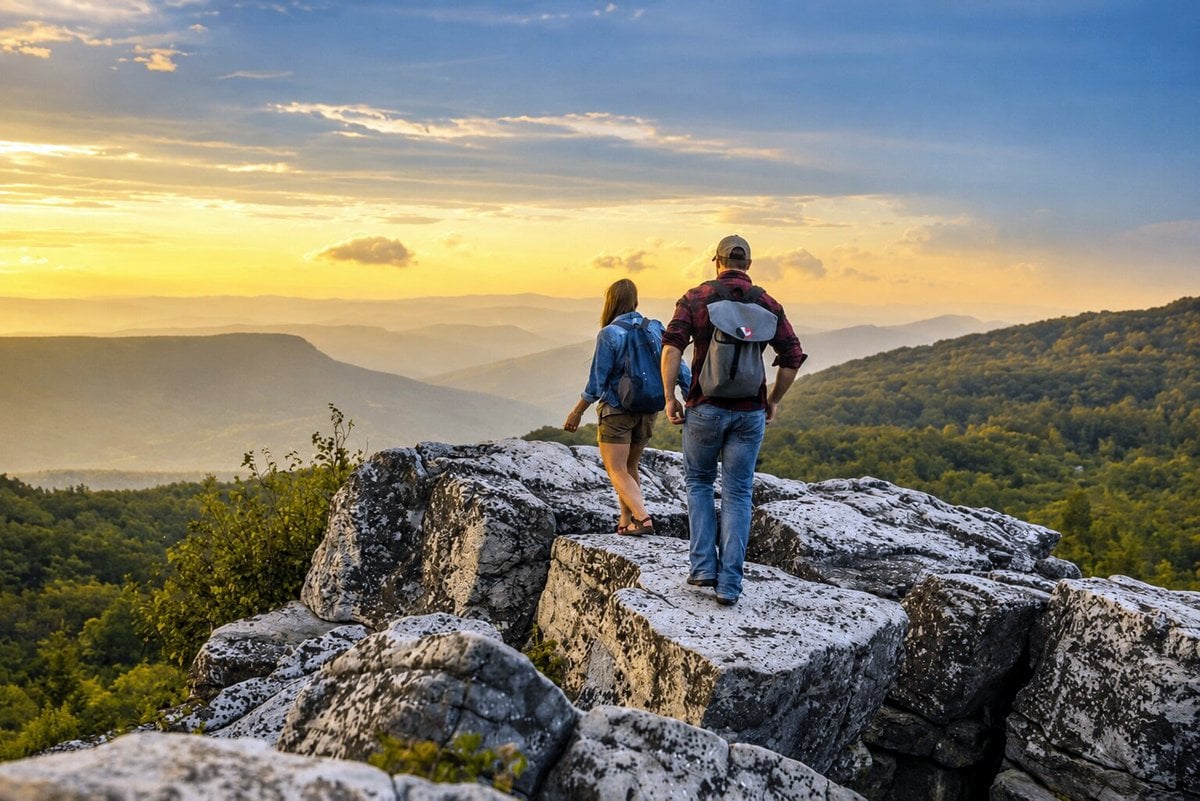
A short drive away, Dolly Sods Wilderness surprises visitors in another way. Open heath barrens, sphagnum bogs, and windswept red spruce forests create an environment more often associated with northern New England or southeastern Canada than the Mid-Atlantic. The transition can feel almost instantaneous. One moment, travelers are climbing through hardwood forests. Next, they find themselves standing in a landscape unlike any other in the region.
Together, elevation, forests, cold streams, and mountain topography create something increasingly rare across much of the East—not simply cooler temperatures, but a different kind of summer.
Where summer still feels like summer
The change is gradual. Leaving the Potomac region, travelers climb through hardwood forests where winding roads follow cold streams into steadily higher country. With each ridge, the air becomes a little lighter. The humidity begins to fade. Somewhere along the drive, many people instinctively lower the windows—not because they planned to, but because they suddenly can.
For first-time visitors, the experience is often surprising. The Canaan Valley, tucked among some of the highest mountains in the state, has long been known for cool mornings, comfortable afternoons, and evenings that invite lingering outdoors. Mist often hangs over the valley at sunrise, while nightfall arrives beneath skies bright with stars instead of city lights.
A short drive away, Dolly Sods Wilderness offers one of the East’s most unexpected landscapes. Winds sweep across open heath barrens and rocky overlooks where red spruce, blueberries, and northern plant communities create an environment unlike almost anywhere else in the Mid-Atlantic. Standing on its broad plateau, it is easy to forget that Washington lies only a few hours away.
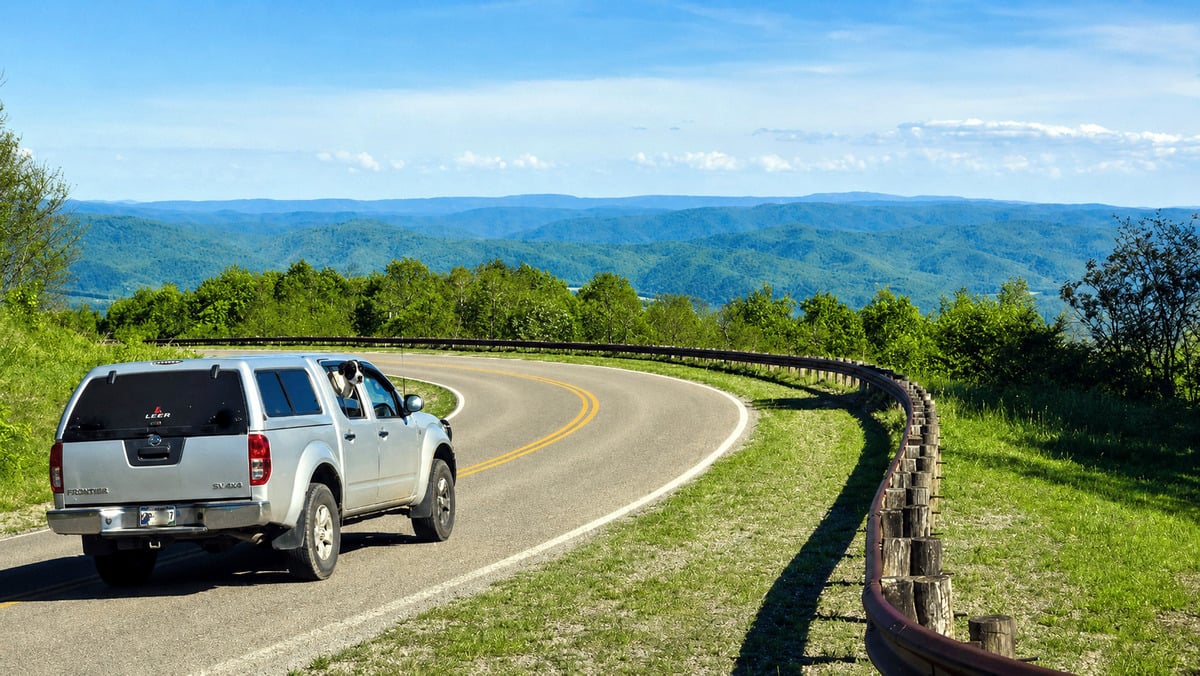
Farther south, the Highland Scenic Highway climbs through the heart of the southern Monongahela National Forest, following one of the highest paved roads in the state. Pull-offs overlook wave after wave of forested ridges, while the journey itself becomes part of the destination. Visitors stop not because they have reached an attraction, but because the mountains encourage them to slow down.
Nearby, the Cranberry Glades preserve a rare remnant of the Ice Age. Boardwalks wind through peat bogs where orchids, carnivorous plants, and other northern species thrive hundreds of miles south of their more familiar range. It is another reminder that West Virginia’s highest mountains occupy a climate all their own.
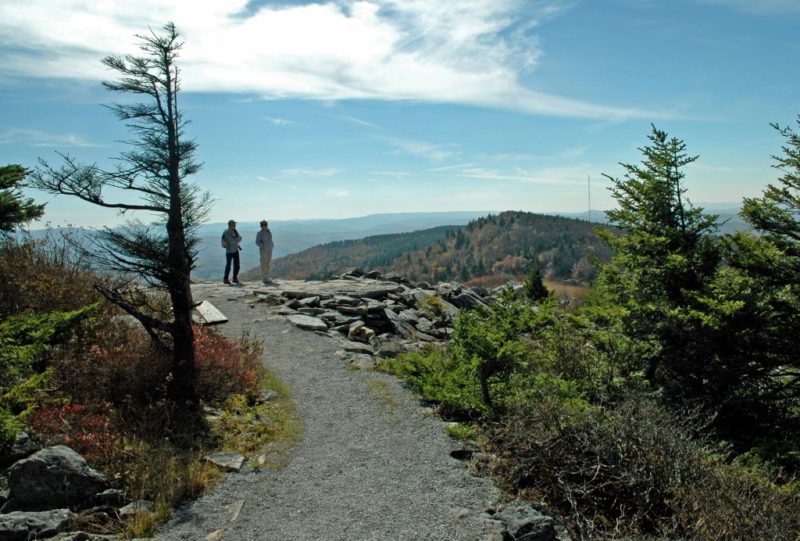
Above them all rises Spruce Knob. From its stone observation tower, ridges roll toward every horizon while cool winds sweep across the summit. As darkness settles over the Alleghenies, one of the darkest skies in the eastern United States gradually fills with stars—another experience increasingly difficult to find in the brightly lit urban corridor stretching from Washington to Boston.
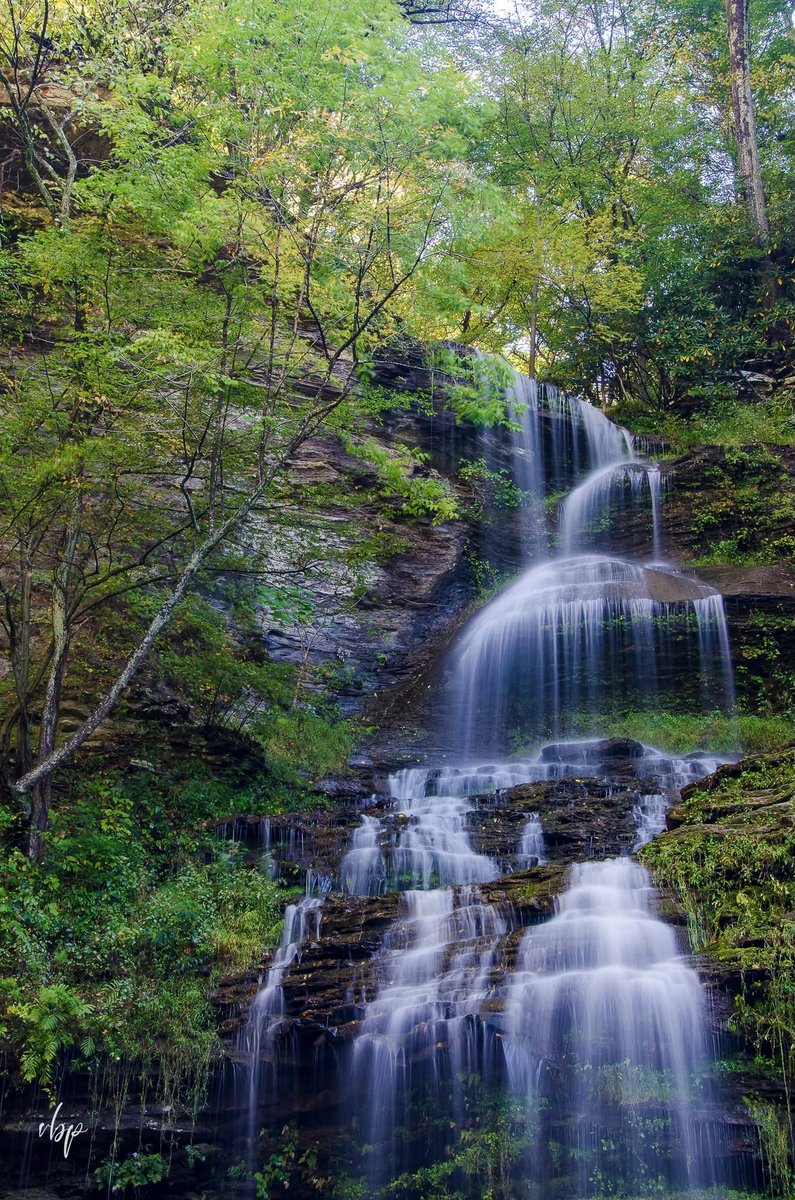
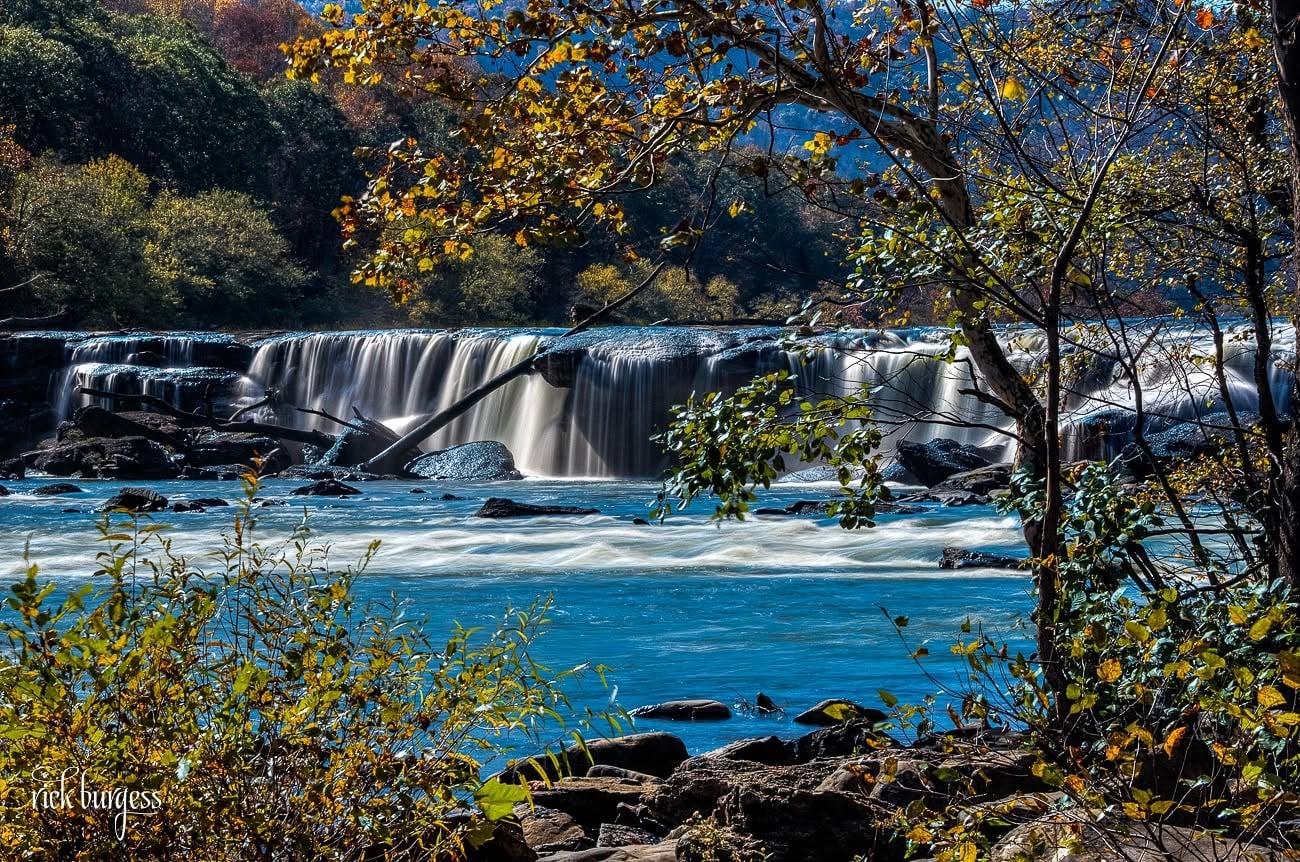
Yet the high country extends far beyond its best-known landmarks. Blackwater Falls, Watoga State Park, quiet campgrounds in the Monongahela National Forest, mountain trout streams, and hundreds of miles of shaded trails all share the same quality. They invite people outdoors rather than driving them inside. They encourage mornings on cabin porches, afternoons beneath towering forests, and evenings that end around a campfire instead of an air conditioner.
For travelers accustomed to spending summer searching for cooler places, that simple change can be memorable.
Why Americans are rediscovering mountain summers
For much of the twentieth century, climate became almost irrelevant to the American vacation. Air conditioning transformed homes, offices, hotels, automobiles, and shopping centers, making it possible to remain comfortable nearly everywhere. Families still traveled to the mountains, but increasingly they came for scenery, recreation, or tradition rather than simple relief from the heat.
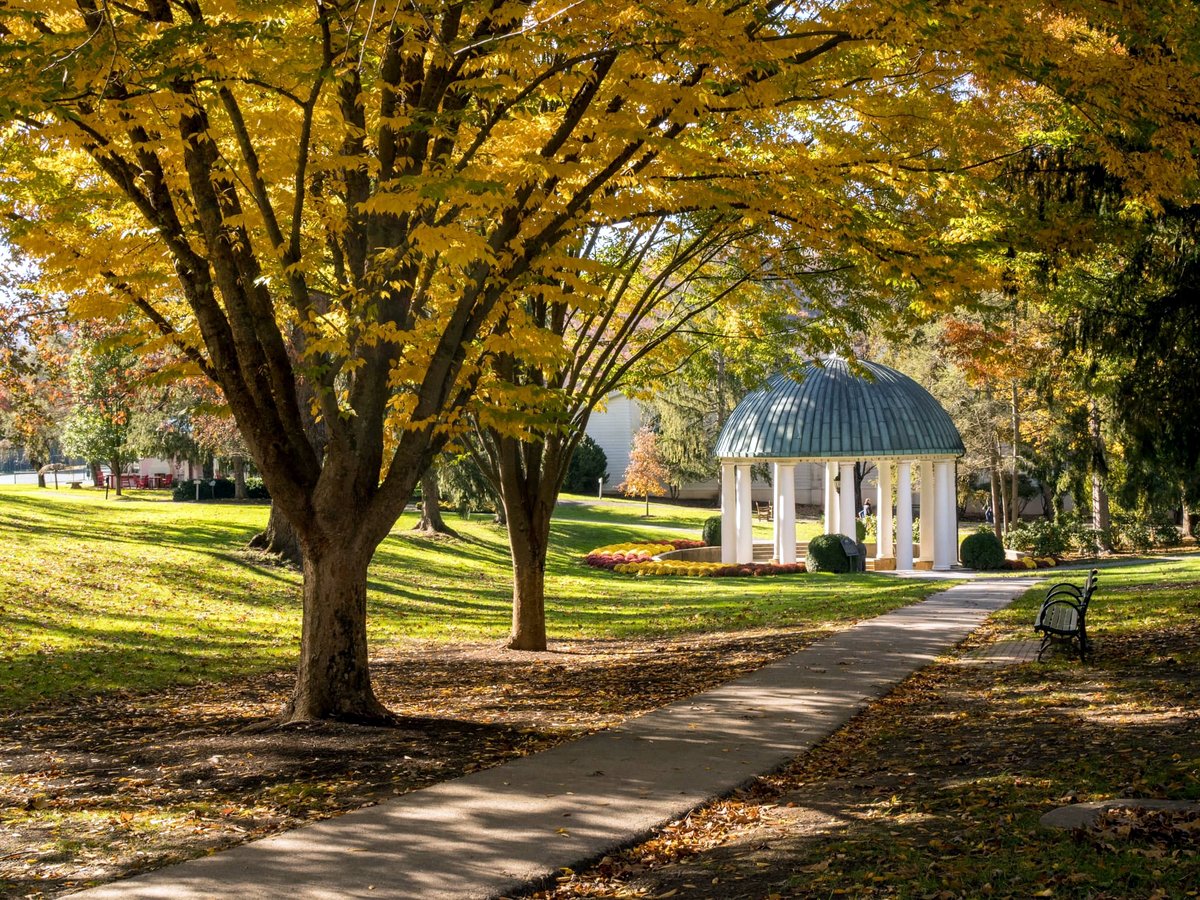
That equation is beginning to change. Across much of the eastern United States, longer stretches of intense summer weather are prompting people to rethink where they spend their free time. Instead of searching only for attractions, many are looking for places where they can comfortably hike in the afternoon, eat dinner outdoors after sunset, or sleep through the night with the windows open.
West Virginia happens to offer exactly those conditions. Its advantages cannot be manufactured. Elevation, forests, abundant public lands, and thousands of miles of cold-water streams have shaped the landscape for millennia. Those same characteristics now align with what many travelers increasingly value: cooler temperatures, quieter surroundings, dark skies, and opportunities to spend time outside without retreating indoors every afternoon.
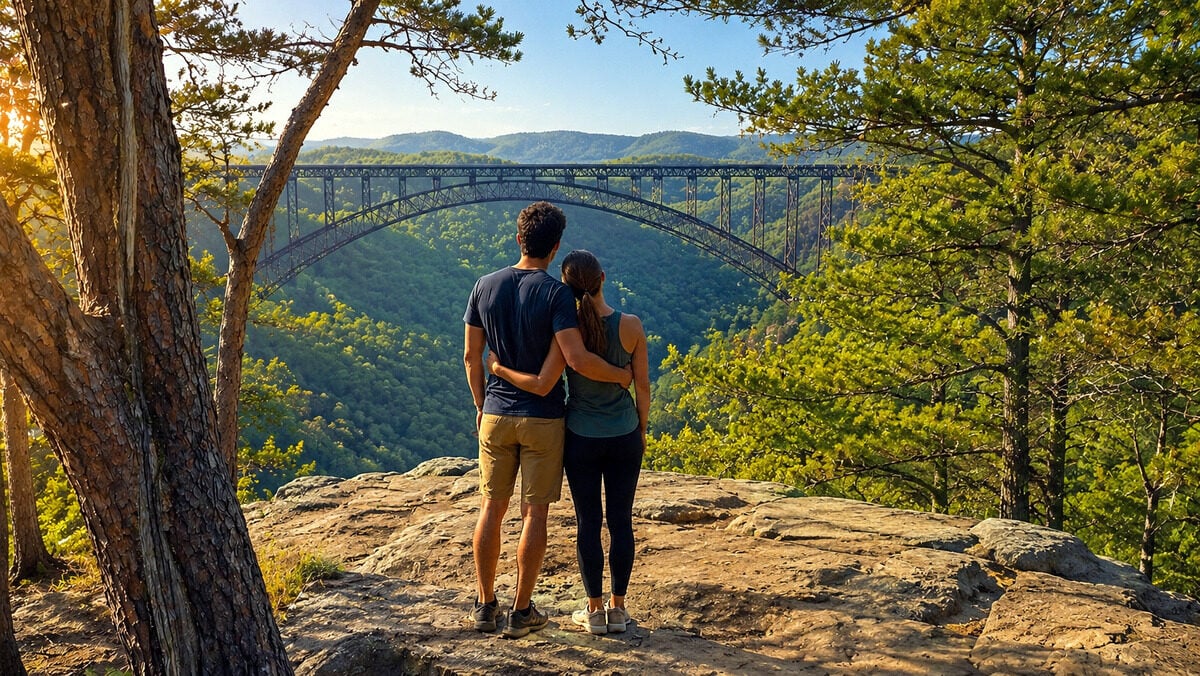
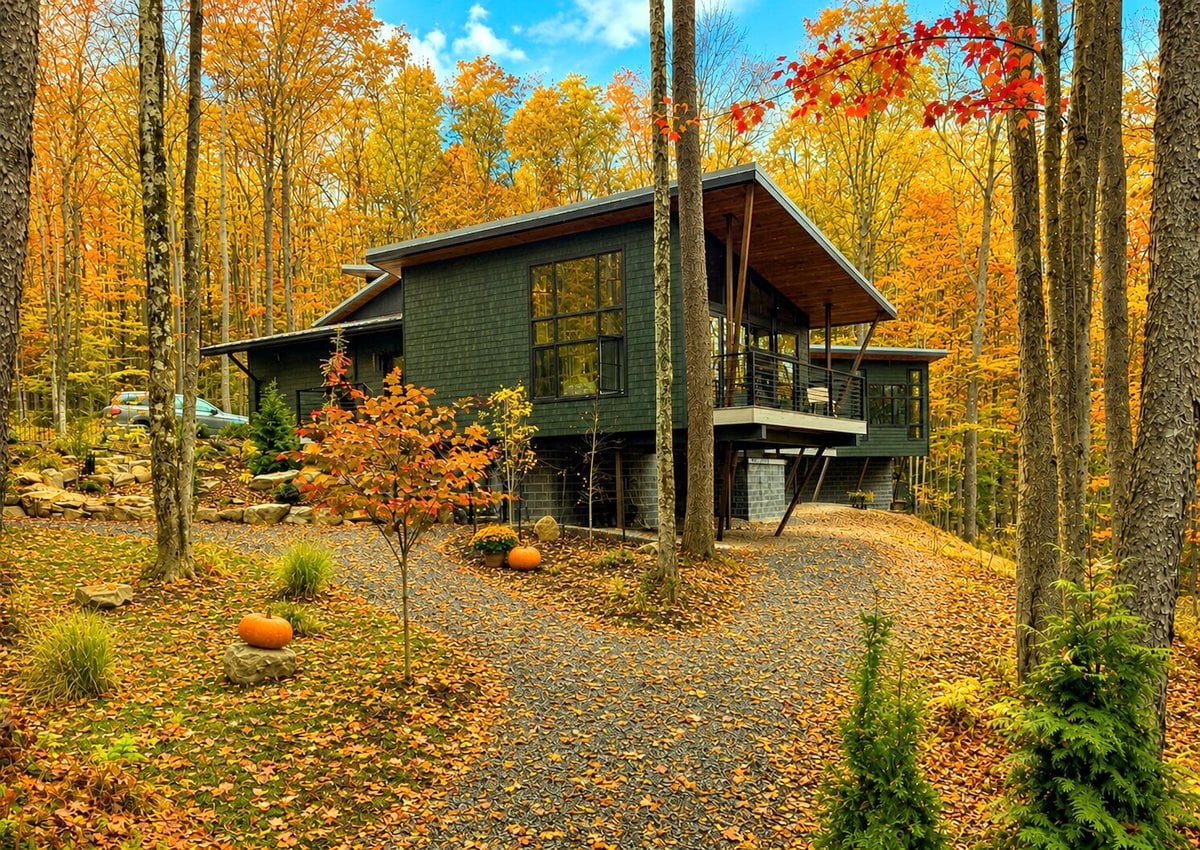
The shift is visible across the state’s recreation economy. Millions of visitors who first discovered West Virginia through the New River Gorge have begun exploring farther into the Allegheny Highlands. Cyclists are finding rail trails that climb into cooler elevations. Campers are returning to mountain forests. Remote workers are extending weekend trips into weeklong stays, discovering that a cabin overlooking a mountain valley can serve as both an office and a retreat.
Perhaps the greatest attraction, however, cannot be measured on a thermometer. For generations, Americans came to associate comfort with technology—air conditioning, insulated buildings, and carefully controlled indoor environments. West Virginia quietly offers another definition. Here, comfort still comes from elevation, forests, clean water, and evenings that naturally cool as the sun sets. That is not innovation. It is memory.
The mountains never forgot
The Appalachian Mountains have witnessed extraordinary change. They watched Native peoples travel ancient footpaths through these forests. They saw frontier settlements spread along rivers, railroads climb seemingly impossible grades, grand hotels rise beside mineral springs, and eventually, highways replace passenger trains. They watched Americans embrace air conditioning and, for a time, forget why earlier generations had escaped to the mountains each summer.
Through it all, the mountains kept their own rhythm. Cool air continued settling into the valleys each evening. Red spruce forests shaded rocky streams. Winds crossed the high plateaus just as they had for centuries. Summer unfolded much as it always had, whether anyone came to experience it or not.
Now, many are returning. Some come for hiking. Others for paddling, photography, wildlife, waterfalls, or dark skies. Many leave remembering something simpler.

They remember opening the cabin windows instead of reaching for the thermostat. They remember pulling on a sweatshirt after sunset. They remember lingering outside because the evening invited them to stay. Those memories are powerful not because they are extraordinary. They are powerful because they have become uncommon.
Long before Americans escaped into air-conditioned buildings, they escaped into the mountains. More than a century later, West Virginia still offers that same refuge—not because it has changed, but because it has not.
For travelers looking beyond another hot summer in the Mid-Atlantic cities, relief may be closer than they realize. Just beyond the Blue Ridge, where cool streams still tumble from forested slopes and the evening air still carries the scent of spruce, one of America’s oldest summer traditions is quietly waiting to be rediscovered.
Planning Your Escape
For many travelers, one of West Virginia’s greatest surprises is how close it is. Berkeley Springs is less than two hours from much of the Washington, D.C., metropolitan area, while Canaan Valley, Blackwater Falls, and Dolly Sods can be reached in about three to four hours.
Visitors from Pittsburgh are generally within three hours of the Potomac Branches and Allegheny Mountains, while travelers from Columbus can reach many of the state’s high-country destinations in about four to five hours. From Charlotte, the New River Gorge region and southern West Virginia are typically four to five hours away by car. For millions of people across the Mid-Atlantic and Midwest, one of America’s coolest summer climates is close enough for a weekend getaway or even an overnight escape.