
RICHWOOD, W.Va. — A historic district in this Nicholas County mountain town could roughly double in size, encompassing distinctive homes, churches, and other landmarks as preservationists work to protect the character of a community at the western gateway to the Monongahela National Forest.

The proposed expansion would extend the existing Downtown Richwood Historic District eastward from White Avenue along East Main Street and include Park Place and portions of East Walnut Street, according to Robert Johnson, president of the Nicholas County Historic Landmark Commission.

A public meeting on the proposal is scheduled for Sept. 9 at Richwood City Hall as the commission moves toward completing a process Johnson said has taken roughly three years. The effort grew out of a 2025 survey and planning grant.
The existing downtown district was added to the National Register of Historic Places in 2001. The proposed expansion would change the district’s character and size.
David Taylor, the preservation consultant working on the project, said the existing district is largely commercial, while the expansion reaches into an adjacent residential neighborhood.
“What we’re going to end up with in Richwood is a mixed-use residential and commercial district,” Taylor said, adding that it would be about twice the acreage of the original district.
Historic district designation, he said, effectively serves to “wave a flag and say there’s something special about this area.”
Preserving more of historic Richwood
Much of the proposed expansion is residential, and Johnson said that is intentional.

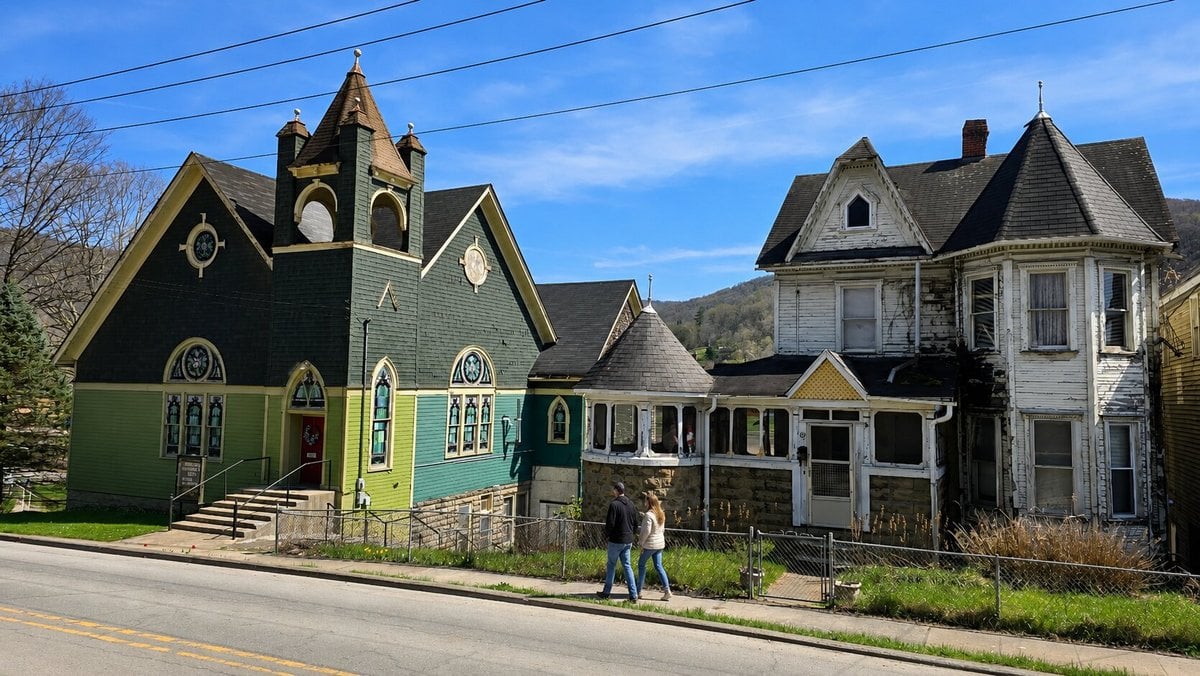
Among the properties that helped inspire the effort is the former Richwood Presbyterian Church, built about 1909 after an earlier wood-frame church burned. Johnson, who lives nearby and formerly played the pipe organ for services there, said he became concerned about the building’s future after the congregation ceased using it.
Park Place would bring another collection of architecturally significant properties into the district, including residences associated with Richwood’s lumber-boom era.
Johnson pointed to the former residence of a Cherry River Boom and Lumber Co. superintendent as an especially unusual example. The house, he said, was once heated through an underground steam line running approximately 1,000 feet from the mill’s main boiler.
Other architecturally notable residences survive nearby, remnants of the industrial development that transformed Richwood during the timber era.
Johnson described one of his principal goals as preserving the community’s “small-town flavor.”
The effort comes as pieces of that historic landscape continue to disappear.
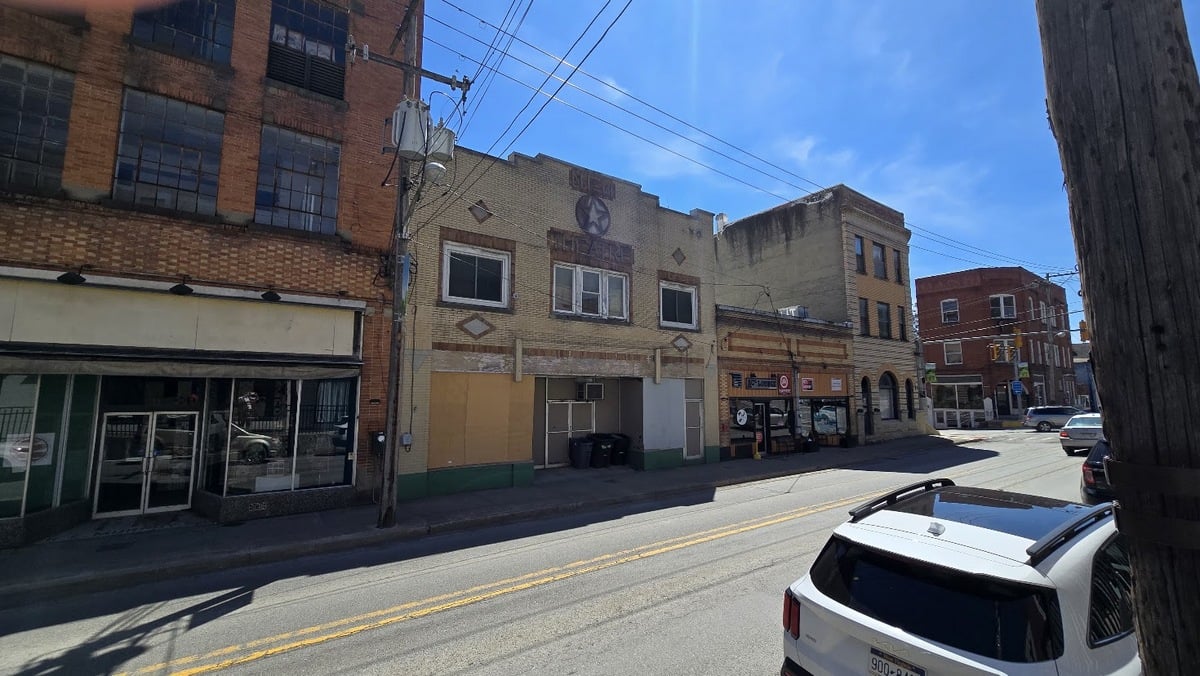
Johnson said Richwood has lost several downtown structures that preservationists had hoped to save. He cited the Deeds-Spencer building and said the New Star Theater was being demolished after money could not be found to stabilize and preserve its brick facade.
“So, we are losing it,” Johnson said.
A tourism opportunity at the forest’s edge
Preserving more of Richwood could also affect a community along an important West Virginia tourism route.
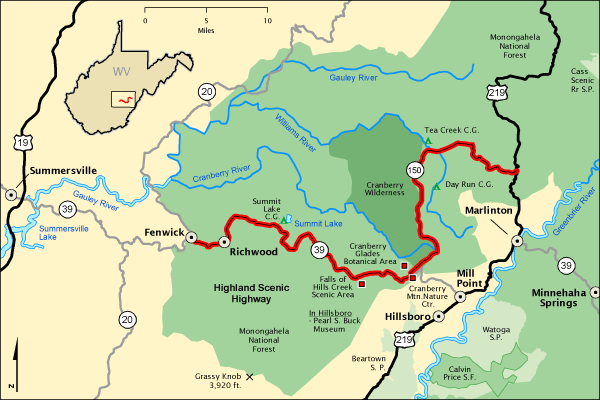
The 43-mile Highland Scenic Highway begins in Richwood and extends east through the Monongahela National Forest toward U.S. 219 north of Marlinton, according to federal tourism information. The route climbs from about 2,325 feet at Richwood to more than 4,500 feet in the Allegheny highlands.
The scenic route provides access to attractions including Summit Lake, Cranberry Glades, and Falls of Hills Creek.
To the west, W.Va. 39 connects Richwood with Summersville and the U.S. 19 corridor, linking to the Gauley River and New River Gorge tourism areas.
That places Richwood between the U.S. 19 tourism corridor to the west and the highlands of the Monongahela National Forest to the east.
Johnson said the forest has long attracted visitors and views the Highland Scenic Highway, trails, trout streams, and other recreational opportunities as a foundation for tourism.
“That is the connector,” Johnson said of the relationship between the town and forest, including visitors traveling the Highland Scenic Highway. Access to fishing and other outdoor recreation, he said, provides “a basis for interest in tourism.”

Taylor said historic preservation can give communities another way to capitalize on such traffic.
“I think that it’s definitely a tourism promotion tool,” Taylor said. “Heritage tourism is a term we didn’t know about 30 years ago.”
Historic preservation can also drive the economy, he said, but designation alone does not guarantee revitalization.
“It’s what you do with what you’ve got,” Taylor said.
Communities must promote their historic districts, educate residents, and make potential investors aware of available benefits if they want the designation to have a broader economic impact, he said.
Taylor said he saw that happen in Brookville, Pennsylvania, a small community along Interstate 80 where he has been involved in historic preservation for decades.
After Brookville’s historic district was listed on the National Register in 1984, community supporters raised money to install large brown highway signs directing interstate travelers toward the historic district.
“We saw traffic the next day they went up,” Taylor said.
The signs gave travelers a reason to leave the interstate and explore the community, he said, demonstrating how preservation and tourism promotion can work together.
What designation means for property owners
National Register designation does not give the federal government control over privately owned buildings within a historic district.
According to the National Park Service, listing in the National Register places no federal restrictions on what a non-federal property owner may do with a property, including demolition, unless a project involves federal funding, licensing, or permitting. State or local laws can impose separate requirements.
Taylor said the distinction is frequently misunderstood.
“A National Register district is nothing but positive,” he said. “It carries with it no design control, no infringement on private property rights.”
Federal regulations also give property owners a formal role when the boundaries of an existing National Register district are enlarged. A boundary expansion is treated as a new nomination for the added area, and owners within that area must be notified.
Listing can also open the door to preservation incentives for qualifying projects, including historic rehabilitation tax credits.
Johnson said property owners can also pursue grants and tax incentives by expanding the district.
For Richwood, however, the effort is also about recognizing more of the community that developed alongside its historic commercial center, as some pieces of that history are already disappearing.
And as travelers head east from town toward the highlands, the buildings preservationists are trying to protect could increasingly become part of what distinguishes Richwood from the mountains beyond it.