
PRINCE, W.Va. — A sweeping new proposal would link communities throughout the New River Gorge region through arts, recreation, preservation, and business development, aiming to keep more of the economic benefits the gorge and its national park generate within surrounding communities.

Called the “New River Gorge Artisan Corridor,” the proposal would extend through communities from Hinton to Montgomery, connecting towns and historic places along and around the national park.
Jennings Berry, Ph.D., president of the New River Gorge Historical Society, led a team of consultants to develop the plan, which supports the proposal. Although its name emphasizes artisans, he said its scope extends well beyond arts and crafts to workforce development, historic rehabilitation, recreation, downtown investment, entrepreneurship, education, and tourism.
“For the last several months, we’ve been developing an idea that started with historic preservation and has turned into a much larger plan for the New River Gorge,” Berry said.
The idea began with a question that preservation alone could not answer, he said: What happens after a historic building is saved?
“We can fight to save a historic building, and we should. But if we save it, what comes next?” Berry said. “Who restores it? What does it become? Who uses it? How does it contribute to the surrounding community? How do we pay to maintain it 10 or 20 years from now?”
Berry’s answer is a proposed cycle in which communities preserve what matters, create things locally, teach the skills needed to continue that work, and give visitors more reasons to experience the gorge. It provides places for people to sell what they make and reinvest some of the resulting economic activity in the communities.
“That cycle is really the heart of the idea,” he said.
Beyond counting visitors
The proposal comes as millions of visitors are being drawn to the New River Gorge for rafting, hiking, climbing, fishing, and other outdoor recreation.
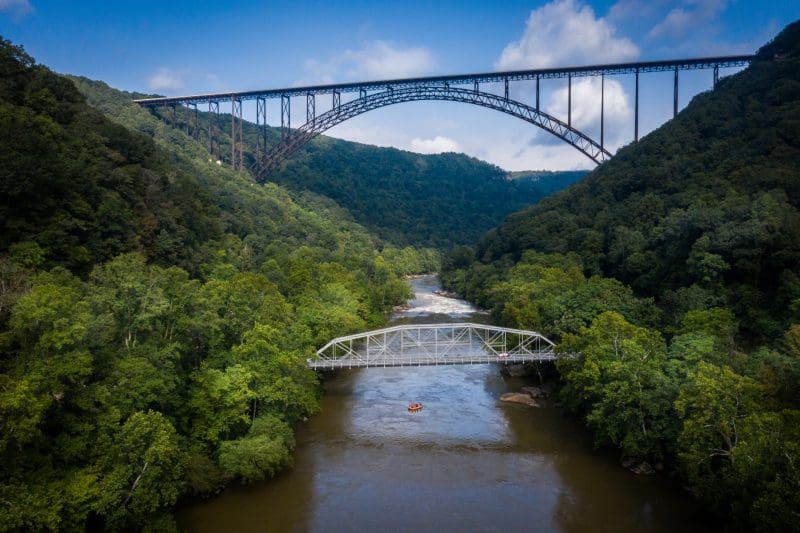
Berry said the corridor, much of which lies within the national park, would try to connect that activity more directly with the surrounding communities.
“If someone hikes, bikes, climbs, fishes, or rafts here, I want it to be easy for them to find the nearby town, learn why it matters, find somewhere local to eat, visit a museum or historic site, buy something made here, and maybe decide to stay another night,” he said.
“I don’t think we should measure success only by how many people visit the New River Gorge,” he said.
“I want to know how much of the value those visitors create stays here. Are locally owned businesses growing? Are we creating jobs? Are artists getting paid? Are we putting historic buildings back into use? Are local contractors getting work? Are young people learning skills they can build careers around? Are our communities stronger because millions of people are coming here?”
The working master plan reflects that emphasis, calling for greater visitor spending to stay in local communities while supporting locally owned businesses, local employment, contractors, artists, food producers, and other enterprises.
Outside investment would not be excluded, but the plan proposes using it to strengthen, not replace, local economic capacity.

One corridor, different communities
The corridor would extend through Hinton, Prince, Thurmond, Glen Jean, Mount Hope, Fayetteville, Ansted, Gauley Bridge, and Montgomery, with Beckley serving as a regional center. The broader planning area also includes small villages like Thayer, Grandview, and Sandstone.
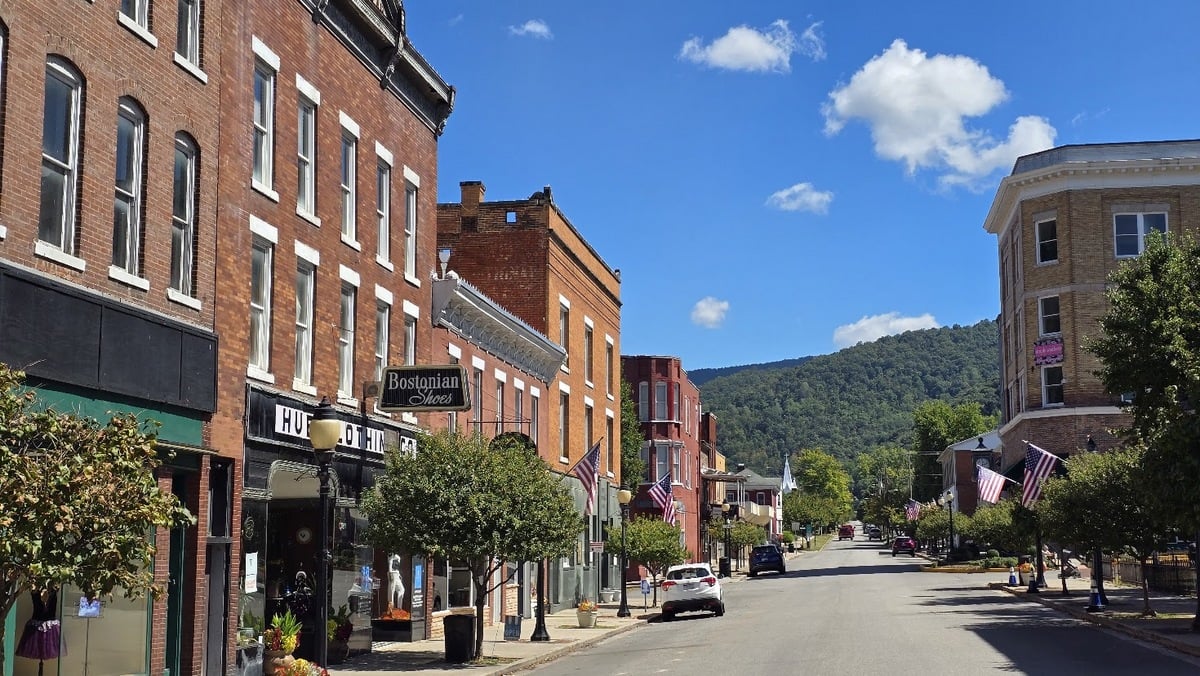
Berry said the proposal is not intended to make those New River Gorge towns resemble one another.
“Hinton is different from Thurmond. Prince is different from Fayetteville. Mount Hope is different from Ansted. Montgomery is different from Glen Jean,” he said.
“That’s a strength.” The working plan instead proposes different roles based on existing community character and resources.
Hinton would serve as a gateway and marketplace, while Prince would emphasize history and memory. Thurmond would focus on preservation and creation; Glen Jean on skills and craft; Mount Hope on food and community culture; Fayetteville on adventure and creative enterprise; Grandview on performance and storytelling; Ansted on retreat and inspiration; Gauley Bridge on rivers, industry, and craft; and Montgomery on innovation and entrepreneurship.
Beckley would serve as a regional exchange, while Sandstone’s proposed role emphasizes nature and art.
Those roles are proposals, not assignments the communities adopted. Berry said the larger concept should not be developed without their participation and that individual projects would have to evolve according to local interest, feasibility, and resources.
“I don’t want to build a manufactured version of Appalachia for visitors,” he said. “I want to make it easier for people to experience the Appalachia that’s already here while creating more opportunities for the people who actually live here.”
Prince, Thurmond, and Glen Jean would provide a starting point
Although the corridor reaches across much of the New River Gorge region, Berry has identified Prince, Thurmond, and Glen Jean as its initial core.
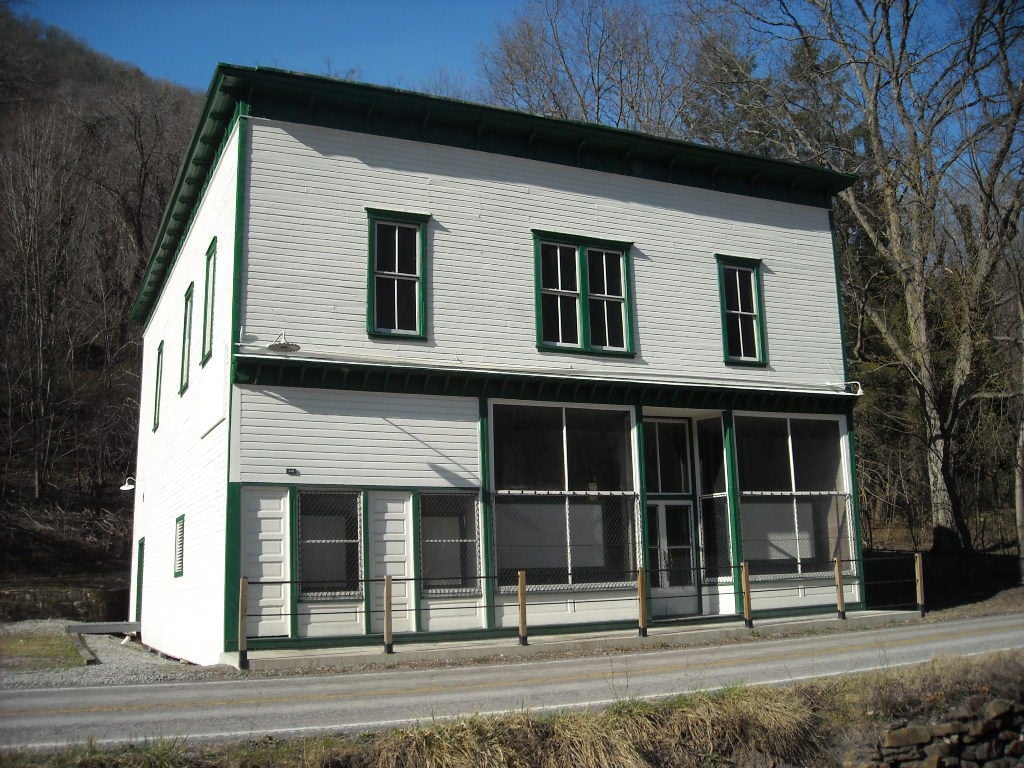
The working plan summarizes the relationship among the three communities: Prince preserves the story, Thurmond preserves the place, and Glen Jean preserves the skills.
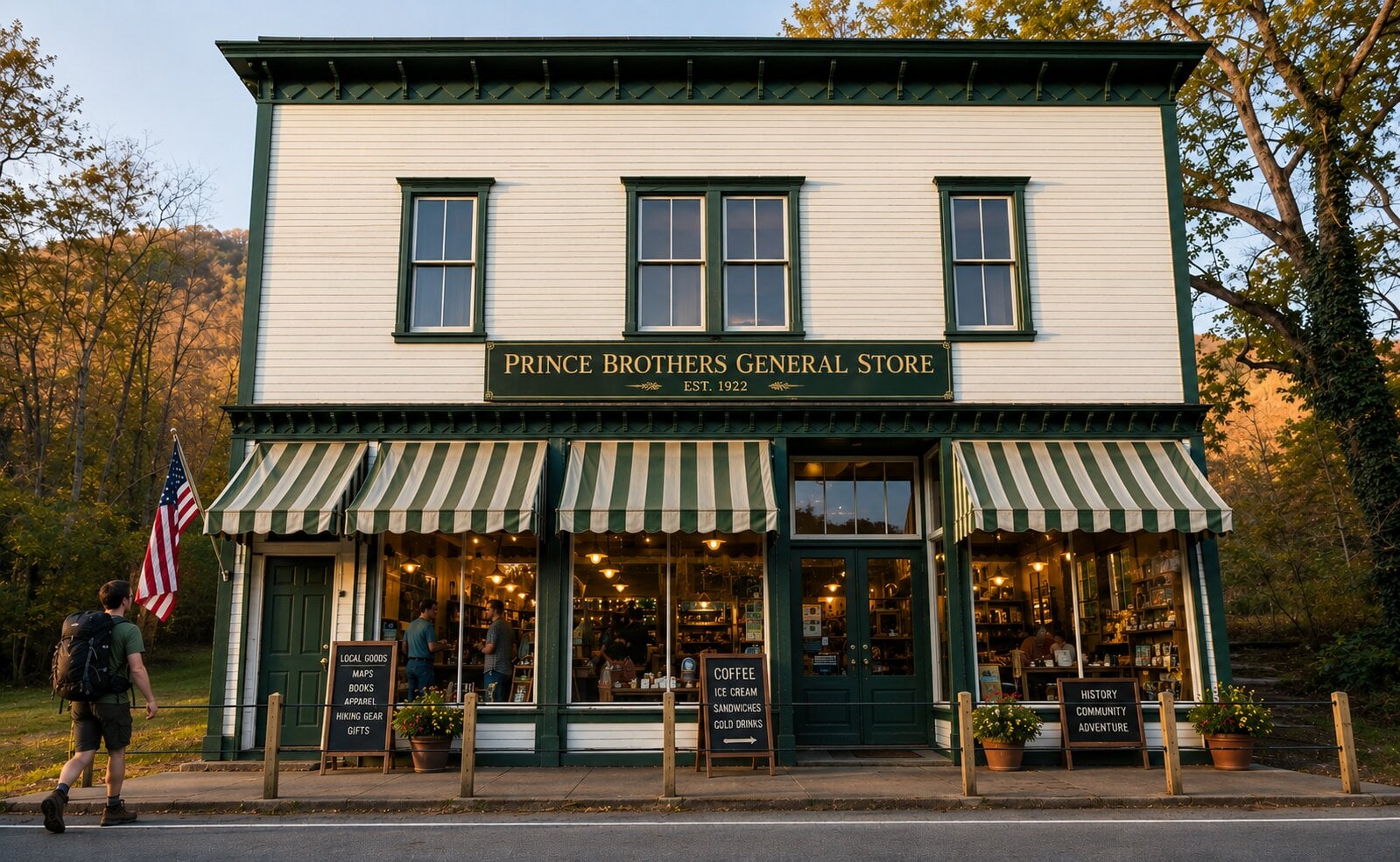
At Prince, the New River Gorge Historical Society hopes to rehabilitate the historic Prince/Berry Store as a museum and research center.
The store, formerly known as the Prince Brothers General Store, is among historic structures the National Park Service has approved for demolition.
The Prince family opened its general-store business in 1872, and the surviving building dates to the late 19th century. Unlike the company stores that characterized many surrounding coal communities, the independently operated Prince store served customers from throughout the region and was listed on the National Register of Historic Places in 1986.
Park service assessments have documented serious deterioration, including water damage, displaced exterior walls, and deterioration of portions of the building. The park service installed an interior beam-and-truss stabilization system in 2021.
The historical society proposes a different future for the building. Berry envisions the Prince Museum not simply as an account of one store or community but as a repository for photographs, documents, maps, oral histories, and artifacts associated with communities throughout the gorge.

The working plan calls for a condition assessment, museum and collections planning, architectural design, accessibility and utility studies, cost estimates, fundraising and grant development before rehabilitation could proceed.
“One of the New River Gorge Historical Society’s major goals is to rehabilitate the historic Prince/Berry Store and turn it into a museum and research center,” Berry said.
“I want that museum to tell more than the history of one building or one community. I want it to help preserve the stories, photographs, documents, oral histories, and artifacts of communities throughout the gorge.”
From Prince, Berry proposes using McKendree Road as a connection toward Thurmond, potentially incorporating historical tours, bicycling, scenic driving, and interpretation along the route.
Putting historic buildings back to work
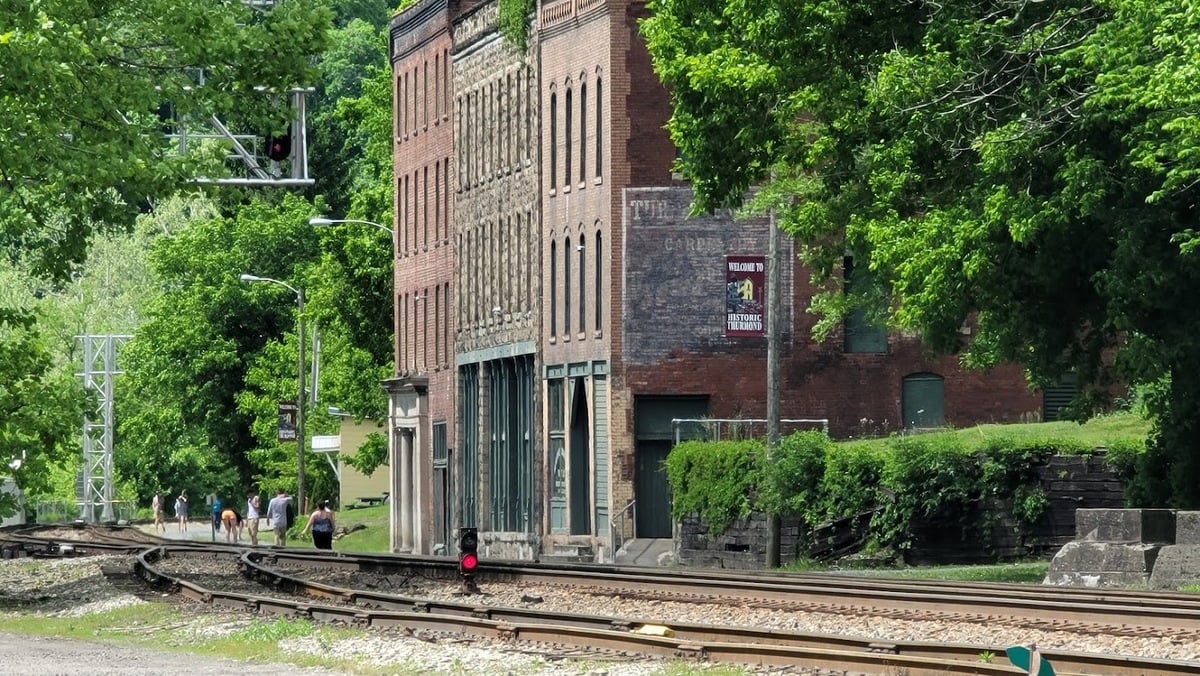
At Thurmond, the proposal would try to show that preserving a building and finding a productive use for it can be part of the same process.
“We don’t want Thurmond to become a collection of photographs showing people what used to stand there,” Berry said.
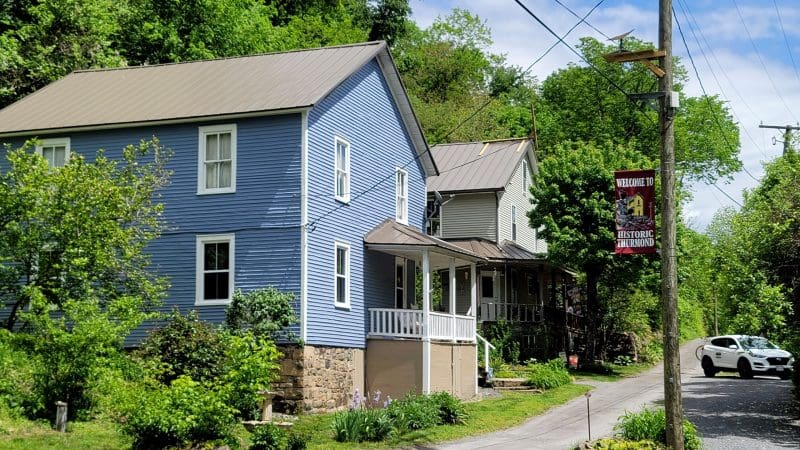
“We want to save what we can reasonably save and find ways to put some of those buildings back to work.”
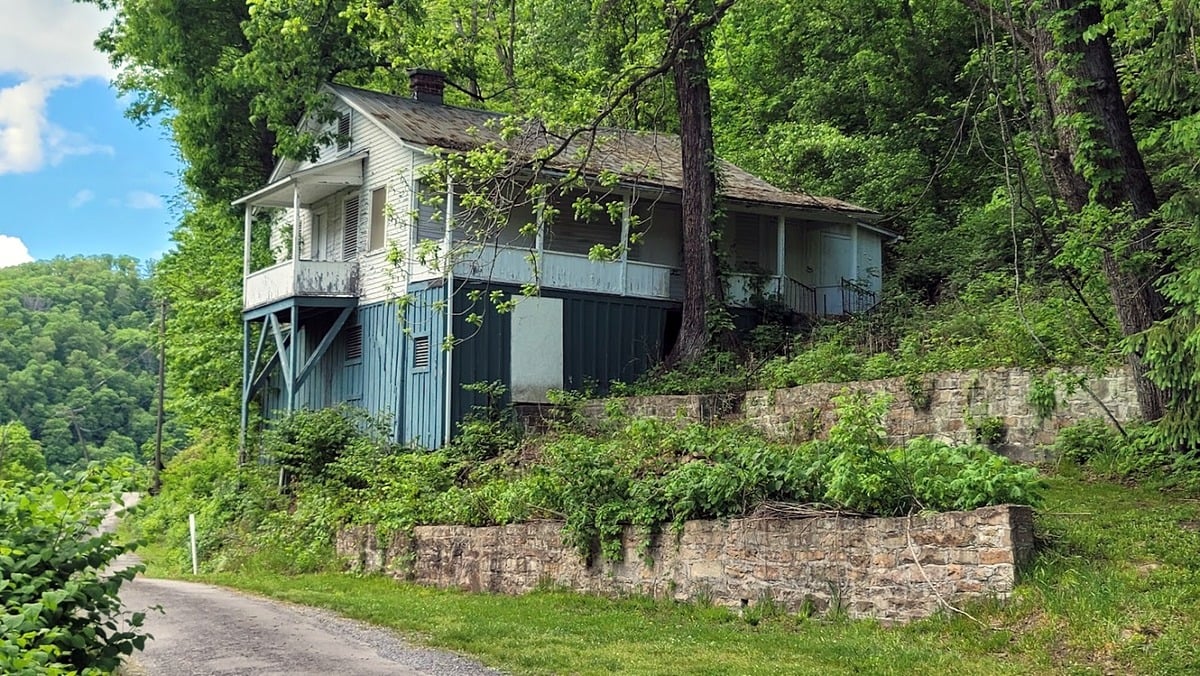
The working plan proposes condition assessments, emergency stabilization where necessary, protection from water infiltration, security and monitoring, and eventually rehabilitating two appropriate historic buildings as a demonstration artisan residency.
Artists, writers, photographers, musicians, filmmakers, and craftspeople could potentially live and work in the town. Residents receiving subsidized accommodations could provide a public benefit through workshops, talks, exhibits, performances, or other programming.
Visitors could watch artisans work, participate in programs and purchase locally produced goods.
“That isn’t preservation for the sake of saying we preserved something,” Berry said.
“The building is being used. An artist is being supported. A visitor is learning something. Money is being spent locally. Thurmond remains a living place.”
The concept would aim to turn what is now a preservation liability—a deteriorating historic building requiring ongoing investment—into a working cultural and economic asset.
Glen Jean would teach the skills to continue it
The third part of the initial core addresses another obstacle to preservation: finding people with the specialized skills needed to maintain and rehabilitate historic structures.
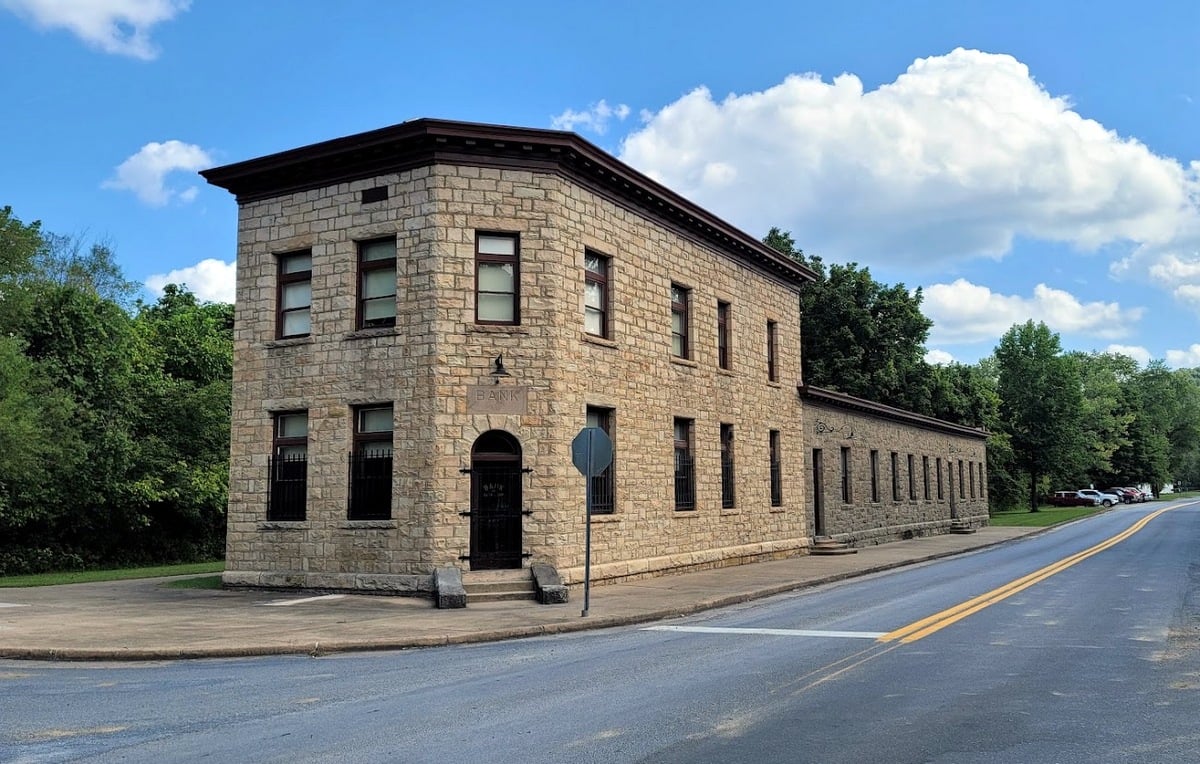
Berry proposes establishing a New River Gorge Artisan & Preservation Academy at Glen Jean.
“If we want to save historic structures throughout southern West Virginia, we need people who know historic masonry, carpentry, plaster, windows, metalwork, and other preservation trades,” he said.
“Those skills can be taught, and the buildings throughout the gorge can become real-world places to practice them.”
Training could include traditional building trades and crafts as well as entrepreneurship and business skills. The proposal anticipates potential partnerships with colleges and universities, technical programs, preservation organizations, tradespeople, apprenticeship programs, and schools.
The broader education strategy also proposes paid apprenticeships when funding permits and a Youth Heritage Corps through which high-school and college-age participants could gain experience in preservation, museums, historic documentation, environmental stewardship, and related work.
Together, the three communities illustrate how Berry’s proposed economic cycle could work.
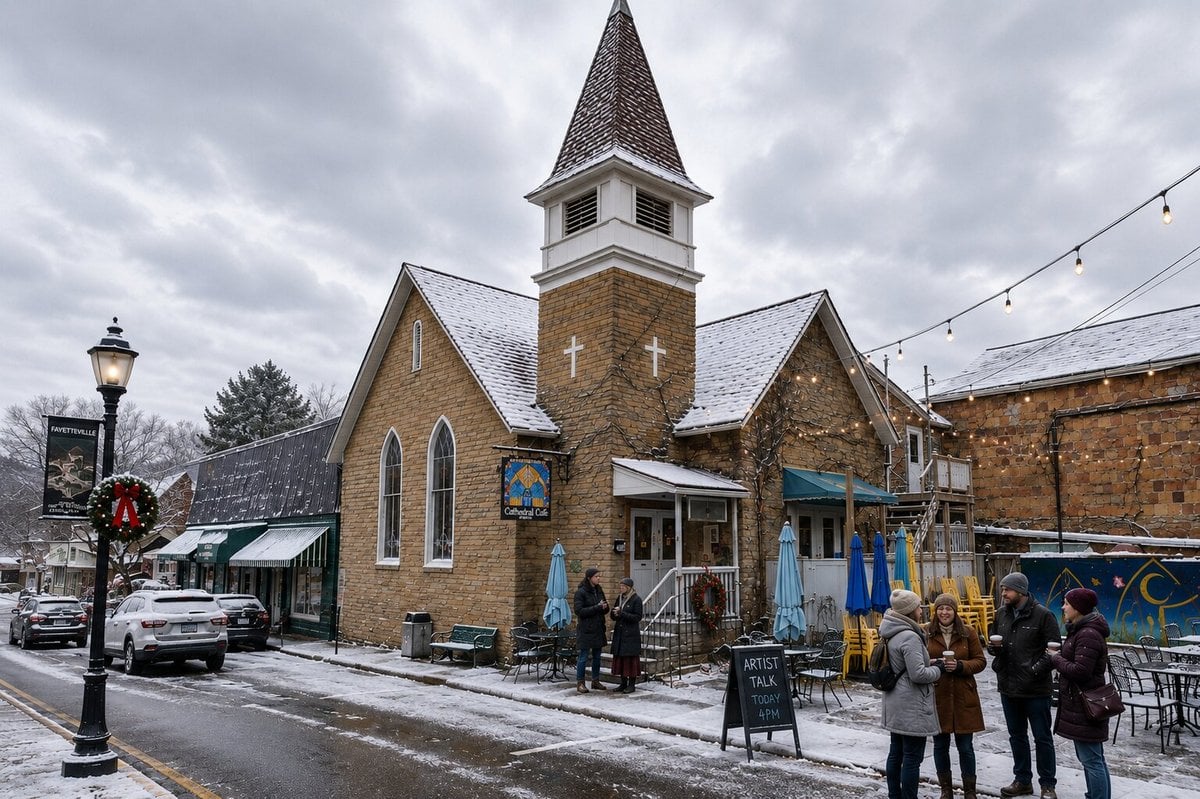
A person could learn a preservation trade at Glen Jean and use that skill to rehabilitate a building in Thurmond. An artisan could create something in Thurmond and sell it there or elsewhere along the corridor. A visitor who came primarily to raft or hike could spend another day exploring Prince, Thurmond, or Hinton.
“A vacant historic building can become a business instead of eventually becoming a demolition project,” Berry said. “A young person can develop a skill that gives them a reason to stay in West Virginia.
“A community gets another piece of its economy back.”
Preservation efforts extend beyond the corridor plan
Berry and the New River Gorge Historical Society are not alone in seeking alternatives for threatened historic properties in the gorge.
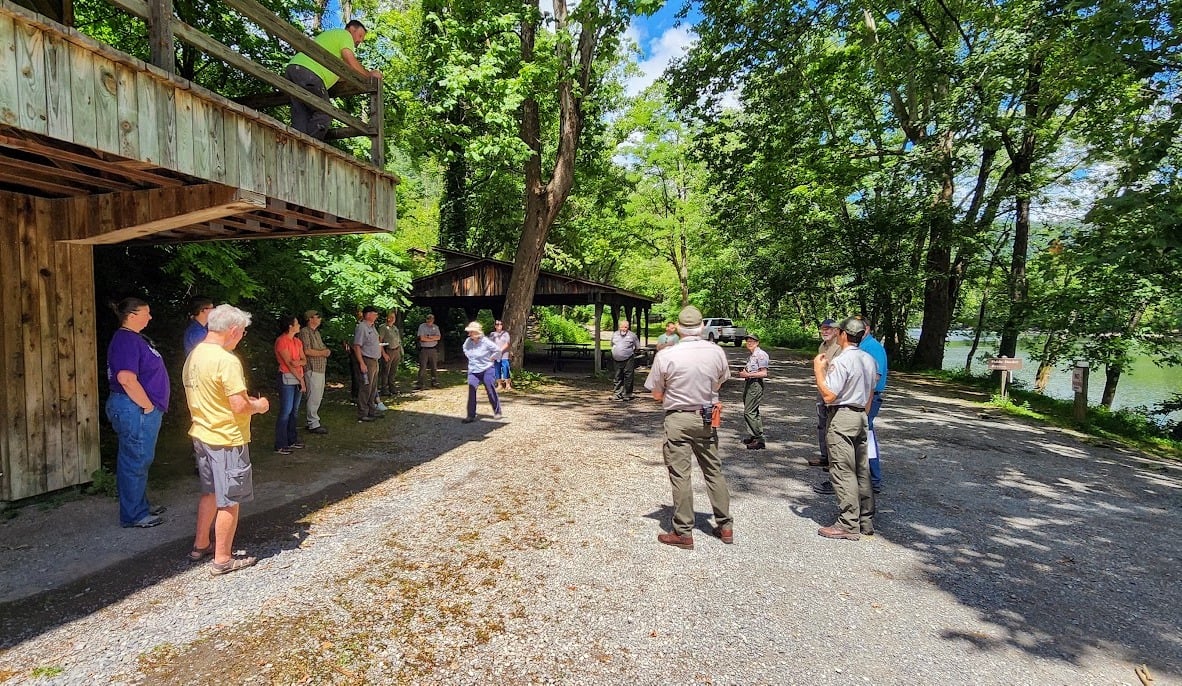
The Preservation Alliance of West Virginia placed Park Service-owned properties in the gorge proposed for demolition on its West Virginia Endangered Properties List in 2024 and participated as a consulting party during the park service’s federal review.
Alliance officials have advocated for rehabilitation and reuse and, following the park service’s 2025 decision, said they were encouraged that some additional buildings could potentially be preserved through leasing.
They also expressed disappointment that the Prince Brothers General Store and Dun Glen Hotel site were not included in the leasing pool.
Alliance officials said their next efforts would include learning more about the park service leasing process and helping prospective applicants develop strong proposals to rehabilitate and reuse buildings that could be made available.
Preservation Thurmond has separately worked to prevent the loss of historic resources in that community and find alternatives to demolition, and the Thurmond Town Council has retained Bailey & Glasser pro bono as it prepares a legal challenge intended to prevent demolition of historic buildings there.
The New River Gorge Historical Society has taken a separate step to prevent the demolitions, engaging West Virginia attorney Steven P. New to represent the organization in its effort to preserve threatened historic structures in the national park.
A 2022 historic-resource survey prepared for the park service by Bratslavsky Consulting Engineers and Aurora Research Associates examined 13 contributing resources in the Thurmond Historic District and found that most retained their historic integrity.
The consultants generally recommended preservation, stabilization, and maintenance. They also concluded that regular occupation and use offered the most effective way to preserve buildings over the long term and recommended considering adaptive reuse and leasing where conventional residential use was impractical.
Despite its consultants’ recommendations, the park service ultimately approved demolition of several historic structures.
Park officials have said the deteriorated structures create safety, maintenance, and law-enforcement burdens, and that removing them would let limited resources be concentrated on other park properties.
Berry said the corridor proposal does not assume that every deteriorated building can be saved.
“Some of these buildings are in bad shape,” he said. “Preserving them will cost money, and not every building is going to have an easy answer. We aren’t pretending otherwise.”
The question, he said, is whether reasonable alternatives have been fully explored before demolition occurs.
Who would pay for it?
The scale of the corridor raises questions that extend well beyond preservation, including who would pay for projects, who would operate them, and who would maintain them years after completion.
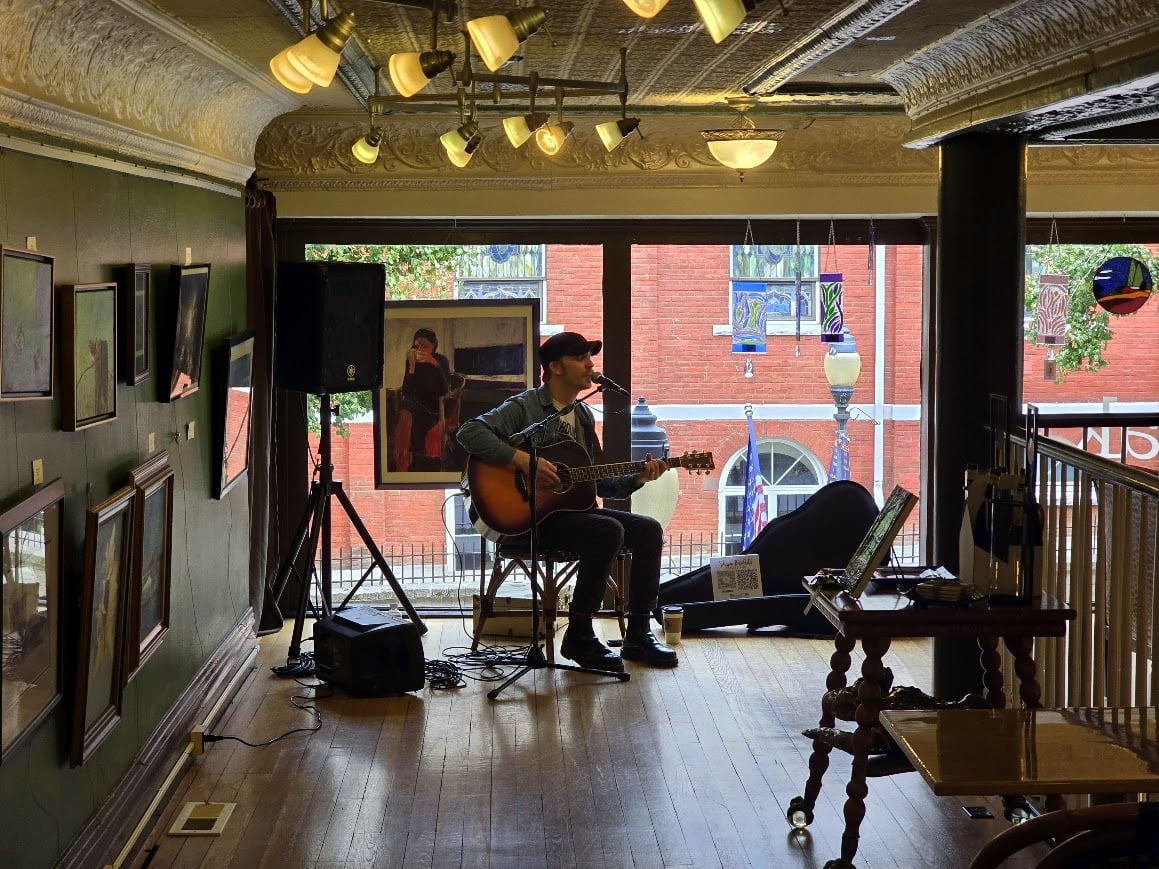
Berry’s 47-page working master plan addresses those questions through a phased development strategy rather than proposing the corridor as a single project.
Potential funding sources include private donations, foundations, federal and state grants, municipal and educational partnerships, historic-preservation incentives, corporate support, private investment, public-private partnerships, and revenue generated by individual projects.
The plan also proposes a predevelopment fund to pay for the less visible work that often must occur before a project can compete for construction funding, including engineering, building assessments, appraisals, environmental reviews, surveys, architectural work, and cost estimates.
Another principle is more straightforward: no major project should proceed without a maintenance plan identifying who will own it, who will operate it, who will maintain it, and how those costs will be paid.
A 20-year proposal
The master plan looks as far as 20 years ahead, but its earliest projects are considerably more immediate.
Initial work would include assessments and stabilization at Thurmond; planning and fundraising for the Prince Museum; security and monitoring of threatened buildings; a feasibility study for the artisan residency; historical documentation and partnership development; project inventories; and the funding resources needed to move individual proposals forward.
Later phases contemplate the Glen Jean Academy, preservation-trades apprenticeships, a Youth Heritage Corps, arts programming, connections between recreation and communities, vacant-building reuse, business development, transportation improvements, and eventually mechanisms for reinvesting economic gains in future community projects.
The corridor would also require an organization that can coordinate work across numerous communities and institutions.
Berry’s working plan proposes evaluating the creation of an independent nonprofit, tentatively called the New River Heritage & Artisan Corridor Alliance, that could coordinate planning, partnerships, funding, data, and implementation without owning or operating every project.
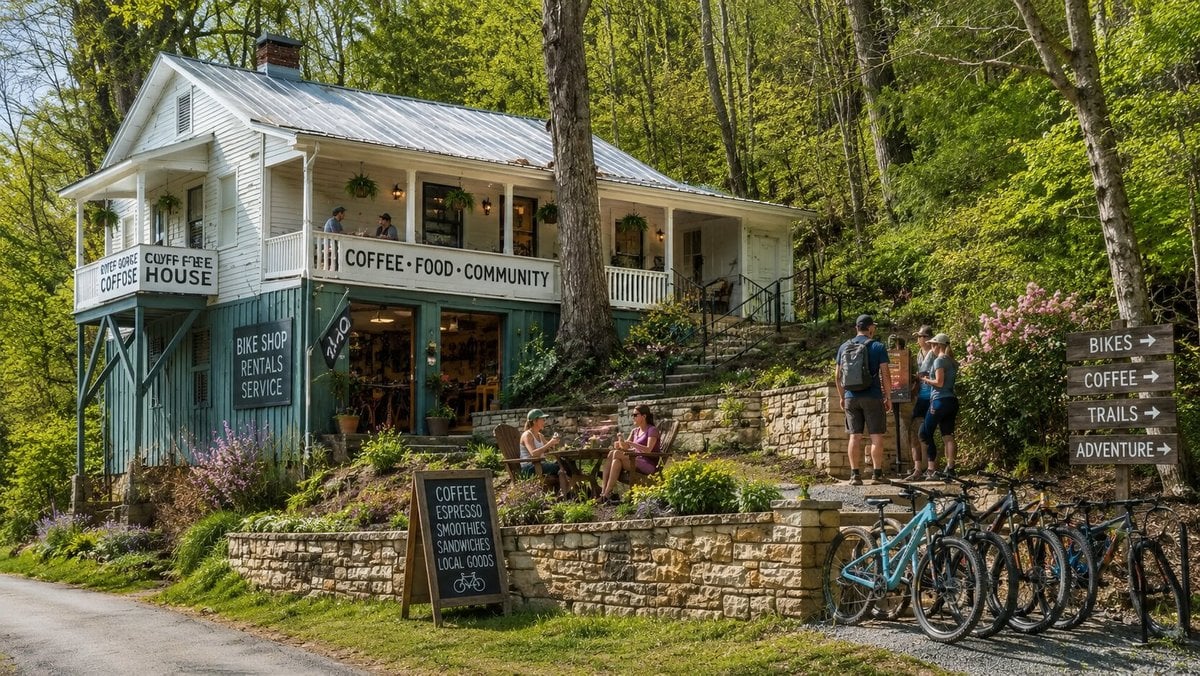
The New River Gorge Historical Society would remain independent and concentrate on its historical mission, including the Prince museum, archives, oral histories, research, and preservation advocacy.
Municipal governments would retain their authority, and the National Park Service and other public agencies would continue to operate under their own legal responsibilities.
Berry said the historical society could help launch the idea but could not—and should not—implement a regional development plan on its own.
“It is ambitious. It stretches across multiple communities, jurisdictions, and organizations, and it will take years to develop fully,” he said.
“The New River Gorge Historical Society can’t accomplish all of it by itself, and we don’t want it to.”
The greater effort would require municipalities, county governments, businesses, colleges and universities, artists, preservation groups, tourism organizations, nonprofits, the park service and residents, Berry said.
The corridor remains a working proposal. Its individual community roles and projects have not been adopted throughout the region, and Berry said they should change as residents, governments and organizations become involved.
“We’ve spent months developing the larger framework, individual community roles, potential projects, funding approaches, and a phased plan for how we can begin putting pieces in place,” he said. “Now we want to start putting that work in front of people.”
For a proposal stretching from Hinton to Montgomery and looking two decades into the future, the first test would be much smaller.
“The New River Gorge Historical Society gives us a place to begin,” Berry said. “Prince, Thurmond, and Glen Jean give us our first projects.”
Editor’s note: West Virginia Explorer publisher David Sibray is a founding board member of the New River Gorge Historical Society.