
High in the southern Allegheny Mountains north of Hillsboro, West Virginia, a trio of falls on Hills Creek tumble through a rugged gorge forested in rhododendron, towering hardwoods, and more than three dozen varieties of wildflowers. The three falls – 25-, 45-, and 63-foot high – grow ever taller as they rush over sandstone ledges and careen around mossy boulders in the Monongahela National Forest.
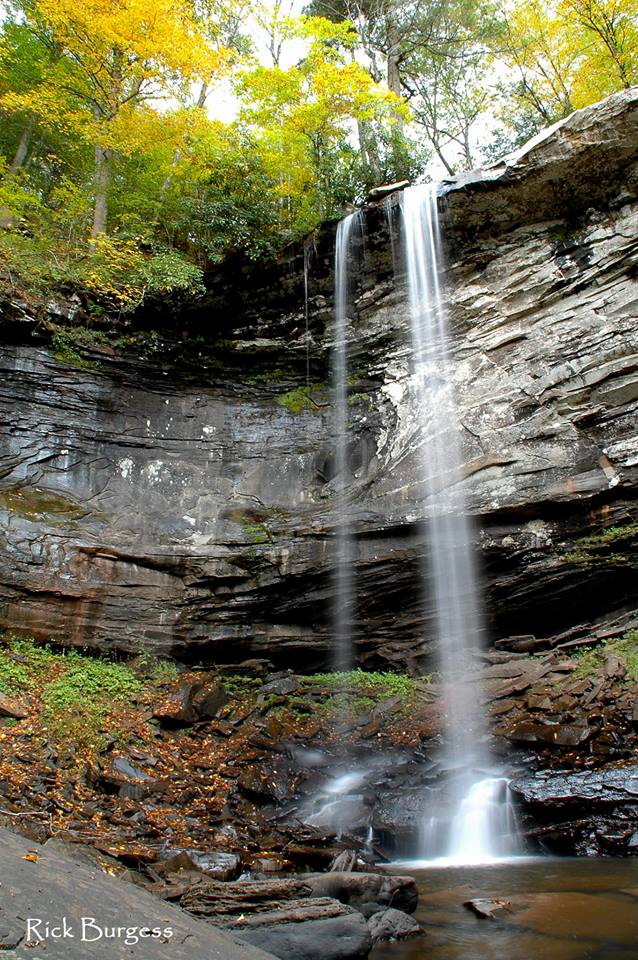
A gently sloping 1,700-foot paved walkway leads to a viewing platform for the first and smallest of the falls. The journey afterward becomes more strenuous as a series of stairs, boardwalks, and pathways guide visitors to the lower falls. The viewing platform for the third and largest of the falls (the second-highest falls in West Virginia) is reached by an elaborate metal stairway with 382 steps.
The three natural wonders were formed as soft layers of red shale eroded much faster than the overlying harder sandstone, causing large chunks of sandstone to fracture and fall into the stream bed. This process continues slowly over time as the water of Hills Creek, considered some of the most pristine in the state because of the lack of agricultural and industrial development in the watershed, reshapes the landscape.
Visitors should allow an hour or more to traverse the three-quarter-mile route from the parking area to the lowest falls. The 114-acre scenic area surrounding the falls is open daily May through October and on weekends in April and November.
Geology of the Falls of Hills Creek
The most compelling geologic story is stream piracy, a relatively uncommon process that appears to have created the unusually large waterfalls. Hills Creek once had a much smaller drainage basin. Over thousands of years, the creek eroded upstream and captured headwaters that once flowed into the nearby Cherry River watershed. This “piracy” increased the creek’s discharge and helped form the large waterfalls seen today.
The falls also occur along the Allegheny Front, the dramatic escarpment that forms the eastern edge of the Allegheny Plateau. As Hills Creek descends the escarpment, it drops rapidly through resistant rock layers, producing a series of waterfalls rather than a gradual stream gradient.
Another process visible at the site is differential erosion. Hard sandstone layers resist weathering, while softer underlying rock erodes more quickly, creating ledges over which the creek plunges. This is the same basic process responsible for many Appalachian waterfalls.
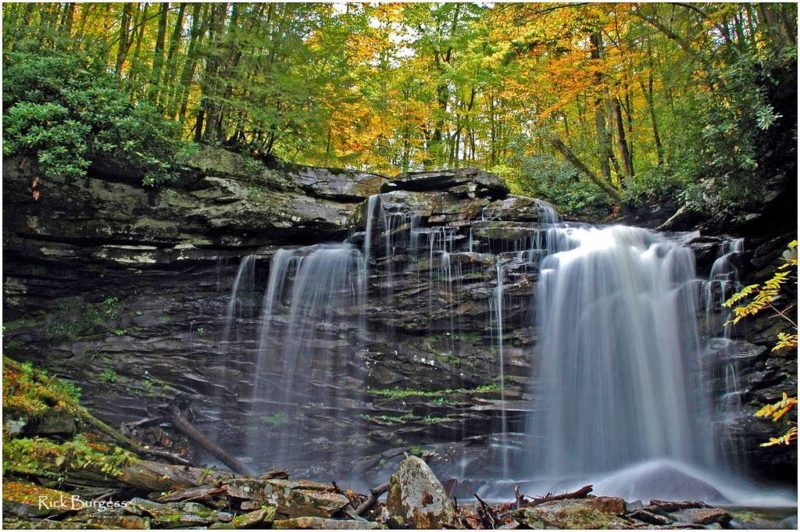
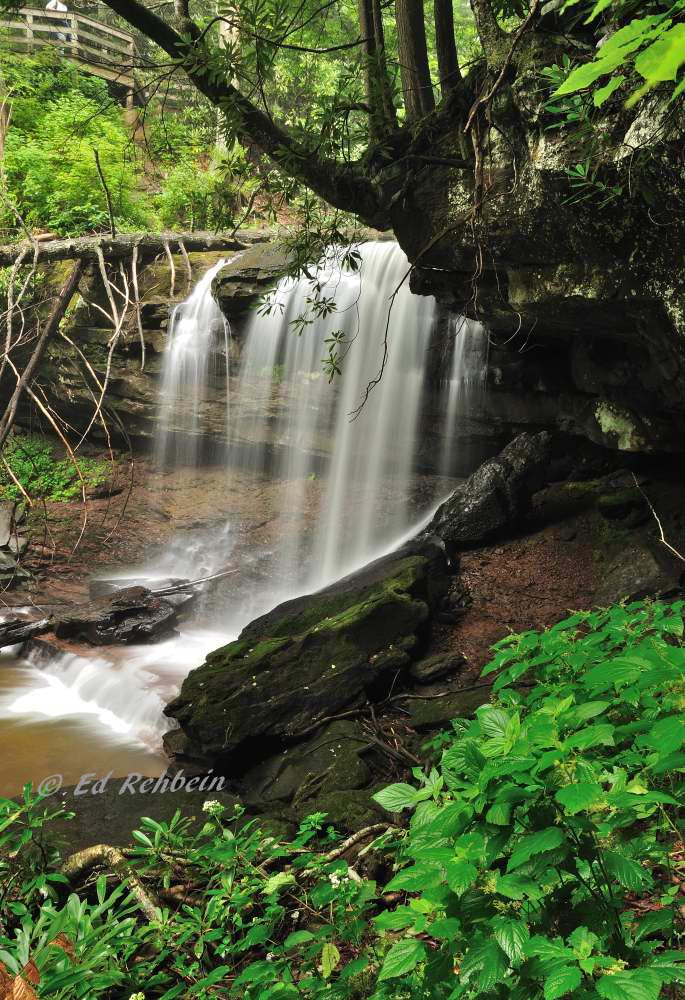
Photos of the Falls of Hills Creek
Directions
The Falls of Hills Creek is located off WV-39/55, five miles west of the Cranberry Mountain Nature Center. The falls are located approximately 23 miles east of Richwood, West Virginia, and 20 miles west of Marlinton, West Virginia. More information is available at the nature center or at the U.S. Forest Service online guide to the falls.
