
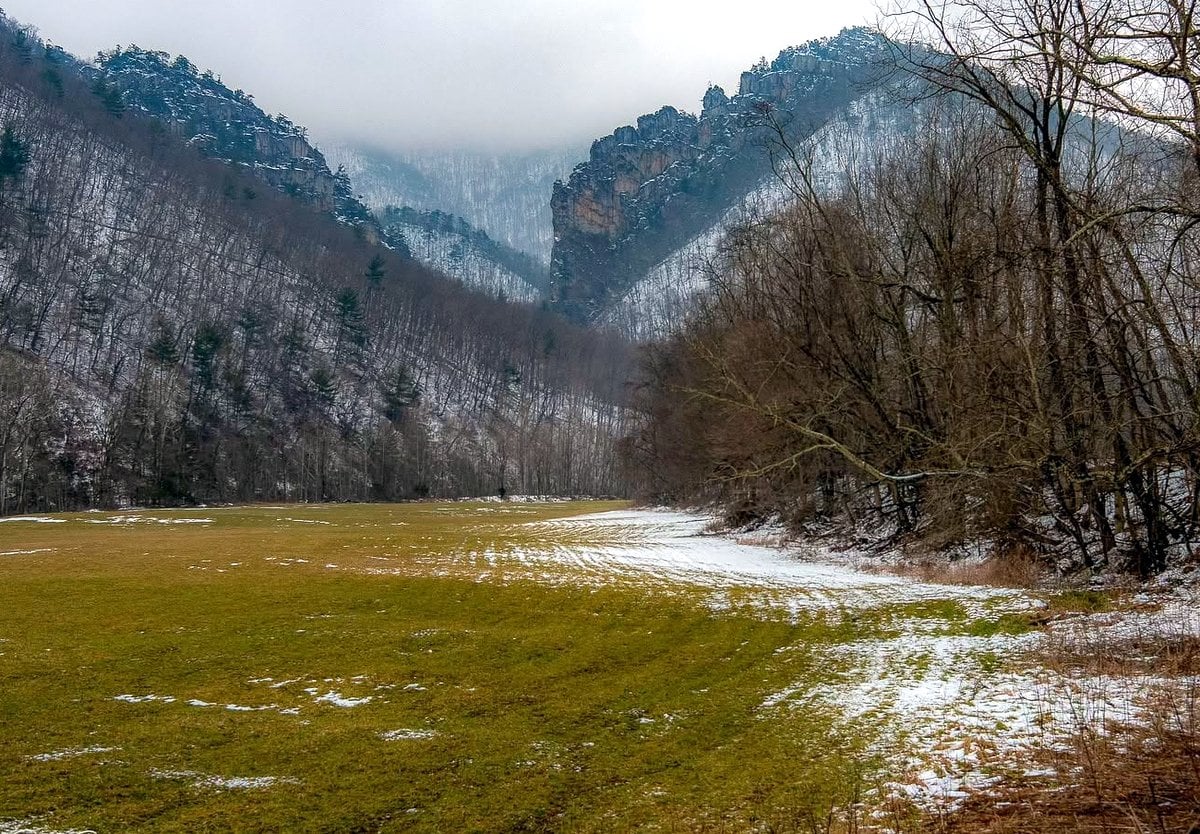
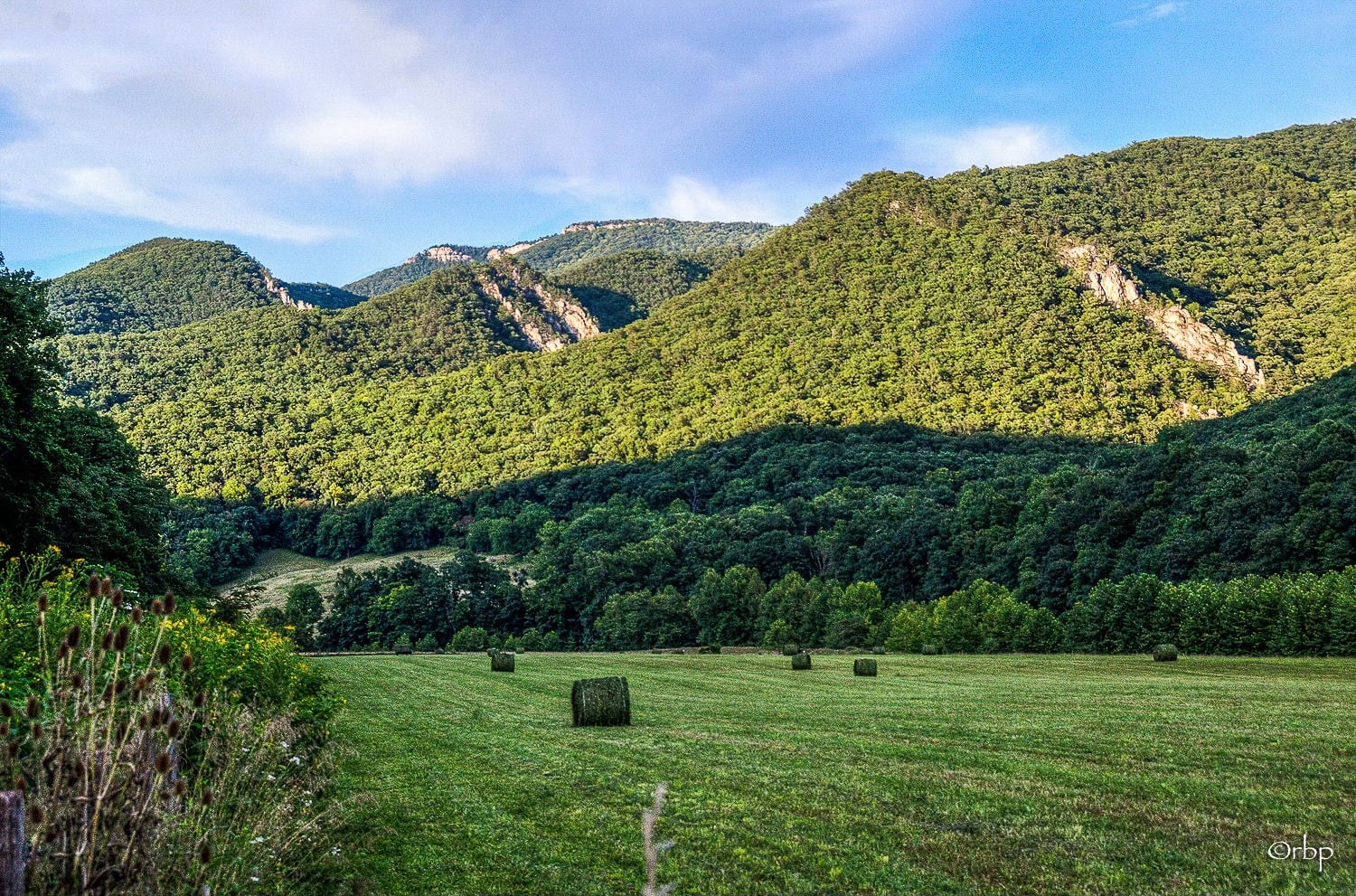
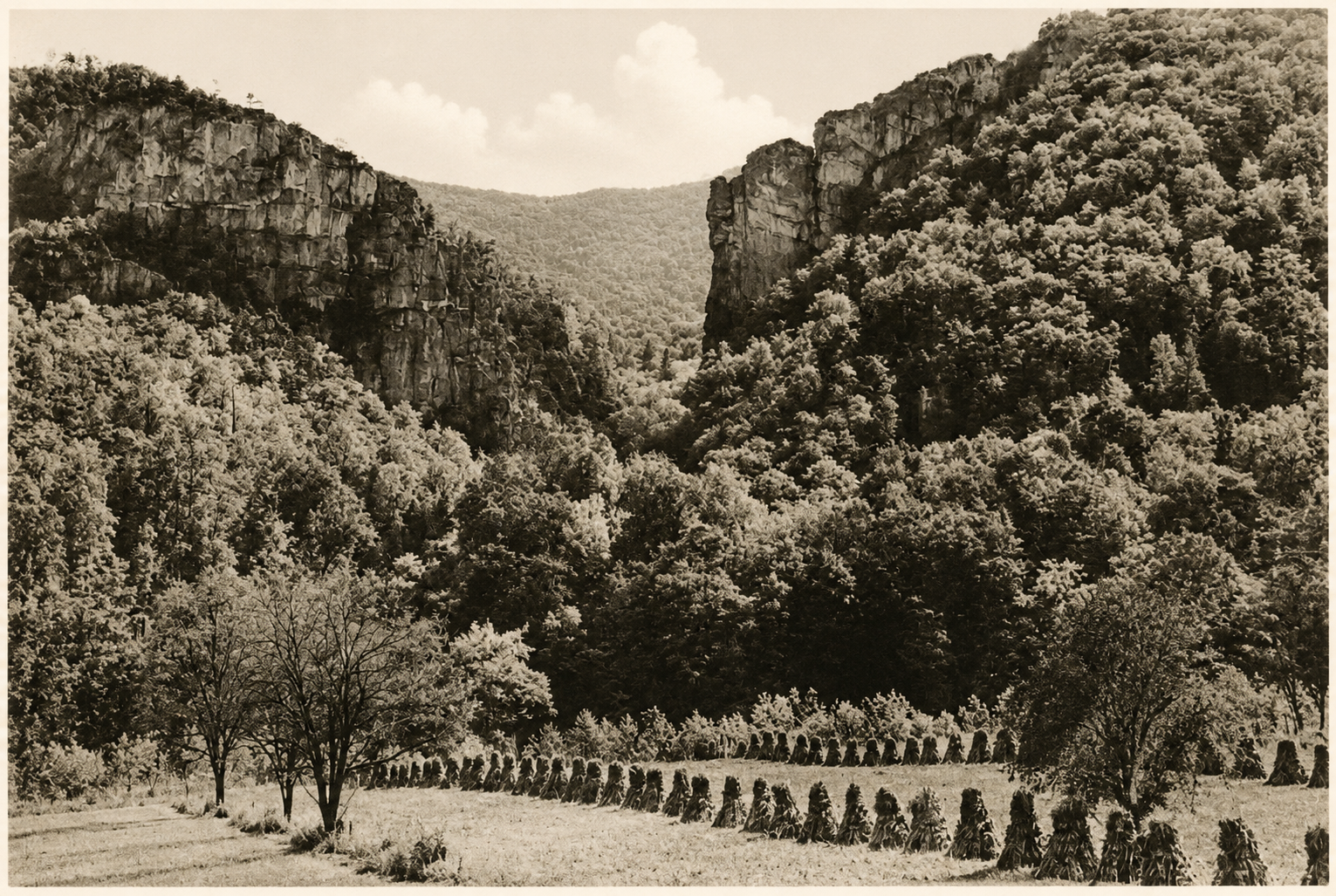
HOPEVILLE, W.Va. — Towering above the North Fork of the South Branch of the Potomac, Champe Rocks has drawn onlookers for generations. Along with nearby Seneca Rocks, five miles to the southwest, its sandstone fins are among the most distinctive natural landmarks in the eastern panhandle of West Virginia.

Unless they stop to read a roadside historic marker, most visitors admire the cliffs without realizing they commemorate one of the American Revolution’s most daring—and least successful—secret missions.
The rocks are named for Sgt. Maj. John Champe, a Continental Army soldier personally chosen by Gen. George Washington for an extraordinary assignment—to infiltrate the British Army, win the confidence of the infamous Benedict Arnold, and kidnap the traitor before he could do further damage to the American cause.
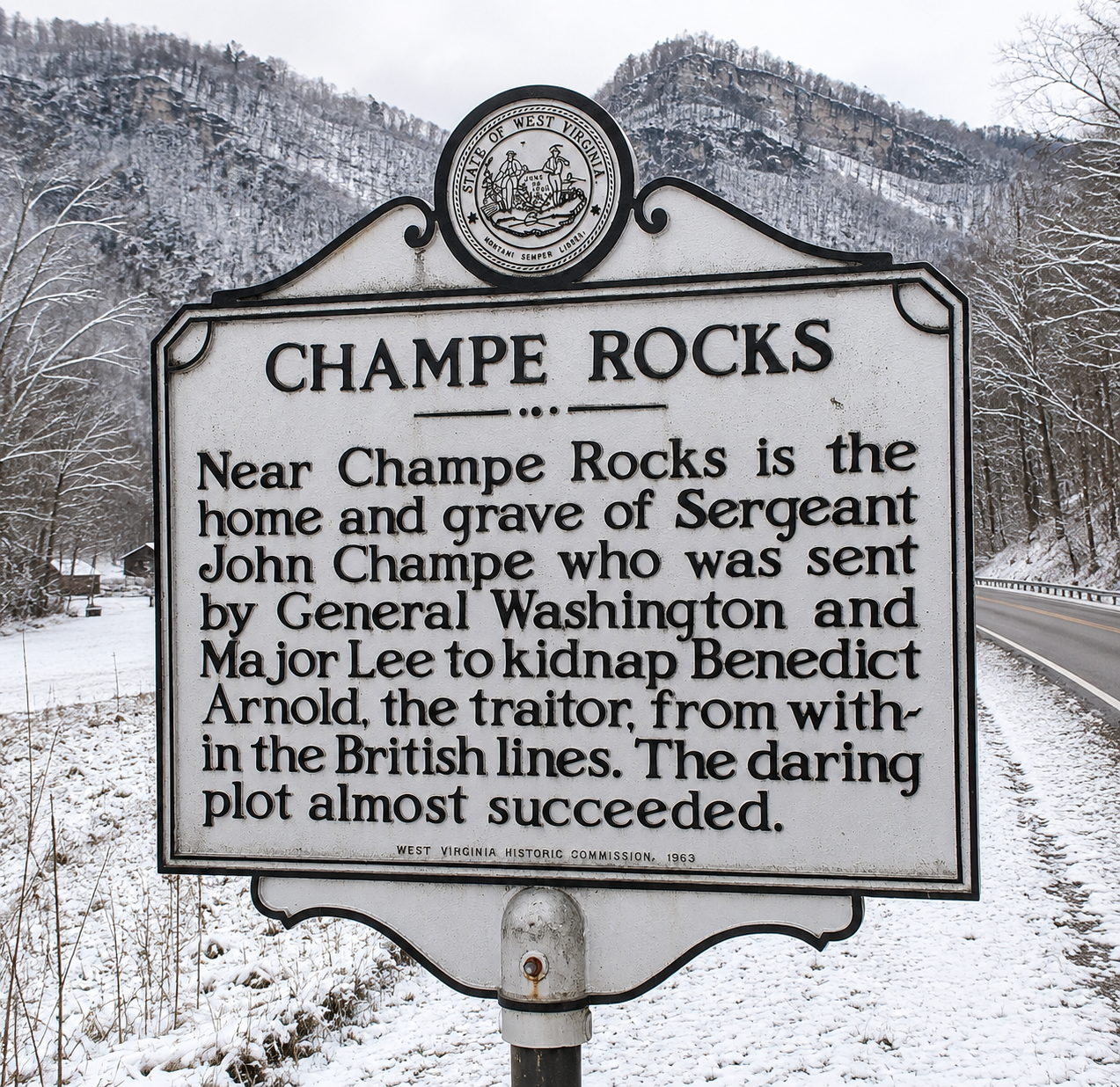
The story has survived through military histories and local tradition. Among the best-known accounts of West Virginia is historian Jim Comstock’s in The West Virginia Heritage Encyclopedia, which traces Champe’s remarkable journey from Washington’s headquarters to the mountains of what would later become West Virginia.
Washington needed a volunteer
By the fall of 1780, the American Revolution had entered one of its darkest chapters. Only weeks earlier, Benedict Arnold—once one of the Continental Army’s most celebrated officers—had secretly agreed to surrender the strategic fortress at West Point to the British.
Benedict Arnold’s plot unraveled only after British intelligence officer Maj. John André was captured carrying incriminating papers hidden in his boot. Arnold escaped across the Hudson River to a waiting British warship just moments before American troops arrived to arrest him.
His betrayal shocked the young nation. Washington, who had trusted Arnold and counted him among his generals, suddenly faced a new problem. Arnold now wore a British uniform, commanded Loyalist troops, and possessed intimate knowledge of American strategy, troop strength, supply routes, and defenses.
If he remained free, Arnold could become one of Britain’s most valuable military assets. Washington wanted him back, not merely to punish him, but to deny the British his knowledge and, if possible, bring the country’s most infamous traitor before an American court. Major Henry “Light Horse Harry” Lee believed he knew the right man.
A soldier willing to become a traitor
John Champe was born in Loudoun County, Virginia, in 1756 and enlisted in the Continental Army shortly after the Revolution began in 1776. By all accounts, he had already established a reputation for discipline, intelligence, and exceptional horsemanship. He rose to the rank of sergeant major, one of the highest noncommissioned positions in Washington’s army. According to Comstock, Lee personally recommended Champe for the dangerous mission.
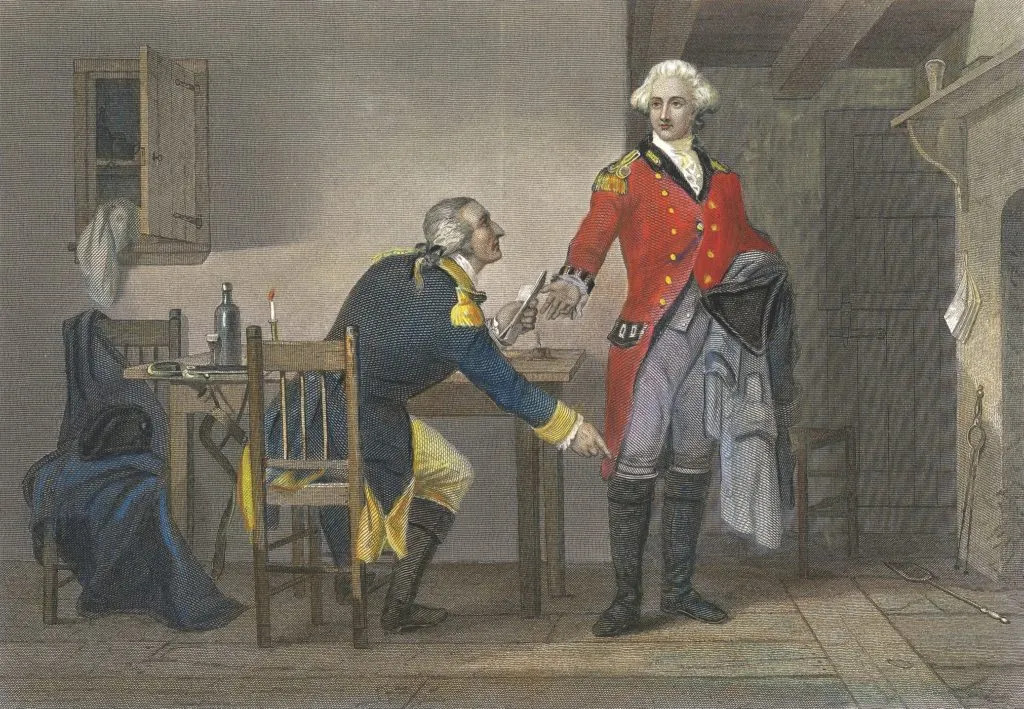
The plan Lee and Washington devised seemed almost impossible. Champe would appear to desert the Continental Army and ride from the American camp under cover of darkness, allowing both friend and foe to believe he had abandoned Washington’s army. Once accepted by the British, he would gain Arnold’s confidence, determine Arnold’s daily routine, and seize him at the first practical opportunity.
Champe understood the risks. If the British uncovered the deception, he would almost certainly be hanged as a spy. Yet if American soldiers caught him before he reached British lines, they might shoot him as a deserter. Even if every step unfolded perfectly, the final act—capturing Arnold alive and transporting him across the Hudson River—would require remarkable luck.
Still, Champe accepted, and his name would become associated with one of the boldest intelligence operations attempted during the Revolution.
The escape had to look real
To convince the British that his desertion was genuine, Champe’s departure had to seem completely authentic. Late one night, he quietly mounted his horse and slipped away from the American encampment.
However, the plan almost failed immediately. A young Continental officer noticed the sergeant major leaving camp and concluded that Champe was deserting. Unaware that Washington himself had authorized the mission, the officer acted exactly as military regulations required. He quickly assembled a detachment of cavalry and galloped after the fleeing soldier. The pursuit became very real.
Champe raced toward the Hudson River with American horsemen closing in behind him, reaching the riverbank only moments before his pursuers. He leaped aboard a British boat as Continental cavalry arrived at the shoreline. To the Americans watching from shore, it appeared that one of Washington’s trusted sergeants had abandoned the cause and escaped to the enemy.

The deception had worked. Only a handful of senior officers knew the truth. Even many of Champe’s fellow soldiers believed he had become a traitor.
For Washington, however, the mission had only just begun. Somewhere beyond the Hudson, his secret agent was about to enter the camp of the most hated man in America, Benedict Arnold.
Among the enemy
British commanders accepted Champe’s story. Believing him to be a genuine deserter, they assigned him to the American Legion, the Loyalist cavalry unit commanded by Benedict Arnold. The assignment gave Champe exactly what Washington had hoped for.
Lee arranged the final operation. At an agreed-upon hour, Champe would overpower Arnold during his evening walk, while two trusted men would secure the prisoner and carry him to a waiting boat hidden along the riverbank. The vessel would then cross to the American side, where Continental troops would receive the captive.
If everything unfolded according to plan, one of the Revolution’s greatest traitors would stand before George Washington within hours.
The operation demanded extraordinary precision. There could be no struggle loud enough to alert nearby guards. Arnold had to be taken alive. The escape route had to remain undiscovered until the party had crossed the Hudson. Failure meant certain death, yet Champe never abandoned the mission.
A single order changed history
After weeks of preparation, the operation date was finally set, and everything appeared ready, then events beyond anyone’s control intervened. The day before Arnold was to be seized, British commanders reassigned him. However, instead of staying at his headquarters, Arnold was ordered to embark with his command for Virginia, where British forces were expanding operations.
The transfer immediately destroyed months of careful planning. Arnold’s transfer instantly destroyed months of planning. Lee’s waiting boat, hidden along the river, would never be used.
The opportunity had vanished. For Washington, it was one of the Revolution’s greatest “what-if” moments. Had the orders arrived twenty-four hours later, Benedict Arnold might have been carried back across the Hudson as a prisoner instead of sailing south under British protection.
Instead, the mission ended without the dramatic confrontation everyone had anticipated. Arnold escaped once again.
Trapped behind British lines
The kidnapping’s failure did not end Champe’s danger. In many ways, it made his situation even worse. He remained in British-controlled territory, surrounded by men who believed he had permanently deserted the Continental Army, and his original assignment no longer existed.
If Champe openly sought to return to American lines, questions would arise. If British officers learned he had secretly planned to abduct Arnold, he would almost certainly be executed as a spy. For a time, Champe remained with British forces while searching for an opportunity to escape.
Comstock writes that after Arnold’s command reached Virginia, Champe slipped away under the cover of darkness and made his way back through enemy-held territory.
The journey itself required remarkable courage. Traveling alone and avoiding British patrols to reach Continental forces, Champe risked capture at every turn. Unlike ordinary soldiers, he could expect little mercy if discovered.
Eventually, he reached Lee’s headquarters, and for the first time since secretly riding away from Washington’s camp, Champe stood once again among fellow Americans. Only then did many officers fully appreciate the extraordinary risks he had accepted.
Although the mission had failed because of circumstances beyond his control, no one questioned Champe’s loyalty or bravery.
Washington’s gratitude
Washington understood exactly what Champe had accomplished. The commander-in-chief reportedly praised the sergeant major for his courage and devotion, despite the mission’s outcome.
Military success often depends on events beyond a soldier’s control, and Washington recognized that Champe had faithfully carried out every part of his assignment until British orders unexpectedly removed Arnold from reach.
The failure was due to circumstance, not to the man chosen to execute the plan.
According to Comstock, Washington also understood another reality: Because Champe’s face had become known among British and Loyalist forces, he could no longer safely serve as a regular Continental soldier. If captured in battle, he might be recognized as the supposed deserter who had infiltrated Arnold’s command. His true mission would almost certainly be revealed, and execution could follow.
Washington later awarded Champe an honorable discharge, recognizing that the mission had failed due to circumstances beyond his control.
A new beginning in the South Branch Valley
Rather than returning to eastern Virginia, Champe headed west into the rugged frontier beyond the Blue Ridge.
According to Comstock, Washington directed him to the South Branch Valley, where he would be well removed from British influence and less likely to encounter former Loyalists who might recognize him.
At the time, the region was a sparsely settled frontier of Virginia, separated from the Revolution’s principal battlefields by mountains and forests.
Here, Champe could begin again. He settled near present-day Romney in what is now Hampshire County, married Phoebe Parnard, and began building a new life far from the intrigue and danger that had defined his wartime service.
In time, his connection with the South Branch Valley would extend farther south into what is now Pendleton County, where his name became permanently associated with one of the most striking natural landmarks in the Potomac highlands.
From Revolutionary War hero to West Virginia pioneer
John Champe’s military career may have ended with the Revolution, but his story was far from over.
For a man who had spent months under constant suspicion behind enemy lines, the rugged valleys of western Virginia offered both security and anonymity.
The frontier was still sparsely populated. Small farms dotted the river bottoms, while thick forests covered the surrounding mountains. Roads were little more than wagon tracks, and settlements remained isolated. It was a place where veterans of the Revolution could begin again.
Champe raised a family there. One of his sons, Nathaniel Champe, later served as an officer in the War of 1812, extending the family’s military tradition into the next generation.
Comstock also notes that in 1788 Champe filed a land claim in what is now Hardy County, near the towering sandstone formation that would eventually become known as Champe Rocks.
Although historians cannot say with certainty how often he visited the cliffs—or whether he ever lived immediately beside them—his association with the area endured. Over time, residents of the South Branch countryside attached his name to the spectacular formation, preserving the memory of the Revolutionary War veteran long after those who knew him had passed away.
Today, the rocks remain one of the few physical reminders in West Virginia of one of George Washington’s most trusted soldiers.
A promise never fulfilled
Despite the extraordinary risks Champe accepted during the war, his postwar life appears to have been marked more by perseverance than by prosperity.
According to Comstock, Washington promised Champe a land grant that apparently was never issued. Like many Revolutionary War veterans, he spent the rest of his life without receiving all the compensation he had been promised.
Eventually, Champe moved west, first to Ohio and later to Kentucky, joining the steady migration of Americans across the Appalachians in search of new opportunities.
His fortunes, however, never matched the heroism of his wartime service. According to Comstock, Champe died in poverty in Kentucky in 1804.
More than half a century later, Hampshire County attorney Andrew W. Kercheval attempted to secure justice for Champe’s descendants. Around 1858, he petitioned Congress on behalf of the veterans’ heirs, seeking compensation for the land and benefits promised decades earlier.
Kercheval’s effort failed. No payment was authorized, and one of the Revolution’s bravest soldiers remained largely forgotten outside military history.
Why Champe Rocks bears his name
The towering cliffs overlooking the South Branch Valley are part of one of the most distinctive geological formations in eastern West Virginia—a series of rock fins that extend for hundreds of miles along the state’s eastern margin.
Formed from hard Tuscarora sandstone that has resisted erosion for hundreds of millions of years, Champe Rocks, also sometimes mapped as Champe Knobs, has long served as a landmark for travelers through the Potomac Highlands.
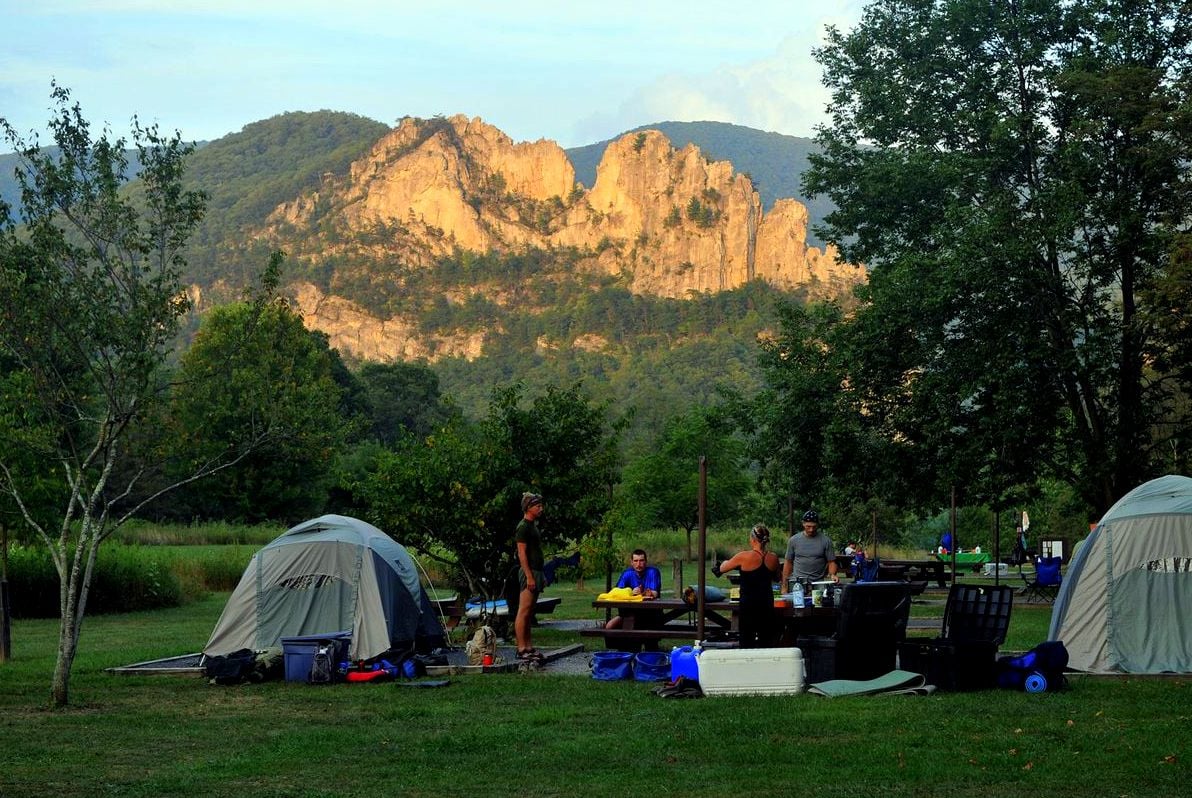
Today, the rocks attract hikers, photographers, birdwatchers, rock climbers, and sightseers seeking sweeping views of the adjacent Allegheny Mountains.
Unlike many West Virginia landmarks named for early settlers or nearby streams, Champe Rocks commemorates a single individual whose courage helped shape the nation’s history. In West Virginia, that history survives not in a battlefield or monument, but in the towering sandstone cliffs that bear his name.
Visiting Champe Rocks today
More than two centuries later, Champe Rocks remain among the most memorable landmarks in the state’s eastern panhandle.
The cliffs rise near U.S. Route 48 west of Moorefield. Although within the Spruce Knob–Seneca Rocks National Recreation Area in the Monongahela National Forest, there is no direct access to the formation from the public road without trespassing on private property. The rocks are therefore rarely climbed.
Read More: The North Fork of the South Branch is also a popular whitewater kayaking run.
Sources:
Jim Comstock, The West Virginia Heritage Encyclopedia; The West Virginia Encyclopedia; historical accounts of Sgt. Maj. John Champe and the Benedict Arnold kidnapping plot.
Morton, Oren F. A History of Pendleton County. Dayton, VA: Ruebush-Elkins, 1910; Reprint, Regional Pub. Co., 1974.
Read also: Rock Climbing in West Virginia; Seneca Rocks Climbing Area; Winter’s tale recalls deadly aspect of Allegheny Mountains