
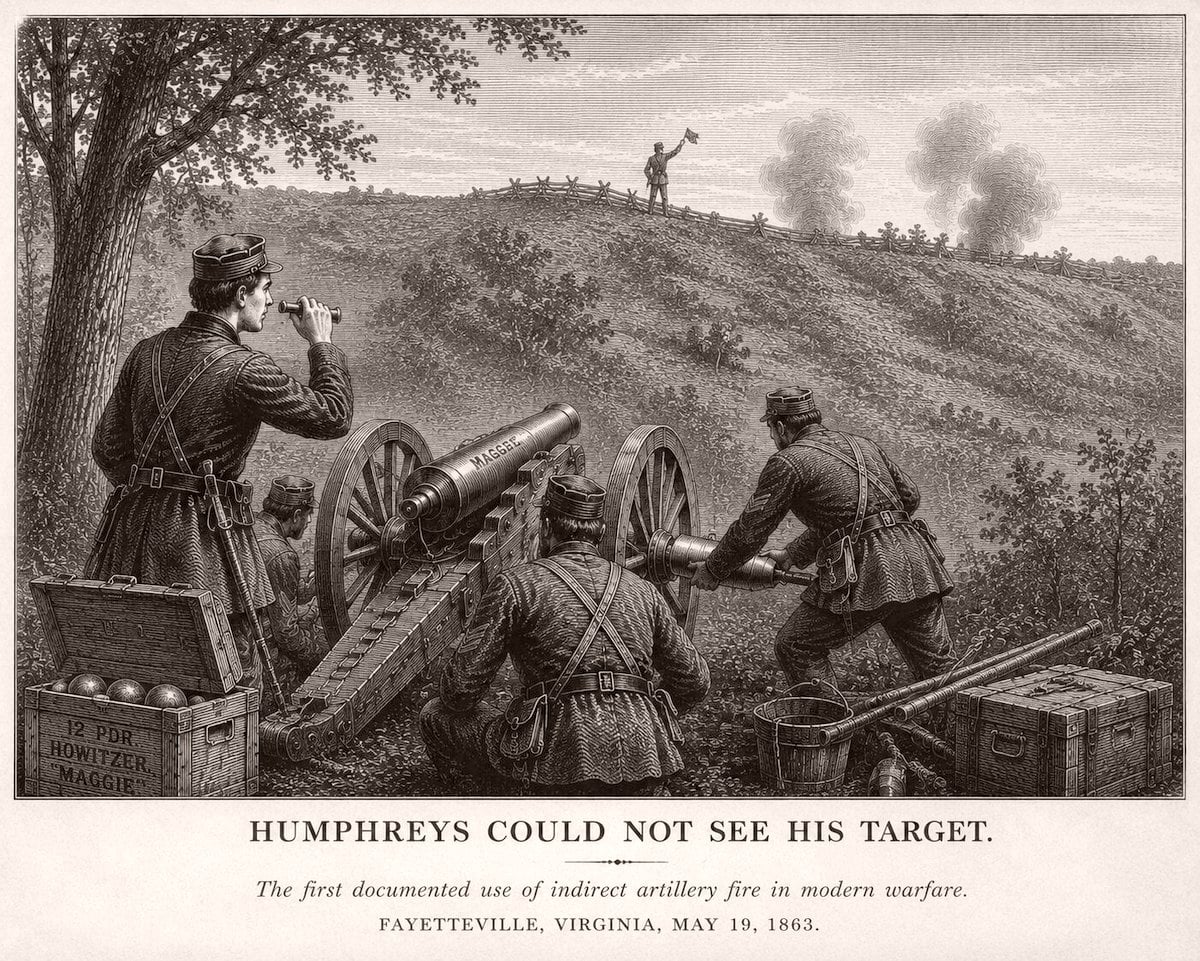
The first documented use of indirect artillery fire in modern warfare is credited to an 18-year-old Confederate gunner on a wooded hillside above today’s New River Gorge.

FAYETTEVILLE, W.Va. — Every year, hundreds of thousands of visitors arrive in Fayetteville to climb cliffs, ride bikes, raft the New River, and explore the forests surrounding the New River Gorge National Park and Preserve. Few realize they are also walking across one of the most significant battlefields in modern warfare.
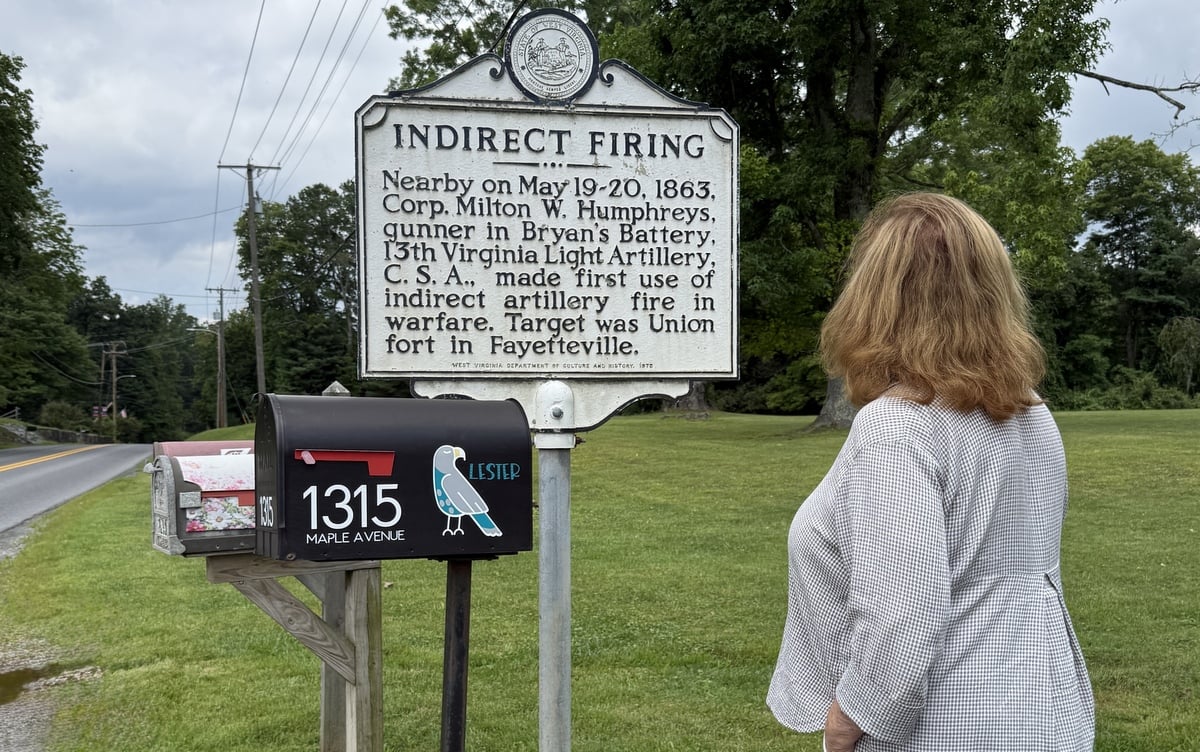
On May 19, 1863, during a Confederate attack on Union-held Fayetteville, 18-year-old Milton Wylie Humphreys is credited with the first documented use of indirect artillery fire in modern warfare. Hidden behind a wooded ridge, where neither he nor his gunners could see the Union fort they intended to strike, Humphreys calculated his cannon’s trajectory and fired over the hill onto an unseen target.
His technique would become standard on battlefields worldwide, though the achievement is commemorated by a modest West Virginia historical marker along Maple Avenue, only minutes from some of the nation’s most celebrated hiking trails and whitewater rapids.
A mountain boy with an extraordinary mind
Born Sept. 14, 1844, along Anthony’s Creek in what is now Greenbrier County, Humphreys displayed an uncommon gift for mathematics and engineering long before the Civil War.
Historian Terry Lowry wrote that as a boy, Humphreys reportedly amused himself by studying rock formations near his home and solving mathematical problems that baffled older students. His academic ability carried him to Mercer Academy in Charleston and later to Washington College—now Washington and Lee University—in Lexington, Virginia.
The outbreak of the Civil War interrupted those studies. In 1862, at age 17, Humphreys enlisted in Capt. Thomas A. Bryan’s 13th Virginia Light Artillery. His remarkable eyesight, engineering ability, and calm under fire soon earned him the coveted position of first gunner.
Years later, Humphreys wrote with unmistakable pride:
“I became known as the first gunner of Bryan’s Battery, a title in which I take more pride than in any other ever bestowed upon me.”
The Battle for Fayetteville
In May 1863, Confederate Gen. John D. Imboden launched a raid into western Virginia that included an attack on the Federal garrison at Fayetteville.
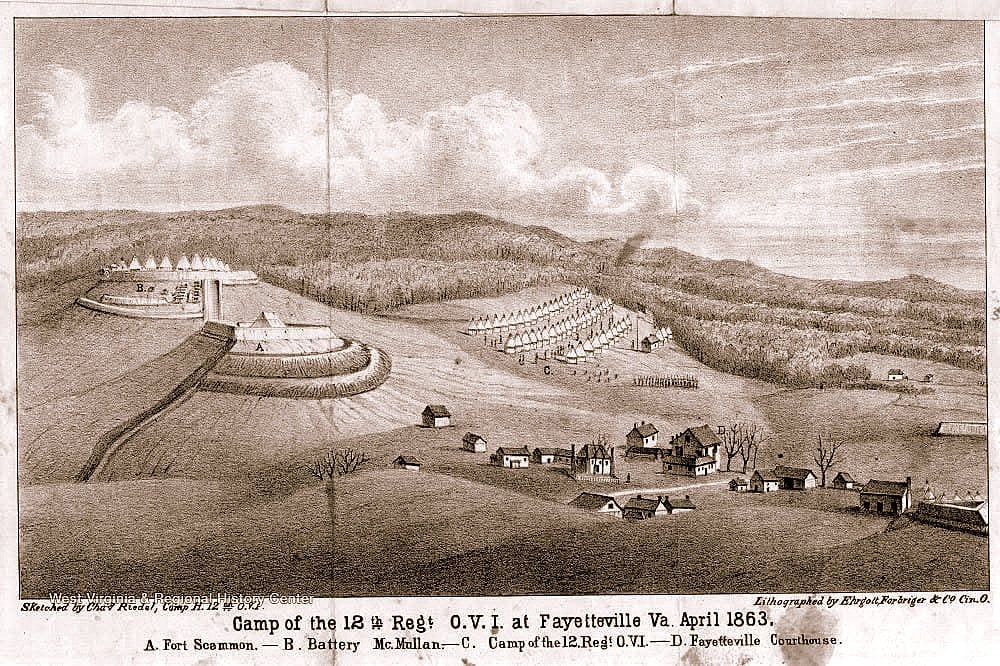
Union troops occupied Fort Scammon, an earthen fortification overlooking the town from the hill behind today’s Fayette County Courthouse. Additional Federal forts and infantry camps surrounded the community, making Fayetteville one of the Union’s strongest positions in the New River Valley.
Humphreys’ battery advanced toward the town with four artillery pieces, including his 12-pound bronze howitzer, nicknamed “Maggie.”
Even before reaching Fayetteville, Humphreys demonstrated the accuracy that had made him one of the battery’s most respected gunners. During a skirmish with Federal cavalry, he fired five rounds, four of which found their mark. When one shell struck a tree limb and deflected harmlessly, Confederate commander Col. John McCausland reportedly smiled and called them “beautiful shots.”
The fighting at Fayetteville proved considerably more difficult. As the Confederates approached Fort Scammon, Union artillery quickly targeted Humphreys’ position. His opening rounds were answered almost immediately by accurate Federal fire.
One violent discharge even caused “Maggie” to leap from her trunnion band, breaking off her front sight before the howitzer could be returned to action.
Getting tired of being shot at
Humphreys’ solution was as simple as it was revolutionary. Rather than remain exposed, he pulled his artillery behind a wooded ridge, out of Union gunners’ sight.
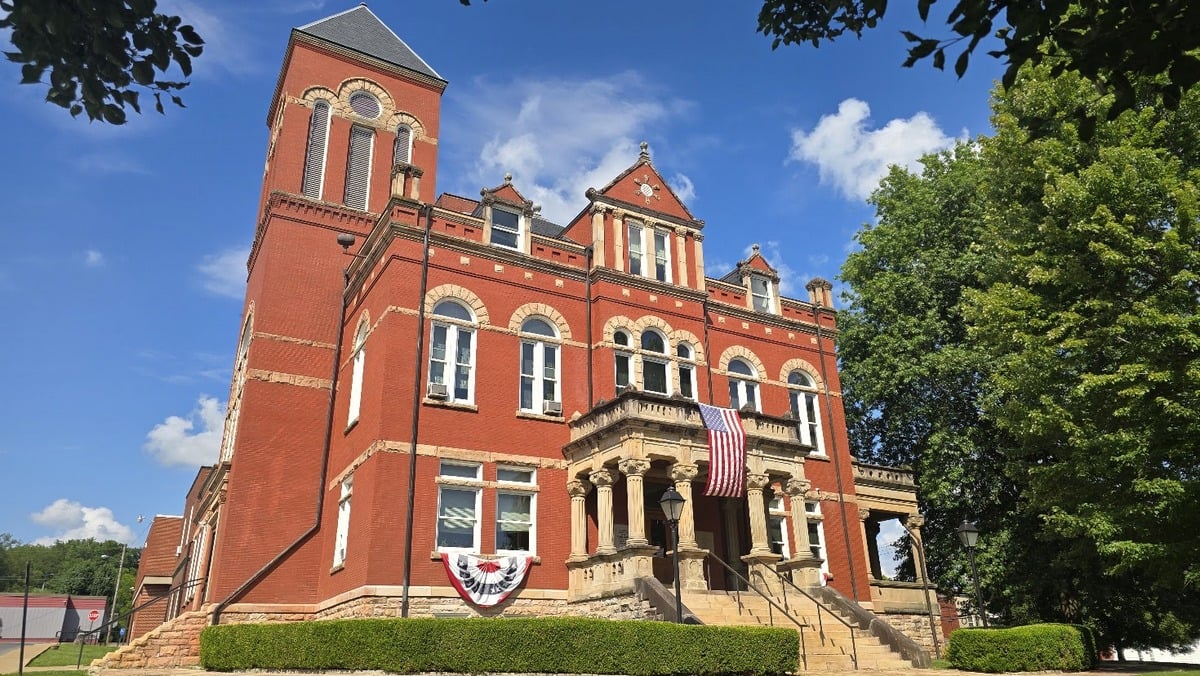
The problem, of course, was that he could no longer see Fort Scammon either. Humphreys relied on mathematics and an observer stationed between the opposing forces to adjust his aim until shells began falling accurately inside the unseen Federal fort.
According to Lowry, Humphreys later insisted he had not set out to invent a new form of warfare.
“He basically invented indirect artillery fire,” Lowry said. “Apparently, he just got tired of being shot at.”
Exactly where Humphreys stationed the observer remains unknown. The man likely occupied elevated ground from which both the Confederate battery and Fort Scammon could be seen, though no contemporary account identifies the location.
The innovation worked. For the first time in documented modern warfare, artillery successfully struck a target the gun crew could not see directly.
An innovation that changed warfare
Humphreys’ accomplishment might easily have been dismissed as battlefield improvisation. Instead, he continued to refine artillery science throughout the rest of the war.

During fighting in Virginia’s South Branch Valley, he reportedly demonstrated such extraordinary accuracy that he dropped cannonballs down the chimney of a Federal headquarters, sending officers scrambling from the building.
He also became one of the first officers to describe what he called “terrestrial shift”—the sideways drift of spinning projectiles in flight, an observation now recognized as a fundamental principle of ballistics.
“It was a major innovation,” Lowry said. “Just like when somebody invented the tank in World War I. Nobody had thought of it before.”
While historians occasionally acknowledge the possibility that someone may have unknowingly employed a similar technique earlier, Humphreys’ action at Fayetteville remains widely recognized as the first documented battlefield use of indirect artillery fire in the modern era.
Beyond the battlefield
Unlike many Civil War soldiers remembered only for their wartime service, Humphreys built an extraordinary academic career after peace returned.
He resumed his education and eventually became one of America’s most respected classical scholars, teaching Greek and Latin and earning national recognition for his intellect. When he died in 1928 at age 84, many knew him better as an educator than as an artillery innovator.
Yet the young mountaineer who solved a battlefield problem above Fayetteville never ceased thinking about science and mathematics.
As Lowry observed in his landmark 1984 study of Humphreys, there was something remarkable about the man himself.
“Powerful, rugged and awkward, his body never outgrew the young mountaineer, and there was something elemental also in the scope and profundity of his mind.”
Today, visitors who come to Fayetteville for its rivers, cliffs, and forests are often only a short walk or drive from the hillside where that mind quietly transformed military history.
The New River Gorge may have made Fayetteville famous around the world, but more than a century and a half earlier, another chapter of world history unfolded here—one whose influence eventually reached battlefields on every continent.
Readers interested in a more detailed analysis of Humphreys’ military career can also explore HistoryNet’s account of his pioneering work in indirect artillery fire.
For more information on visiting Fayetteville, contact the Fayetteville Convention and Visitors Bureau.
SOURCES
-
Milton W. Humphreys, Military Operations in Fayette County, West Virginia 1861-63, privately issued by Charles A. Goddard, 1931.
-
Dictionary of American Biography, Vol. IX, p. 377.
-
W.E.R. Byrne, Tale of the Elk, (Mountain State Press — Richwood, West Virginia), 1940, Chapter XXV: “Doctor Humphreys Looks At Artillery, Creek and Fish,” pp. 206 – 213.
-
Mary Elizabeth Kincaid, “Fayetteville, West Virginia, During The Civil War,” West Virginia History, Vol. XIV, 1952-53, pp. 339 – 364.
-
Personal interviews with Rev. Shirley Donnelly (Brigadier General – retired – U.S. Army) of Oak Hill, West Virginia, who was a personal friend of Humphreys.