

PENCE SPRINGS, W.Va. — Historians in West Virginia’s Greenbrier Valley are searching for answers about a little-known healing spring hidden on the grounds of the famed Pence Springs Hotel, a once-renowned mineral resort now on the market.
While the sulfur-rich waters that made Pence Springs famous were widely promoted and carefully documented, far less is known about a second spring reputed to possess curative properties. Local historians William Jones and Steven Trail say the spring remains one of the resort’s most intriguing mysteries.
Trail, co-author of the 1983 book History of the Pence Springs Hotel, said references to the spring are surprisingly scarce.
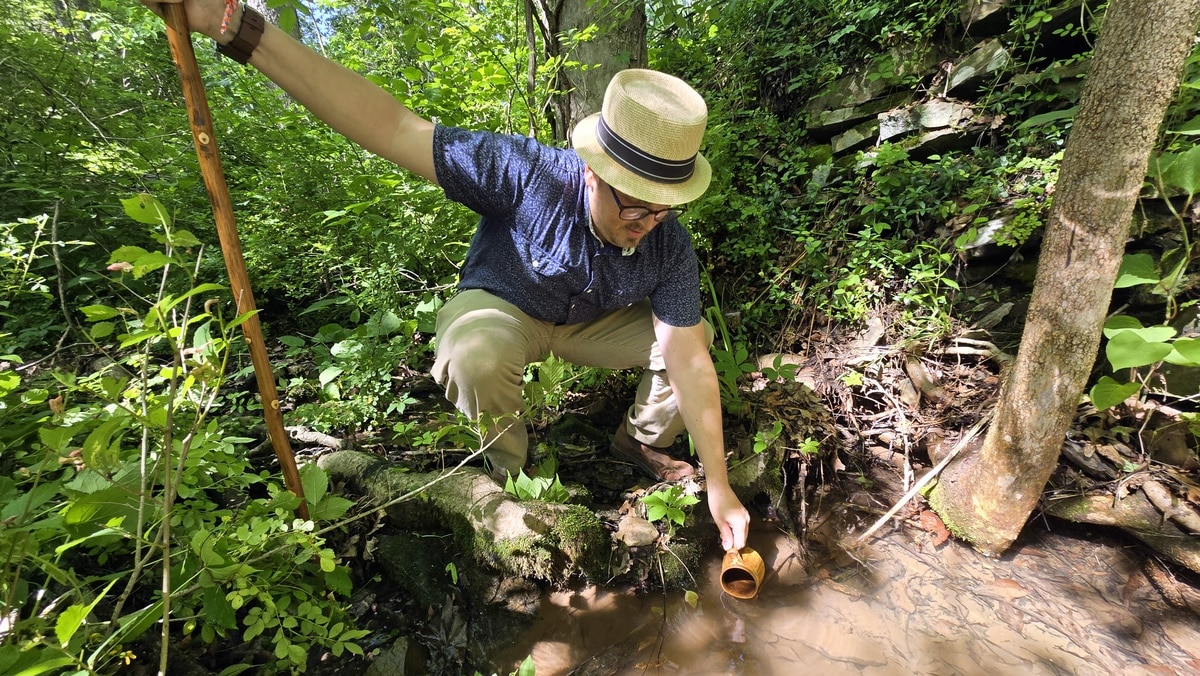
“I’ve read about the spring, but that was 50 years ago,” Trail said. “To the best of my recollection, it was a magnesium spring where some hotel guests would bathe, but that’s about as much as I know. I once came across a mineral profile of the water, but I’ve seen very little else.”
The absence of documentation is striking given the attention mineral waters received during the height of the resort era. Pence Springs gained national recognition for its bottled mineral water and therapeutic baths, attracting visitors seeking relief from digestive ailments, rheumatism, and other chronic conditions. Yet historical references to the magnesium spring are rare.
Jones, who grew up within sight of the resort, says he believes the spring was located near the property’s entrance on W.Va. Route 3, where an enclosed bathing pool may have been built. Though an avid collector of information about the Pence Springs, he hasn’t found any documentation.
“George Malcolm Kounse, who was 91 when he passed away in 2018, told my father that was where the magnesium spring was located,” Jones said. “George was a lifelong resident of Pence Springs and worked as a caddie on the resort’s first golf course in the early 1900s.”
According to Jones, the pool disappeared when a new entrance road was constructed around 1947 after the property was converted into the West Virginia State Prison for Women. The prison operated there until 1985. Jones believes the spring may still survive in a rocky grotto near the entrance and suspects a nearby concrete trough once watered horses brought to the spring.
The mystery has renewed interest in Pence Springs itself, one of the Greenbrier Valley’s most celebrated mineral resorts. Located in Summers County, about 12 miles east of Hinton along State Route 3, the spring is known for its sulfurous water rich in hydrogen sulfide, which gives it the distinctive odor and taste commonly associated with “rotten eggs.”
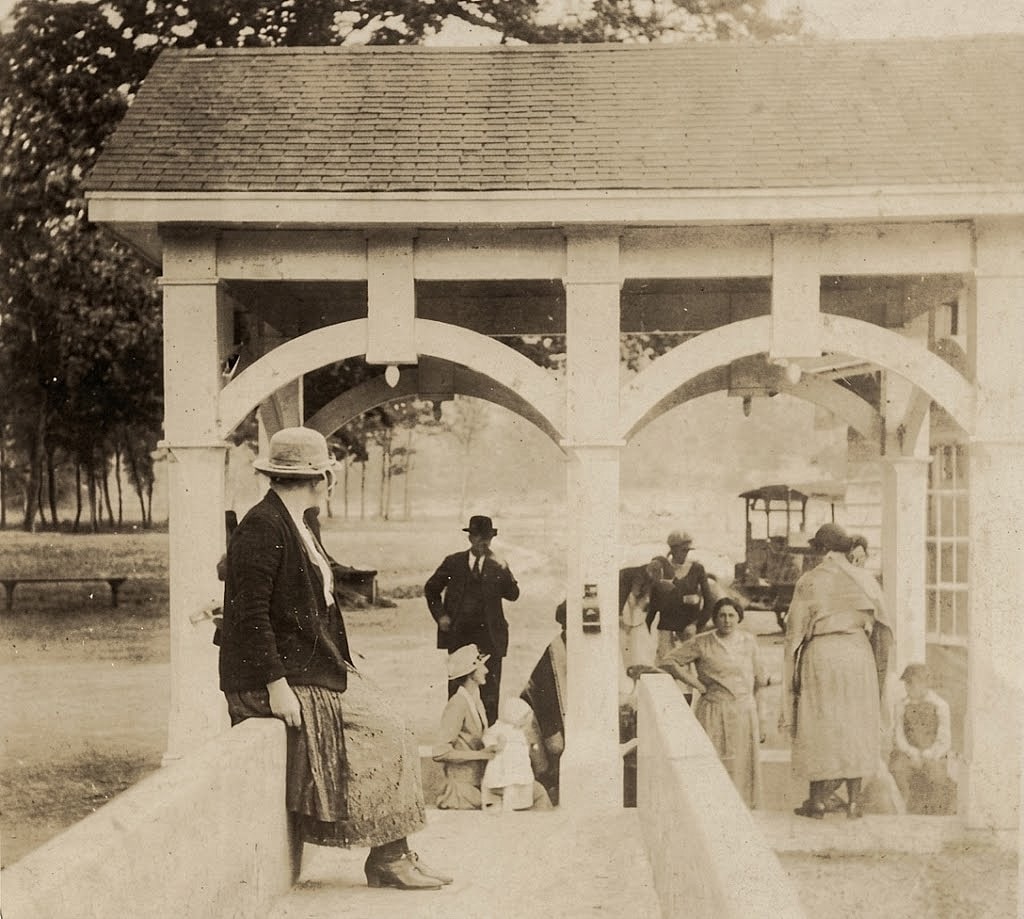
Long before the arrival of settlers, the spring attracted wildlife, particularly buffalo, drawn to its mineral-rich waters. Native Americans also frequented the area, likely because of the abundant game. Archaeological investigations conducted by the University of Kentucky in 1984 documented prehistoric sites in the broad fields between the spring and the Greenbrier River. Read an article on the springs at the W.Va. Encyclopedia.
By the nineteenth century, belief in the healing powers of mineral water had transformed the spring into a destination for health seekers. Commercial development began in 1872 with the construction of a wooden hotel, and visitation surged after the Chesapeake & Ohio Railway extended its line through the valley. A passenger station built across the river made the resort readily accessible to travelers.
The property’s fortunes rose further after its 1878 purchase by entrepreneur Andrew S. Pence, who expanded the resort and built a thriving business bottling and selling the spring’s water. Pence Springs water achieved national acclaim in 1904, winning the highest award in its class and a silver medal at the St. Louis World’s Fair. At one time, the resort also operated a ginger ale bottling plant using the mineral water.

As its popularity grew, additional hotels and boarding houses sprang up around the resort. Competition became fierce. Around 1900, Kanawha County businessman E. M. Carney developed a rival hotel nearby and began marketing water from a well drilled into the same underground seam. Pence sued Carney in 1904, but the West Virginia Supreme Court ultimately ruled in Carney’s favor.
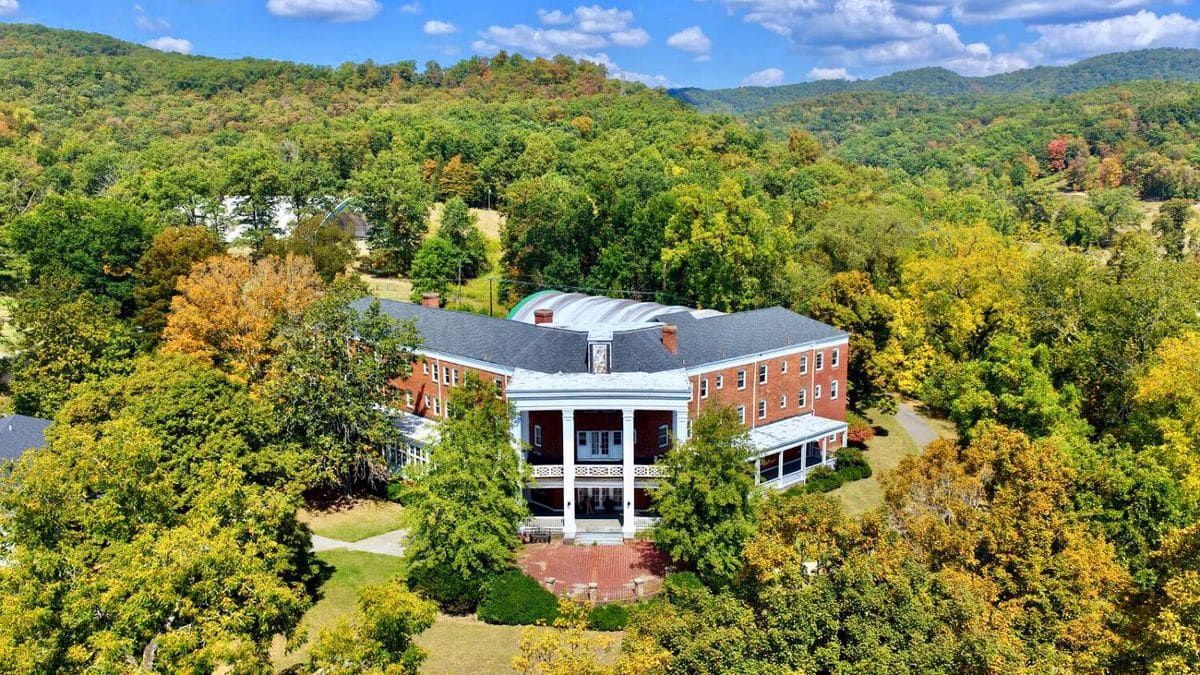
In 1918, the Pence family crowned the resort’s success by constructing a grand brick hotel overlooking the spring. The impressive structure operated until the Great Depression, when declining revenues forced its closure. The property entered a new chapter in 1947, when the State of West Virginia purchased it to be used as the State Prison for Women.
After the prison closed in 1985, the hotel was listed on the National Register of Historic Places and underwent several attempts at restoration and redevelopment. It operated intermittently as an inn before becoming home to the Greenbrier Academy for Girls.
Today, as the historic property awaits a new owner, historians hope the search for the forgotten magnesium spring may uncover another chapter in the story of one of Appalachia’s most remarkable mineral resorts.
The healing power of magnesium waters
During the nineteenth century, mineral springs rich in magnesium and other dissolved minerals were widely promoted as natural remedies for a broad range of ailments. Physicians and resort operators frequently claimed that bathing in or drinking mineral water could relieve rheumatism, digestive disorders, nervous conditions, kidney complaints, skin diseases, and chronic fatigue.
In The American Cyclopædia (1879), mineral waters were described as exerting effects on the body that differed from those of ordinary water and were regarded as important therapeutic agents. Similar beliefs fueled the rise of resort communities throughout the Appalachian mineral-springs region, where visitors traveled long distances to “take the waters” in hopes of restoring health.
By the mid-1800s, physicians increasingly sought to classify mineral springs by their chemical composition, linking specific minerals to particular health benefits. Geological surveys and medical publications analyzed waters containing magnesium, sulfur, iron, lithium, and other compounds thought to possess curative powers.
Writing in 1846 about Virginia’s mineral springs, physician William Burke argued that the chemical makeup of certain waters demonstrated their therapeutic value, while later scientific studies sought to explain why some springs had gained reputations as healing destinations. Although modern medicine has questioned many of the more expansive claims made during the resort era, the belief in the restorative power of mineral waters helped create one of the nation’s most important health-tourism industries and played a major role in the development of resorts such as Pence Springs.
Reviving the region’s healing springs heritage
The Greenbrier Valley and surrounding mountains remain one of the richest concentrations of historic mineral springs in Appalachia. During the nineteenth century, resorts developed around mineral springs whose waters were believed to possess restorative powers. Destinations such as Pence Springs, Barger Springs, Blue Sulphur Springs, Green Sulphur Springs, Gray Sulphur Springs, White Sulphur Springs, Red Sulphur Springs, Old Sweet Springs, and Mercer Healing Springs attracted travelers from across the South and Mid-Atlantic, establishing the region as one of America’s earliest health-tourism corridors. Although many of the grand hotels disappeared during the twentieth century, the springs themselves continue to shape the region’s cultural identity.
Interest in that heritage has grown in recent years with the restoration of the historic pavilion at Blue Sulphur Springs Pavilion near Alderson. Built in 1834 as the centerpiece of a resort, the Greek Revival structure was formally rededicated in 2023 after a decade-long preservation effort. The project has prompted renewed discussion about creating a regional heritage trail linking the area’s historic healing springs, resorts, springhouses, and mineral-water sites. Supporters say such a route could connect the network of springs while highlighting the history, architecture, folklore, and wellness traditions.
Preserving the legacy of Pence Springs
The listing of the Pence Springs property has highlighted the historic resort’s scale and the benefits of its preservation. Encompassing roughly 138 acres along the Greenbrier River, the estate includes the landmark three-story hotel, former educational facilities, a gymnasium, horse stables, forestland, ponds, and miles of internal roads and trails. Altogether, the property contains more than 44,000 square feet of finished space across multiple buildings.
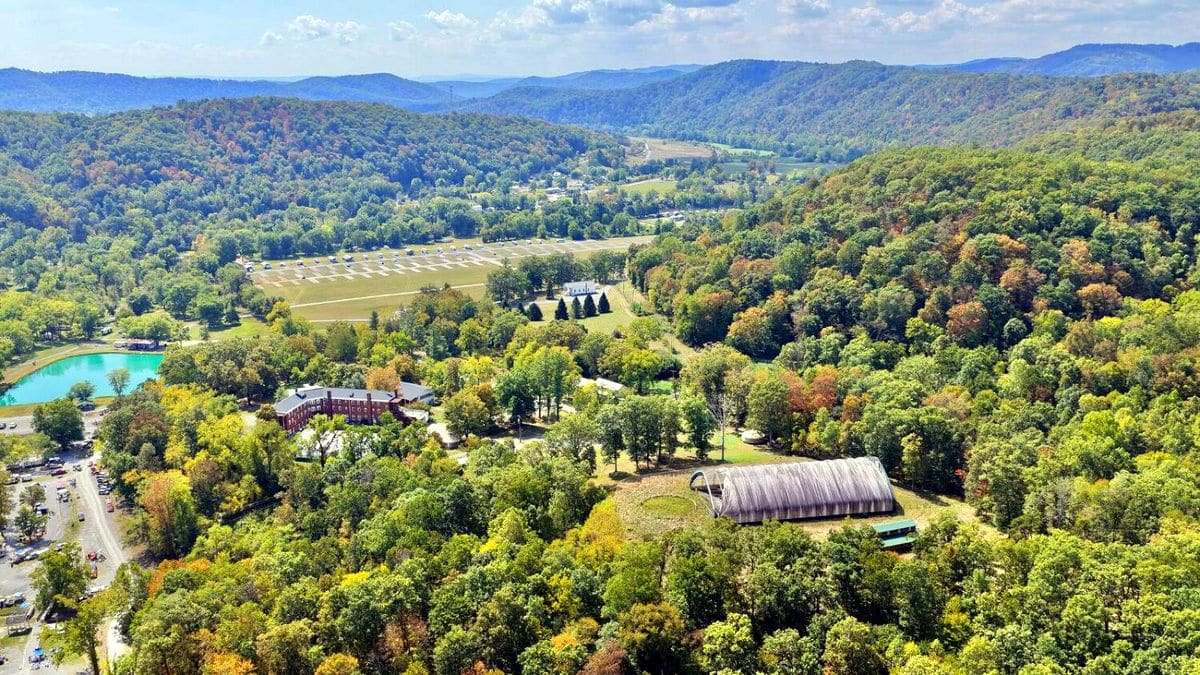
The main hotel remains the complex’s centerpiece. Portions of the first and second floors have been renovated in recent decades for classrooms, offices, lodging, and meeting spaces, while much of the third floor still reflects alterations from the years the building served as the West Virginia State Prison for Women. Historic architectural features, including the grand lobby, ballroom, fireplaces, porches, and woodwork, remain among the property’s defining characteristics.
Real estate marketing materials have emphasized the site’s potential for adaptive reuse as a boutique hotel, retreat center, educational campus, wellness destination, or conference facility. The property’s location places it within easy reach of the Greenbrier, Bluestone, and New rivers, as well as the New River Gorge National Park and Preserve, all of which have helped sustain tourism throughout southern West Virginia.
For Trail and Jones, however, the estate’s greatest value may lie in the layers of history still embedded in the landscape. Few places in West Virginia have undergone as many transformations—from a mineral-springs resort to a nationally known hotel, and from a state prison to a private academy.
The renewed attention surrounding the property’s sale has revived interest in the forgotten magnesium spring, raising hopes that new research may finally uncover details about one of the last unsolved chapters in the story of Pence Springs.
Trail says he hopes social media may help uncover new information. “We have access to a lot more information than we did 50 years ago when we published the history of the spring. It’s possible someone out there can help us find answers.”
Property Information
Additional information about the Pence Springs property, including photographs, maps, and historical background, is available through Foxfire Realty, the brokerage representing the estate. The firm, which specializes in historic and rural properties throughout the Virginias, has highlighted the site’s resort-era architecture, riverfront setting, and redevelopment potential as key features of the offering. Read the full Pence Springs listing here.
According to Google Gemini, the asking price for this property is only $2.2 million. That’s nearly the value of just the acreage! Hard to believe that it hasn’t been snatched up by someone. It must really be a money pit.