
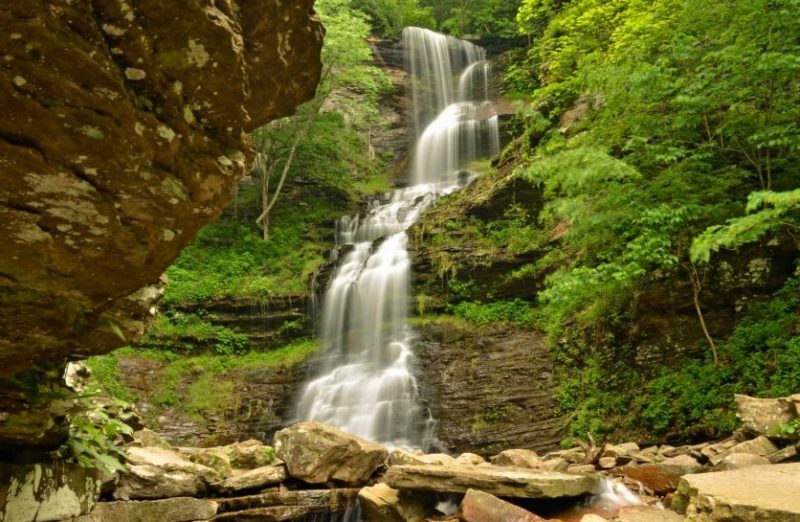
Visible from the historic Midland Trail near Gauley Bridge, Cathedral Falls has become one of the state’s most beloved and photographed natural wonders.

GAULEY BRIDGE, W.Va. — Most of West Virginia’s great waterfalls require effort. Visitors hike mountain trails, navigate winding forest roads, or venture deep into remote valleys to discover them. Some of the state’s most celebrated cascades remain hidden from all but the most determined explorers.
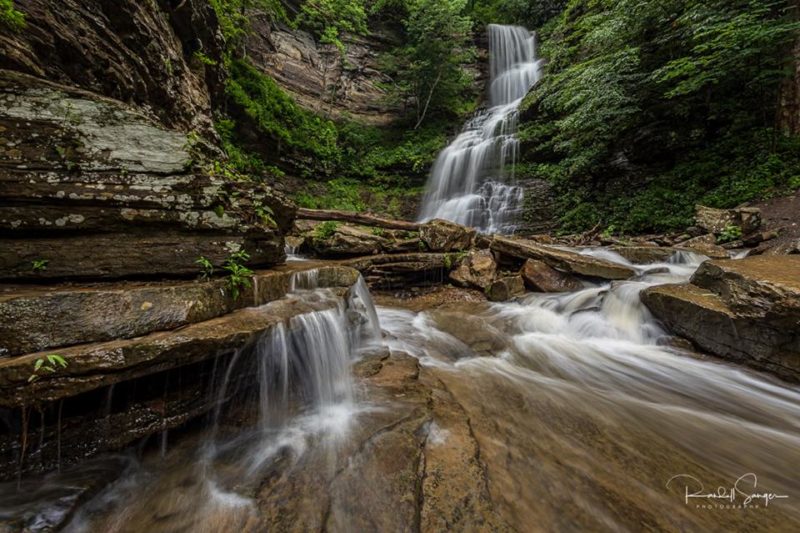
Cathedral Falls is different. Rising beside historic U.S. Route 60 near Gauley Bridge, the waterfall appears almost without warning. Travelers round a curve and suddenly encounter a cascade plunging down a steep sandstone cliff only yards from the roadway.
Many pull over immediately. Some stay only a few minutes. Others return again and again throughout their lives.
Few roadside attractions in West Virginia have inspired as many photographs, family memories, and spontaneous stops as Cathedral Falls.
For generations, the waterfall has served as an unofficial gateway to the New River Gorge, welcoming travelers with one of the state’s most dramatic displays of natural beauty.
A waterfall that generations have stopped to see
The popularity of Cathedral Falls is hardly a modern phenomenon.
Long before smartphones and social media transformed scenic destinations into internet attractions, travelers were stopping to admire the waterfall. Early motorists traveling US 60, the Midland Trail, frequently paused at the site, drawn by the spectacle of water tumbling from a narrow mountain gorge beside one of the region’s busiest highways.
As automobile tourism expanded during the twentieth century, Cathedral Falls became one of countless roadside landmarks that helped define the American road trip. Unlike many scenic destinations, however, it never faded from public attention. Today, the waterfall remains one of the best-known natural attractions along U.S. Route 60.
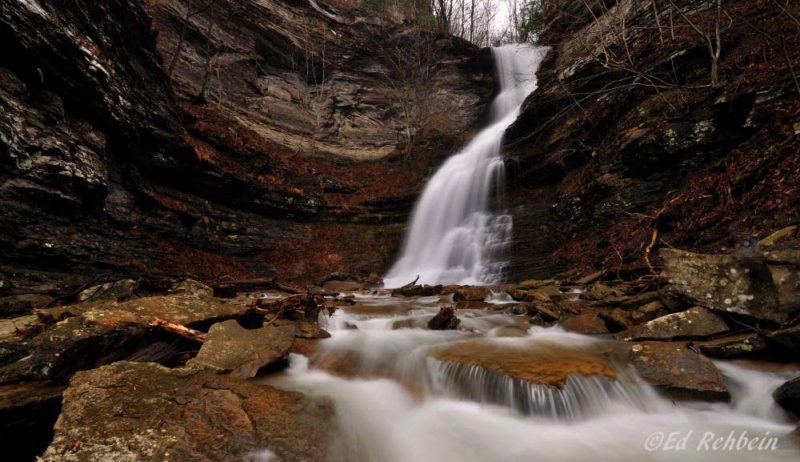
West Virginia Explorer publisher David Sibray has described Cathedral Falls and nearby Kanawha Falls as “two of the most visited and best-known waterfalls in West Virginia.” Their locations along the scenic Midland Trail have made them favorite stops for travelers exploring the Kanawha Valley and the New River Gorge region.
The observation reflects what countless visitors already know: few places combine beauty, accessibility, and history quite as effectively as Cathedral Falls.
Why it’s called Cathedral Falls
The name perfectly suits the setting. The waterfall descends through a narrow ravine enclosed by steep sandstone walls that rise dramatically above. Moss-covered rock faces, overhanging vegetation, and the constant echo of rushing water create an atmosphere that many visitors compare to a natural sanctuary.
Standing near the base of the falls, it is easy to understand how early observers arrived at the name. Its little gorge resembles a great outdoor chamber, with towering walls forming a natural nave and the waterfall serving as its centerpiece. It was formerly named Cane Branch Falls, after the stream that feeds it.
Even on busy summer days, the setting often feels surprisingly peaceful. The sound of water drowns out nearby traffic, replacing it with a steady roar that fills the narrow canyon.
Built for Photographers
Few waterfalls in West Virginia are as easy to photograph. Visitors do not need to embark on a long hike or carry specialized equipment into the backcountry. The falls are visible almost immediately upon arrival, allowing travelers to capture memorable images within minutes.
That accessibility has made Cathedral Falls a favorite subject for generations of photographers.
Postcards featuring the waterfall circulated widely throughout the twentieth century. Family photo albums across the region contain snapshots taken beside the cascade. Today, social media platforms are filled with images documenting visits to the site.
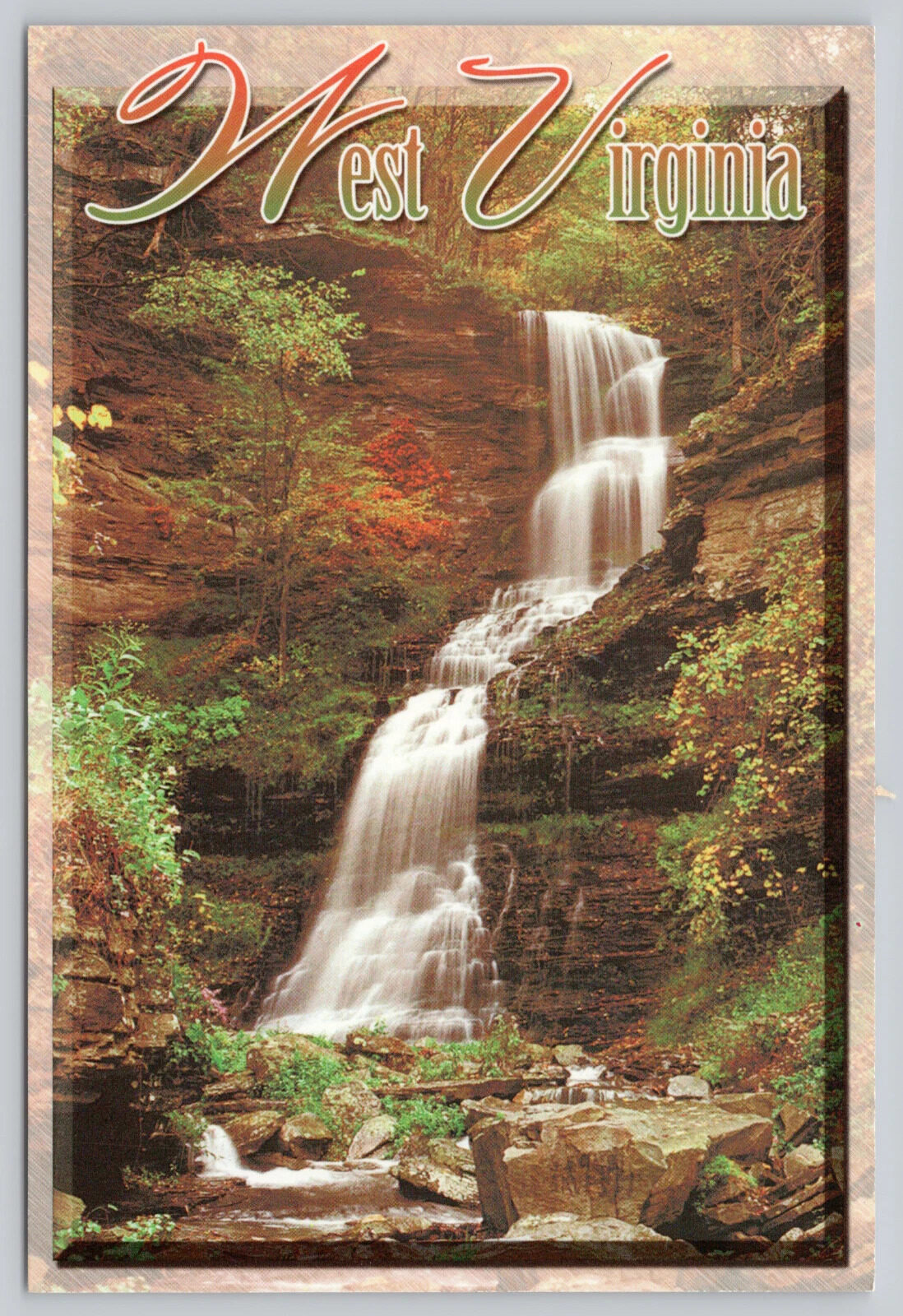
Professional photographers often seek out the falls during periods of heavy rainfall, when the stream expands into a broad curtain of white water. Others visit in autumn, when brilliant foliage frames the gorge in shades of red, orange, and gold.
Each season presents a different portrait. Spring rains produce powerful flows. Summer blankets the ravine in deep green vegetation. Autumn brings vivid color, while winter occasionally transforms the waterfall into a display of ice and snow. No two visits are exactly alike.
The geology behind the spectacle
Like many of West Virginia’s natural wonders, Cathedral Falls owes its existence to millions of years of geological change.
The waterfall cascades over resistant layers of sandstone that have weathered more effectively than the surrounding rock formations. Over time, water carved a steep channel through the mountainside, creating the dramatic ravine visitors see today.
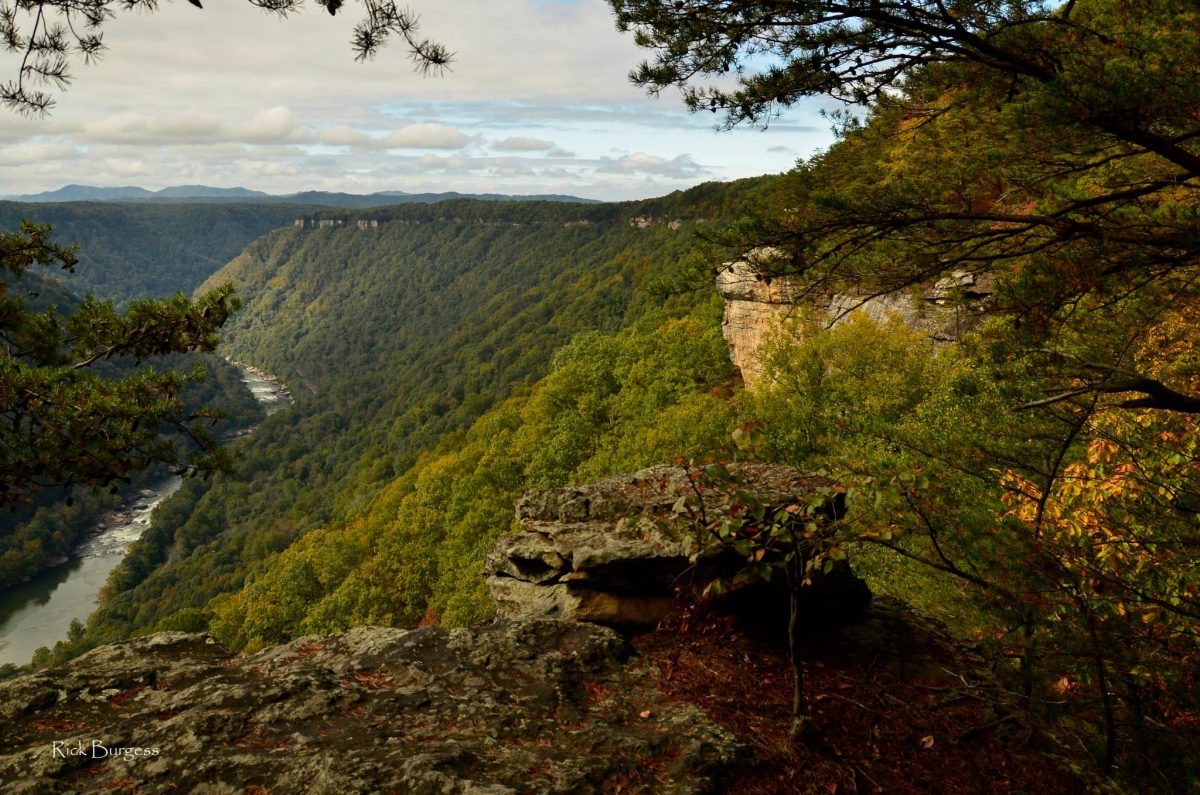
Rock climbers know the sandstone that forms the falls intimately. Just to the east, the layers rise to form the cliff-lined rim of the New River Gorge, and to the west they descend to form Kanawha Falls.
Heavy rains can significantly alter the appearance of the falls.
During wet periods, water spreads across the cliff face in a powerful torrent. During drier weather, the flow narrows, exposing more of the rugged rock formations that define the gorge.
These seasonal changes help explain why photographers return repeatedly throughout the year. The waterfall is familiar, yet never quite the same.
A landmark along the historic Midland Trail
To understand Cathedral Falls, one must understand the road beside it. Before the construction of Interstate 64, Midland Trail served as one of southern West Virginia’s principal transportation routes. The highway connected communities across the mountains and carried generations of travelers through the Kanawha Valley.
Families heading east. Vacationers exploring the mountains. Salesmen making their rounds. Coalfield residents traveling to larger towns. All passed by Cathedral Falls.
The waterfall became a natural stopping place—a chance to stretch one’s legs, enjoy the cool mountain air, and experience a landscape unlike any other along the route. While traffic patterns have changed over the decades, the tradition endures.
Visitors continue to discover the falls much as travelers did a century ago: unexpectedly and often with a sense of wonder.
More than a stop on the way to somewhere else
Many visitors encounter Cathedral Falls while traveling to other destinations. Some are headed toward the New River Gorge. Others are exploring the Kanawha Valley or driving scenic backroads through Fayette County.
Yet the waterfall increasingly serves as a destination in its own right. Its accessibility makes it appealing to visitors of all ages and abilities. Unlike remote waterfalls hidden deep within the mountains, Cathedral Falls can be appreciated without strenuous hiking.
That accessibility has broadened its appeal far beyond the traditional outdoor recreation community. The waterfall belongs to everyone.
Why people keep coming back
The enduring popularity of Cathedral Falls cannot be explained solely by its beauty. West Virginia is full of beautiful places. What sets Cathedral Falls apart is the experience itself.
Visitors often remember exactly when they first saw it. They remember rounding the bend in the road. They remember hearing the water before stepping from their vehicle. They remember standing in the cool mist and looking upward toward the towering cliffs above.
The waterfall creates an immediate connection. It transforms an ordinary drive into a memorable encounter with the landscape.
For some, Cathedral Falls recalls family vacations and childhood road trips. For others, it serves as an introduction to the mountains and rivers that define southern West Virginia.
Whatever the reason, people return. They come back during spring floods, autumn color, and winter freezes. They bring friends and relatives. They stop once more while passing through the valley. And they take another photograph.
In a state blessed with extraordinary scenery, Cathedral Falls remains one of West Virginia’s most cherished natural landmarks—a waterfall that has been stopping travelers in their tracks for generations and shows no sign of losing its power to inspire.
Visiting Cathedral Falls
For more information about visiting the Cathedral Falls area, contact the Fayette County Convention and Visitors Bureau.
Thank you for reminding me if all the beauty out state holds.
It’s easy to become discouraged when we travel roads damaged from years of use.
The poverty that has creeped into our beautiful state.
To know the natural resources we had.
How out state has been left in disarray from greed not love.