
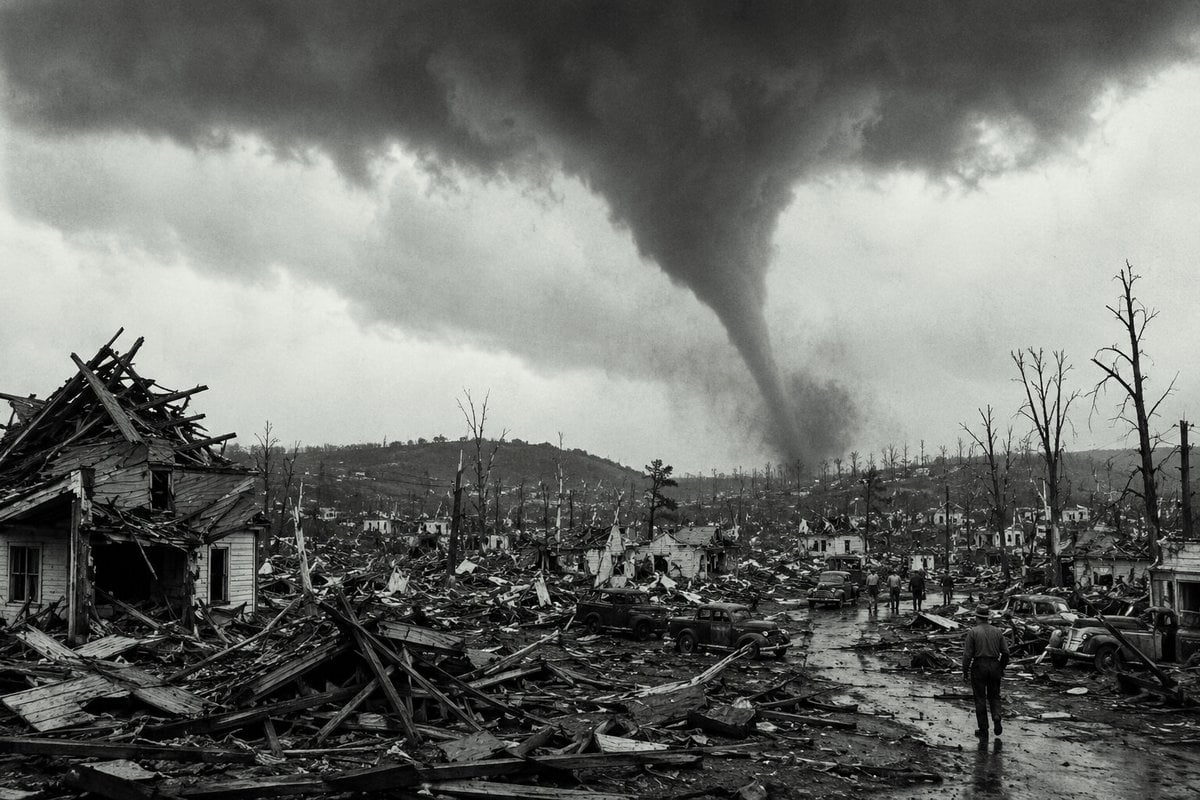
SHINNSTON, W.Va. — For many residents, West Virginia is known more for its mountains than for tornadoes. Yet some of the state’s deadliest weather disasters have come not from floods or winter storms but from violent tornadoes that swept through towns with little warning.

While West Virginia experiences fewer tornadoes than the Great Plains states, the Mountain State has endured several devastating storms that left communities shattered, claimed lives, and altered local history.
The most infamous occurred during World War II, when a powerful tornado tore through north-central West Virginia, becoming one of the deadliest tornadoes ever recorded in the Appalachian region.
The Shinnston Disaster
On June 23, 1944, a violent tornado struck the Harrison County community of Shinnston before moving through parts of neighboring counties. The storm carved a path of destruction through homes, businesses, farms, and industrial facilities.
The tornado remains one of the deadliest ever recorded in West Virginia and among the most significant weather disasters in the state’s history. Entire neighborhoods were damaged or destroyed as the storm moved across the region.
Newspaper accounts from the era described scenes of devastation rarely seen in the Mountain State. Buildings were leveled, trees stripped bare, and transportation and communication networks disrupted. The Shinnston News reported the following:
“The tornado struck Shinnston about 8:30 Friday evening, and while the people in the path of the storm had brief seconds of warning in the unnatural noises immediately preceding the blow and in the appearance of the awful cone-shaped cloud on the horizon, few of the victims had time to seek shelter, even in their homes’ basements.”
The disaster occurred at a time when modern weather radar did not exist, and tornado forecasting was virtually nonexistent. Residents often had little warning before storms arrived.

The 1974 Super Outbreak
Thirty years later, West Virginia again found itself in the path of historic tornado activity.
In April 1974, one of the largest tornado outbreaks on record struck much of the eastern United States. Known today as the Super Outbreak, the event produced scores of tornadoes across multiple states.
Several tornadoes struck West Virginia, damaging communities already vulnerable to severe spring weather. The outbreak showed that powerful tornadoes could occur well beyond the nation’s traditional Tornado Alley.
Kenneth T. Batty reported in the W.Va. Encyclopedia that the state’s southern counties suffered the worst damage, with one fatality and as many as 40 injuries:
“Southeastern West Virginia sustained notable damage on the morning of Thursday, April 4, when the outbreak crossed over from western Virginia. In the dark, between 4:00 and 5:00 a.m., a few tornadoes raced northeast across McDowell, Wyoming, Raleigh, Fayette, Summers, and Greenbrier counties. They touched down intermittently, a typical pattern for West Virginia.”
Meteorologists continue to study the 1974 outbreak for its unprecedented scale and intensity.
The Spencer Tornado of 1998
More recently, residents of Roane County experienced one of the state’s most destructive tornadoes in modern times.
On May 7, 1998, a powerful tornado struck near Spencer, damaging homes, businesses, and public infrastructure. The storm was part of a broader outbreak that affected parts of the Ohio Valley and central Appalachians.
Meteorologist Brandon Stover, examining the event in retrospect, reminded state residents that the notion that the Mountain State was tornado-free was inaccurate.
“Once again, the myth that tornadoes can’t occur in rugged terrain was defeated here,” he wrote in a 2023 social media post 25 years after the Spencer tornado.
The twister became one of the strongest on record in modern West Virginia history and served as a reminder that dangerous storms can develop even in mountainous terrain.
Mountains do not stop tornadoes
A long-standing belief among some residents is that West Virginia’s rugged mountains protect the state from tornadoes. Meteorologists say otherwise.
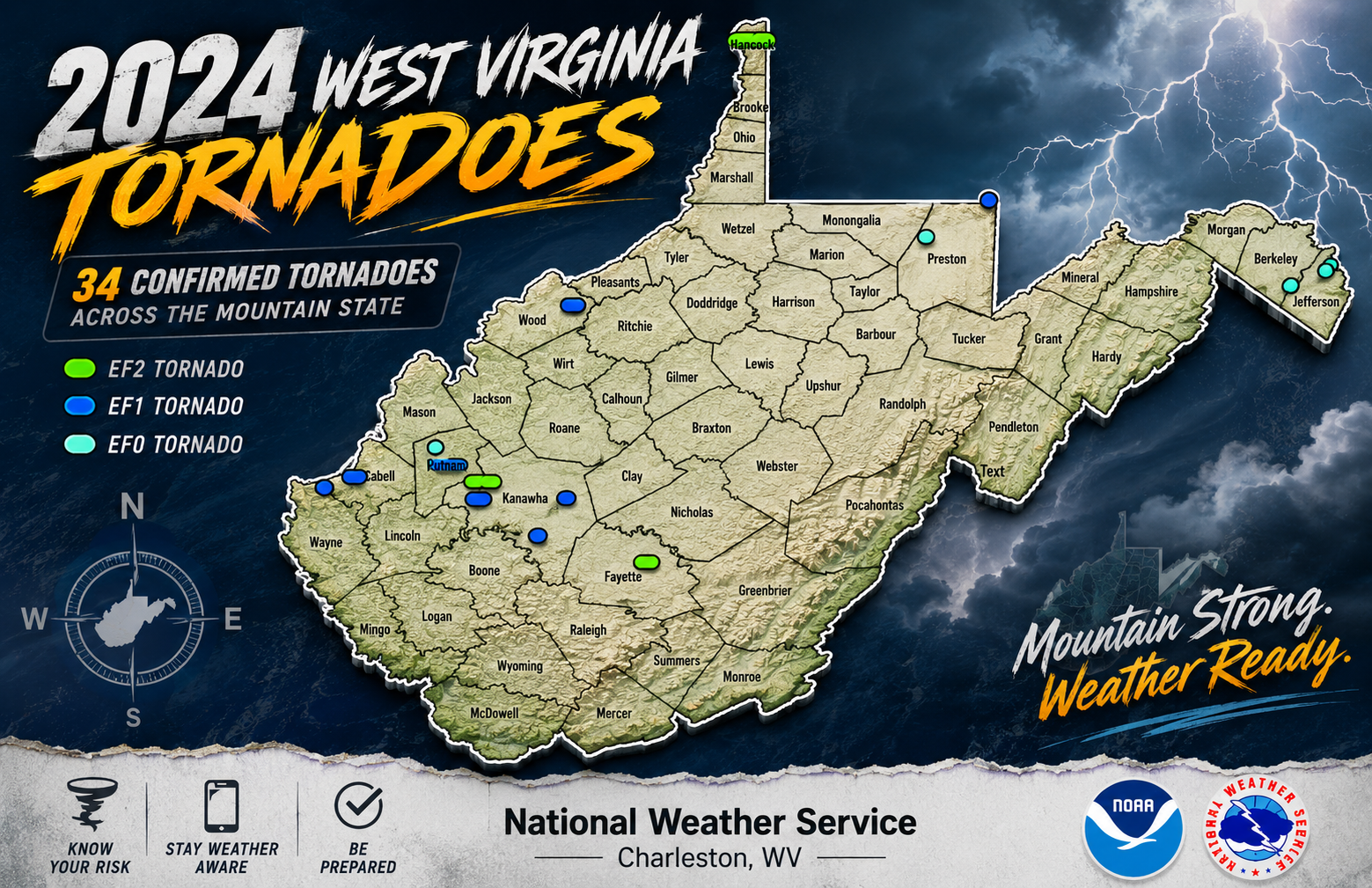
Research by the National Weather Service and the National Oceanic and Atmospheric Administration shows that while mountains may influence storm behavior, they do not prevent tornadoes from forming or crossing ridges and valleys.
Historical records document numerous tornadoes that have struck communities in both lowlands and mountainous regions of the state. In 2024, meteorologist Tony Edwards of the National Weather Service office in Charleston clarified the matter.
“Tornadoes can happen in West Virginia. We’ve had them in every month of the year,” Edwards said in an interview with West Virginia Watch.
Modern warnings save lives
One major difference between today’s storms and those of earlier generations is the availability of advanced warning systems.
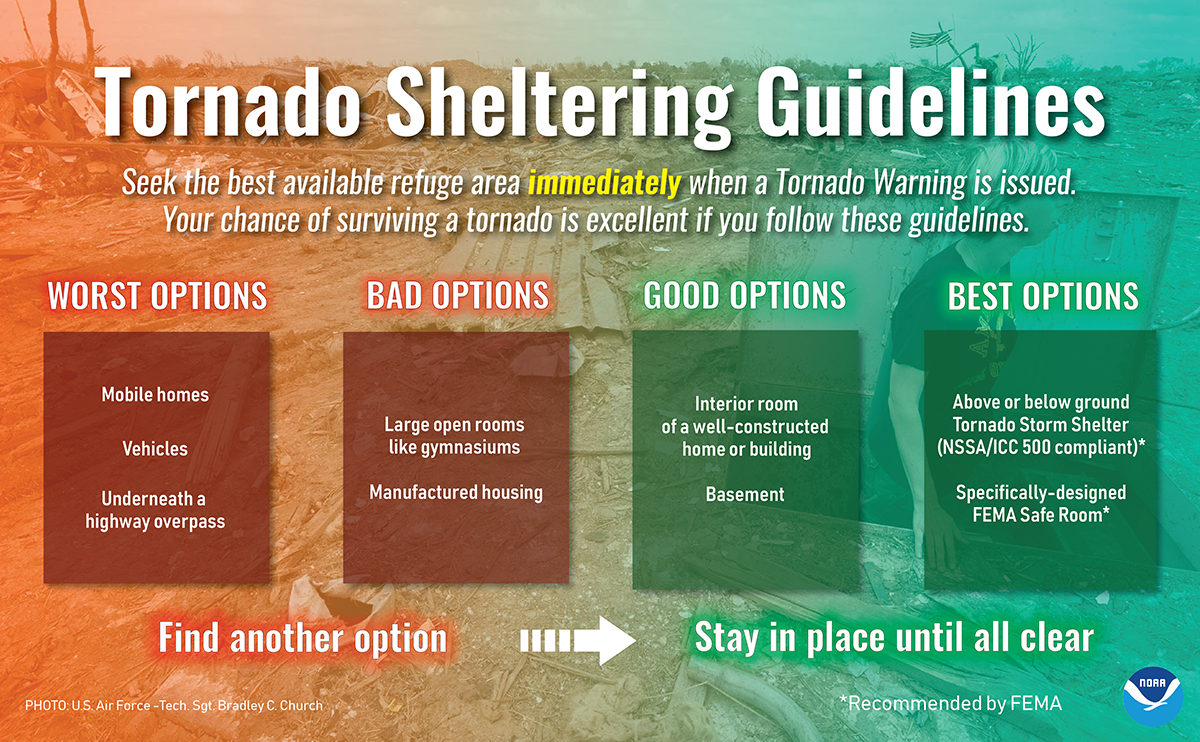
Weather radar, emergency alerts, smartphone notifications, and improved forecasting now provide residents with warnings that earlier generations lacked.
Although tornadoes remain relatively uncommon compared with those in the Midwest and South, severe storms continue to occur every year in West Virginia.
State records show that dozens of tornadoes have been documented across the Mountain State during the modern weather era, with some causing significant damage.
Remembering the storms
The deadliest tornadoes in West Virginia’s history remain part of the state’s collective memory. They are a reminder that even in a landscape dominated by mountains and forests, nature can unleash sudden, devastating force.
From Shinnston to Spencer and beyond, communities have rebuilt after disaster while preserving stories of resilience for future generations.
As tornado season returns each spring, those historic storms serve as a warning that preparedness remains essential, even in a state where many people rarely think about tornadoes until dark clouds gather over the mountains.