
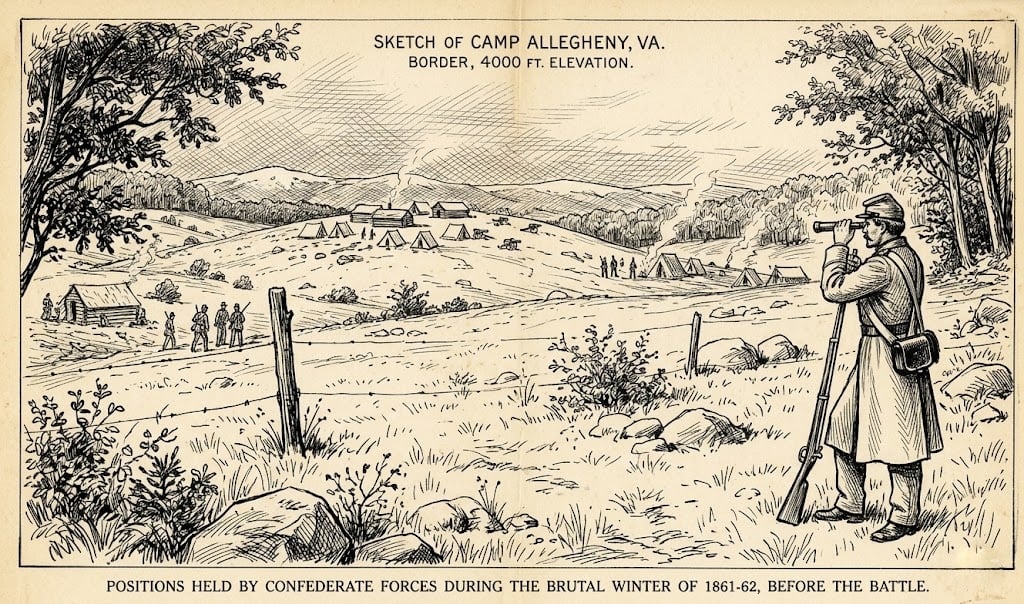
TOP-OF-ALLEGHENY, W.Va. — The highest battlefields of the American Civil War lie not in Virginia’s rolling countryside but atop the rugged mountains of eastern West Virginia, where soldiers fought for control of strategic mountain passes and vital transportation routes through the Alleghenies.

Today, many of these remote sites remain largely overlooked by travelers, hidden among spruce forests, high meadows, and winding mountain roads. Yet together, they tell the story of one of the war’s earliest and most consequential campaigns—the struggle for western Virginia in 1861.
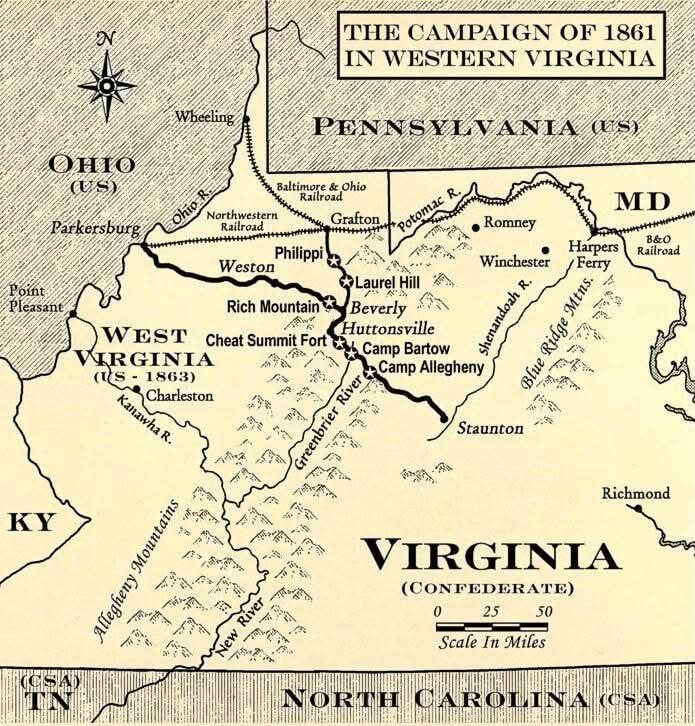
Visitors willing to venture into the highlands can explore a remarkable chain of historic sites along the old Staunton-Parkersburg Turnpike, including Camp Allegheny, Rich Mountain Battlefield, Cheat Summit Fort, and Camp Bartow.
Camp Allegheny: Battlefield Above the Clouds
Near the Virginia border, Camp Allegheny occupies one of the highest military positions used during the Civil War.
Established by Confederate forces in 1861, the fortification stood at an elevation exceeding 4,000 feet, where soldiers endured brutal mountain weather even before winter arrived. The site became the scene of the Battle of Camp Allegheny on Dec. 13, 1861, when Union troops attempted to dislodge Confederate defenders from the strategic summit.
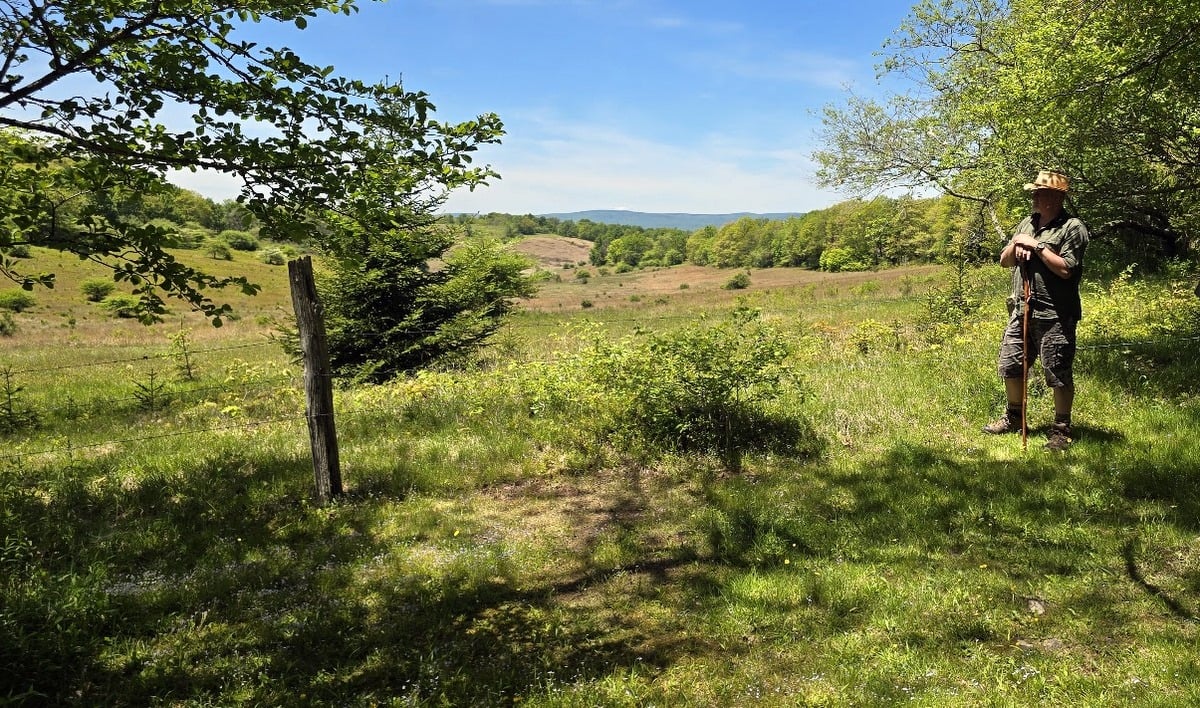
Today visitors can walk among surviving earthworks and trenches while taking in sweeping views of the surrounding mountains. Documentation prepared for the National Register of Historic Places notes that substantial portions of the battlefield and defensive works remain intact, offering one of the best-preserved high-elevation military landscapes in the region.
Interpretive signs help explain the battle and the difficult conditions soldiers faced while stationed in one of the coldest regions of the wartime South.
Rich Mountain: Where West Virginia’s Fate Was Decided
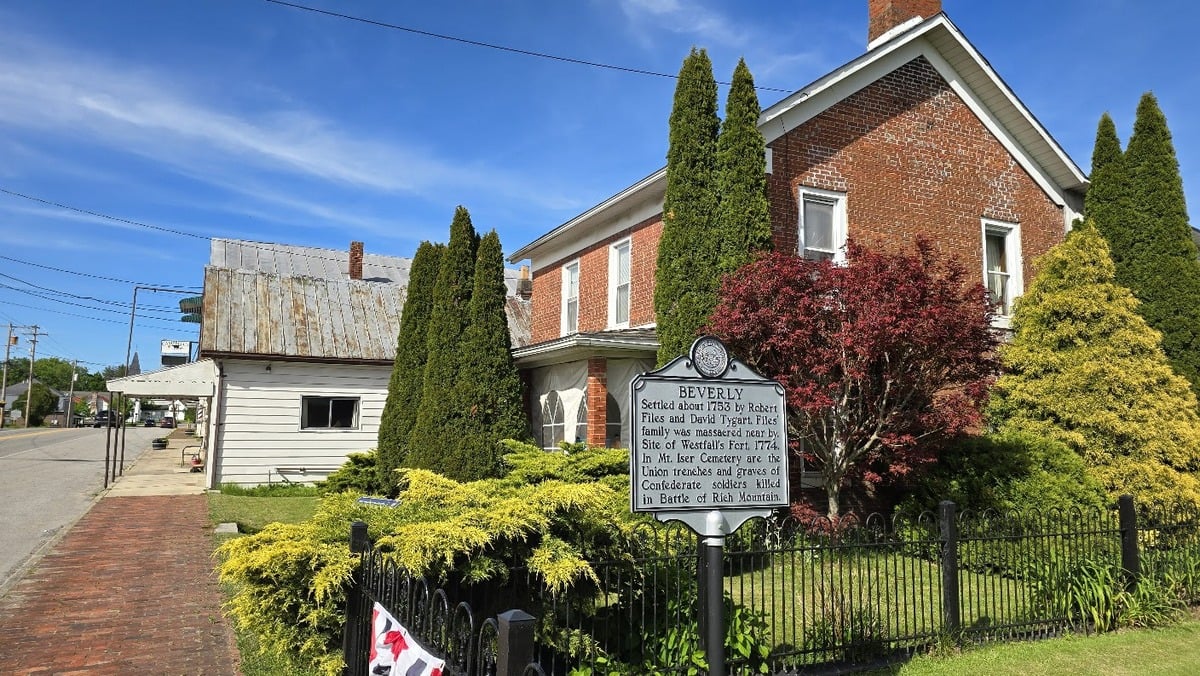
West of historic Beverly and the beautiful Tygart Valley, Rich Mountain Battlefield preserves the site of one of the most important engagements of the 1861 campaign.
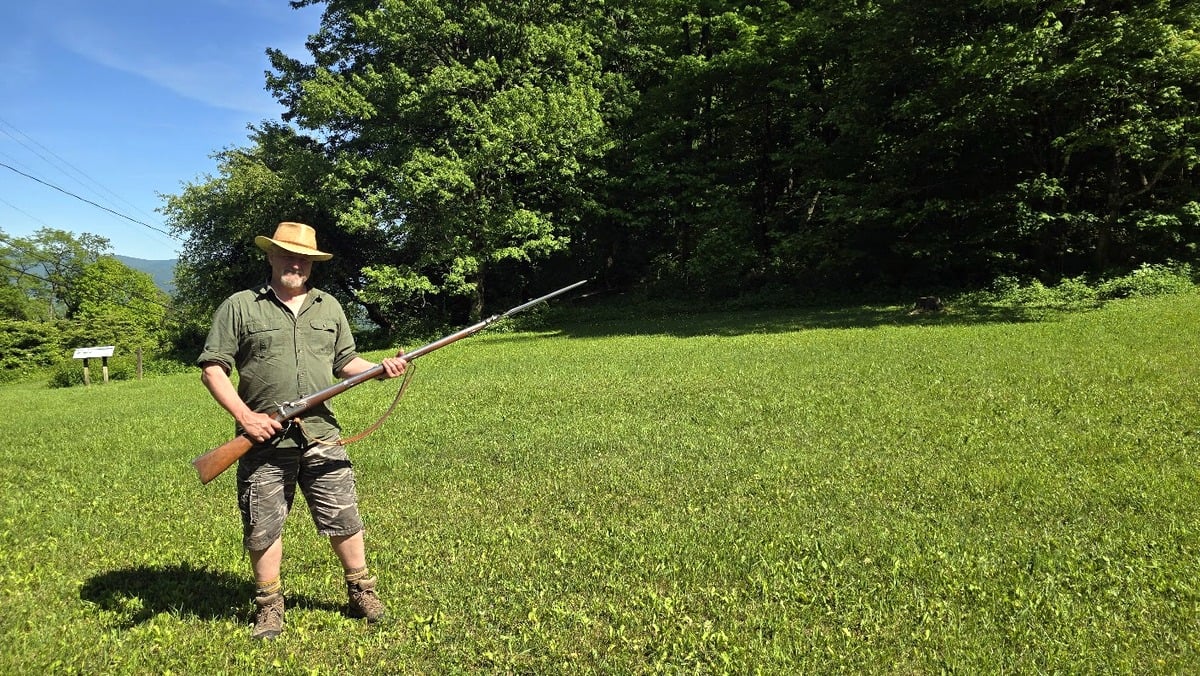
According to historians with the American Battlefield Trust and the Rich Mountain Battlefield Foundation, the Union victory at Rich Mountain helped secure federal control of western Virginia and elevated General George B. McClellan to national prominence.
Visitors can hike trails through dense forest to the battlefield and explore the nearby historic district of Beverly, where many structures witnessed the campaign firsthand. Historians often point to the Union victory at Rich Mountain as a key event leading to the eventual creation of West Virginia in 1863.
The battlefield’s quiet woodland setting contrasts sharply with the significance of the events that unfolded there more than 160 years ago.
Beyond military history, Rich Mountain is also remembered for the remarkable story of the wounded Capt. DeLaguel, who reportedly crawled through the Allegheny wilderness before a local family sheltered him. The battlefield has also inspired generations of ghost stories and mountain folklore.
Cheat Summit Fort: The Mountain Stronghold
Perched along Cheat Mountain east of Elkins, Cheat Summit Fort represents one of the best-preserved Civil War fortifications in the region.
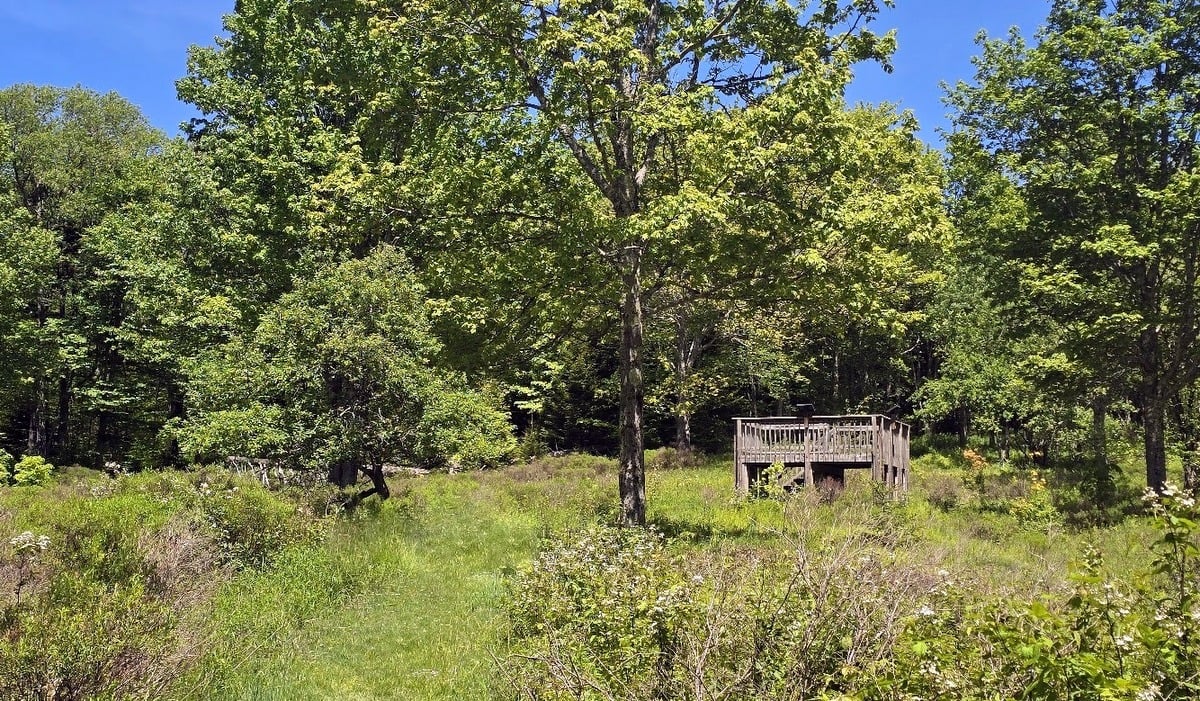
Built by Union forces in 1861, the fort guarded the Staunton-Parkersburg Turnpike and served as a crucial defensive position during Confederate attempts to regain control of the mountain corridor. Historical resources maintained by the Monongahela National Forest identify the site as one of the most intact surviving Union fortifications in West Virginia.
A short hiking trail leads visitors to extensive earthworks that remain visible beneath towering hardwoods. The site offers a rare opportunity to stand inside a mountain fortress largely unchanged since the war.

Interpretive exhibits explain the strategic importance of Cheat Mountain and the harsh realities soldiers faced while stationed in the remote wilderness.
Camp Bartow and the Greenbrier Valley Campaign
Farther south near modern-day Bartow, Camp Bartow occupies a scenic bend of the Greenbrier River where Confederate troops established a fortified camp in 1861.
National Register documentation describes the site as one of the most significant surviving Confederate fortifications in the Allegheny region. The camp became associated with the Battle of Greenbrier River, one of the largest engagements fought in what would become West Virginia during the war’s first year.
Visitors can still see portions of the earthworks overlooking the river valley. Surrounded by mountains and forests, the location offers insight into how geography shaped military strategy throughout the Allegheny campaign.
The nearby village of Bartow serves as a gateway to both Civil War history and outdoor recreation in the highlands.
Following the Old Turnpike
Together, these sites form a largely forgotten Civil War trail along the former Stanton-Parkersburg Turnpike, which stretched across some of West Virginia’s most scenic mountain country, linking the Ohio Valley in the west with the Valley of Virginia in the east.
Unlike the crowded battlefields of Gettysburg or Antietam, the Allegheny battlefields often see only a handful of visitors on any given day. Travelers encounter quiet forests, mountain vistas, and preserved fortifications that evoke the isolation experienced by Civil War soldiers.
For history enthusiasts, the route offers a chance to explore the campaign that helped shape western Virginia’s future. For outdoor travelers, it combines historic discovery with some of the state’s most spectacular mountain scenery.
More than 160 years after soldiers marched through these high passes, the mountain forts and battlefields remain hidden in the Alleghenies, awaiting visitors to uncover one of West Virginia’s most remarkable chapters of Civil War history.
Visiting West Virginia’s Mountain Battlefields Today
Unlike many of the nation’s best-known Civil War battlefields, West Virginia’s mountain forts and camps remain remarkably uncrowded. Visitors exploring Rich Mountain, Cheat Summit Fort, Camp Bartow, and Camp Allegheny often find themselves alone amid the earthworks and forested ridges where soldiers once stood watch over the Alleghenies.
The sites are especially popular in summer and fall, when travelers can combine Civil War history with scenic drives through some of the state’s highest mountains. Rich Mountain lies near Beverly and the Tygart Valley, while Cheat Summit Fort and Camp Bartow offer convenient stops for visitors exploring the Monongahela National Forest, Cass Scenic Railroad State Park, and the Highland Scenic Highway.
Together, the four sites offer a rare opportunity to trace an entire Civil War campaign across the landscape where it unfolded. From the wooded slopes of Rich Mountain to the windswept heights of Camp Allegheny, travelers can follow the same mountain corridor that Union and Confederate armies fought to control in 1861.
For those seeking lesser-known historic destinations, the Allegheny battlefields reveal a side of West Virginia history often overshadowed by larger Civil War sites elsewhere. Yet it was here, high in the mountains, that events unfolded that would help shape the state’s future and leave a lasting mark on the nation.
Don’t forget about Droop mountain battlefield in Pocahontas County not really sure the significance of the battle but I know they fought there in the Civil war
It was the last major battle fought in the newly formed state of West Virginia. It took place on November 6, 1863 and the Confederate army under Brigadier General John Echols (of Union in Monroe County) was severely outnumbered by the Union army under General William W. Averell. The Confederate troops gathered up by where the Lookout Tower now stands and watched the approach of the Union army. After several hours of hand to hand combat and skirmishes the Confederate army was forced to retreat back towards Lewisburg. I have organized a visit to Droop Mountain as a part of the itinerary for my upcoming Johnson Family Reunion (the Johnson family of Johnson’s Crossroads in Monroe County).
Fort Mill Ridge in Romney is very well preserved but often overlooked.
It is sad that most history accounts state now West Virginia as this article is consistent with, although this is true you never see one ever read now the East Virginia, both are equally accurate and true. History will always be flawed until this narrative of one Virginia is corrected. I hope you get this David.
And his free country that my ancestors fought for why do my comments have to go through a moderator?