
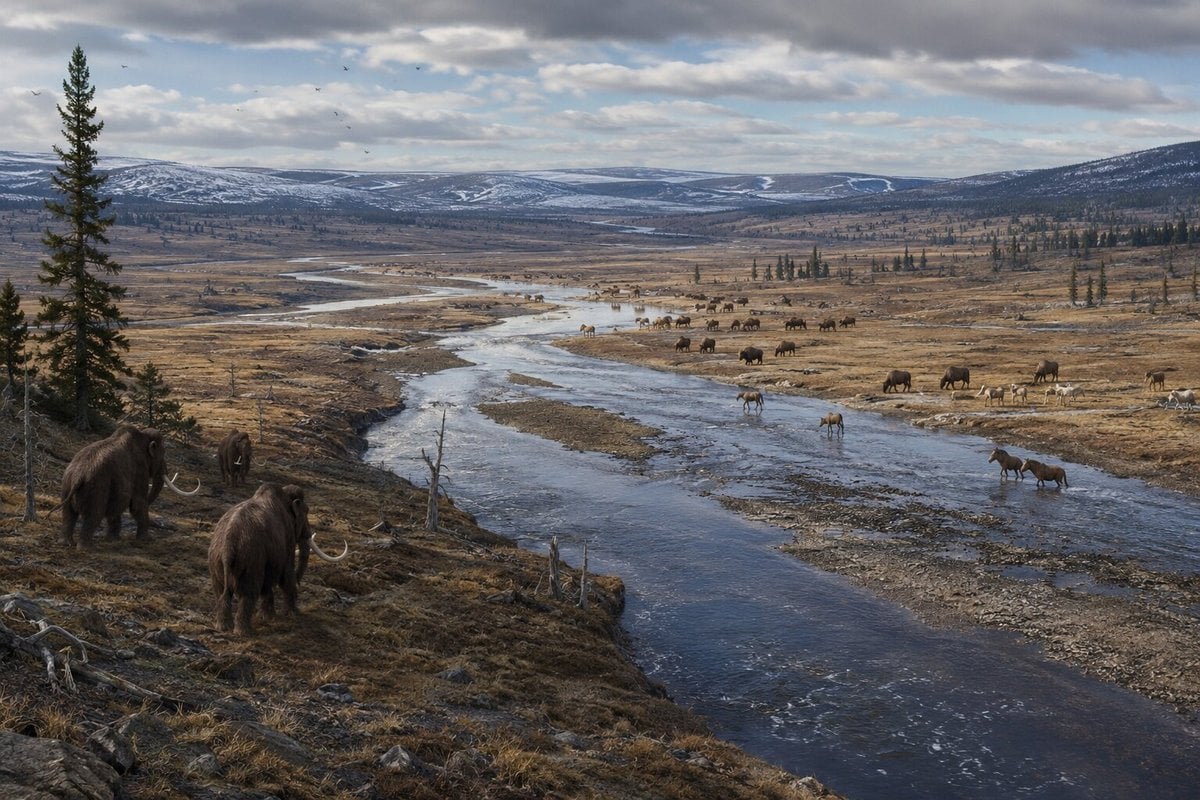
CHARLESTON, W.Va.— Long before the Ohio River existed and long before humans set foot in North America, a massive river flowed across what is now West Virginia. Known as the Teays River, the ancient waterway drained a vast portion of the Appalachian region and helped shape the Mountain State’s landscape millions of years before it disappeared during the Ice Age.
Today, the river no longer appears on any map. Its waters stopped flowing hundreds of thousands of years ago, and much of its valley lies buried beneath layers of sediment. Yet geologists consider the Teays one of the most important rivers ever to cross the Appalachian Mountains, and evidence of its existence remains hidden beneath towns, farms, forests, and highways throughout West Virginia.
The story of the Teays River reveals a forgotten landscape that looked dramatically different from the one visitors see today.
What Was the Teays River?
The Teays River was a prehistoric river system that existed millions of years before the modern Ohio River formed. Scientists believe it originated in what is now North Carolina and Virginia, then flowed northwest across West Virginia and into present-day Ohio, Indiana, and Illinois.
The river was enormous. Some geologists estimate that portions of the Teays rivaled major modern rivers in size, draining thousands of square miles across eastern North America. During its existence, it served as one of the continent’s dominant waterways, transporting sediment and water across a landscape that predates the modern Appalachian drainage system.
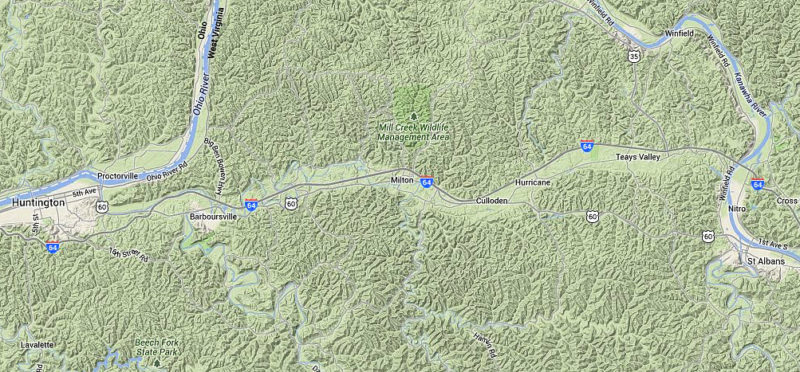
The river takes its name from the community of Teays Valley in Putnam County, where geologists first identified significant evidence of the ancient waterway in the late nineteenth century.
According to Marshall University geologist Dewey Sanderson, the name “Teays” came from one of the early settlers in the valley where the river was first identified.
“The valley itself was named for an early settler, Stephen Teays,” Sanderson wrote in the W.Va. Encyclopedia. Although the pronunciation varies, most West Virginians pronounce the name “Taze.”

A different West Virginia
To understand the Teays River, it helps to imagine a West Virginia unlike the one that exists today.
The Appalachian Mountains had already formed, but rivers flowed in different directions. The Ohio River did not yet exist. Many of today’s familiar waterways—including portions of the Kanawha, Monongahela, and Allegheny systems—followed courses that were far different from their present paths.
Instead of draining toward the Ohio River, vast areas of the region drained into the Teays.
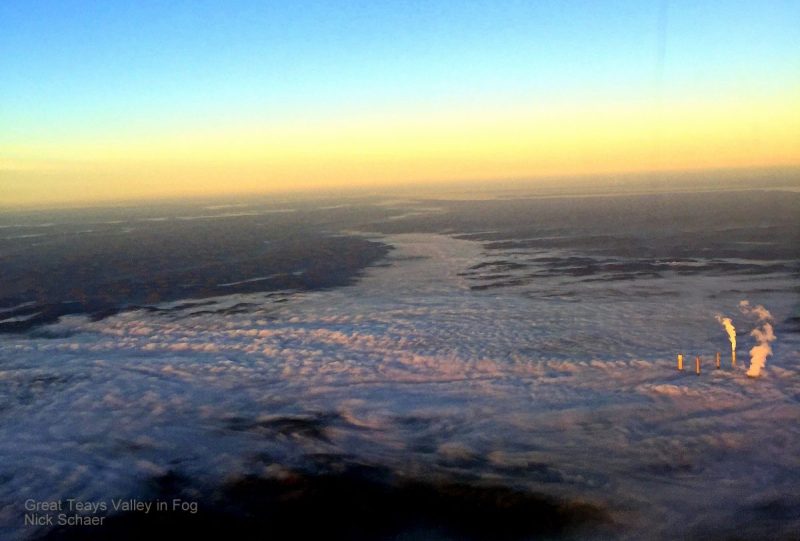
Over millions of years, the river carved broad valleys through the landscape. Unlike the steep, narrow hollows common throughout Appalachia today, portions of the Teays Valley were remarkably wide.
Those ancient valleys remain one of the strongest pieces of evidence for the river’s existence.
Where did the river flow?
The Teays entered West Virginia from the southeast and crossed much of the state before turning northwest toward Ohio.
Geologists have traced portions of the river’s route through the New River and Kanawha River valleys before it continued across western West Virginia. Evidence of the ancient drainage system has been found beneath parts of Putnam County, Cabell County, Mason County, and other areas along its route.
The river then continued into Ohio, where it flowed across much of the state before extending westward toward Illinois.
Although researchers continue to refine their understanding of the river’s exact course, there is little doubt that the Teays once formed one of North America’s most extensive river systems.
Today, much of that route lies buried beneath younger deposits left by floods, erosion, and glacial activity.
How scientists discovered the lost river
The existence of a giant buried river might sound like the plot of an adventure novel, but its discovery came through careful geological investigation.
In the late nineteenth century, geologists studying West Virginia and Ohio noticed unusually large valleys that seemed disproportionate to the streams flowing through them. Small creeks occupied valleys that appeared capable of holding rivers many times their size.
Later drilling projects uncovered deep deposits of gravel, sand, and river sediments beneath these valleys. The findings suggested that a much larger river had once occupied the landscape.
As additional studies were completed across several states, scientists gradually reconstructed the path of the ancient waterway.
The result was one of the most significant geological discoveries in the eastern United States—a river system that had vanished long before recorded history.
The Ice Age changed everything
The Teays River survived for millions of years, but it could not survive the Ice Age. Beginning roughly two million years ago, continental glaciers advanced southward across North America. Although the ice sheets never covered most of West Virginia, they dramatically altered river systems throughout the region.
As glaciers expanded into Ohio and neighboring states, they blocked portions of the Teays drainage network. Water backed up behind natural ice dams, creating enormous lakes and flooding ancient valleys.
Eventually, the trapped water found new routes around the obstacles.
Rivers were diverted. Valleys were abandoned. Entire drainage systems were reorganized.
Over thousands of years, the Teays River was fragmented and replaced by new waterways that followed different courses.
One of those waterways eventually became the Ohio River.

Older than the Ohio River
Perhaps the most surprising fact about the Teays is that it is considerably older than the Ohio River.
Many people assume the Ohio River has always existed, but geologists view it as a relatively recent feature in Earth’s history. Before glacial activity reshaped the region, the Teays and its tributaries dominated much of the Appalachian drainage network.
The modern Ohio River emerged only after glaciers forced rivers to carve new pathways across the landscape.
In a sense, the Ohio River owes its existence to the destruction of the Teays.
Without the Ice Age, the familiar map of eastern North America might look very different today.
Can you still see the Teays River?
The river itself is gone, but traces of it remain throughout West Virginia.
Broad valleys, unusual deposits of river gravel, and buried channels help reveal the path of the ancient waterway. In some locations, drilling has shown that the old river valley extends hundreds of feet below modern streams.
Teays Valley in Putnam County serves as perhaps the most visible reminder of the river’s existence. The community takes its name from the prehistoric waterway and sits within the region influenced by the ancient drainage system.
Travelers driving through western West Virginia often pass over portions of the buried valley without realizing what lies beneath them.
To geologists, however, the hidden landscape remains unmistakable.
Why the Teays River Matters Today
The Teays River is more than a fascinating chapter in geological history.
Its ancient valleys influence groundwater resources, soil composition, and modern landforms. Understanding the river helps scientists reconstruct past climates and better understand how glaciers reshaped eastern North America.
The buried valley also provides clues about natural resources and groundwater movement beneath portions of the Appalachian region.
For historians and naturalists, the Teays offers a reminder that landscapes are constantly changing, even if those changes occur over millions of years.
The mountains, rivers, and valleys that seem permanent today are merely snapshots in a much longer geological story.
Fun Facts About the Teays River
- The Teays River is older than the Ohio River.
- The river existed millions of years before humans arrived in North America.
- Portions of its buried valley remain hidden beneath West Virginia communities.
- The community of Teays Valley was named for the ancient river.
- Geologists have traced remnants of the river across several states.
- The river was largely destroyed when glaciers blocked its path during the Ice Age.
- Some sections of the ancient valley are hundreds of feet below modern river levels.
A hidden world beneath the Mountain State
Most West Virginians have never seen the Teays River, yet it remains one of the most influential natural features in the state’s history.
Long before coal mines, railroads, highways, and towns appeared on the landscape, the giant river crossed the Appalachian region and shaped the valleys that would one day become part of the Mountain State.
Though its waters vanished long ago, the Teays River continues to tell a story written deep beneath West Virginia’s hills—a story of ancient rivers, changing climates, and a landscape that has been evolving for millions of years.
For a more detailed story of the river, read: West Virginia haunted by the ghosts of the Teays River and other ancient streams
Good read , thanks !!
My Grandma Lipscomb told me about the Teays when I was young. She told of someone digging a well and tools disappearing. We have so much history here that is lost when the elderly pass.. She would sing West Virginia Hills. She taught me about trees and plants. There is clay here where they made bricks. How many people know about where they live,?
That was a very interesting article. I never heard of that before. I am going to look my Google earth over and go to my terrain maps to see if I can notice some of the features myself? I really enjoy geography and elevation maps. Thanks again for the interesting article and for your service. My son leaves for the Army July 13th for basic training at Fort Benning.