

CHARLESTON, W.Va. — Across West Virginia’s mountains, valleys, farm fields, and suburban neighborhoods, a new generation of baby deer is quietly entering the world.
June is the peak month for fawning season in the Mountain State, and residents are increasingly encountering spotted fawns curled motionless in tall grass, woodland edges, hayfields, and even backyards. While many people assume the young animals have been abandoned, wildlife officials say the opposite is usually true.
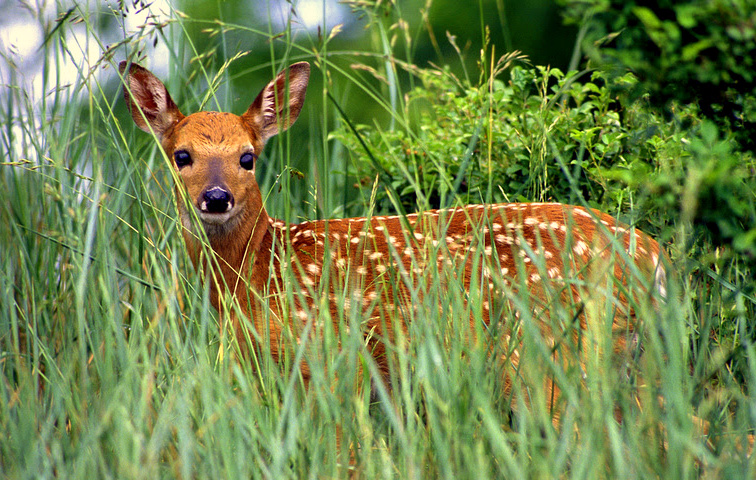
Biologists with the W.Va. Division of Natural Resources report that every spring, they receive calls from concerned residents who discover what appear to be orphaned fawns. In most cases, however, the animals are exactly where they are supposed to be.
Adult does often leave newborn fawns hidden for hours while they feed, returning periodically to nurse and care for them. The strategy helps reduce the chances that predators will discover the young deer.
For the thousands of fawns born across West Virginia each year, the first few weeks of life are also the most dangerous.
Why baby deer are appearing across West Virginia right now
Wildlife biologists describe the period as a race for survival. Newborn fawns rely almost entirely on camouflage and concealment. Their reddish-brown coats are covered with white spots that help them blend into dappled sunlight filtering through leaves and grasses.
They also produce very little scent, making them harder for predators to detect. Instead of fleeing from danger, a newborn fawn’s first instinct is often to remain perfectly still. The strategy works surprisingly well, but it does not guarantee survival.
West Virginia’s forests are home to a variety of predators capable of taking young deer. Coyotes, black bears, bobcats, foxes, feral dogs, and even large birds of prey can threaten fawns during their first weeks of life.

Research conducted in the eastern states has found that predation accounts for a significant share of fawn mortality, with black bears and coyotes often responsible for many of these losses.
Wildlife discussions associated with West Virginia deer studies have likewise noted that bears can be major predators of fawns in heavily forested regions.
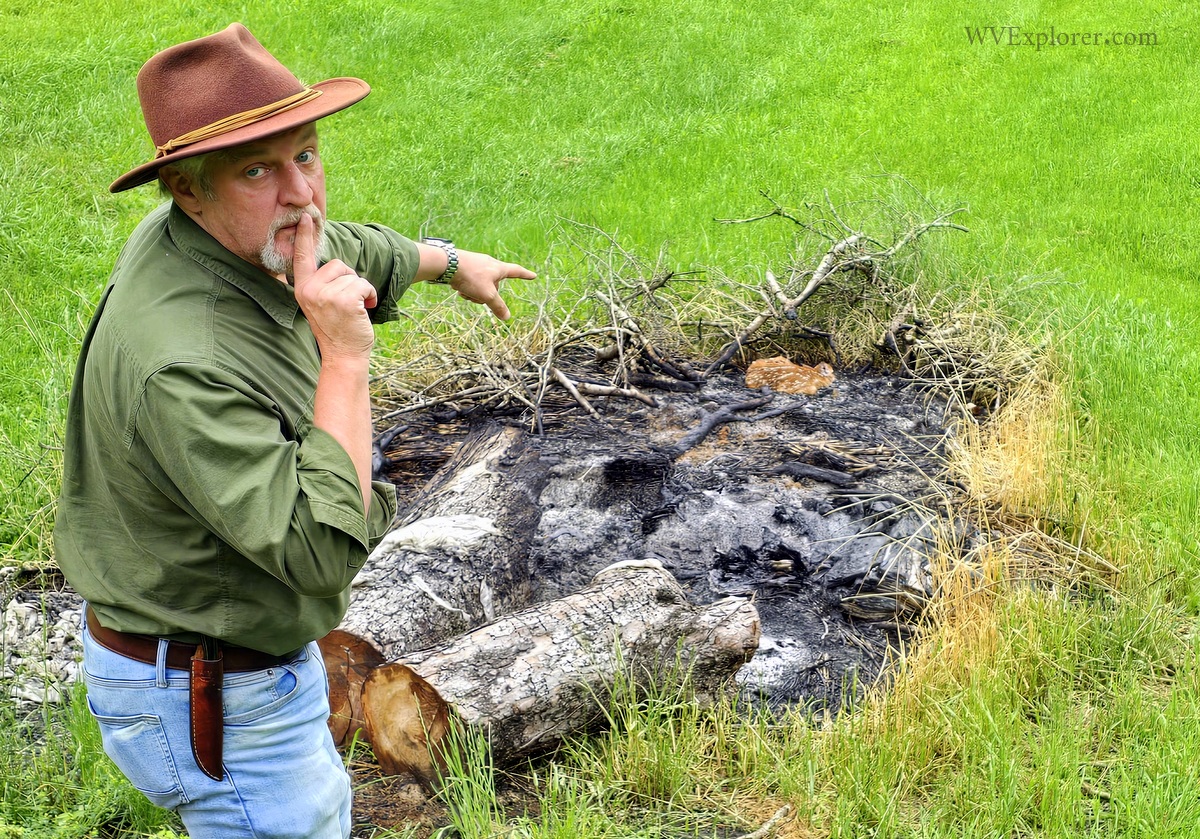
Weather can also play a role. Extended periods of cold rain shortly after birth can weaken fawns, especially those born during unusually wet springs. Flooding, vehicle collisions, disease, habitat disturbances, and accidental encounters with domestic animals create additional hazards.
Even a well-intentioned human intervention can sometimes reduce a fawn’s chances of survival if it separates the animal from its mother. Picking up, touching, or even getting close to wildlife can harm the animal.
Vinnie Johnson, a wildlife biologist for the division, warns onlookers that approaching young animals can be gravely dangerous.
“When you touch or approach young animals, you leave behind scent that predators may key in on, which brings risk to that young animal,” Johnson said. “Watching these young animals can be an enjoyable pastime, but W.Va. DNR recommends this be done from a distance with the use of binoculars.”
The timing of West Virginia’s fawning season is closely tied to the deer’s annual reproductive cycle. Most breeding occurs during the autumn rut, which typically peaks in November. After a gestation period of roughly 200 days, does begin giving birth in late spring.

Most fawns arrive between May and July, with June generally representing the height of the season. First-year mothers usually produce a single fawn, while mature does frequently give birth to twins and occasionally triplets.
The weeks immediately following birth are critical because fawns lack the speed and endurance needed to escape danger. During this period, does intentionally spend much of their time away from their offspring.
Why mother deer leave their baby deer alone
To people unfamiliar with deer behavior, the practice can seem unusual. Wildlife experts say it is one of the species’ most effective defenses. By remaining elsewhere while feeding, the doe avoids leading predators directly to the hidden fawn. She typically returns at dawn and dusk to nurse, groom, and sometimes relocate the animal to a new hiding place.
Biologist Trevor Moore of the West Virginia Wildlife Center stresses that state officials want people to understand that baby deer found alone should not be disturbed.
“The biggest thing we want people to know is most of the fawns you find are not abandoned,” Moore explained in a previous conversation with West Virginia Explorer. The separation between mother and fawn is normal behavior designed to protect young deer from predators.
That message becomes especially important in June, when outdoor recreation, hiking, gardening, and mowing activities increase throughout the state.
What to do if you find a baby deer
Wildlife officials advise residents to avoid touching, feeding, or attempting to rescue fawns that appear healthy. Human scent and repeated visits to a bedding site can attract predators and increase the animal’s stress.
In many cases, the best action is no action at all. Observers are encouraged to leave the area and allow the doe to return naturally.
The appearance of fawns also serves as a reminder of the importance of white-tailed baby deer to West Virginia’s wildlife heritage. Deer remain among the state’s most recognizable mammals and are closely tied to hunting traditions, wildlife photography, tourism, and outdoor recreation.
Visitors to state parks, forests, and public lands often consider the sight of a doe and fawn among the iconic experiences of a West Virginia summer.
Yet only a fraction of the spotted baby deer now hidden across the state will survive every challenge they encounter during their first weeks. Those that do will gradually lose their spots later in the summer, begin traveling regularly with their mothers, and eventually join the deer herds seen throughout the Mountain State each autumn.
For now, however, the tiny deer scattered across West Virginia’s fields and forests remain in nature’s most vulnerable stage—concealed, silent, and dependent upon camouflage and instinct to carry them through the most perilous days of their lives.
A fawns worst predator today is the coyote . It’s hard to believe that until 50 years ago a coyote was not found in West Virginia . Nobody seems to know where they came from, some say they were introduced to help control the deer population and some say they just migrated east . I personally can’t understand why for hundreds of years they never migrated . 60 to 70 per cent of a coyotes diet during the summer is fawns , and considering the number of coyotes in West Virginia now that would bea lot of baby deer .
Coyote are very adaptable and have been migrating throughout the U.S. for generations. They can be found in the downtowns of our largest cities.
They were released…for sure…I remember it in the 70’s n 80’s…
Coyotes were not found throughout the United States and certainly not in major cities in the east until the last 5 decades. Who knows why they started there migrating , but they have certainly done a number on West Virginia wildlife .
I have always been told the government relocated them to WV. I don’t know why it was done.