
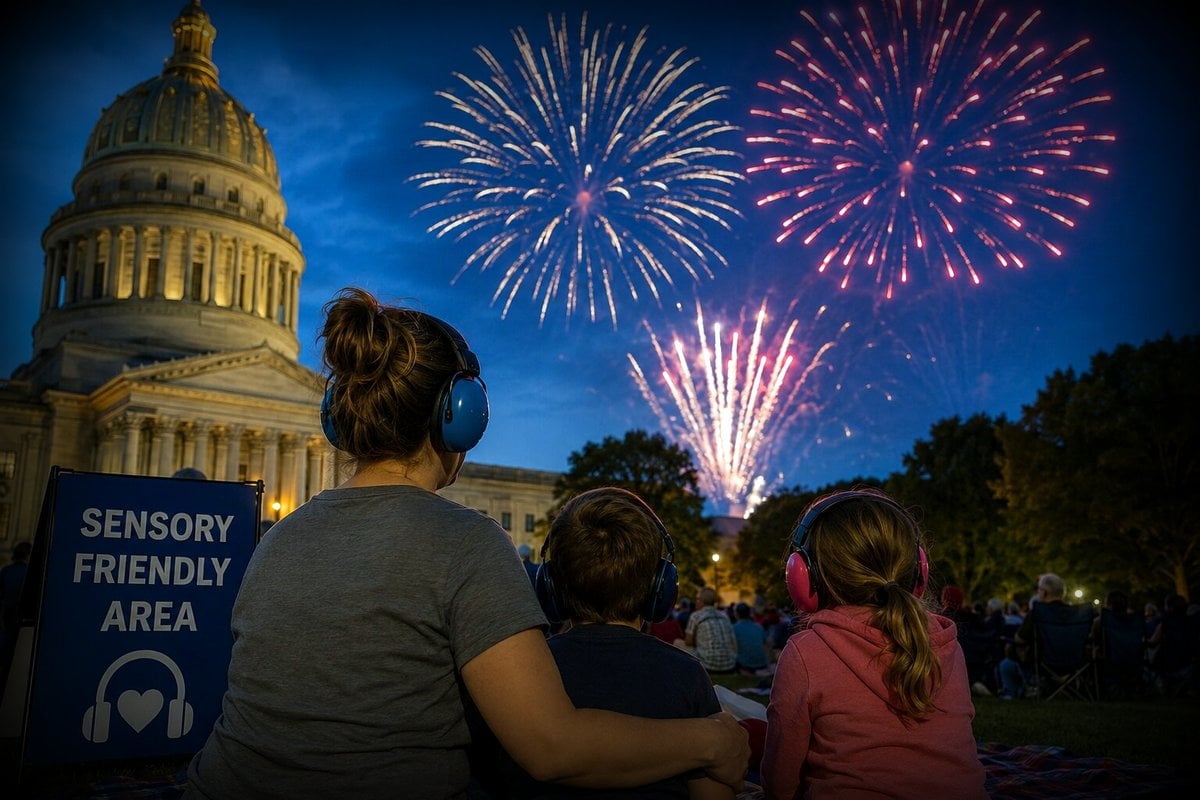
CHARLESTON, W.Va. — As thousands gathered at the West Virginia state capitol this weekend to celebrate the nation’s 250th birthday, organizers made a point of welcoming visitors who might otherwise avoid large Independence Day celebrations.

Among the accommodations were designated sensory-friendly spaces to provide a quieter environment for children and adults with autism, post-traumatic stress disorder, and other sensory sensitivities—part of a growing national effort to make one of America’s loudest holidays more accessible.
These accommodations reflect a broader shift well beyond West Virginia. While traditional fireworks remain central to most Fourth of July celebrations, communities increasingly are experimenting with quieter pyrotechnics, drone light shows, and other alternatives that preserve the spectacle while reducing the intense blasts that can overwhelm some spectators.
For many families, the changes mean they can participate in celebrations that were once too stressful to attend.
A Holiday That Isn’t Easy for Everyone
Traditional fireworks routinely exceed 140 decibels at close range—roughly comparable to the noise of a jet engine during takeoff.
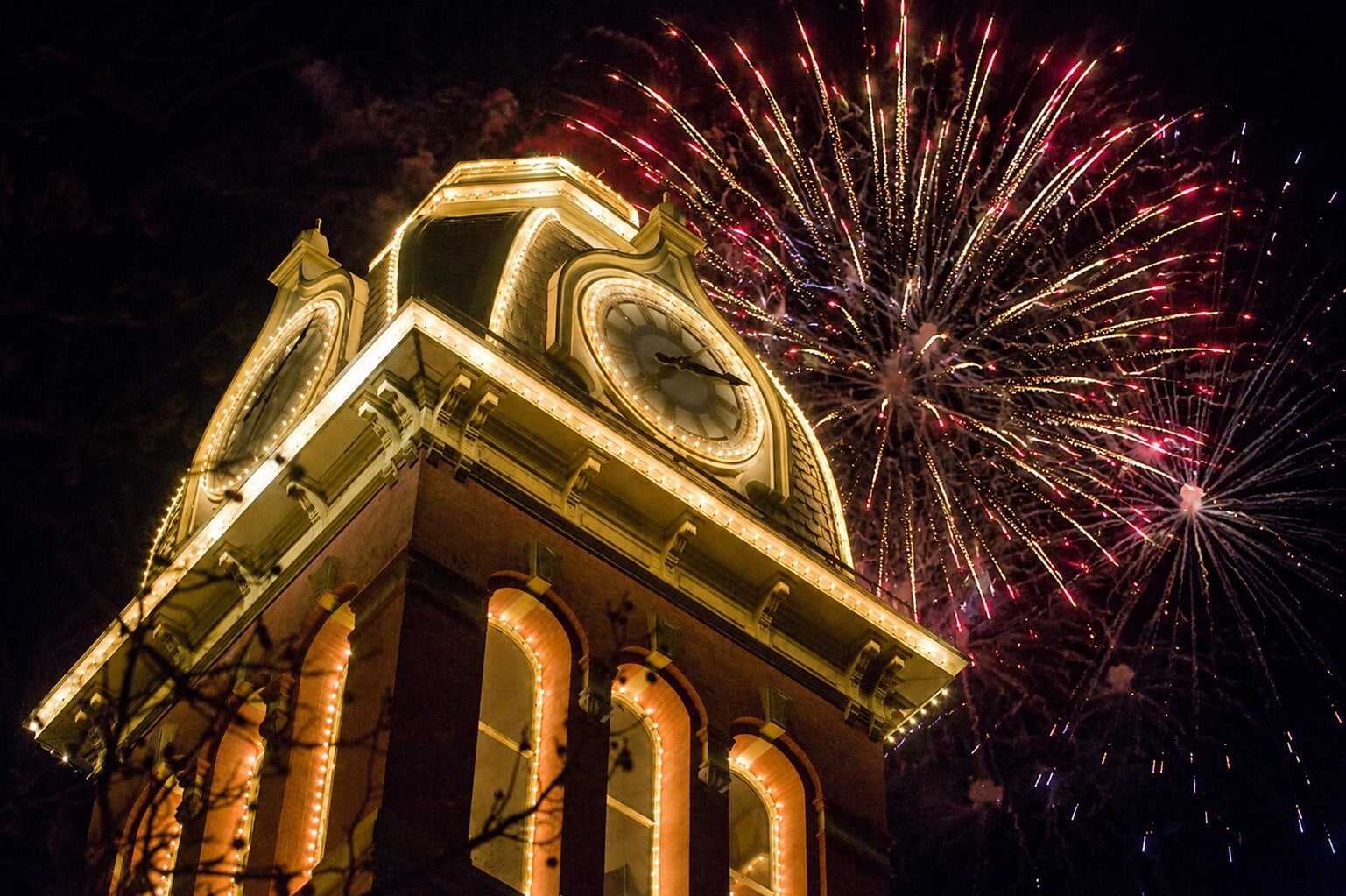
For many people, that isn’t merely uncomfortable. Children and adults on the autism spectrum often experience heightened sensitivity to sudden, loud sounds. Veterans living with PTSD may find that the explosions trigger traumatic memories. People with hearing disorders, dementia, anxiety disorders, migraines, or sensory processing conditions can also experience significant distress during fireworks displays.
Parents frequently describe spending Independence Day indoors with windows closed, putting headphones on their children, or leaving community celebrations before darkness falls.
Accessibility advocates increasingly argue that Americans shouldn’t have to choose between celebrating the nation’s birthday and protecting their health.
Read Also: Why hand injuries surge during Fourth of July fireworks celebrations
The Rise of Quiet Fireworks
One solution gaining attention is the use of “low-noise” or “quiet” fireworks. Unlike conventional shells designed to create sharp, concussive reports, quieter fireworks are engineered to emphasize color, movement, and visual effects while reducing explosive noise. They still produce noise—far from silent—but eliminate many of the chest-thumping blasts associated with traditional aerial displays.
Several European countries have adopted low-noise fireworks for festivals and municipal celebrations, particularly in historic city centers and communities seeking to reduce impacts on residents and wildlife.
Although still relatively uncommon in the United States, more municipalities are beginning to test them, especially where organizers hope to accommodate visitors with sensory sensitivities or reduce disturbances for nearby neighborhoods.
Drone Shows Offer Another Alternative
Perhaps the fastest-growing alternative isn’t fireworks at all. Drone light shows, featuring hundreds or even thousands of synchronized aircraft equipped with LED lights, create animated images across the night sky without the repeated explosions of conventional fireworks.
Levi Moore, an outdoor recreation consultant for West Virginia Explorer Magazine, bemoaned the noise, which he believed would frighten his family’s new dog, and said he looked forward to a day when drone shows would be more common.
“We really can’t go out and leave the puppy alone here in the house with all the noise,” Moore said. “What I’d really like to see is more drone shows. They’re quiet but astonishing.”
Drone displays can depict American flags, eagles, historical figures, military tributes, or community landmarks with remarkable precision.
Communities also cite practical advantages. Drone shows produce little smoke, reduce wildfire risk during dry weather, cause less disturbance for pets and wildlife, and can be programmed with remarkable accuracy. Some cities now combine drone performances with traditional fireworks, while others have replaced fireworks entirely.
More Than Fireworks
Accessibility doesn’t end with what happens in the sky. Many event organizers now offer designated quiet areas away from speakers and crowds, sensory bags with fidgets and ear protection, maps highlighting lower-noise viewing spots, and advance schedules so families know when louder parts of programs will begin.
Organizers say the goal isn’t to eliminate fireworks but to provide options that let more people participate. The accommodations at West Virginia’s America250 celebration illustrate that philosophy.
Rather than changing the holiday itself, planners recognized that small adjustments—including sensory-friendly spaces—can make large public celebrations welcoming to families who have historically stayed home.
A Changing Tradition
Fireworks have been used to celebrate American independence since the nation’s earliest years. Yet the way communities celebrate continues to evolve.
As laser light shows, synchronized music, and drone technology have expanded what is possible at public celebrations, accessibility has become another key consideration for organizers.
For many communities, the question is no longer whether fireworks should remain part of Independence Day, but how celebrations can preserve the excitement while ensuring that children with autism, veterans coping with PTSD, older adults with dementia, and others with sensory challenges can enjoy the festivities alongside everyone else.
The sensory accommodations at the West Virginia State Capitol suggest that this year’s America250 celebration was about more than commemorating the nation’s past. It also reflected an emerging vision for how America’s next 250 years of public celebrations may include more people than ever before.