
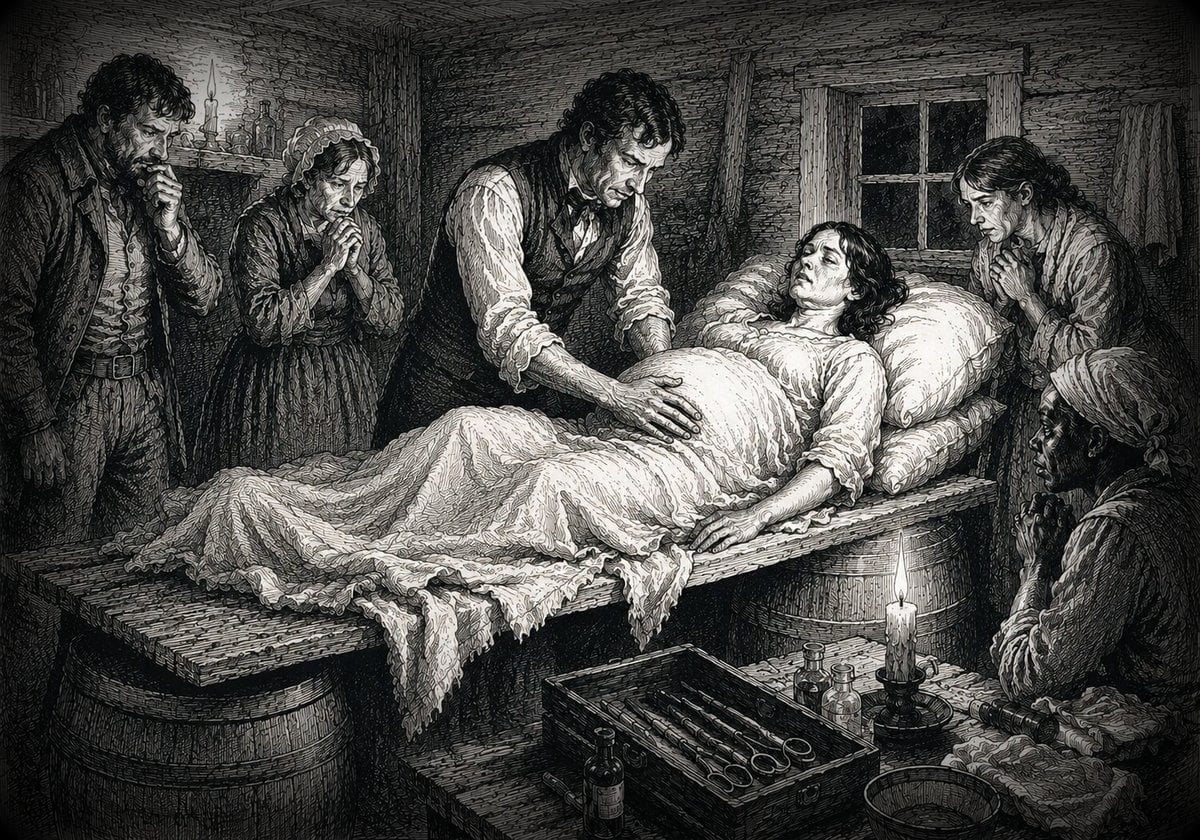
POINT PLEASANT, W.Va. — Long before antibiotics, anesthesia, or modern hospitals, a young physician in a log cabin on the American frontier faced an impossible decision.

The operation he performed is now widely regarded as the first successful Cesarean section in the United States in which both mother and child survived. Within a few years, he settled along the Ohio River in what is now West Virginia, where he spent the rest of his life serving one of the nation’s most isolated frontier communities.
A winter night on the American frontier
In January 1794, the United States was still a young nation, and much of the country west of the Blue Ridge Mountains remained wilderness. The great medical schools and hospitals of Philadelphia, New York, and Boston lie hundreds of miles away.
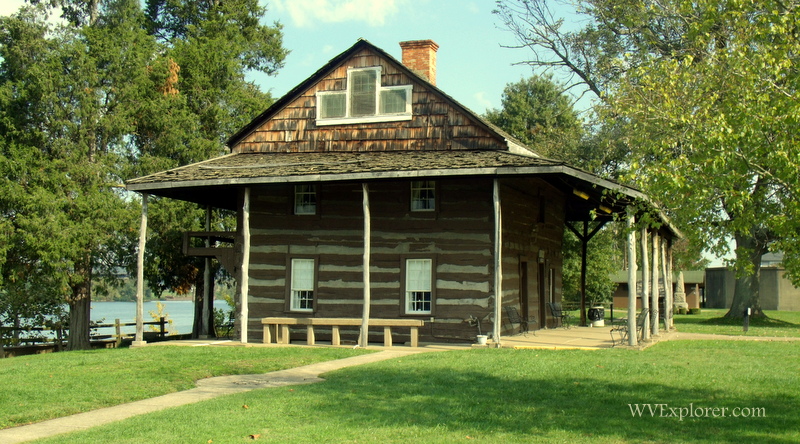
Beyond the Blue Ridge stretched a landscape of vast forest and a handful of isolated settlements, where physicians often traveled on horseback for days to reach their patients. Childbirth itself posed one of the greatest dangers a family could face, and when complications arose, there was often little even an experienced doctor could do.
It was in that world, inside a small log cabin in Virginia’s Shenandoah Valley, that 24-year-old Dr. Jesse Bennett faced a choice few physicians of his generation would have dared make.
His wife, Elizabeth, had endured a long, exhausting labor. Another physician, Dr. Alexander Humphreys, had already concluded there was little hope and that, without extraordinary intervention, both mother and child appeared unlikely to survive.
According to accounts later preserved by historians, Elizabeth understood the seriousness of her condition. Believing she was dying, she pleaded with the physicians to attempt a cesarean operation in hopes that her child might live, but Humphreys refused.
At the close of the eighteenth century, opening a woman’s abdomen during childbirth was regarded as an act of desperation. There were no antibiotics, no antiseptic surgery, no blood transfusions, and no understanding that bacteria caused infection. Ether and chloroform had not yet been introduced as anesthetics, leaving patients to endure surgery with little more than alcohol, opium-based medicines, or physical restraint.

To many physicians, the operation offered almost no chance of success. Bennett, however, saw one remaining possibility. If death seemed certain without surgery, he believed there was at least some hope with it.
Working by candlelight, he improvised an operating table by laying wooden planks across two barrels. Elizabeth received a large dose of laudanum—an opium preparation commonly used to dull pain and induce sleep, though nothing resembling modern anesthesia. Family members and two enslaved household women remained nearby as he prepared for an operation at which almost no American physician had succeeded.
Moments later, he delivered a healthy baby girl, whom they named Maria. Then came the truly astonishing outcome: Elizabeth survived.
Today, Bennett’s operation is widely regarded as the first successful Cesarean section in the United States in which both mother and child survived. Medical historian James V. Ricci described it as one of the landmark achievements in early American obstetrics, while modern historians continue to recognize its significance despite later debates over the surviving documentation.
Inside that modest frontier cabin, American medical history had quietly changed, and almost no one outside the family knew it.
Why did the operation seem impossible?
Modern readers naturally wonder why Bennett’s achievement inspired such astonishment, and the answer lies in the state of medicine itself.
The operation occurred nearly half a century before the first practical use of surgical anesthesia and more than seventy years before Joseph Lister introduced antiseptic surgical techniques. Physicians did not yet understand germs. Surgical instruments were not sterilized. Surgeons generally operated in ordinary clothing with unwashed hands because no one knew bacteria caused deadly infections.
Even successful operations often ended with patients dying days later from infection. Blood transfusions were unavailable. Intravenous fluids did not exist. If severe bleeding occurred, there was little a physician could do.
Under such circumstances, Cesarean delivery was considered a last resort reserved for situations in which death already appeared inevitable. The operation Bennett performed required both surgical skill and extraordinary courage. It also required remarkable composure.
According to later accounts, Bennett completed the surgery using frontier instruments, relying on experience, instinct, and determination rather than on the scientific knowledge physicians possess today.
Whether every detail survived unchanged through generations of retelling is impossible to know. What historians broadly agree upon, however, is that both Elizabeth and Maria recovered, an outcome almost unheard of in America at the time.
The remarkable success might have secured Bennett a lasting place in medical history. Instead, it nearly disappeared!
A physician on the Appalachian frontier
Only three years after the operation, Bennett and his family left Virginia’s Shenandoah Valley for the Ohio River frontier.
Their destination was Point Pleasant, where the Kanawha River joins the Ohio River in what is now western West Virginia. At the close of the eighteenth century, the settlement marked the edge of American expansion. Beyond it lay countless miles of forested mountains and river valleys where communities, mostly established by the French, remained small, travel was difficult, and trained physicians were exceedingly rare.
According to Robert B. Ferguson’s account in the West Virginia Heritage Encyclopedia, Bennett quickly established one of the region’s largest medical practices. Patients traveled from throughout the Ohio Valley to seek his care.
He regularly crossed into Gallipolis, Ohio, and journeyed along the Kanawha River to the French settlements at Belpre, Pomeroy, Marietta, and Guyandotte. He reportedly traveled upriver as far as Wheeling and served communities separated by great distances and primitive roads.
Ferguson observed that Bennett may have been “the only educated physician within fifty miles,” illustrating both the scarcity of formally trained doctors and the immense responsibilities placed upon frontier physicians.
Medicine became only one part of Bennett’s public life. He also served in the Virginia Assembly, became a militia officer, and later worked as a surgeon during the War of 1812.
Ferguson notes that Bennett refused to become involved in the conspiracy of former Vice President Aaron Burr and neighbor Harman Blennerhassett, whose alleged plot to establish an independent western nation became one of the young republic’s greatest political controversies.
By the early nineteenth century, Bennett had become one of western Virginia’s most respected physicians—not because of a single operation, but because of decades spent caring for families across one of America’s newest frontiers.
Why history nearly forgot him
Given the importance of Bennett’s achievement, it seems surprising that his name is not more widely known today. The reason is remarkably simple. He never published the operation.
Unlike physicians practicing in Philadelphia or other eastern cities, Bennett lived and worked on the nation’s frontier. Communication with the country’s medical community was slow, professional journals were still few in number, and many rural physicians spent their lives treating patients rather than building academic reputations.
As a result, he never presented his extraordinary case before a medical society or sought recognition from his colleagues. For decades, the story remained largely within his family and the communities where he practiced. Later, physicians who documented successful Cesarean operations received far greater attention because their cases were published in the medical literature.
Only many years after his death did historians begin assembling evidence from family papers, local traditions, and eyewitness recollections that had survived in the Ohio Valley. Among those who helped preserve the story was nineteenth-century historian Aquilla Leighton Knight, whose research brought renewed attention to the remarkable events of January 1794.
According to accounts preserved by Knight, Bennett himself explained why he had remained silent. “No strange doctors,” Bennett said, “would believe that the operation would be done in the Virginian backwoods and leave the mother alive, and I’d never give them a chance to call me a liar.”
Whether every word survived exactly as spoken is impossible to know after so many decades. Yet historians have long cited the quotation because it captures the reality of frontier medicine. Physicians practicing hundreds of miles from America’s medical centers often worked in relative isolation, their successes known only to the families they served.
Ironically, Bennett’s modesty may have cost him decades of recognition. Today, historians generally distinguish between performing the operation and reporting it. Bennett is widely regarded as having performed the earliest successful Cesarean section in the United States, in which both mother and child survived, whereas later physicians received broader recognition because they formally published their cases.
Remembering Jesse Bennett today
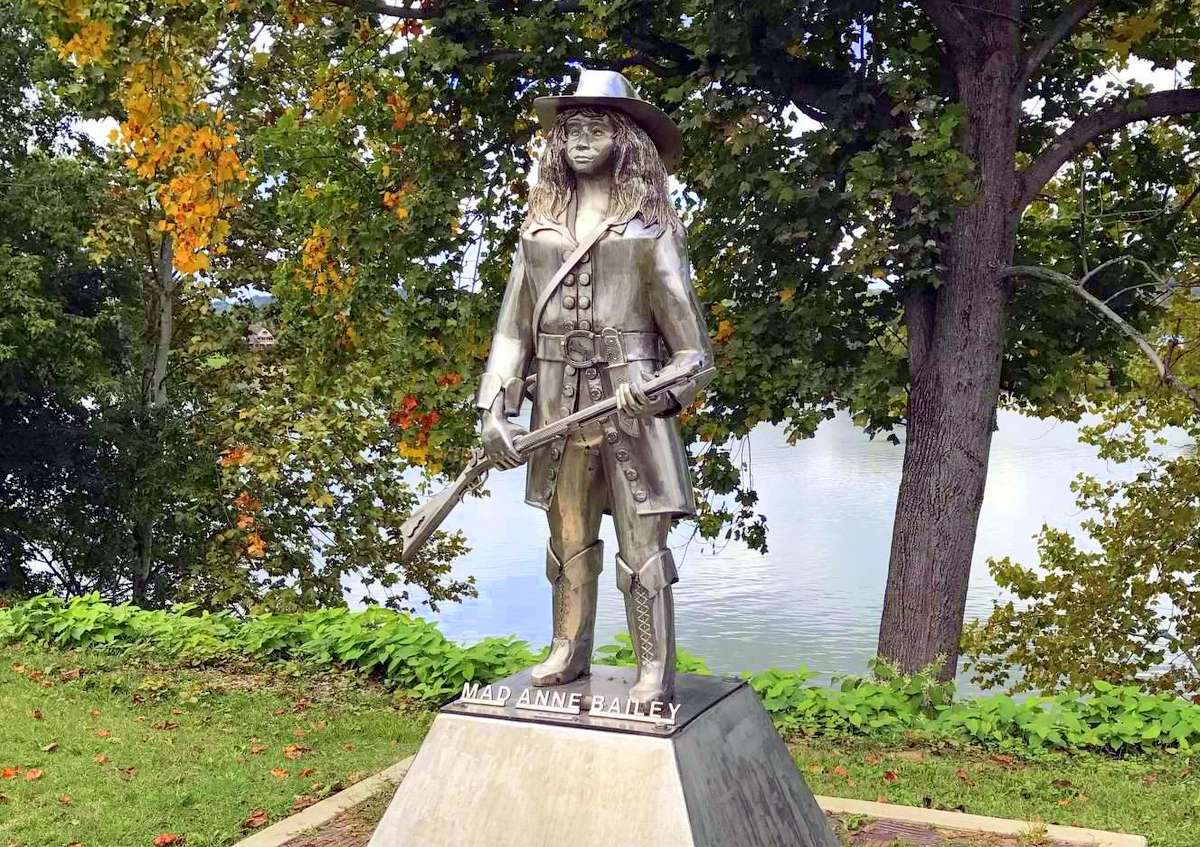
Visitors to Point Pleasant often arrive to explore the town’s rich history. Many come to learn about the 1774 Battle of Point Pleasant, which ended Shawnee claim to lands south and east of the Ohio River. Others visit because of the community’s famous Mothman legend or to enjoy the scenic meeting of the Ohio and Kanawha rivers. Few realize the town was also home to one of the nation’s most remarkable frontier physicians.
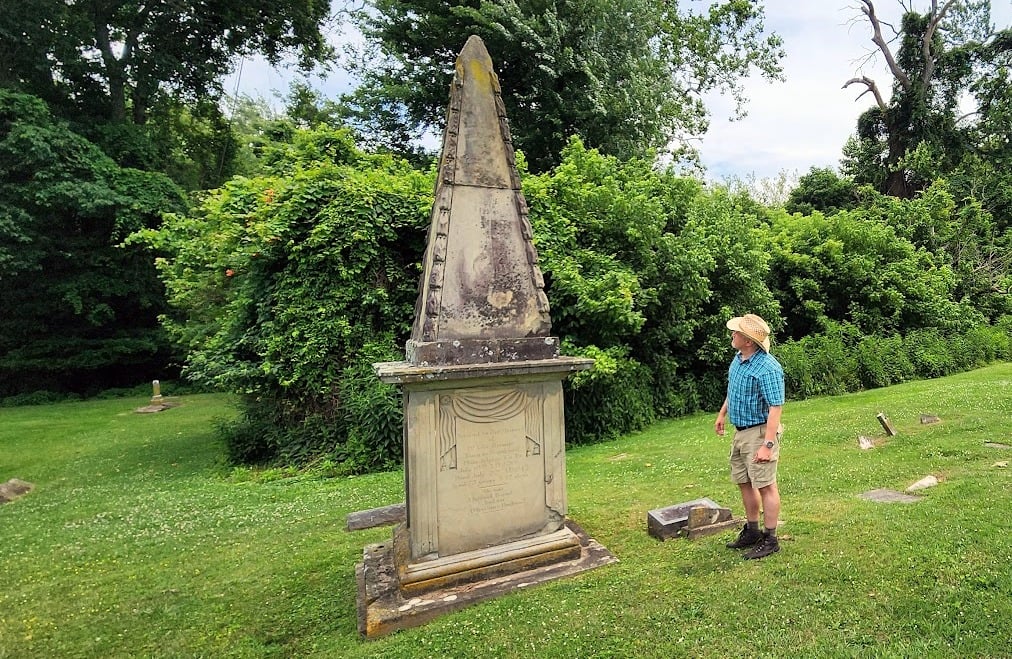
Dr. Bennett practiced medicine at Point Pleasant until his death in 1842 and is buried in a historic cemetery, where local historians have preserved his memory for generations. In 1947, the community commemorated the 150th anniversary of his arrival on the frontier, reflecting the lasting respect he earned among the people he served.
The historical record is not without questions, however. Because Bennett never published his account, scholars continue to evaluate later testimony and surviving documents. Yet few dispute the extraordinary outcome witnessed inside that frontier cabin. Both mother and child survived an operation that almost certainly would have claimed their lives under ordinary circumstances.
That alone secured Bennett a place in American medical history.
A legacy born on the frontier
Medical breakthroughs are often associated with renowned universities, famous hospitals, or celebrated research laboratories. Jesse Bennett’s greatest achievement happened somewhere very different. It took place inside a log cabin lit by candles, hundreds of miles from the nation’s leading medical centers, where a young physician faced an impossible choice with little more than his training, his determination, and the hope that he might save the woman he loved.
Within a few years, he carried that same spirit of service westward to the Ohio River frontier, spending the rest of his life caring for families across what would later become West Virginia. His name never became as famous as those of many physicians who followed him. Yet history has gradually caught up with his accomplishment.
Today, more than two centuries after that winter night in Virginia’s Shenandoah Valley, Jesse Bennett is remembered not only as a pioneer of American medicine but also as one of the remarkable frontier physicians who helped shape the early history of Appalachia. His story reminds us that some of the nation’s greatest achievements occurred far from its largest cities—in places where courage, necessity, and quiet determination often mattered more than recognition.
Sources
- Embryo Project Encyclopedia, Arizona State University, “Jesse Bennett (1769–1842).”
- Ferguson, Robert B. “Jesse Bennett,” West Virginia Heritage Encyclopedia.
- Knight, Aquilla Leighton. “Dr. Jesse Bennett,” The Southern Historical Magazine (1892).
- Ricci, James V. The Genealogy of Gynaecology: History of Obstetrics and Gynecology. Philadelphia: Blakiston Company, 1945.