
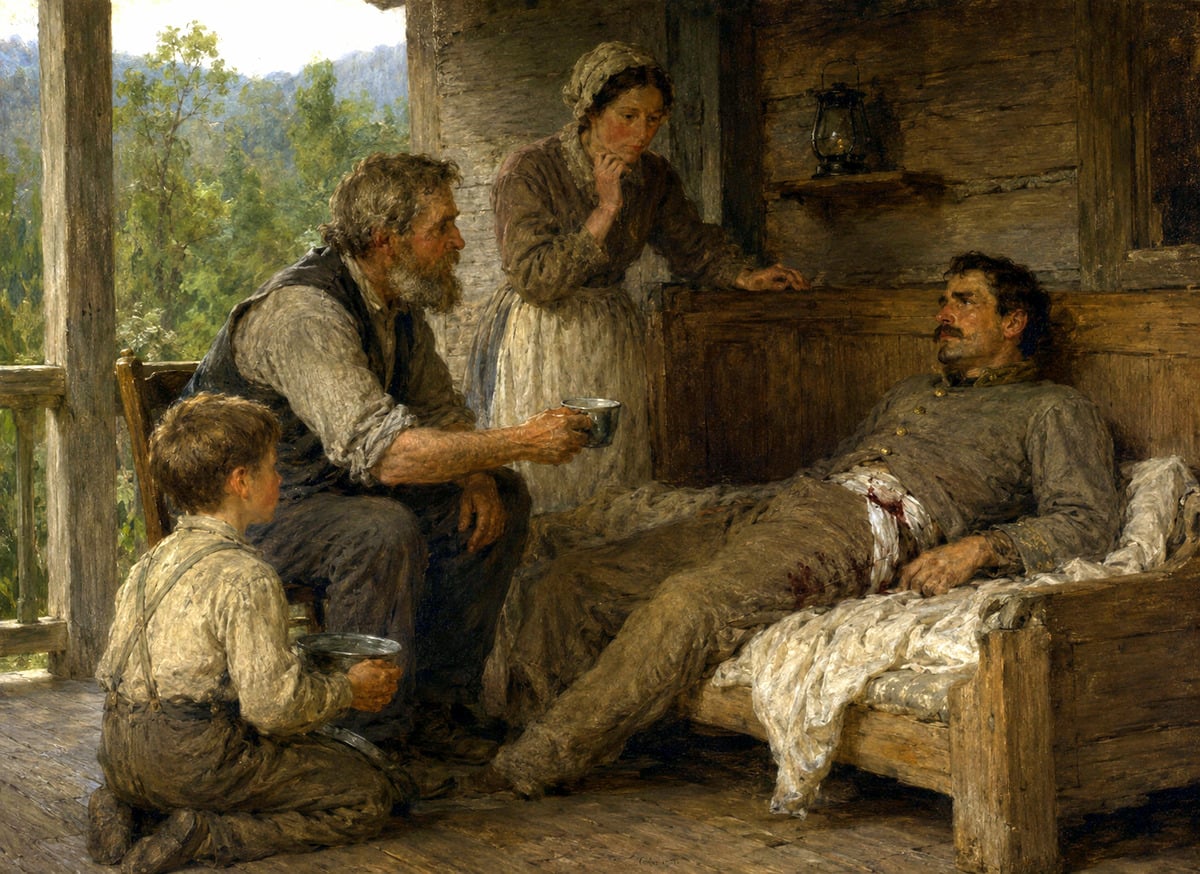
BEVERLY, W.Va. — Every battlefield has its stories. Some are preserved in military reports and official records, while others endure because generations of local families refused to let them be forgotten.

Among the most enduring tales from the Battle of Rich Mountain is that of Confederate Capt. DeLaguel, who, according to Randolph County tradition, spent three days crawling through the Allegheny wilderness after being wounded in the battle before finding refuge with a farm family that risked everything to save him.
Whether every detail can be documented today is uncertain. Yet for decades, the story has appeared in local historical accounts, remembered not for military heroics but for the compassion shown by ordinary West Virginians during one of the state’s earliest Civil War battles.
The following account was published by Lucille Smith in the Magazine of the Randolph County Historic Society in 1971.
Wounded on Rich Mountain
The legend begins on July 11, 1861, as Union troops attacked Confederate positions atop Rich Mountain overlooking the Tygart Valley.
According to the account, a young Irish boy was helping serve one of the Confederate cannon crews when Capt. DeLaguel urged him to surrender as Union soldiers closed in.
“There is no more danger for me than for you,” the boy reportedly replied, and within minutes, to DeLaguel’s horror, the boy was killed.
The Confederate line soon collapsed. As soldiers retreated into the surrounding forest, DeLaguel stepped into the open and raised his hands in surrender. Instead of being taken prisoner, he was shot in the hip.
Unable to walk, the wounded DeLaguel pulled himself into tall weeds and remained hidden until both Union and Confederate soldiers had left the battlefield. Only then did his real struggle begin.
Read also: West Virginia’s hidden mountaintop Civil War sites reveal forgotten campaigns
Three days across the Alleghenies
For the next three days, DeLaguel reportedly crawled nearly four miles across the rugged mountain landscape. Unable to stand, he survived on spring water and wild turkey berries while searching for help. Late on the third day, he spotted a farmhouse, the home of Frank White.
The following morning, he crawled to the White home, where family members found the exhausted officer lying outside their back gate, asking only for a drink of water. He declined food. “I’m too sick to eat,” he reportedly told them.
Shelter at the White Farm
Helping DeLaguel carried considerable risk. Union troops still occupied much of the region following the battle, and anyone discovered sheltering a Confederate officer could have faced serious consequences. Nevertheless, the White family chose to hide him inside a small trundle bed built into one end of their porch while Dr. Yokum of nearby Beverly secretly traveled to treat his wounds.
According to local tradition, the captain remained there for six weeks. As his strength slowly returned, he ventured outside only after dark to exercise his injured hip, fearful that passing soldiers might discover his hiding place. During restless nights, he reportedly believed Union troops were approaching and crawled beneath the trundle bed to hide.
When he was finally strong enough to travel, Frank White dressed him in a farmer’s homespun clothing, packed him a small sack of salt and a modest lunch, and advised him to pretend he was searching for stray livestock.

An escape cut short
The disguise nearly worked. According to the story, DeLaguel successfully passed several Union picket lines before someone noticed his expensive boots.
“No farmer wears fifteen-dollar boots,” one soldier reportedly remarked. DeLaguel was arrested and remained a prisoner until the Civil War ended, but his story did not end there.
Decades later, in 1891, DeLaguel wrote to Beverly’s postmaster, hoping to locate the White family. Correspondence followed, but the reunion itself would not occur until the spring of 1923.
A reunion more than sixty years later
Local accounts say a taxi stopped outside the White home one day, and an elderly gray-haired man knocked on the door.
“You don’t know me,” he reportedly said, though Mrs. White answered that she had recognized him by his voice.
During the visit, DeLaguel told how he had nearly escaped Union lines before his boots gave him away. He also showed the Whites a pocketknife and a dogwood walking cane Frank White had given him when he left the farm more than 60 years earlier.
The White family, in turn, had preserved reminders of his stay, including the bloodstained suit he wore when he first arrived at their home.

Read also: Tale of Rich Mountain Ghosts recalls early Civil War battle in West Virginia
A story that endures
Like many Appalachian stories passed from one generation to the next, the tale of Capt. DeLaguel exists somewhere between documented history and local memory. Whether every detail occurred exactly as remembered may never be known.
What has endured is a story that reflects another side of the Civil War in the Allegheny Mountains—not simply one of armies and battlefields, but of survival, mercy, and the unlikely bond formed between enemies during one of the conflict’s darkest summers.
Visiting Rich Mountain Battlefield
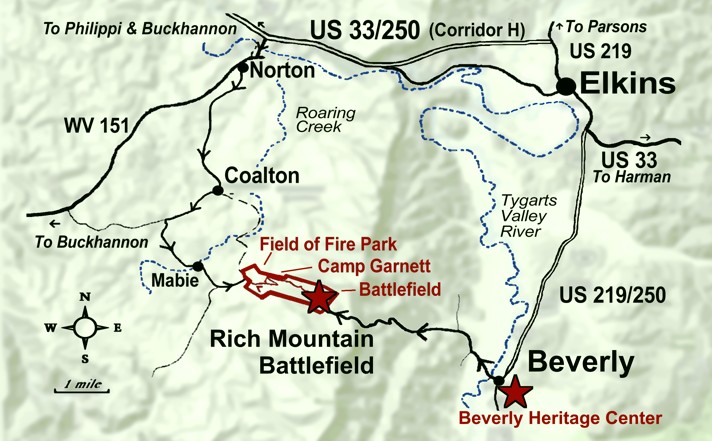
Visitors today can explore much of the small battlefield at Rich Mountain Battlefield, where wooded trails, interpretive exhibits, and quiet overlooks help bring to life one of the Civil War’s earliest campaigns.
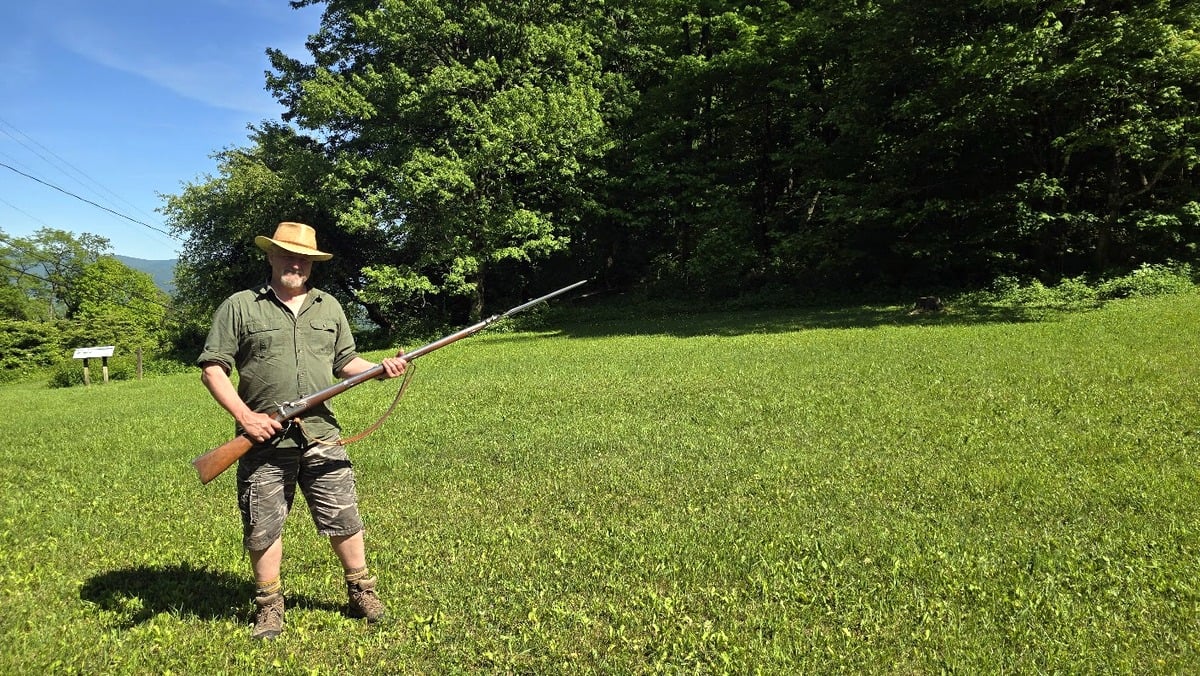
The site preserves much of the rugged mountain landscape through which soldiers fought and, according to local tradition, where the wounded Capt. DeLaguel began his desperate crawl to safety.
Many travelers combine a visit with a stay in nearby Beverly, one of West Virginia’s best-preserved historic communities, where museums, restored 19th-century buildings, and the Beverly Heritage Center offer additional insight into the region’s Civil War history.
Following the route of the old Staunton–Parkersburg Turnpike, visitors can continue east across Rich Mountain or west into the Tygart Valley, retracing a landscape that played a pivotal role in the opening months of the war.