
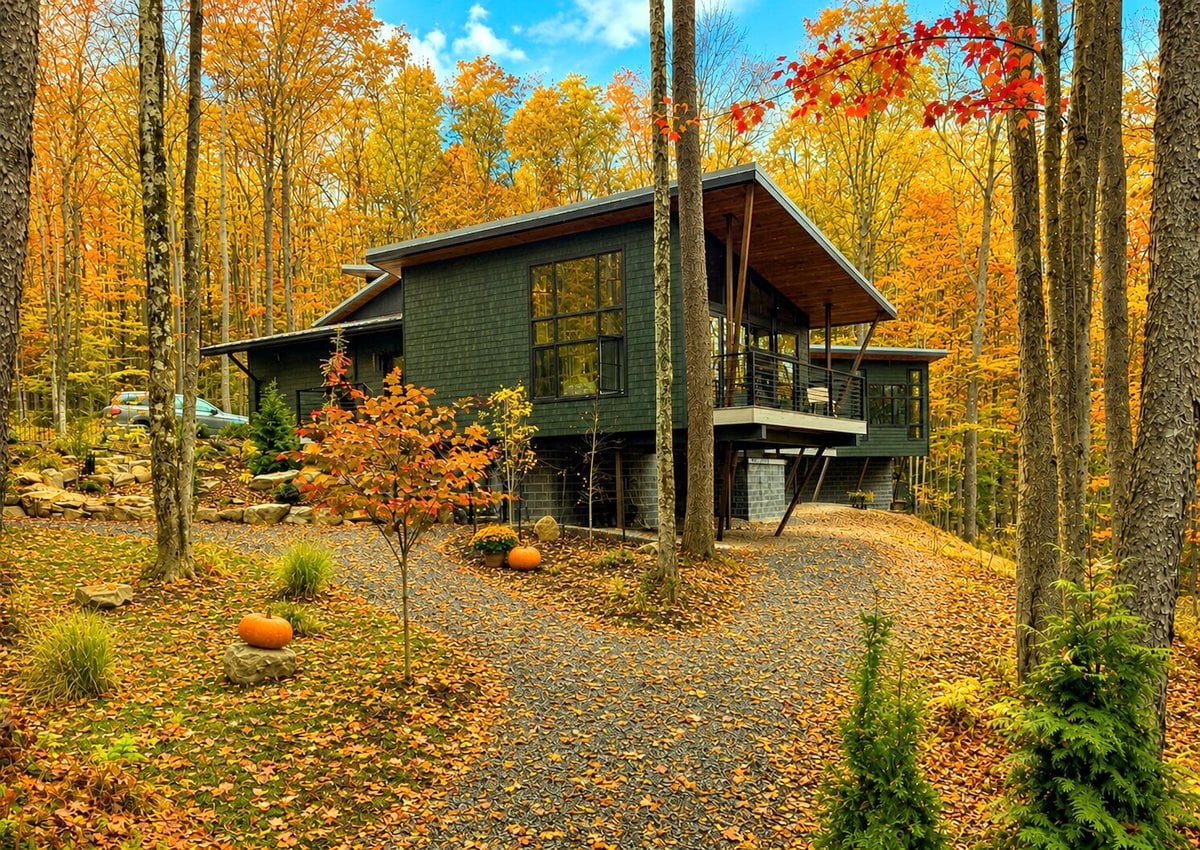
MORGANTOWN, W.Va. — For generations, West Virginia’s steep mountainsides posed one of the state’s greatest challenges for homebuilders.
Deep hollows, narrow ridges, and rugged slopes left little level ground for construction, so communities developed along river bottoms and broader ridge tops, where building was easier. Homes climbed hillsides only when necessary, and the state’s dramatic topography often dictated everything from road locations to town layouts.
Today, however, architects and engineers are turning that challenge into an advantage.
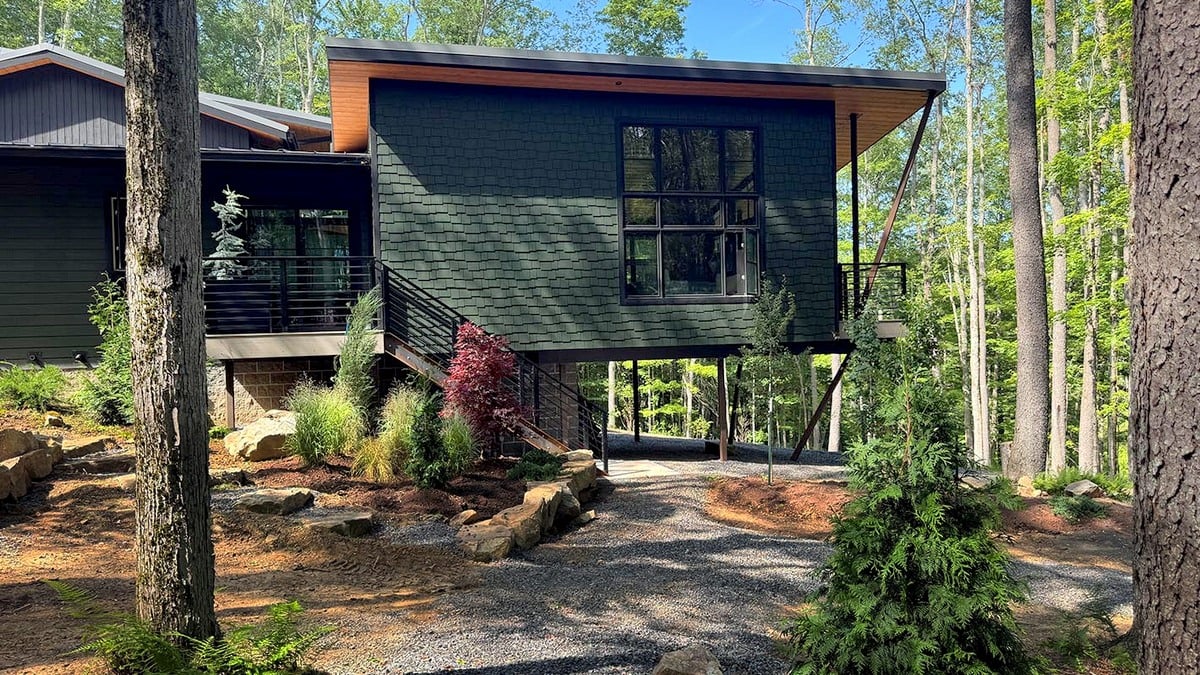
Advances in structural engineering, foundation systems, and computer modeling are enabling homeowners to build on hillsides once considered impractical. Rather than reshaping the landscape to accommodate conventional construction, designers increasingly build homes that adapt to the mountains themselves.
This shift reflects more Americans’ growing flexibility in where they live. Remote work, earlier retirement, and changing lifestyle preferences have encouraged many buyers to look beyond traditional suburban neighborhoods in search of privacy, scenic views, and closer connections to nature.
In West Virginia, those qualities are rarely found on flat ground. Instead, they appear along wooded ridges, overlooking winding rivers, perched above broad valleys, and tucked into forested mountainsides, where the landscape itself becomes part of everyday life.
For Michael Mills, principal architect with The Mills Group, West Virginia’s rugged terrain has become one of the state’s greatest architectural assets.
“We are fortunate to have clients who purchase land on hillsides and want to capture the views and maximize the context,” Mills said.

Rather than seeing steep terrain as a limitation, Mills said it often inspires better design.
“It’s often an architectural challenge, but an opportunity for a design solution that can be unique while fitting within a client’s budget and design aesthetic,” he said.
The result is a growing number of homes designed not simply to occupy the mountains but to become part of them.
West Virginia was built on mountains
West Virginia’s landscape has shaped where and how people build for centuries. Unlike much of the East Coast and Midwest, where broad expanses of relatively level ground allowed communities to spread outward in orderly patterns, West Virginia developed within one of the East Coast’s most rugged landscapes.
Read More: Why West Virginia may be the wildest state east of the Mississippi
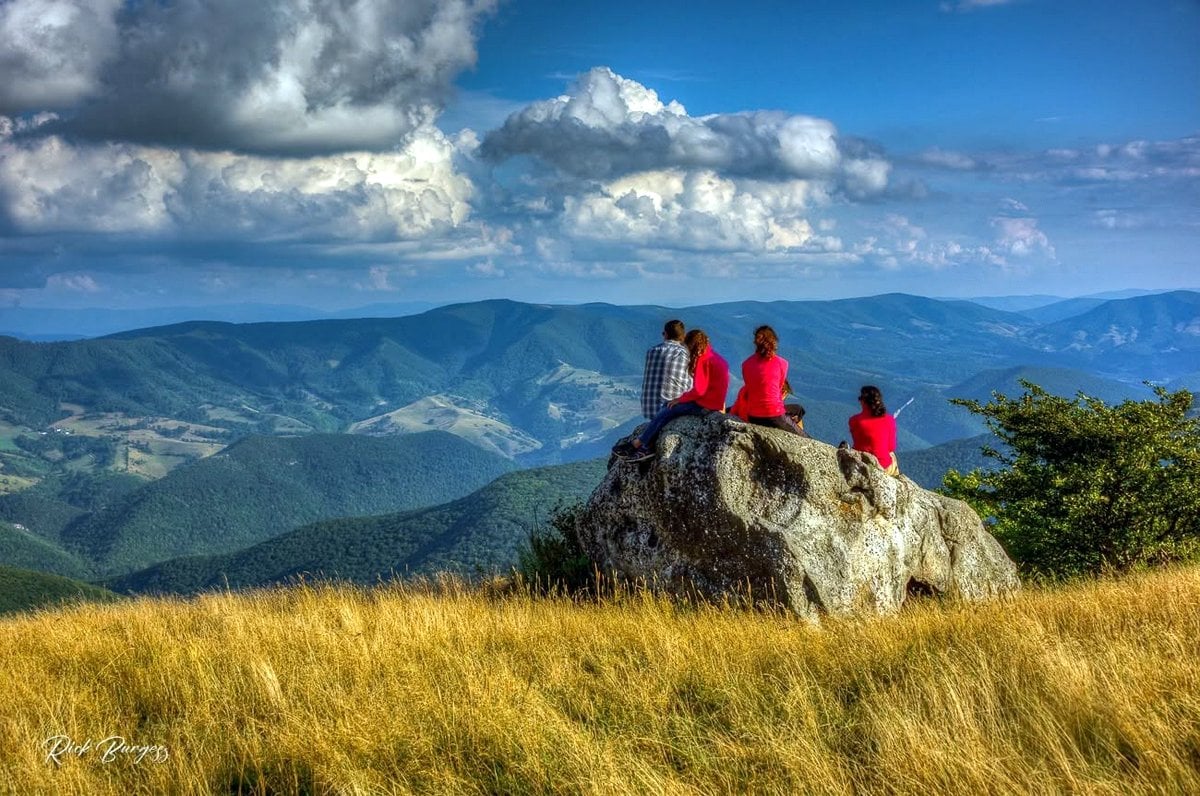
The state’s mountain ranges created narrow river valleys, steep wooded hillsides, and long forested ridges separated by deep hollows. Outside a limited number of floodplains and broader valleys, naturally level building sites have always been scarce.
Early settlers quickly adapted. Rather than reshaping the landscape, they often built homes on natural benches above streams, staying close to water while avoiding seasonal flooding. Farms occupied gentler slopes where fields could be cleared, while towns developed wherever valleys widened enough to accommodate homes, businesses, churches, and roads.
That pattern remains visible throughout the Mountain State today. Many highways still follow rivers because they provide the easiest routes through the mountains. Communities often stretch for miles along narrow valleys before climbing the surrounding hillsides as development expands beyond the valley floor.
Modern architects face many of the same geographic realities as early settlers. The difference is that today’s designers have engineering tools that allow buildings to respond to challenging terrain in ways that would have been impossible only a few generations ago.
Architects see opportunity where others see obstacles
For many prospective homeowners, a steep mountainside represents uncertainty. Questions about construction costs, access, drainage, and foundations can make hillside properties appear more complicated than conventional subdivision lots.
Architects often see something else entirely. For Mills, designing on steep terrain is simply part of practicing architecture in West Virginia.
“It is a rare day that we design on a flat lot with a residential structure,” Mills said.
Instead of imposing a standard design on every property, hillside projects require architects to start with the land itself. Before a floor plan takes shape, they study natural contours, views, vegetation, drainage patterns, and how the building will relate to its surroundings.
Those limitations often become opportunities. “Our greatest challenge and best design results have come about from sloped or steep hillside lots,” Mills said.
Rather than asking how a mountain can be altered to accommodate a home, architects increasingly ask how a home can respond to the mountain.
That philosophy influences nearly every aspect of the design process—from window placement and room arrangement to the orientation of outdoor living spaces and the selection of foundation systems.
The goal is not simply to build on a hillside. It’s to create a home that appears to belong there.
Designing homes that belong to the landscape
Mills believes successful architecture begins with a relationship between the building and its setting.
“As an architect, we always want the exterior and interior of a home to relate to the land, whether it is the views from within, framed by the expanse of glass on slope-side faces, or rooftop opportunities for decks that take advantage of the views in the hillside,” he said.
That relationship often begins with the view. Rather than treating windows as openings in a wall, architects increasingly use them to frame mountain ridges, forests, and river valleys as living works of art that change with the seasons.
Outdoor living spaces have become equally important. Covered porches, rooftop terraces, and expansive decks extend daily living beyond the home’s walls, allowing residents to experience morning fog lifting from a valley, autumn color spreading across distant hillsides, or evening sunsets from elevations few neighborhoods can offer.
Natural light also plays an important role. Homes built on steep slopes often take advantage of southern exposures and elevated positions, allowing sunlight to penetrate deeper into interior spaces and creating opportunities for passive solar design and improved energy efficiency.
Mills said the emphasis is not on dominating the landscape but on allowing the landscape to shape the architecture.
Modern engineering has changed what is possible
Many of the homes being built on West Virginia’s mountainsides today would have been difficult—or prohibitively expensive—to construct just a few decades ago.
However, advances in structural engineering, geotechnical analysis, and building materials have dramatically expanded the range of sites that can safely support residential construction.
Rather than relying on extensive excavation to create a large, level building pad, architects and engineers now have a variety of foundation systems that adapt to the natural terrain.
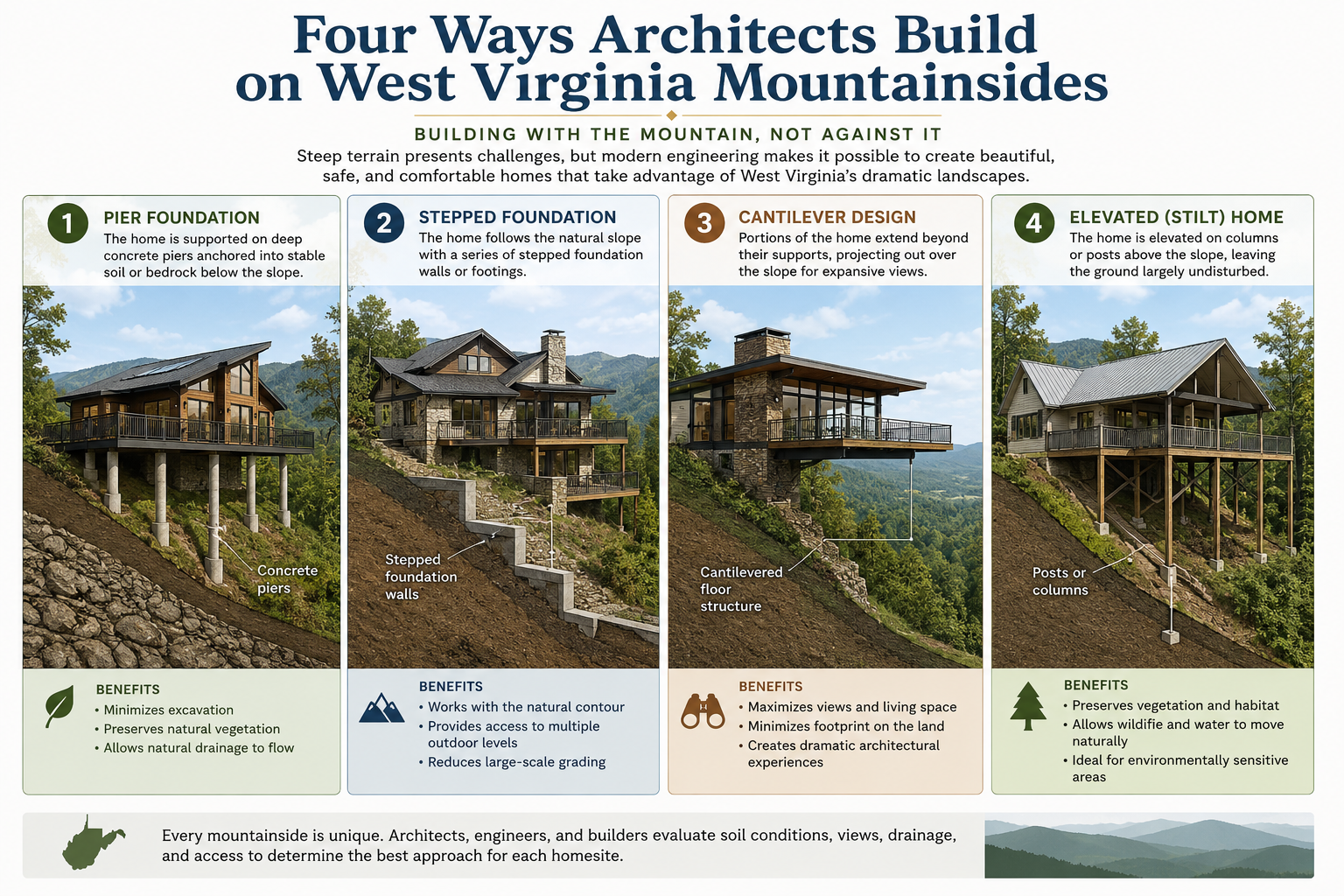
Pier foundations remain among the most common solutions. Instead of removing large amounts of earth, contractors install reinforced-concrete piers anchored in stable soil or bedrock. Structural beams span between the piers to support the home above, reducing excavation, preserving existing vegetation, and allowing natural drainage patterns to remain largely intact.
Other homes follow the slope itself. Stepped or terraced foundations allow structures to descend with the natural contours of a hillside rather than cutting deeply into it. This approach can reduce grading while creating multiple outdoor living spaces at different elevations.
On especially dramatic sites, architects sometimes incorporate cantilevered construction, allowing portions of a home to extend beyond their structural supports. Carefully engineered framing transfers the weight back into the primary structure, creating living spaces that project toward mountain or river views with minimal disturbance below.
Some properties also lend themselves to elevated structural systems supported by engineered columns or steel framing. Raising portions of a building above steep terrain can reduce impacts on mature trees, rocky outcrops, and environmentally sensitive areas while opening expansive views beneath and beyond the structure.
Although each approach differs, they share a common goal—enabling the building to respond to the landscape rather than forcing the landscape to conform to the building.
Computer modeling has become equally important. Before construction begins, engineers routinely analyze soil conditions, drainage, wind exposure, snow loads, and structural forces to ensure the design suits each property’s specific characteristics. Modern engineered wood products, high-strength steel connectors, reinforced concrete systems, and advanced waterproofing materials have further expanded what architects can safely accomplish on steep terrain.
Together, these advances have transformed hillsides once viewed as difficult building sites into some of the state’s most desirable places to build.
Read more: What out-of-state buyers should know before purchasing property in West Virginia
Appalachians have long built with the land
Although today’s engineering is remarkably sophisticated, the idea of adapting homes to the landscape is hardly new.
Long before computer modeling and reinforced-concrete foundations, Appalachian builders learned to work with the mountains rather than against them.
Cabins and farmhouses were often positioned on naturally level benches above creeks and rivers, taking advantage of well-drained ground while remaining close to water sources and fertile bottomland. Builders oriented homes to capture sunlight, shelter entrances from prevailing winter winds, and make practical use of local materials.
Stone gathered from nearby hillsides was used for foundations and chimneys. Timber harvested from surrounding forests supplied framing, flooring, and siding. Rather than imposing rigid geometric layouts on difficult terrain, early builders allowed the land’s contours to influence the placement of homes, barns, and outbuildings.
The tools have changed dramatically over the past two centuries, but the underlying philosophy remains surprisingly familiar. Good mountain architecture still begins with understanding the land.
Why mountain living appeals to homeowners
The same rugged landscape that once complicated construction has become one of West Virginia’s greatest attractions.
For many buyers, the appeal extends well beyond the house itself. Mountain properties offer a sense of privacy that is increasingly rare in more densely developed parts of the country. Homes tucked into wooded hillsides often overlook miles of uninterrupted forest, winding rivers, or broad agricultural valleys, creating views that change with the seasons.
Spring brings fresh green hillsides and flowering dogwoods. Summer fills valleys with deep forests and long evenings on shaded decks. Autumn transforms entire mountain ranges into sweeping displays of red, orange, and gold, while winter reveals long-distance views that disappear beneath summer foliage.
Wildlife also becomes part of daily life. White-tailed deer browse along woodland edges, wild turkeys cross forest openings, hawks circle in rising mountain air currents, and songbirds gather around backyard feeders. Depending on the location, homeowners may occasionally spot black bears, foxes, or bobcats moving through surrounding forests.
The experience is fundamentally different from suburban living. David Sibray, publisher of WVExplorer.com and a West Virginia real estate agent specializing in scenic and historic properties, said many buyers are drawn first to the landscape and only then begin thinking about the home they want to build.
“People aren’t necessarily looking for the biggest house,” Sibray said. “They’re looking for a place where the landscape becomes part of everyday life. They want to enjoy mountain views with their morning coffee, watch storms move across distant ridges, or spend evenings on a deck listening to the sounds of the forest. The setting is often what inspires the architecture.”
For architects, those expectations reinforce the importance of designing homes that connect occupants to their surroundings rather than separating them from them.
Mountain views offer more than scenery
Views remain one of the most valuable assets of a hillside property, but they provide more than dramatic photographs.
Large expanses of glass can fill interior spaces with changing natural light throughout the day while creating a constant visual connection to the surrounding landscape. Elevated homes often capture cooling breezes, distant weather systems, and expansive vistas stretching for miles beyond the property.
The mountains become a calendar of the seasons. Morning fog settles into valleys before lifting into clear blue skies. Summer thunderstorms can often be watched as they move across distant ridges. Autumn colors gradually sweep from one mountainside to another, while winter snow reveals the folds and contours of the landscape in remarkable detail.

Architects frequently position living rooms, kitchens, and outdoor gathering spaces to take advantage of those daily changes, recognizing that the view becomes an integral part of the home’s design rather than an afterthought.
Dark skies and quiet nights
Mountain homes also offer an increasingly uncommon luxury—darkness.
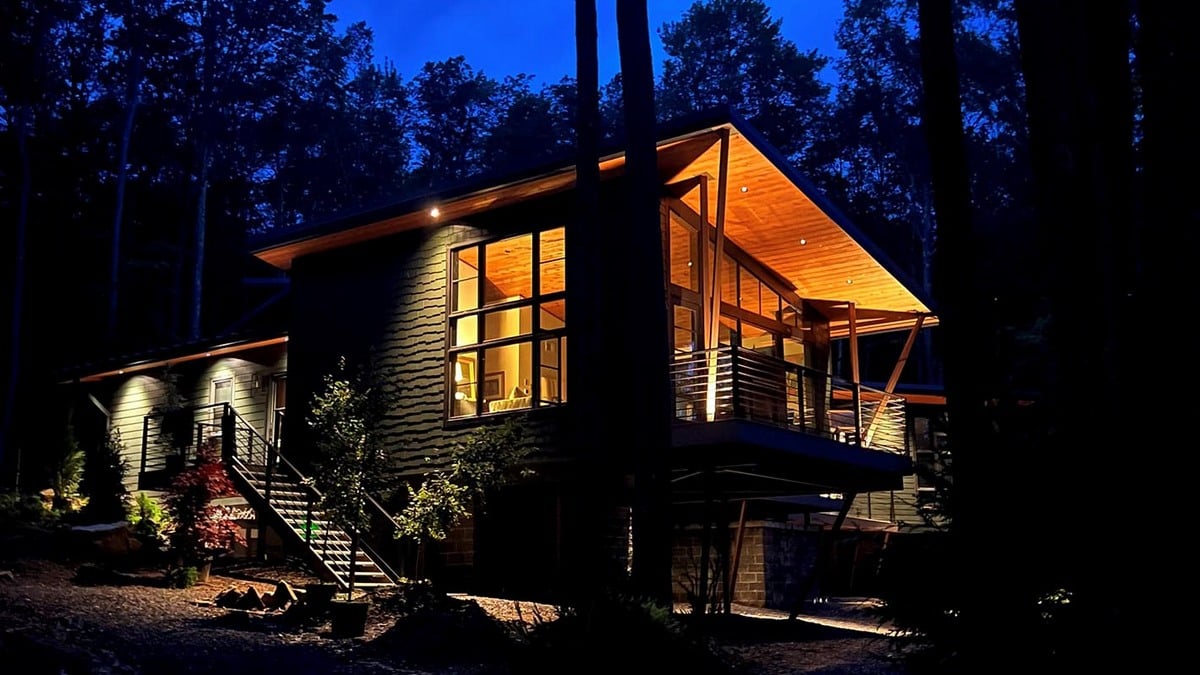
Far from large metropolitan areas, many West Virginia hillsides experience relatively little light pollution compared with more heavily developed regions of the eastern United States. On clear nights, residents may see thousands of stars, the Milky Way stretching across the sky, meteor showers, and satellites crossing overhead.
During late spring and early summer, many wooded properties also offer opportunities to observe fireflies, whose displays have become increasingly rare in heavily developed areas.
Quiet is another defining characteristic. Instead of traffic noise and densely packed neighborhoods, evenings may be marked by the sounds of tree frogs, owls, flowing streams, or wind moving through hardwood forests. For many homeowners, those natural rhythms are part of the appeal of mountain living.
Read More: Why West Virginia remains one of America’s best places to see fireflies
Lessons from Fallingwater
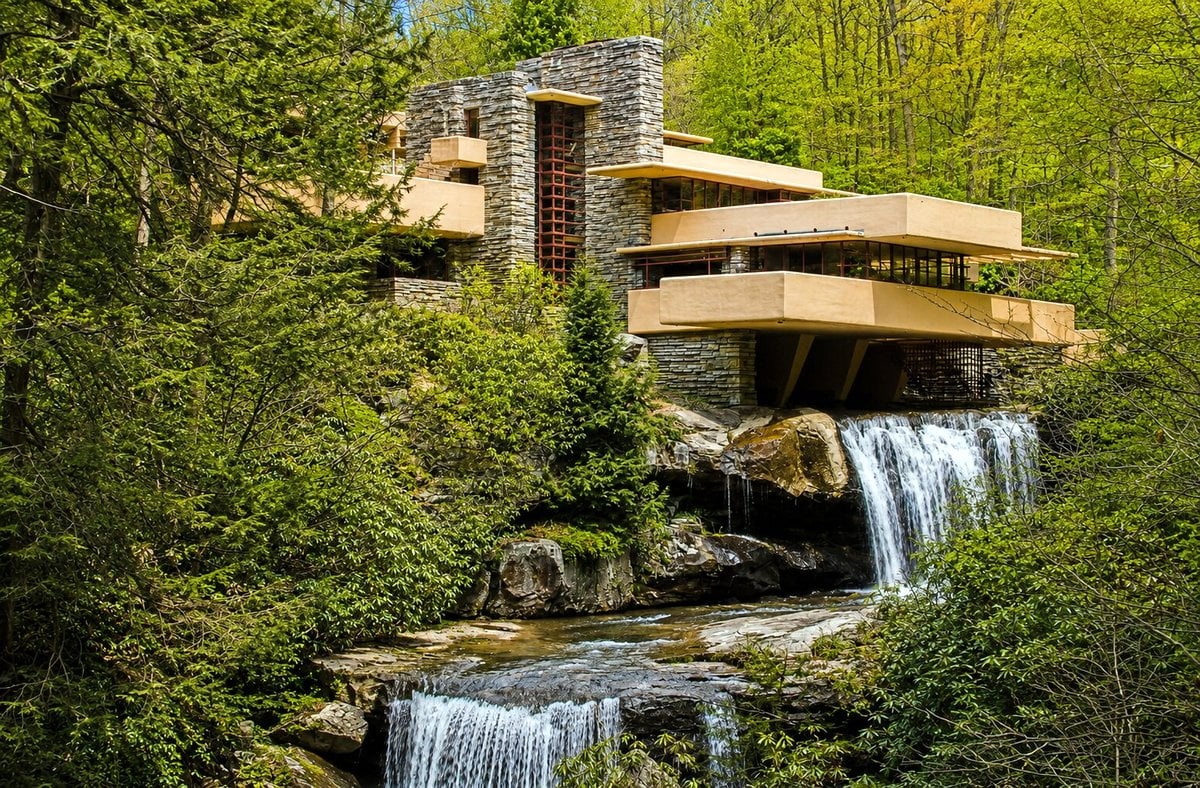
Long before modern engineering made hillside homes increasingly common, one architect demonstrated that extraordinary design could emerge from difficult terrain.
Completed in 1939, Frank Lloyd Wright’s Fallingwater stands above Bear Run in the Allegheny Mountains of southwestern Pennsylvania, roughly 40 miles northeast of Morgantown, where The Mills Group is headquartered.
Rather than avoiding the steep hillside and rushing stream, Wright made them central to the design. Reinforced-concrete terraces project dramatically above the waterfall, while native stone walls appear to rise naturally from the surrounding bedrock.
The home became one of the defining works of American architecture and helped popularize Wright’s philosophy of organic architecture—the idea that buildings should harmonize with their natural surroundings rather than dominate them.
Although today’s hillside homes vary widely in size, style, and budget, many reflect the same principle Wright embraced nearly a century ago: the landscape should shape the architecture.
What buyers should know before purchasing a hillside property
Building on a mountainside requires more planning than buying a conventional subdivision lot. Access roads and driveways often need careful engineering to handle steep grades, and utility connections may require longer service runs than on level properties.
Drainage is equally important. Water naturally flows downhill, making stormwater management a critical part of both site selection and home design. Proper grading, foundation waterproofing, and drainage systems help protect structures over the long term.
Many architects and builders also recommend geotechnical investigations before finalizing plans. Soil conditions, rock formations, and groundwater can vary considerably from one property to another, even within the same community.

Because every mountainside is unique, successful projects typically begin with understanding the land before designing the home.
A different way of building
West Virginia’s mountains once limited where people could build. Today, they increasingly inspire where people choose to live.
Modern engineering has made it possible to safely build homes on sites that previous generations might have deemed impractical, yet the underlying philosophy remains surprisingly consistent with Appalachian tradition. Rather than reshaping the landscape to fit the building, architects increasingly pursue designs that respond to the land’s character.
For Mills, that approach lies at the heart of good architecture.
Homes built on steep terrain present undeniable challenges, but they also create opportunities that flatter sites rarely offer—opportunities to frame extraordinary views, preserve natural landscapes, and create living spaces that feel inseparable from the surrounding mountains.
As more homeowners seek privacy, scenery, and a stronger connection to the outdoors, West Virginia’s steep hillsides are becoming more than places to build. They are becoming places where architecture, engineering, and the Appalachian landscape converge to define a distinctly Mountain State way of life.
Link: West Virginia affordable housing group expands team as demand for rural development grows
Nice article on how architects are incorporating nature into their designs in the Mountain State. Falling Water is a masterpiece and an inspiration to modern-day architecture.
Awesome article. Great writing. Thank you