
WINONA, W.Va. — Every small town carries a reputation, and once that reputation takes hold, it can become remarkably difficult to change, particularly in communities that have endured decades of economic decline, population loss, and the quiet assumption that their best years are behind them.
Winona, a former coal community along the New River Gorge, has lived with that perception for years. Yet residents there increasingly believe that the story of their town is not finished, and a recent community cleanup that removed nearly 7.7 tons of trash has become less a story about litter than one about what can happen when people begin investing in the place they call home.
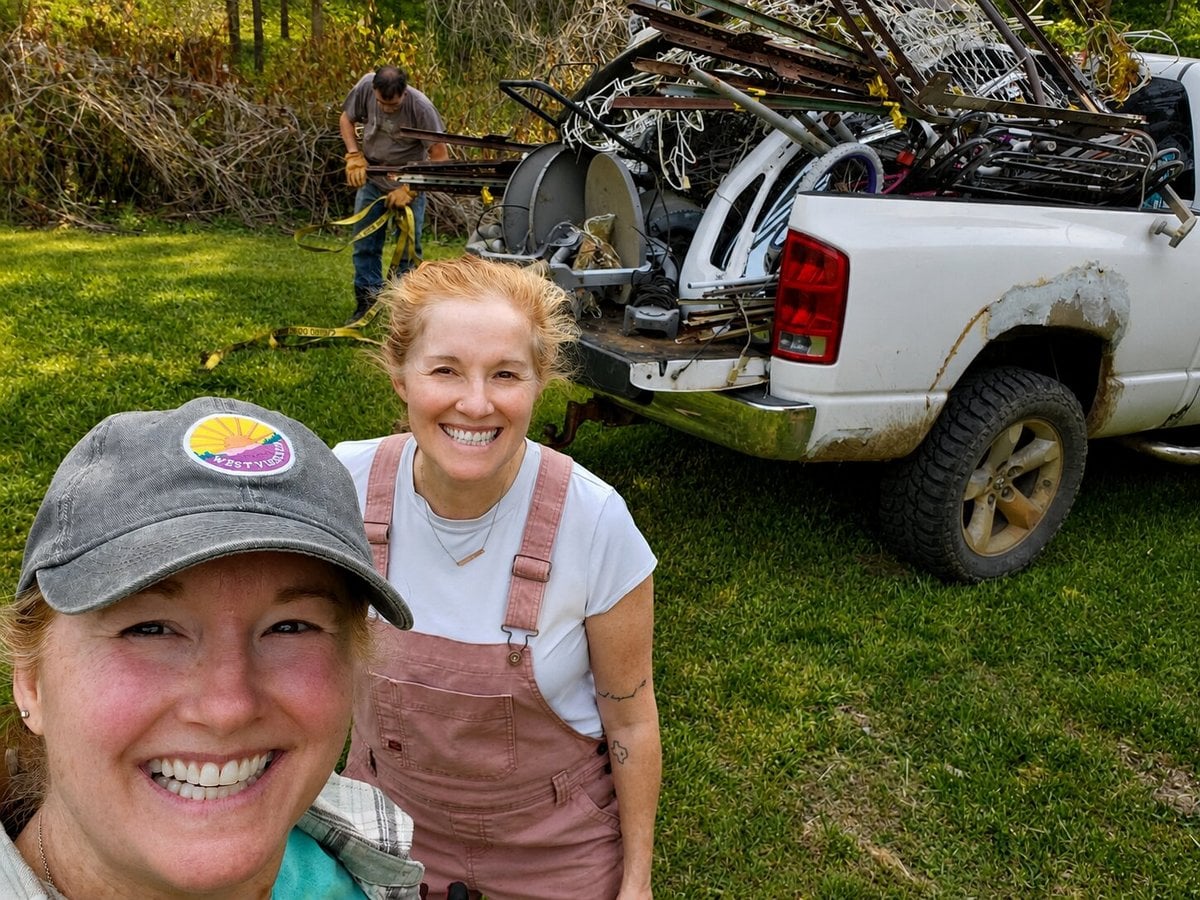
For sisters Krissy and Heather Stiver, who moved from Texas several years ago to restore a historic bed-and-breakfast in the community, the effort has reinforced a simple conviction: many small towns possess far more potential than they are often given credit for.
Looking beyond first impressions
The sisters say they did not move to Winona because they were searching for a community in need of saving. They came because they fell in love with an old house and with the rugged beauty of the adjoining New River Gorge National Park and Preserve. They only gradually recognized that the roads leading to their new home were lined with discarded furniture, appliances, tires, and other debris that had accumulated over many years.
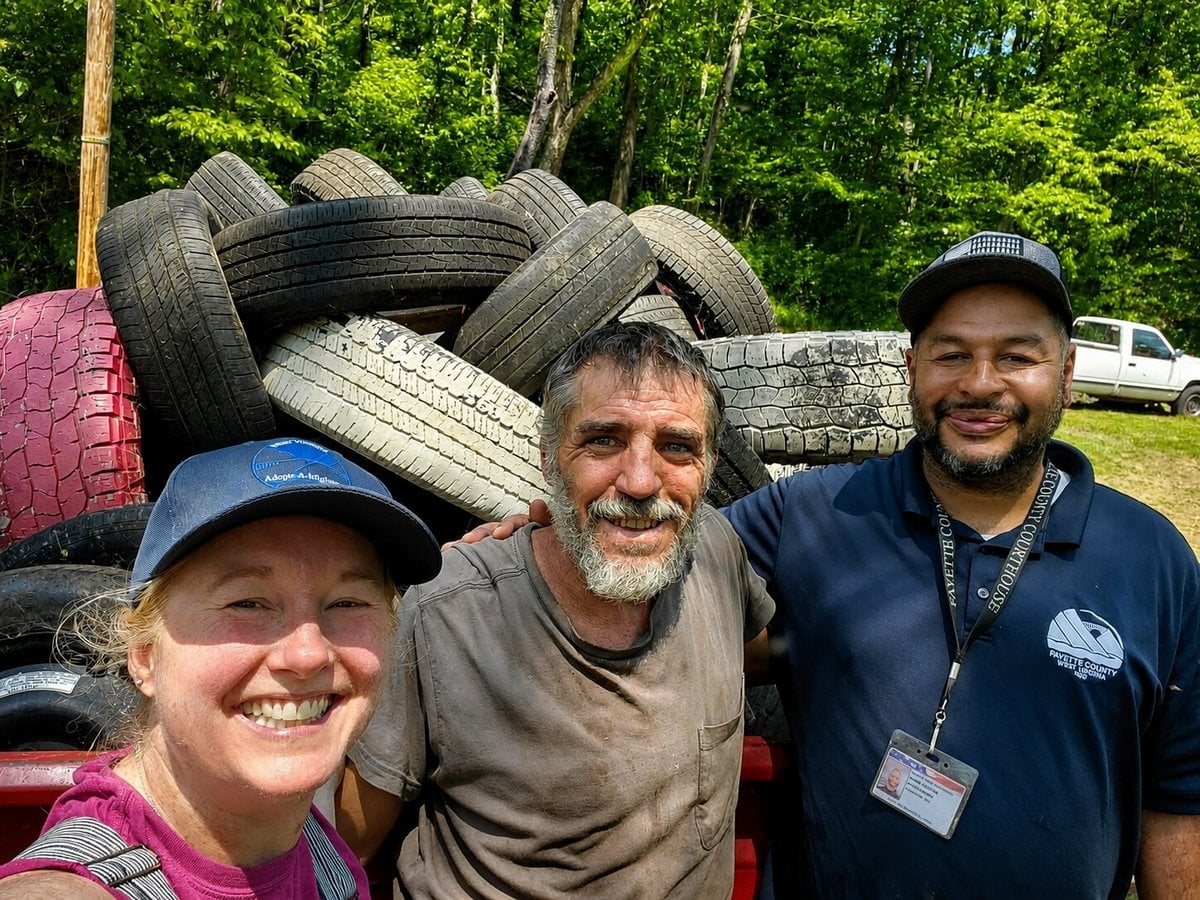
Rather than accepting those conditions as inevitable, they began asking what might happen if neighbors worked together to improve them.
“I don’t think Winona was so far gone that it wasn’t going to be a huge uphill battle to clean it up,” Krissy said. “I don’t think we’re hopeless—just a little bit of work and a little bit of support makes a huge difference.”
What surprised her most, she said, was not the amount of trash collected but the response from residents.
“People here were really grateful for what happened,” she said. “It didn’t take much.”

A community ready to participate
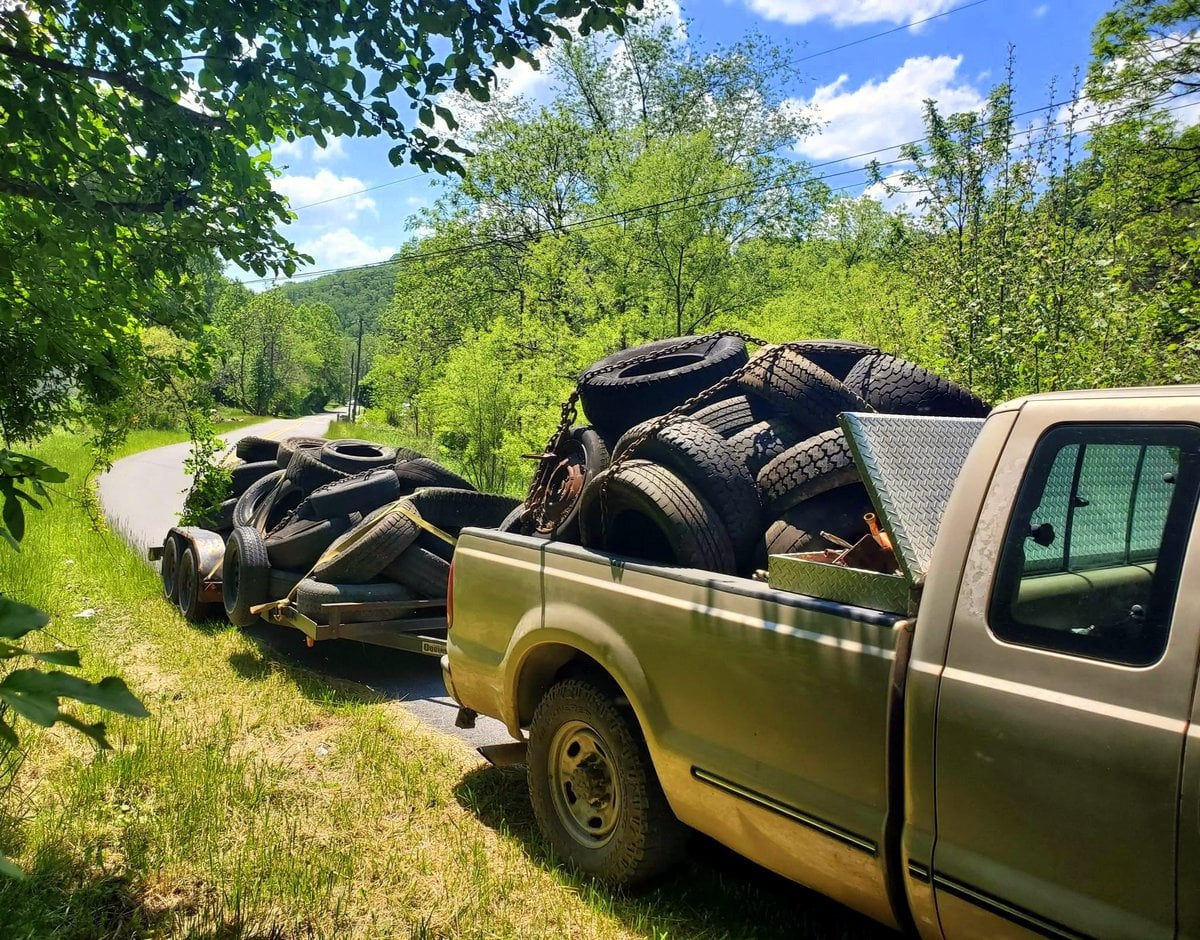
The cleanup eventually filled three large roll-off dumpsters and removed approximately 7.7 tons of debris, but the work involved much more than simply providing trash containers. Weeks of planning were required to coordinate volunteers, collect tires and scrap metal separately from household waste, work with county litter-control officials and the local waste-hauling company, and communicate with residents throughout the community.
The sisters believe the experience revealed something that is often overlooked in discussions about struggling rural communities.
“We’re going to do this,” Krissy said. “It’d be great if you support us, but if you don’t, we’re going to do it anyway.”
That determination, they said, demonstrated that local residents were not waiting for someone else to solve their problems. Instead, they were looking for opportunities to show what they could accomplish with modest support and cooperation.
“We’re not the only Winona in Fayette County,” Krissy said, arguing that many communities in the county and state face similar circumstances but rarely receive the same attention or resources afforded elsewhere.
Building momentum
The sisters say they have already begun seeing signs that attitudes are changing. New residents have purchased homes in the community, neighbors have become more engaged in conversations about its future, and what began as a cleanup has evolved into broader discussions about beautification, property improvements, and how Winona presents itself to visitors traveling through the area.
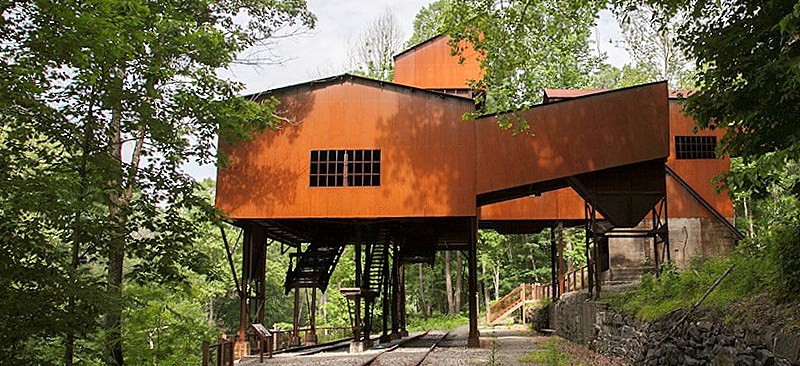
That last point may prove particularly significant. Every day, visitors bound for the historic mining community of Nuttallburg travel through Winona before reaching one of the New River Gorge’s most popular heritage destinations.
The sisters believe the community serves as a gateway to that experience and that even relatively modest improvements could strengthen the first impression many tourists receive of this part of southern West Virginia. Even as a vital gateway community to the gorge, no help had come from outside.
Lessons for other small towns
Looking back, Heather says the cleanup succeeded not because of extraordinary funding or a large organization but because the community concentrated on a few practical fundamentals.
Clear communication ensured residents understood what was happening and when to participate. A committed local organizer coordinated volunteers, visited neighbors, answered questions, and kept the project moving. Equally important, county officials and local businesses helped provide the resources needed to dispose of the material once it had been collected.
“You have to have engagement,” Heather said. “People have to know about it.”
More than a cleanup
The most lasting impact of the project may not ultimately be measured by the three dumpsters that were filled or the 7.7 tons of debris hauled away, impressive as those accomplishments were.
Instead, the cleanup appears to have changed something less tangible but perhaps more important: the conversation surrounding Winona itself.
Communities are rarely transformed by a single project, and no one involved suggests that Winona’s challenges have disappeared. Roads still need attention, neglected properties remain, and additional cleanup efforts are already being discussed.
Yet the experience has offered a reminder that many of West Virginia’s smallest communities still possess the ingredients necessary for renewal—people who care deeply about where they live, neighbors willing to work together, and a growing belief that their hometown’s future may be brighter than its reputation suggests.
Every small town inherits a story. Some are written by prosperity, others by decline. But stories are not permanent. In Winona, three dumpsters and 7.7 tons of trash may have cleaned more than roadsides. They offered residents something far harder to collect than discarded tires or broken furniture—a reason to believe that the next chapter of their community might be written by the people who still call it home.
We love to visit different areas of West Virginia. Our all time favorites are Thomas and Davis West Virginia and of course the New River Gorge area. Thank you for this article. It opened our eyes to areas we never heard of. Love your articles. Keep them coming.
In the late 70s, my great-grandparents bought a farm out Flannagan School Rd. I have many fond memories of Winona, so I’m VERY glad to see this happening!
The sisters and the community are to be commended. Litter in any form – from a candy bar wrapper or aluminum can tossed from a passing car to tires dumped over a hillside – is too common of an occurrence. For someone who walks our country road several times a month to clean up litter, this article was inspiring. Thank you.
This is epic and exciting! It is not rocket science–get the ball rolling, invite people along…so stoked for Winona! Congrats y’all!
I love this site, David does his homework!! I’ve lived in several places on this globe! I lived overseas and within several states and I never forget my roots! You can tell that David loves West Virginia, and he makes me homesick for my beautiful mountain state and his articles keep me grounded! Don’t ever stop David and a big Thank You!!!!
I lived in Winona in the 70’s as a child. Winona used to be a beautiful place where everyone knew everyone and the people was so friendly. The old pool room/bar and Store was always full of people. Life was simple back then when it was still booming some.
Great work! It was almost 20 years ago when a group of locals went door to door to spread the idea of a localized sewage option (vs piping into Keeneys creek & the New River).
“People “ said – no one’s gonna pay to have that when they can do it for free- well- every family except one signed on. It took 15 years for the project to be finished but it’s done and folks are proud of it.
My mother grew up in Winona in the 1930’s. We took her back many times before her passing in 2022 and my husband and I had passed through several times in these last few years. So happy The Garvey House is being restored and for the Community clean up! Thank you for sharing in this article!